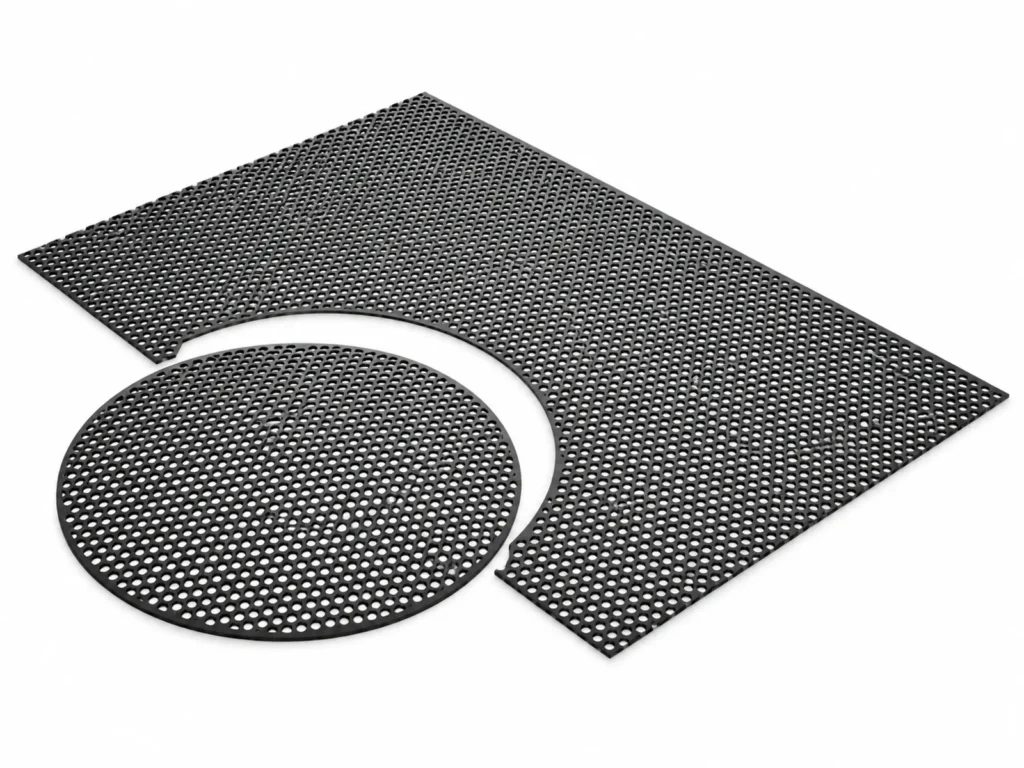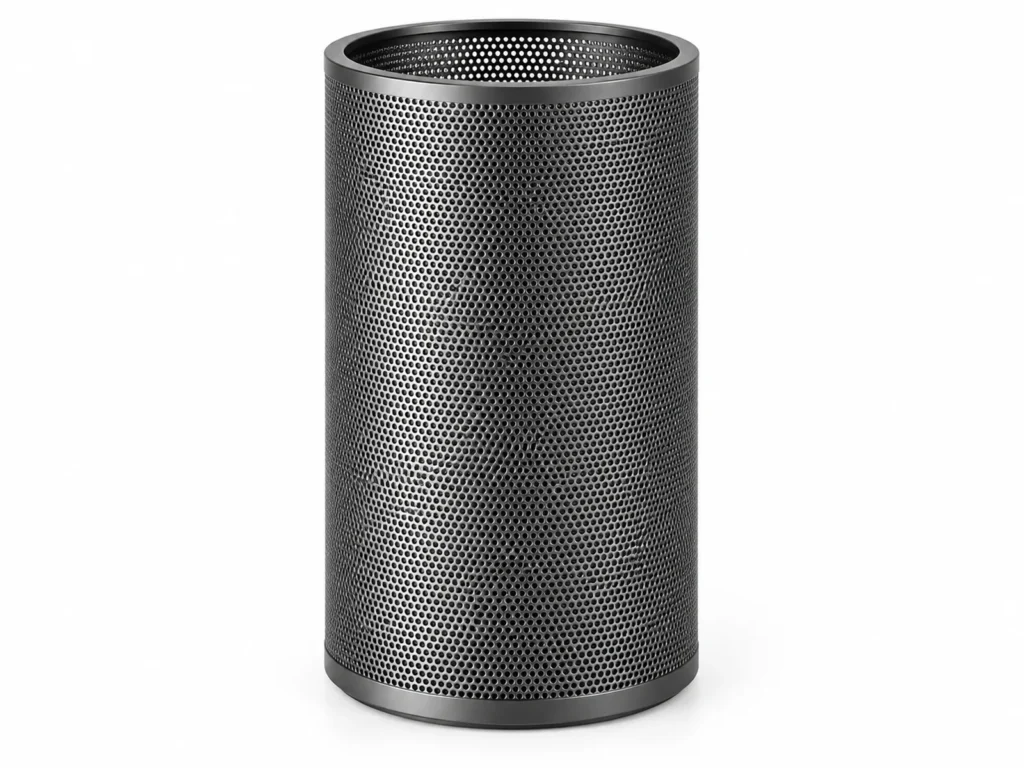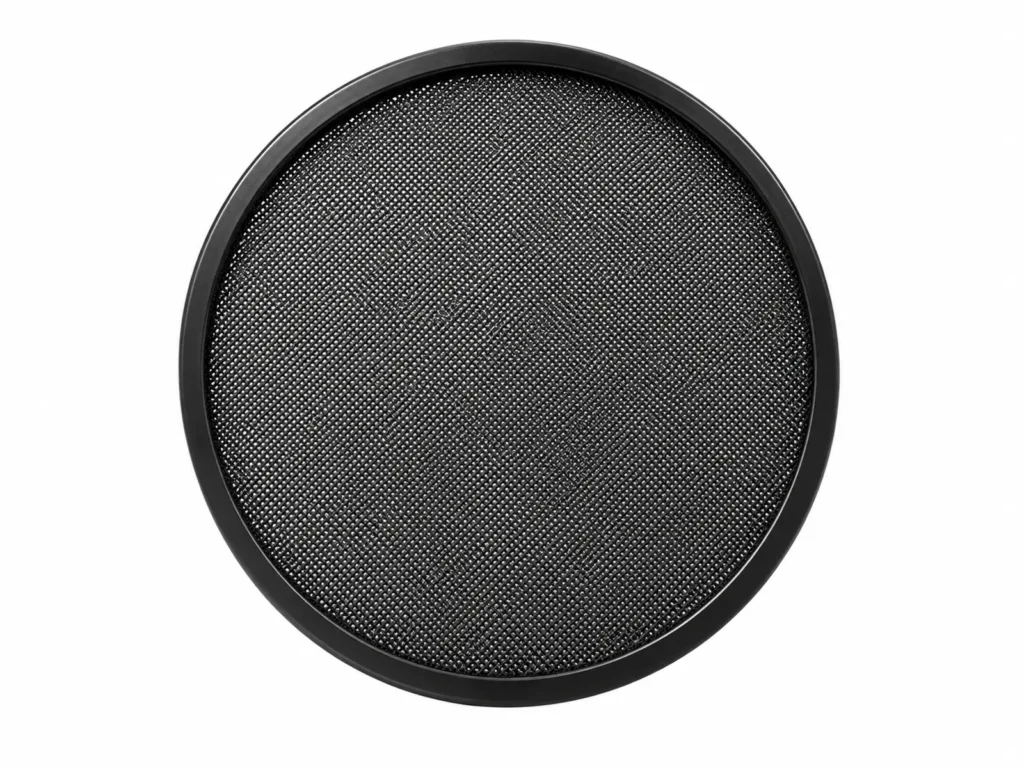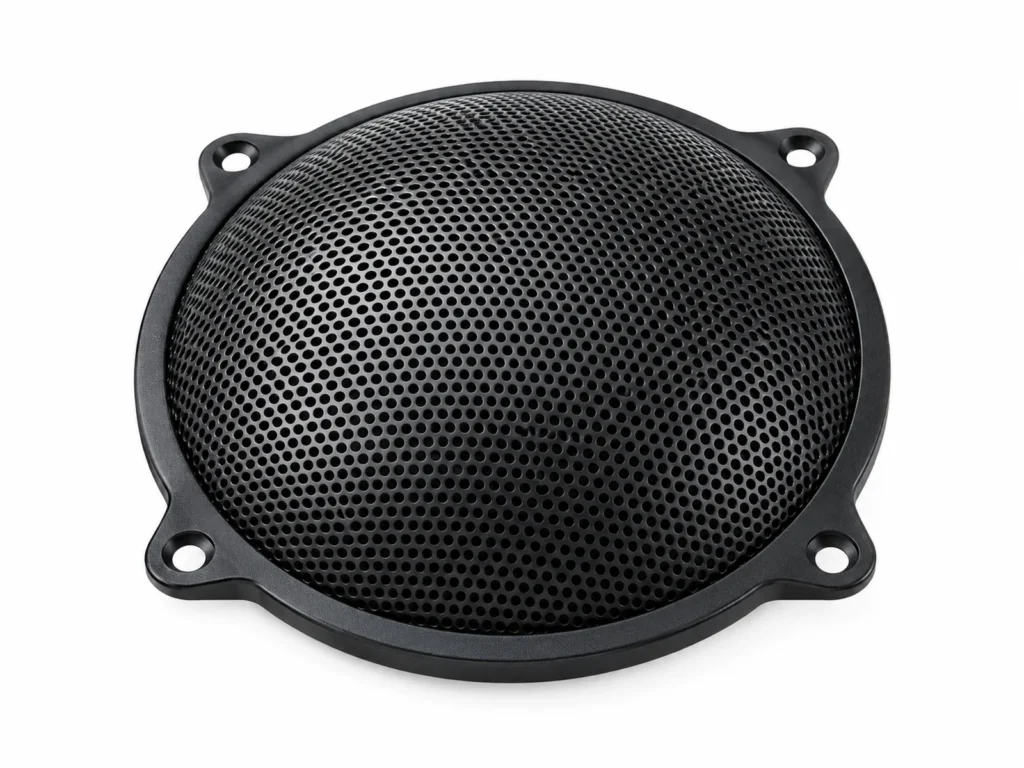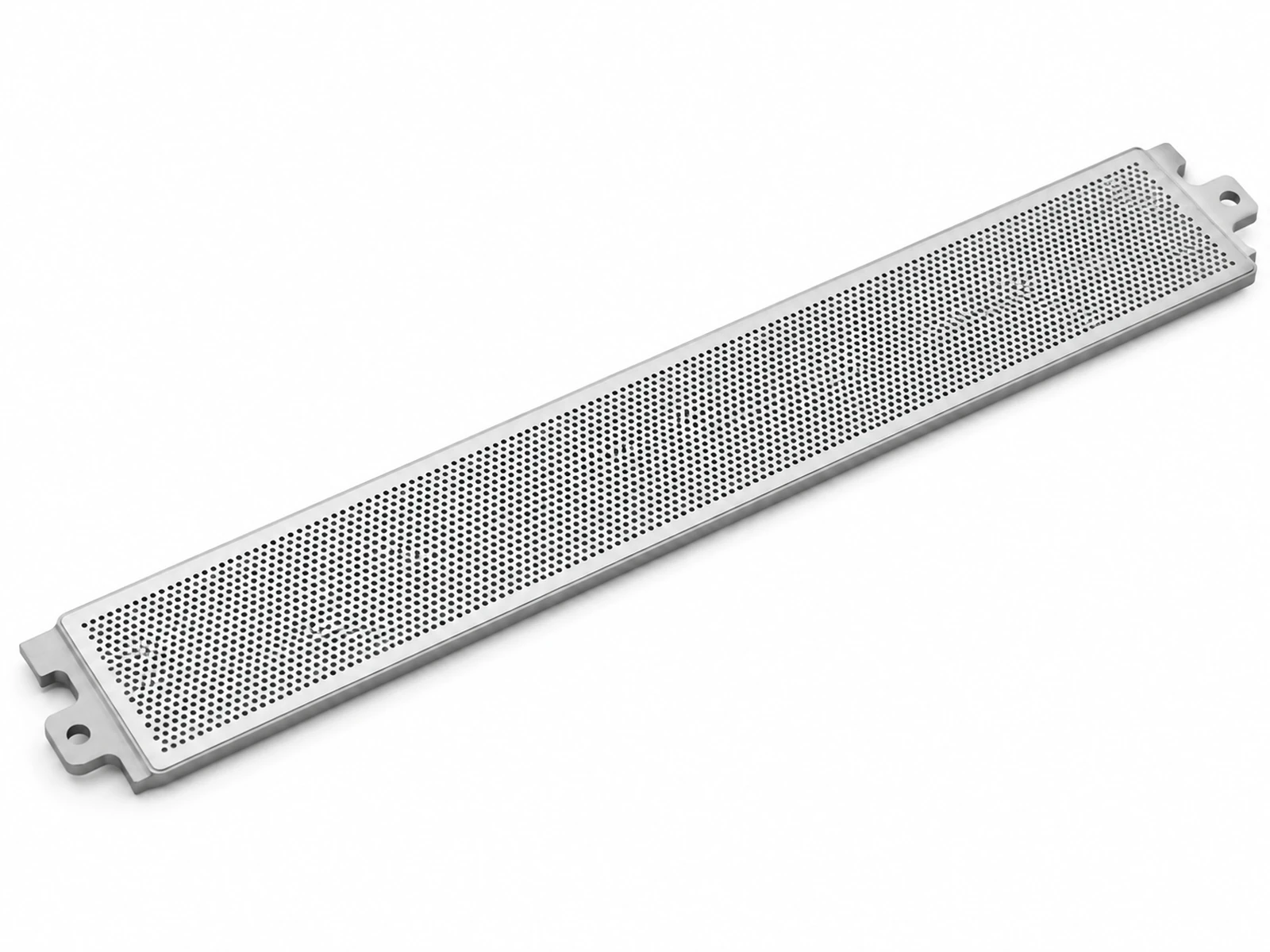
Laptop & Device Speaker Grille (Micro-Perforated) is used primarily for forming micro-perforated speaker grilles in laptop decks, tablets, monitors and smart displays that look solid from normal viewing distance yet pass sound. This page lists the industries and assemblies where it is specified, the selection criteria that matter for each application, handling and installation practice, and the cases where a different mesh, screen or filter type is the correct choice. It is supplied to DIN 24041 pattern.
Typical Applications for Laptop & Device Speaker Grille (Micro-Perforated)
Where Laptop & Device Speaker Grille (Micro-Perforated) is specified and bought:
- Laptop OEMs: grilles beside the keyboard and on the base underside.
- Monitors & all-in-one PCs: speaker bars integrated into the bezel.
- Smart home displays & hubs: front grilles with a seamless metal look.
- Medical & industrial devices: alarm and buzzer grilles that must be cleanable.
How to Specify Laptop & Device Speaker Grille (Micro-Perforated) for Your Application
- Hole size & pitch: Holes under 0.8 mm at 1.0–1.5 mm pitch read as a texture rather than holes.
- Open area: Keep at least 20–25 % so the speaker is not muffled; increase it for bass-heavy drivers.
- Material & finish: Anodized aluminum 5052 matches unibody cases; SS304 suits thinner, stiffer grilles.
- Standard: Quote DIN 24041 pattern and the size designation from the table on the product page, plus any value you changed in the technical drawing.
Handling & Installation Practice
- Back the grille with acoustic fabric or a dust mesh so particles do not settle on the driver.
- Perforate before anodizing so hole walls are colored and do not show bright metal.
Common Selection Mistakes with Laptop & Device Speaker Grille (Micro-Perforated)
- Aligning the hole pattern with the keyboard grid, which creates visible moiré.
- Choosing an open area under 20 %, which muffles small drivers.
Where Laptop & Device Speaker Grille (Micro-Perforated) Is Not the Right Choice
Not a structural or impact-resistant panel; heavy-duty enclosures need a thicker perforated plate.