Skip to content

Acoustic & Electronics Mesh · IEC 60268-7 · Application guide

What Is Earbud & Headphone Nozzle Mesh Used For?

Close-up of a white wireless earbud with its silicone tip

Application guide for Earbud & Headphone Nozzle Mesh to IEC 60268-7. The core duty of the type is covering the sound nozzle of earbuds and the driver opening of headphones so earwax and debris stay out while the high-frequency response is tuned. The typical industries, the how-to-specify checklist, handling practice and the exclusion cases are set out below.

Typical Applications for Earbud & Headphone Nozzle Mesh

Where Earbud & Headphone Nozzle Mesh is specified and bought:

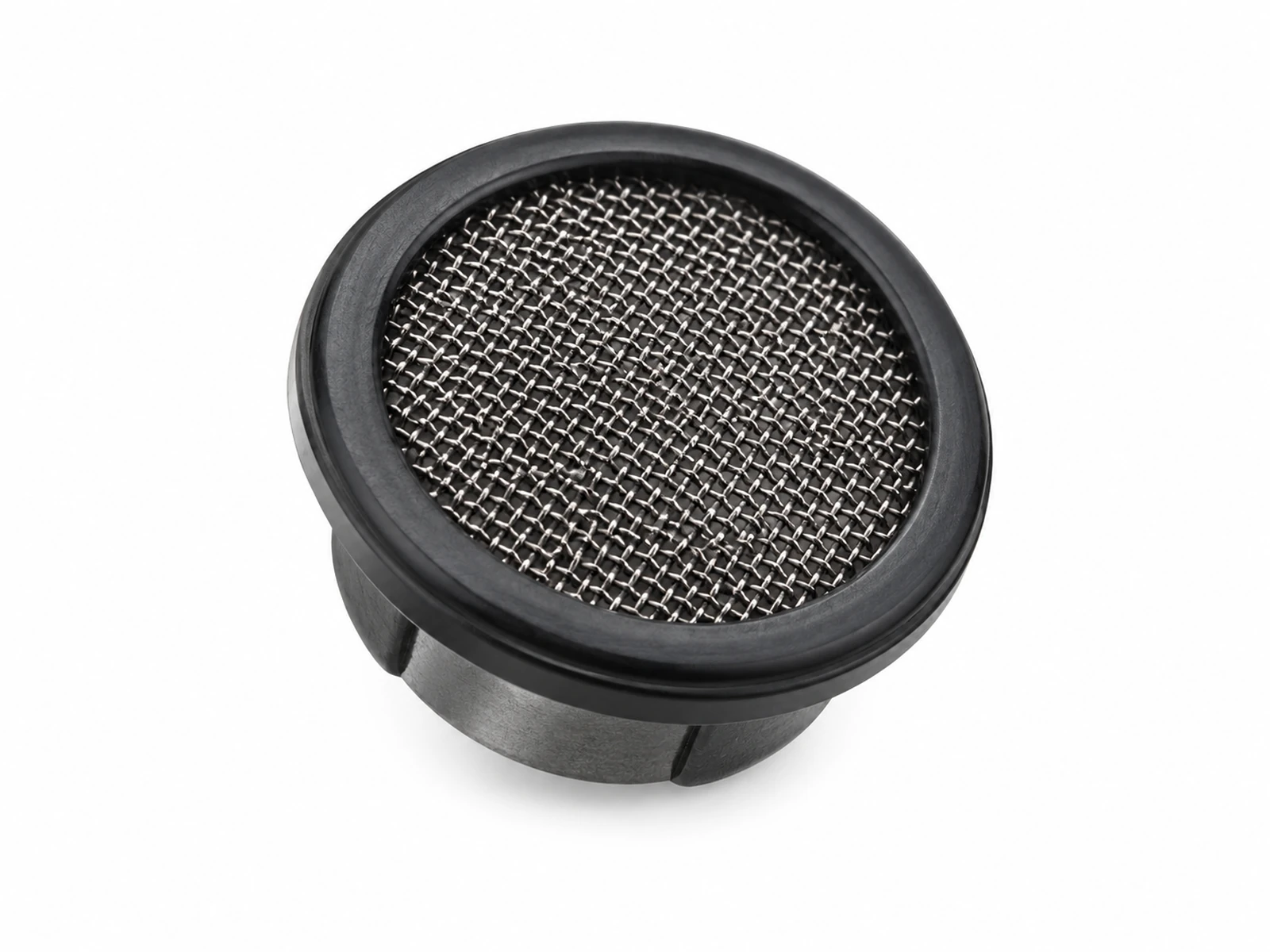
  • TWS earbud OEMs: stamped or etched nozzle meshes that double as the visible acoustic grille.
  • Over-ear & on-ear headphones: driver-front meshes that protect diaphragms and damp the treble peak.
  • Hearing protection & musician earplugs: calibrated meshes that set attenuation.
  • Accessory brands: replacement wax guards and nozzle filters for popular earbuds.

How to Specify Earbud & Headphone Nozzle Mesh for Your Application

  • Nozzle fit: Match diameter to the nozzle bore (commonly 4.5–6.5 mm) and specify flat or domed.
  • Acoustic damping: The mesh Rayl value sets how much the 6–10 kHz peak is softened; quote the frequency response target.
  • Color & finish: Black oxide or PVD makes the mesh visually disappear behind tinted housings.
  • Standard: Quote IEC 60268-7 and the size designation from the table on the product page, plus any value you changed in the technical drawing.

Handling & Installation Practice

  • Clean nozzles with a dry soft brush; liquids push wax deeper into the mesh.
  • When replacing a mesh, remove all old adhesive so the new disc sits flat and level.

Common Selection Mistakes with Earbud & Headphone Nozzle Mesh

  • Fitting any mesh that fits the nozzle — a different Rayl value changes the sound signature noticeably.
  • Glue squeezing into the open area, which partially blocks the mesh and dulls treble.

Where Earbud & Headphone Nozzle Mesh Is Not the Right Choice

Not a medical-grade hearing-aid wax filter, which uses dedicated disposable filters approved for the device.
If This Construction Is Not the Right Fit

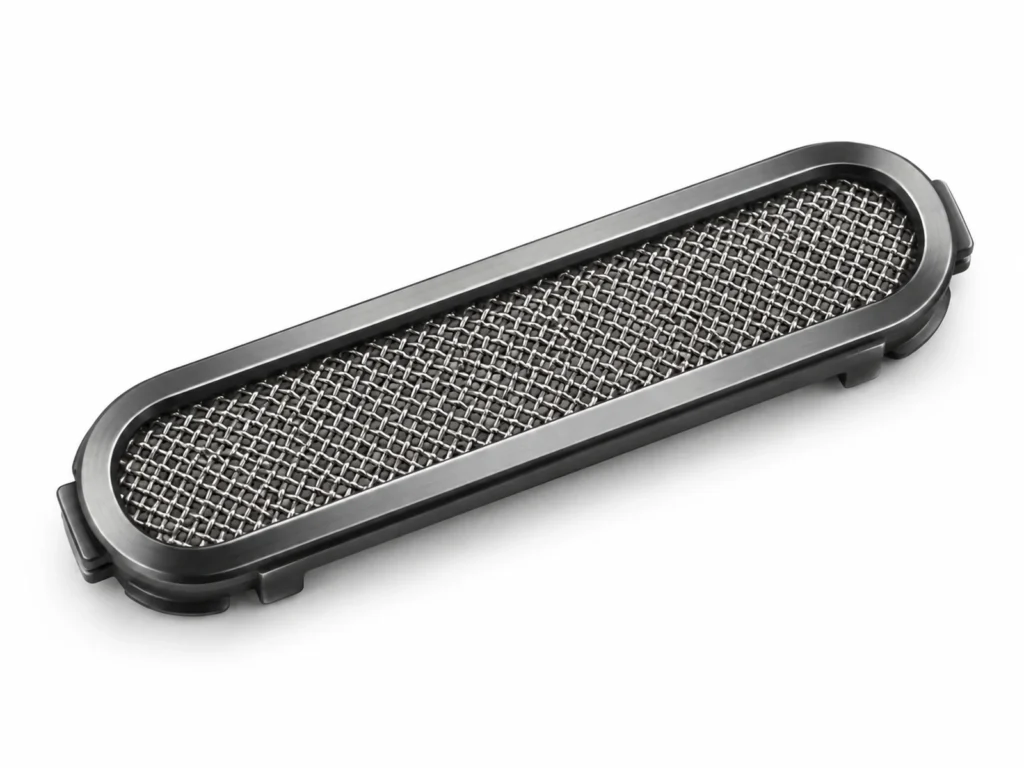
Closely related mesh types for the same duty — compare open area, aperture range and cleanability before you commit.

Technical Drawing

Customize the parameters below — every spec field is editable, and the drawing redraws to match the values you choose. Changing the size will snap the other fields to that size's standard values; you can then override any individual value.

Sends the selected values to the quote form below.

Request a Quote

Set the size and options in the drawing above, then send the exact configuration straight to this form.

Request a Quotation

Specification
Business Information

Dimensions & Specifications (IEC 60268-7)

PartLength (mm)Width (mm)Thickness (mm)Hole diameter (mm)Open area (%)Acoustic resistance (MKS Rayl)
Nozzle u00d84.54.54.50.060.05024100
Nozzle u00d85.55.55.50.060.05024100
Nozzle u00d86.56.56.50.080.0602875
Over-ear u00d84040.040.00.100.1003530

Frequently Asked Questions

What is Earbud & Headphone Nozzle Mesh used for?

Covering the sound nozzle of earbuds and the driver opening of headphones so earwax and debris stay out while the high-frequency response is tuned.

Why does one earbud sound quieter than the other?

The most common cause is earwax blocking the nozzle mesh. Clean it gently; if it stays muffled, replace the mesh.

Does the nozzle mesh change how earbuds sound?

Yes. It damps the high-frequency peak; manufacturers tune the mesh as part of the acoustic design.

Stainless steel or fabric nozzle mesh?

Stainless is more durable and easier to clean; fabric gives more damping but traps wax.

Can I get a quote for Earbud & Headphone Nozzle Mesh to my own drawing?

Yes. Set the size and any custom value in the technical drawing on the product page and send it with the quote form; we reply within one business day.