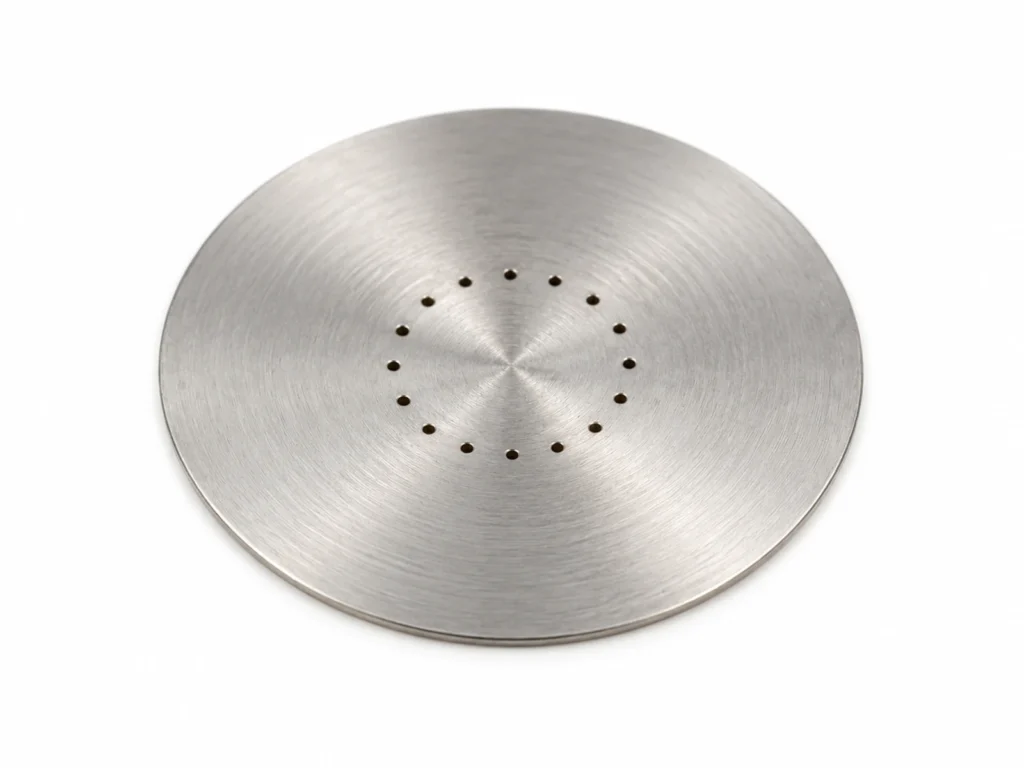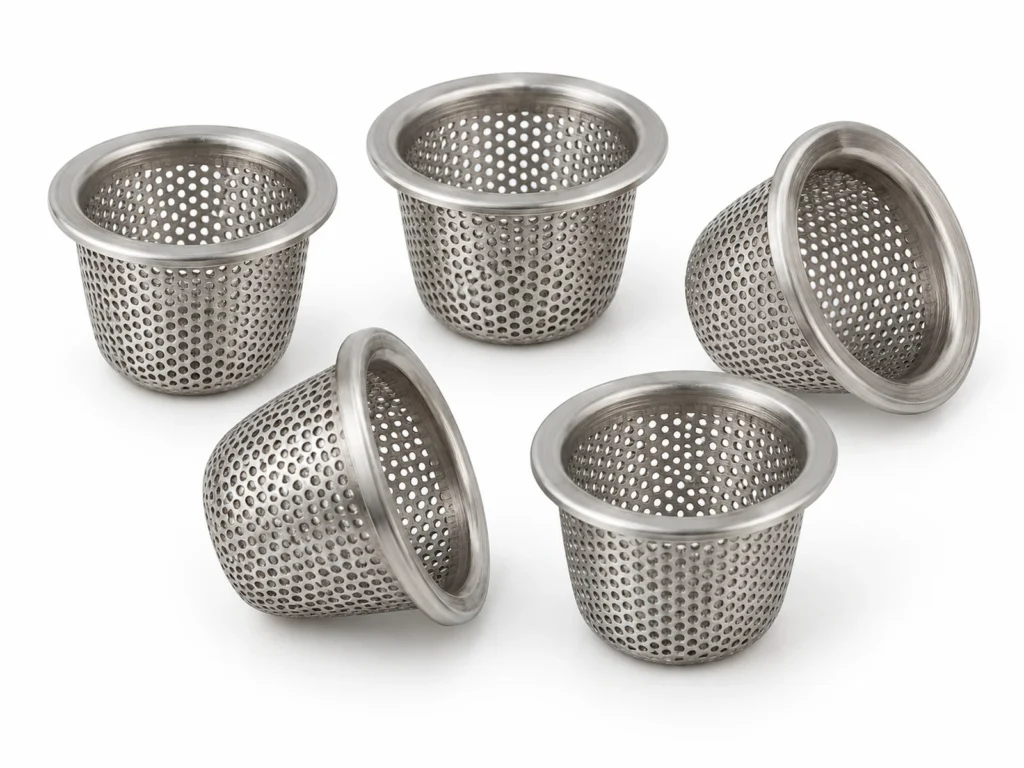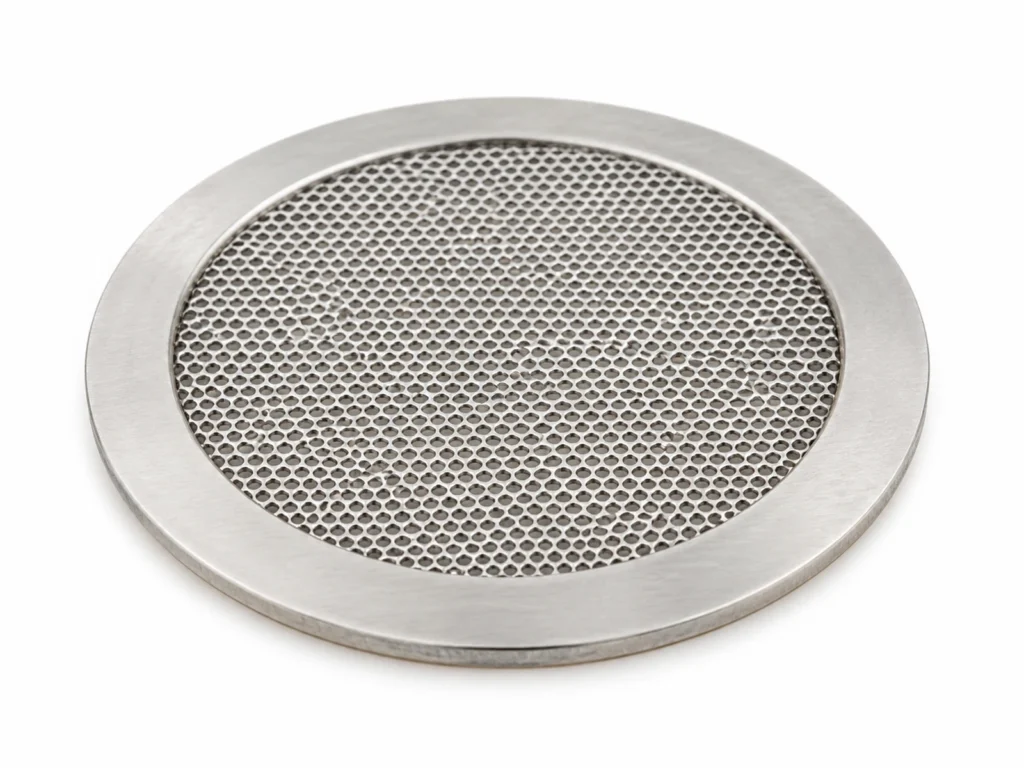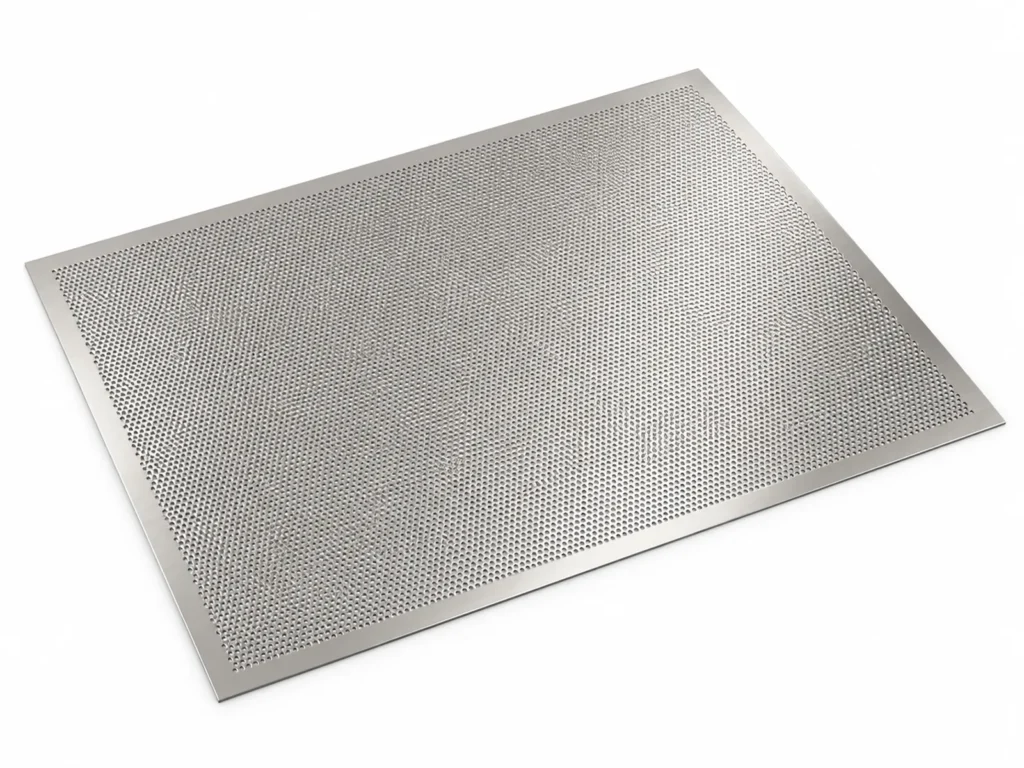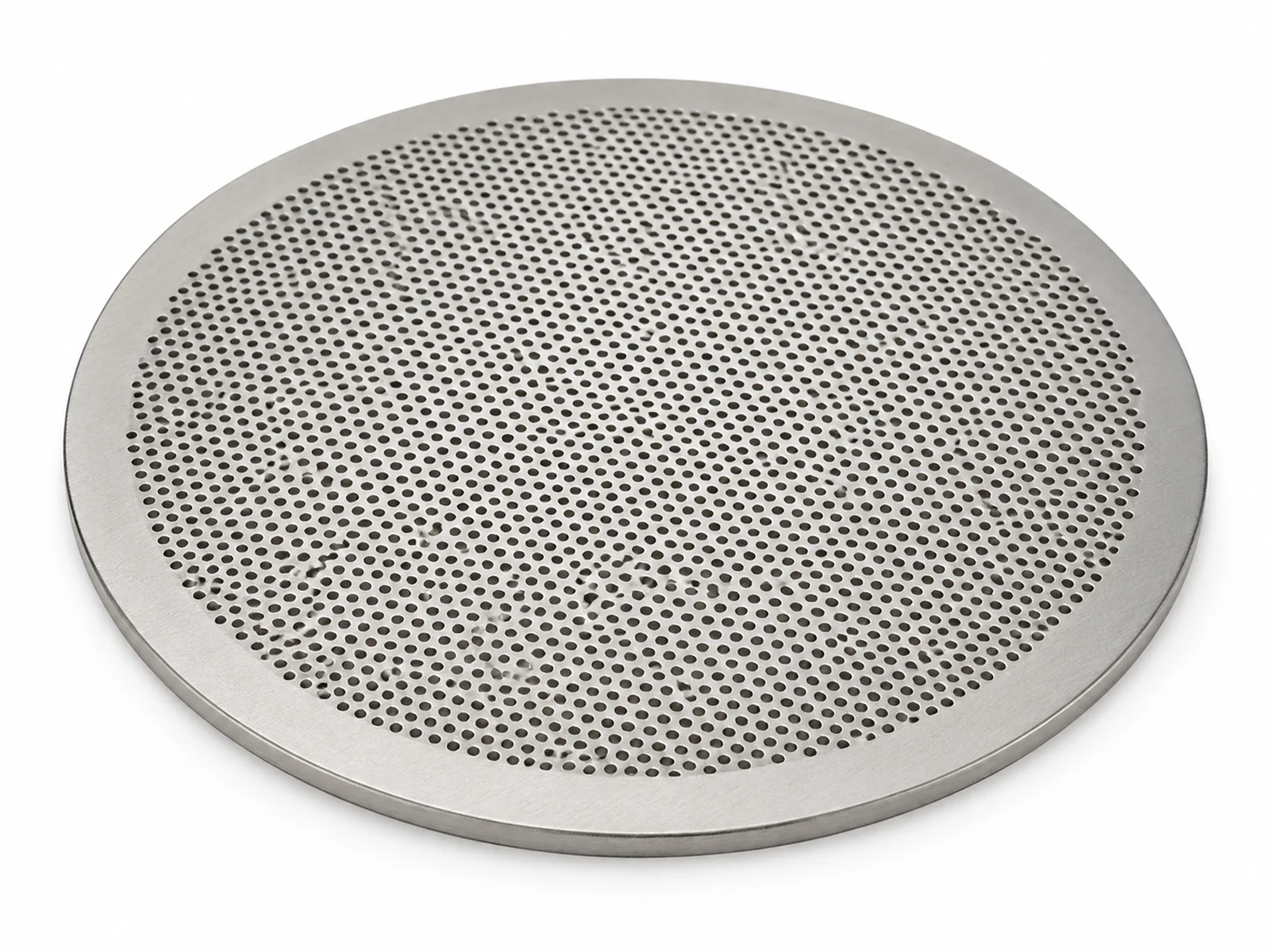
The primary duty of Etched Titanium Porous Plate for Electrolyzers is distributing water and collecting gas in PEM electrolyzer and fuel cell stacks with thin titanium plates etched with thousands of precise through-holes. Below: the sectors that specify it in volume, the checklist used to select the right mesh and alloy for the application, handling notes, and the known limits of the type.
Typical Applications for Etched Titanium Porous Plate for Electrolyzers
Where Etched Titanium Porous Plate for Electrolyzers is specified and bought:
- PEM electrolyzer stacks: porous transport plates on the anode side.
- Fuel cell R&D: flow-distribution and diffusion plates.
- Electrochemical cells: perforated titanium electrodes.
- Hydrogen test labs: single-cell fixtures.
How to Specify Etched Titanium Porous Plate for Electrolyzers for Your Application
- Hole size & pitch: 0.2–0.4 mm holes; pitch sets open area and in-plane conductivity.
- Thickness: 0.2–0.5 mm Gr1 titanium.
- Coating: Platinum or iridium flash to keep contact resistance low.
- Standard: Quote ISO 22734 electrolyzer stacks and the size designation from the table on the product page, plus any value you changed in the technical drawing.
Handling & Installation Practice
- Handle in clean conditions; contamination poisons catalysts.
- Compress evenly in the stack.
Common Selection Mistakes with Etched Titanium Porous Plate for Electrolyzers
- Uncoated titanium passivating.
- Burrs that pierce the membrane.
Where Etched Titanium Porous Plate for Electrolyzers Is Not the Right Choice
Not for alkaline electrolyzers, which use nickel.