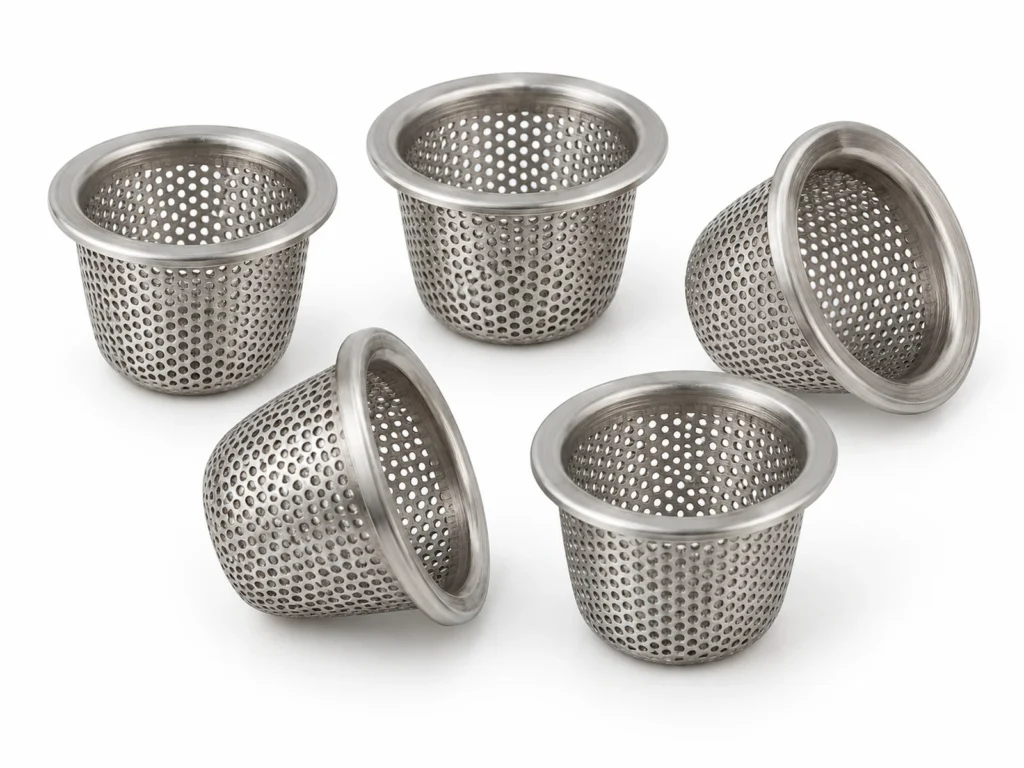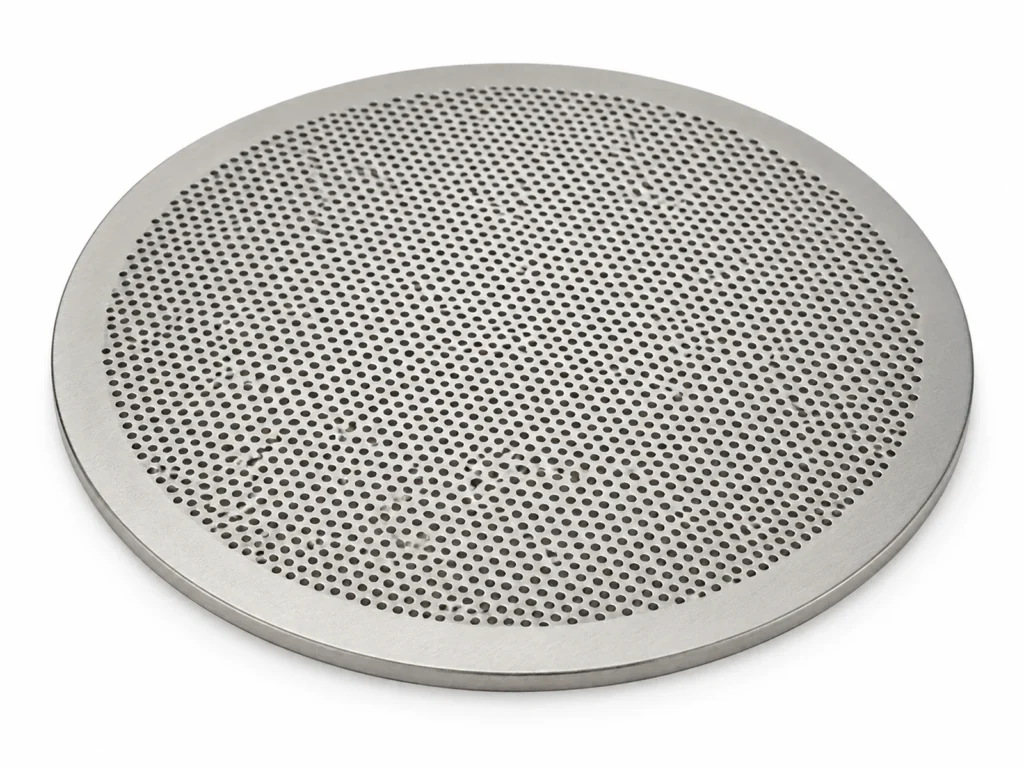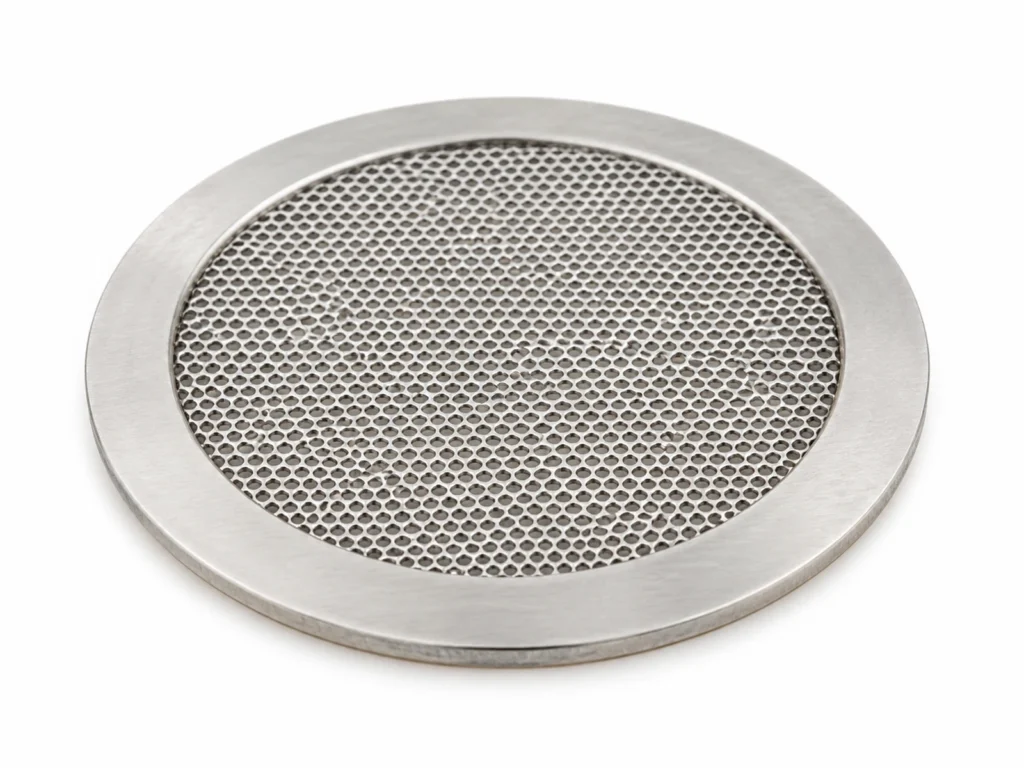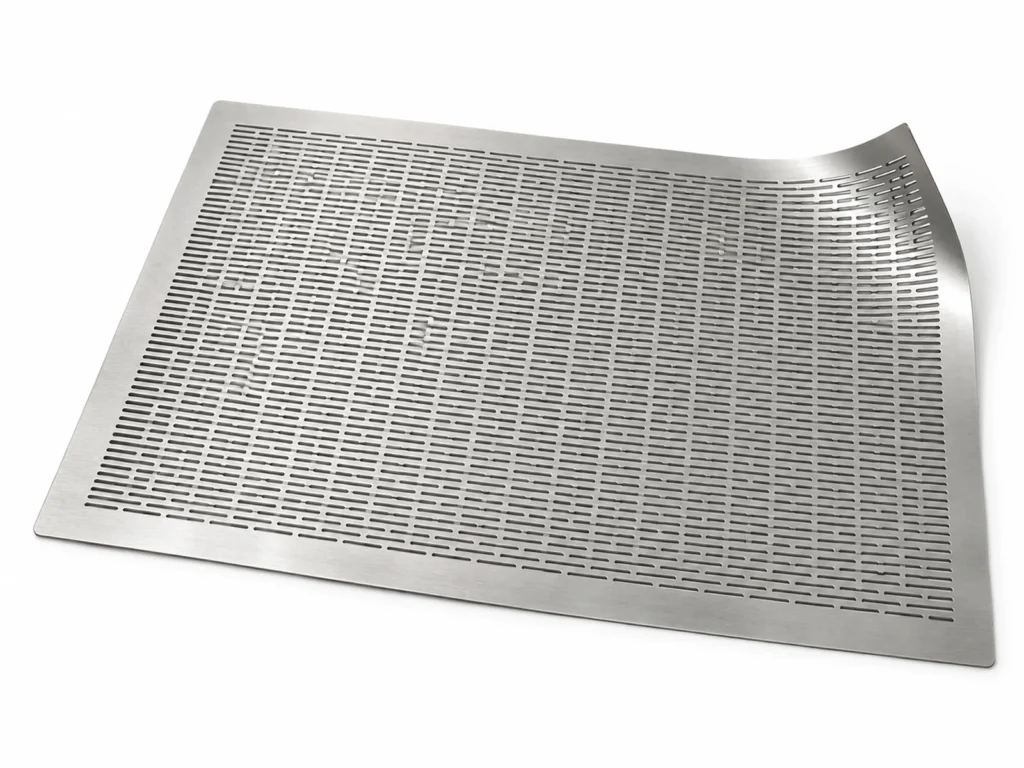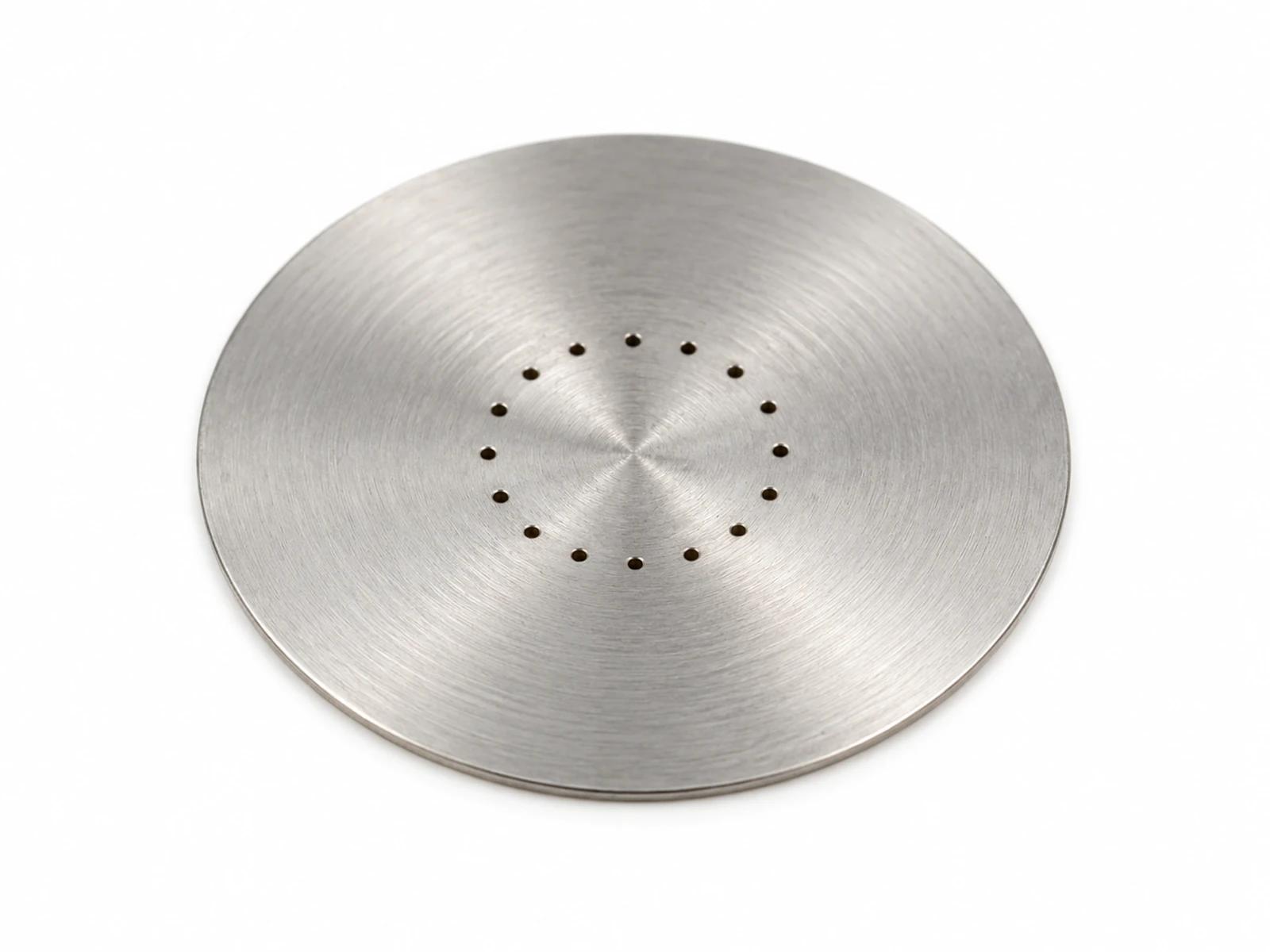
The primary duty of Etched Fuel Injector Spray Plate is shaping gasoline and urea sprays at the injector tip with thin etched orifice plates, whose hole size, count and layout set droplet size and spray pattern. Below: the sectors that specify it in volume, the checklist used to select the right mesh and alloy for the application, handling notes, and the known limits of the type.
Typical Applications for Etched Fuel Injector Spray Plate
Where Etched Fuel Injector Spray Plate is specified and bought:
- Port fuel injector makers: multi-hole orifice discs for cleaner combustion.
- SCR / AdBlue dosing: urea doser spray plates.
- Small engines & motorcycles: injector spray plates.
- Industrial atomizers: fine-spray orifice plates for humidifiers and coaters.
How to Specify Etched Fuel Injector Spray Plate for Your Application
- Hole count & diameter: 4–12 holes of 0.12–0.18 mm, matched to target flow.
- Spray angle: Set by hole position and wall taper on the etch exit face.
- Thickness & alloy: 0.1–0.15 mm SS316L or martensitic stainless for wear.
- Standard: Quote Injector OEM drawing and the size designation from the table on the product page, plus any value you changed in the technical drawing.
Handling & Installation Practice
- Flow-test and spray-image every lot; hole-size drift changes engine calibration.
- Clean ultrasonically before welding to the injector seat.
Common Selection Mistakes with Etched Fuel Injector Spray Plate
- Burrs or etch residue that distort the spray.
- Hole-size variation between plates on one engine.
Where Etched Fuel Injector Spray Plate Is Not the Right Choice
Not a filter screen — an inlet filter basket protects the injector upstream.