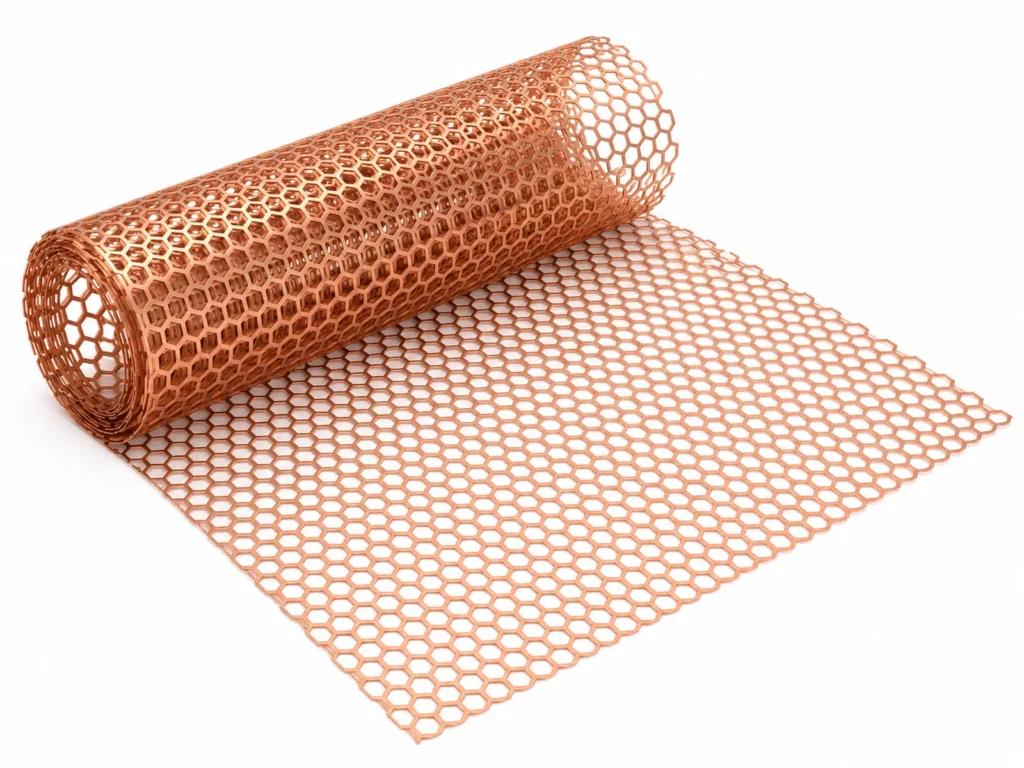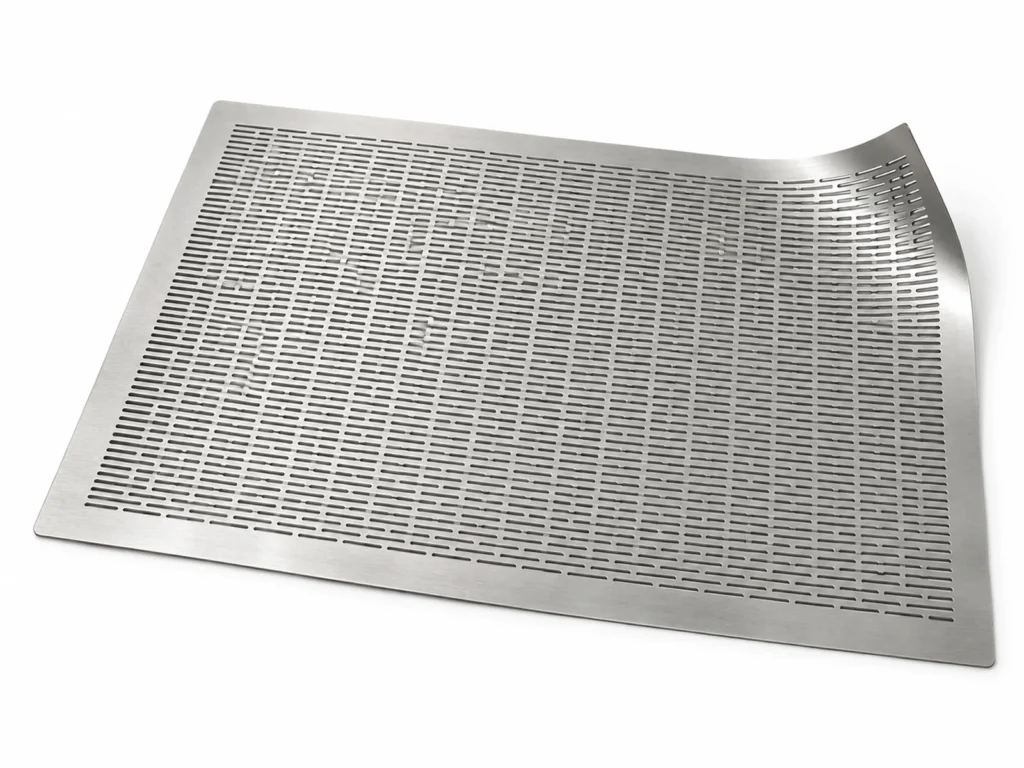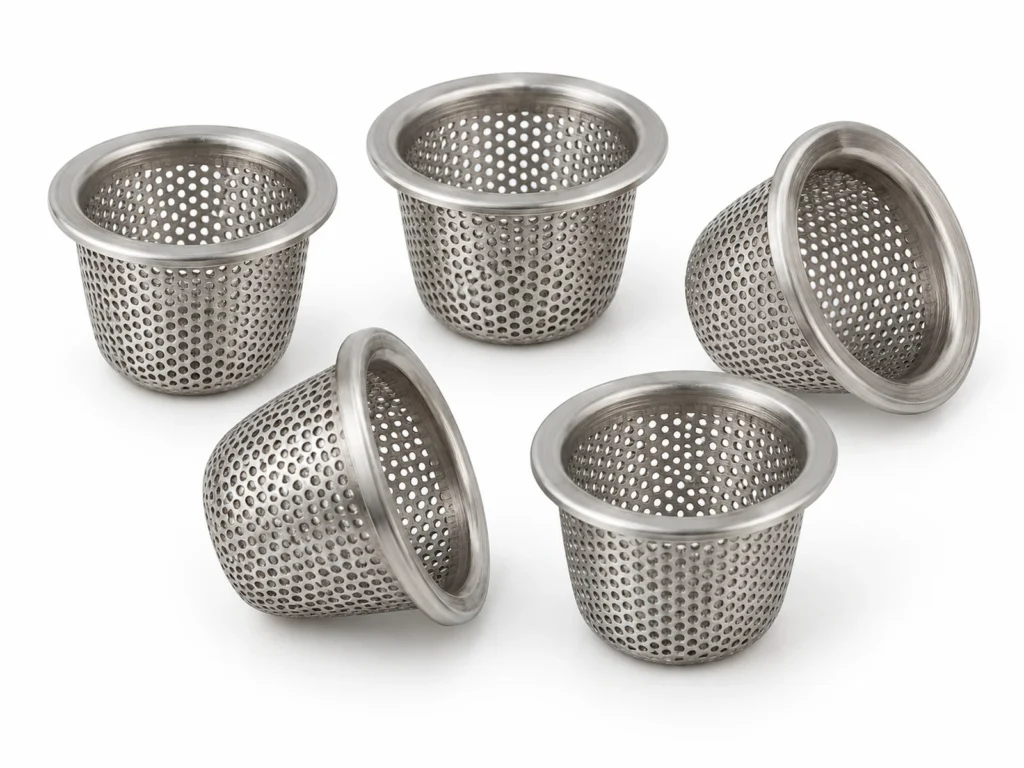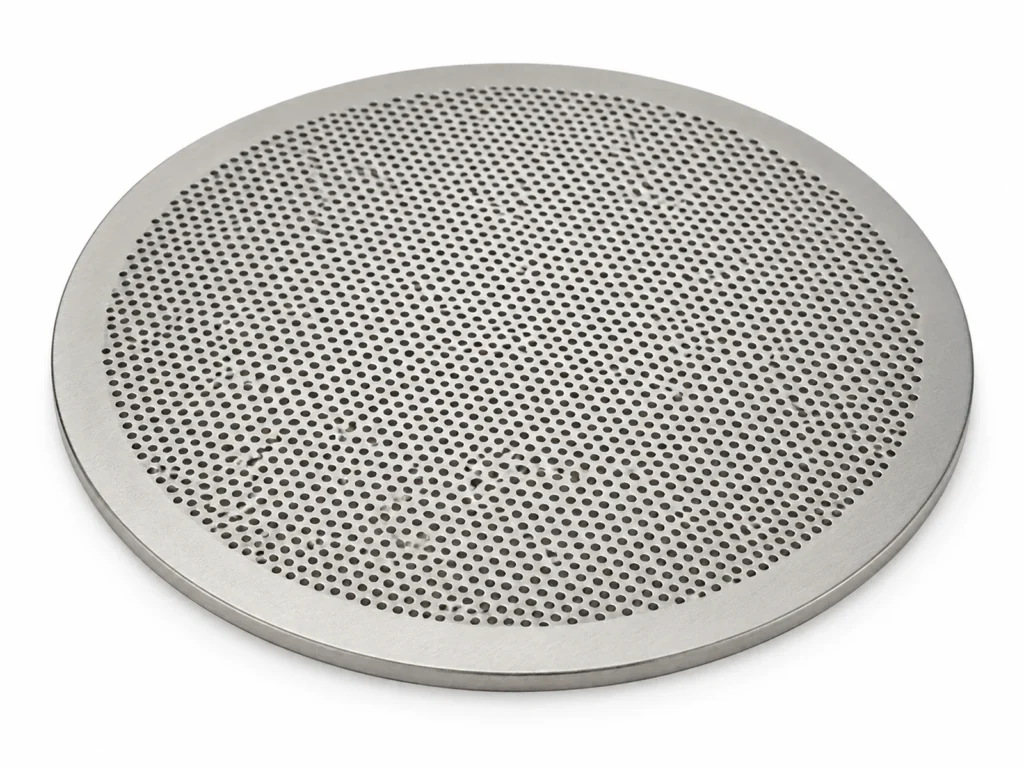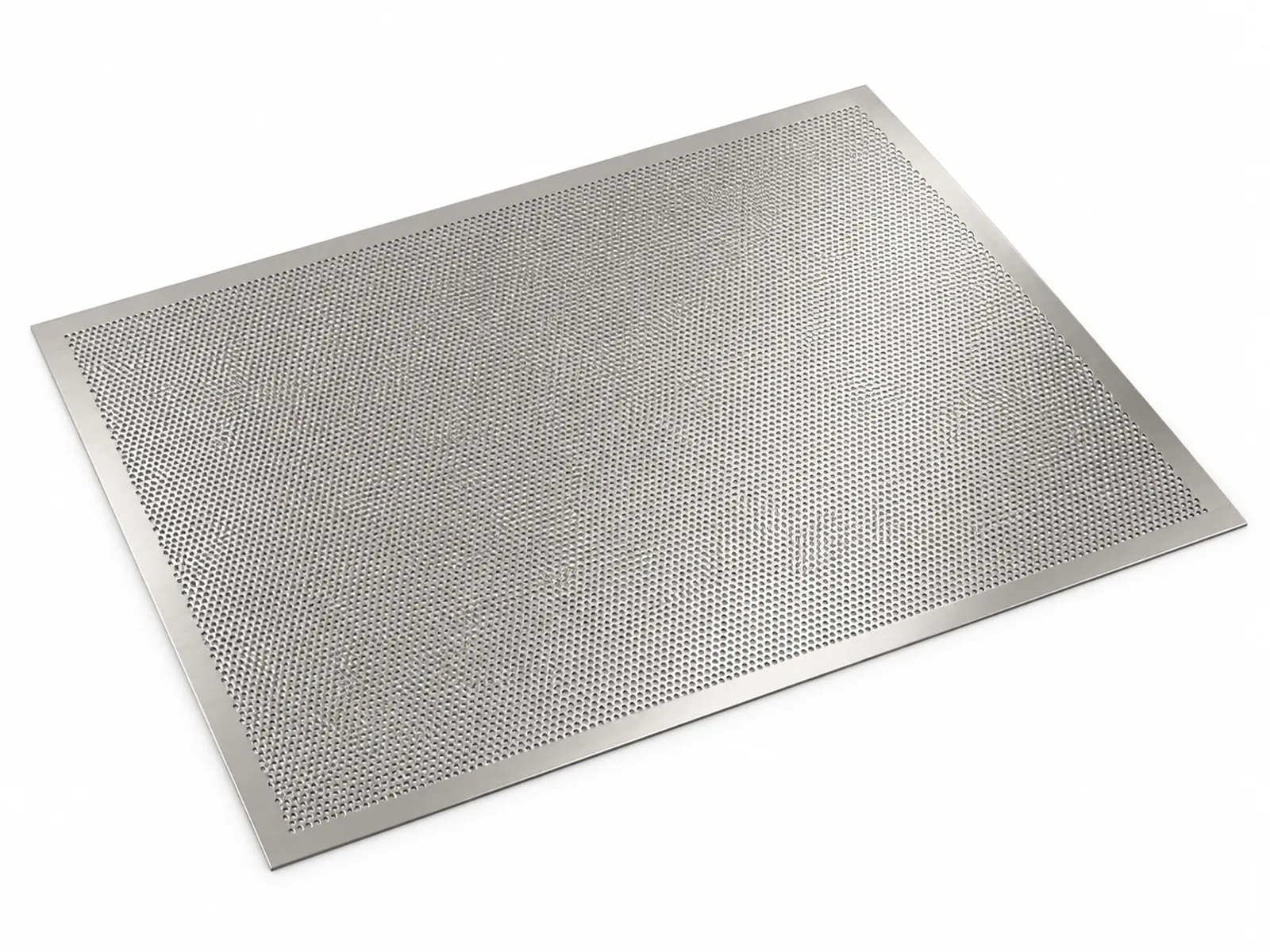
The primary duty of Photo-Etched Mesh Sheet is supplying burr-free, flat filter and screen sheet with micro-holes from 0.05 mm, made by photo-chemical etching of thin stainless, nickel or copper foil. Below: the sectors that specify it in volume, the checklist used to select the right mesh and alloy for the application, handling notes, and the known limits of the type.
Typical Applications for Photo-Etched Mesh Sheet
Where Photo-Etched Mesh Sheet is specified and bought:
- Filter manufacturers: sheet stock for cutting and forming filter parts.
- Medical & laboratory: flat micro-perforated sieves and supports.
- Acoustics & electronics: speaker meshes, vents and EMI windows.
- Prototyping: test sheets before tooling a punched part.
How to Specify Photo-Etched Mesh Sheet for Your Application
- Hole and pitch: Holes from 0.05 mm, roughly equal to or larger than the foil thickness.
- Foil: 0.05–0.3 mm SS304/316L, nickel, copper or titanium.
- Sheet size & margins: Up to about 500 × 600 mm with solid borders for handling.
- Standard: Quote Photo-chemical machining to drawing (ISO 2768-f) and the size designation from the table on the product page, plus any value you changed in the technical drawing.
Handling & Installation Practice
- Store sheets flat and interleaved with paper to protect the surface.
- Cut with a sharp guillotine or laser to keep the hole field undamaged.
Common Selection Mistakes with Photo-Etched Mesh Sheet
- Requesting holes smaller than the foil thickness.
- Expecting woven-mesh open area from very fine etched holes.
Where Photo-Etched Mesh Sheet Is Not the Right Choice
Not economical for large volumes of coarse perforations, where punching is cheaper.