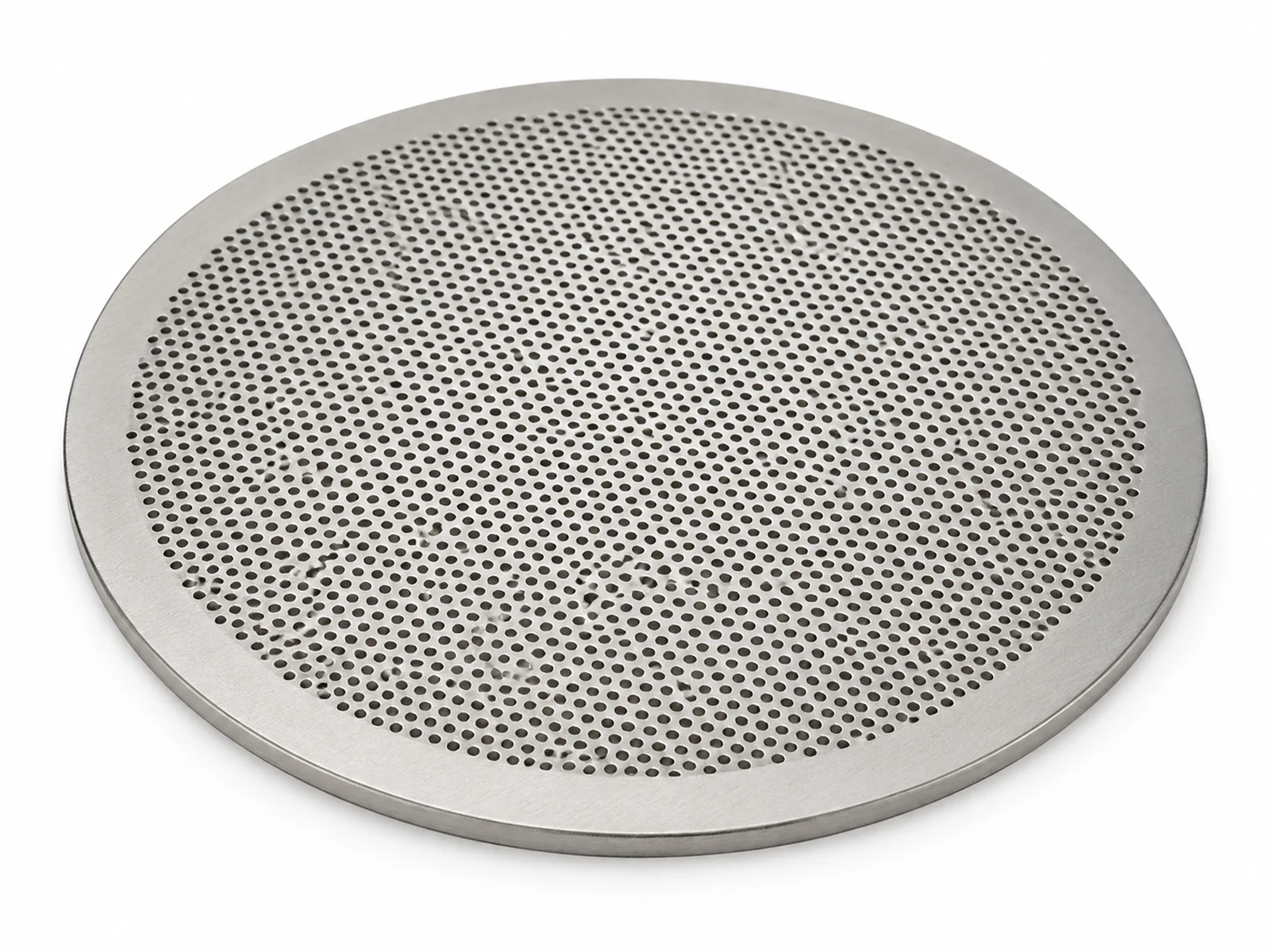
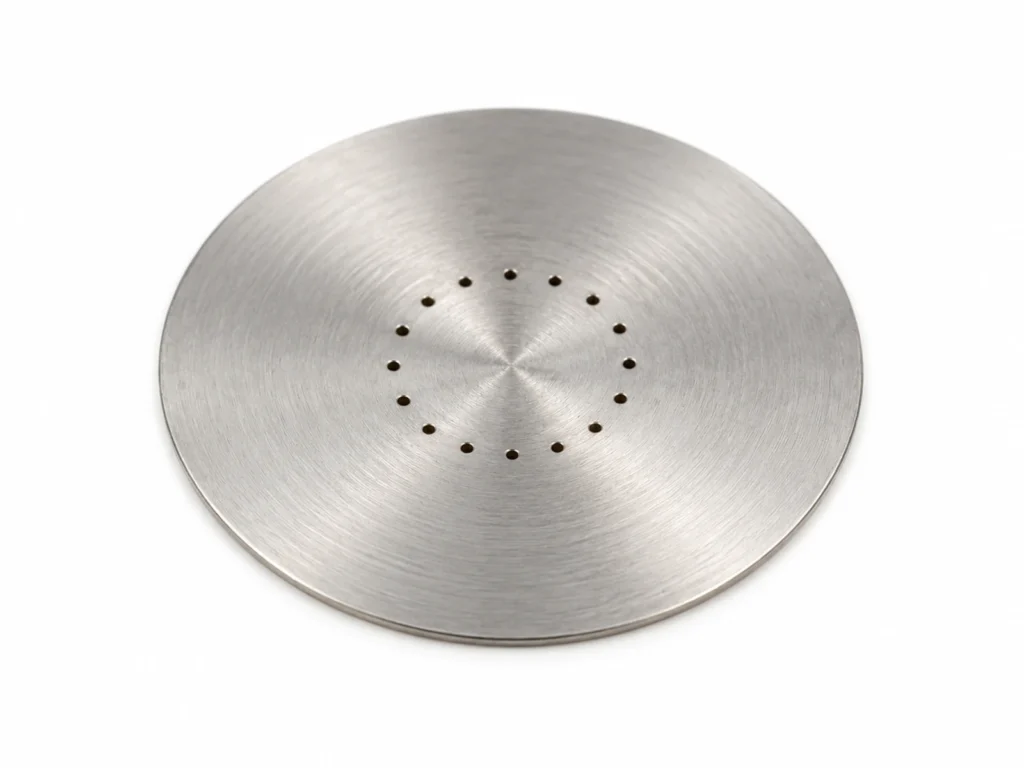
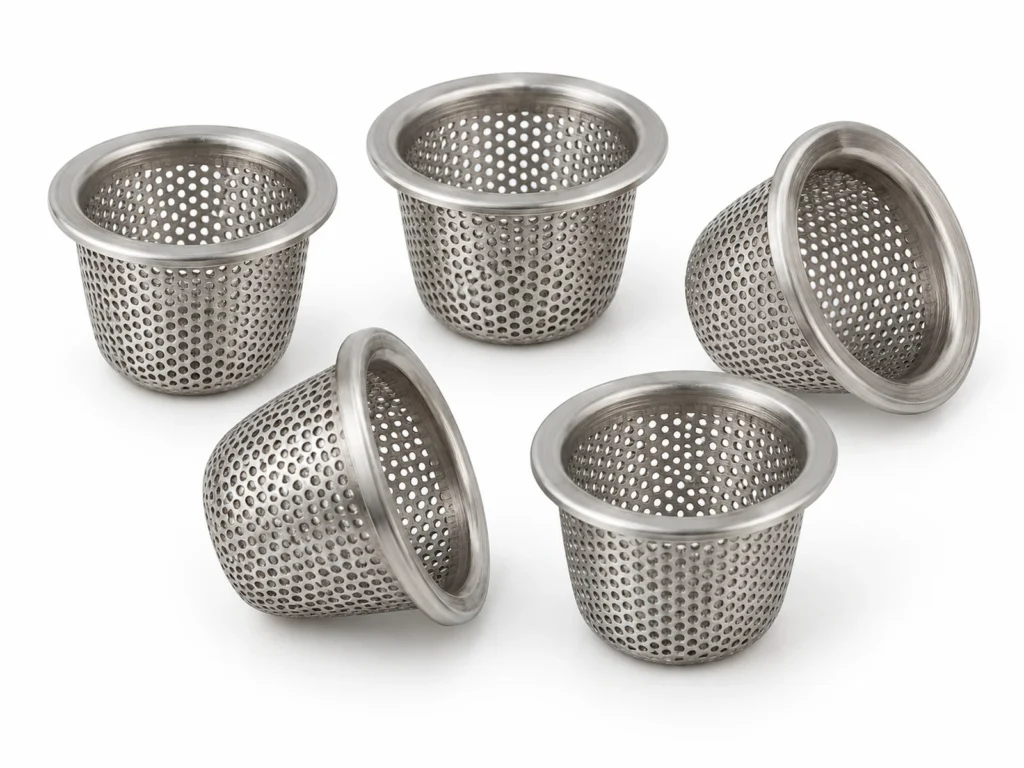
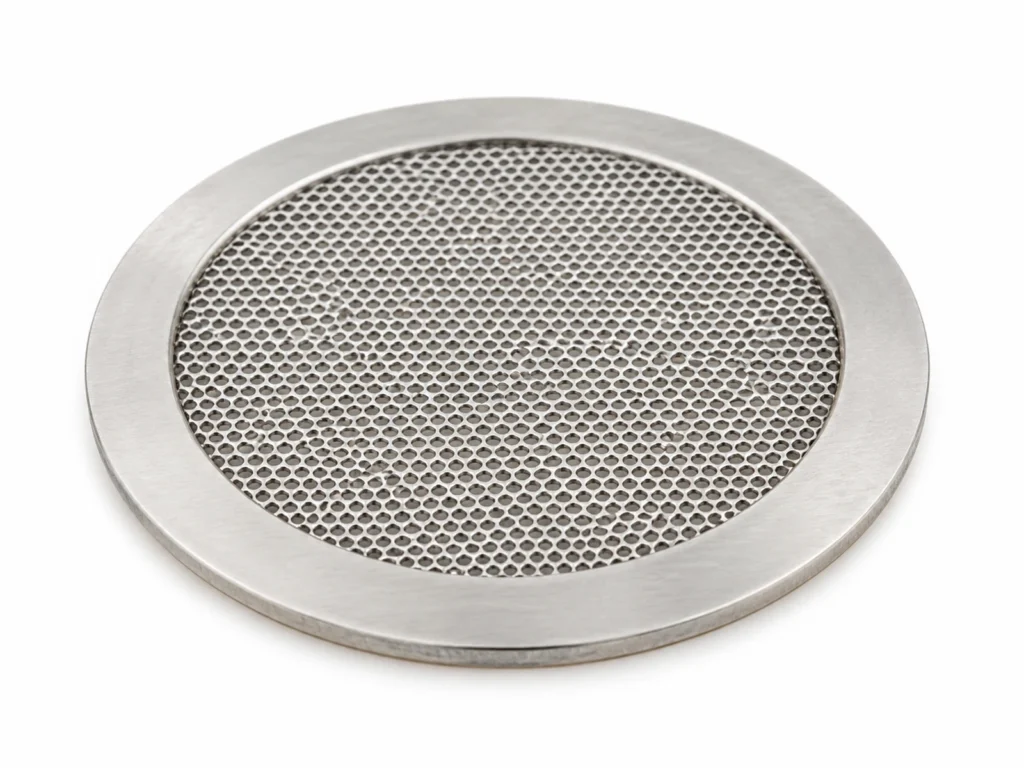
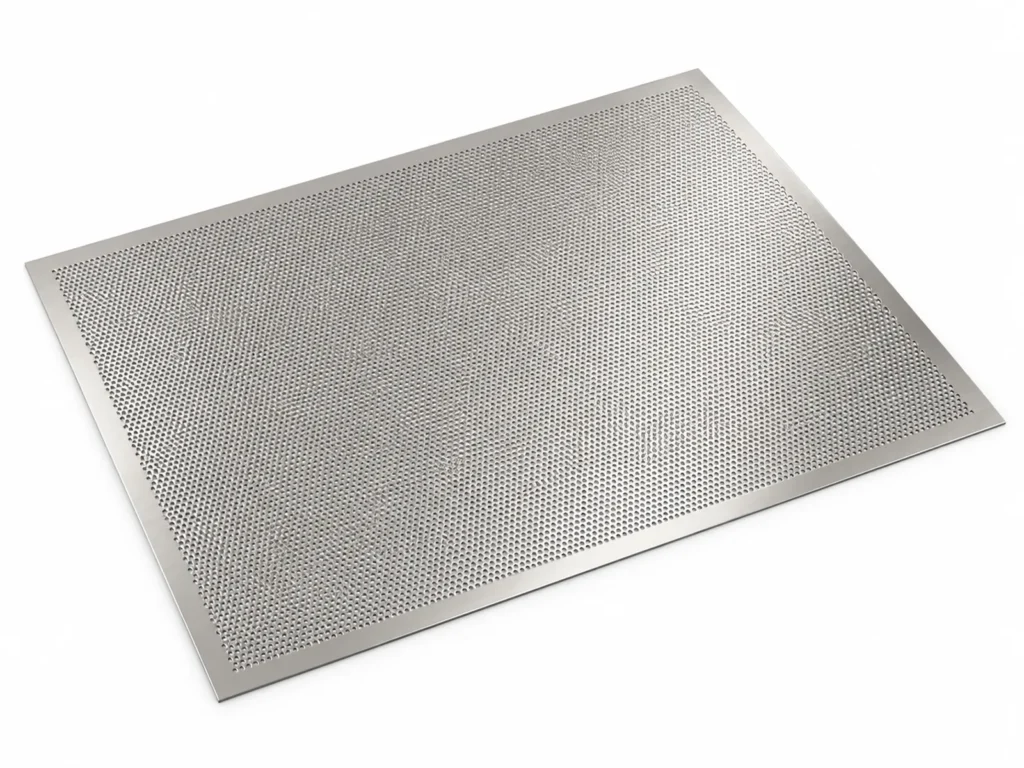
Etched Titanium Porous Plate for Electrolyzers in 316L Stainless Steel (AISI 316L (1.4404)) is used for distributing water and collecting gas in PEM electrolyzer and fuel cell stacks with thin titanium plates etched with thousands of precise through-holes. The alloy gives superior resistance, including chlorides, brines, food CIP and mild acids and is essentially non-magnetic, with a practical service limit of approx. +550 °C continuous.
Alloy Properties
| Grade designation | AISI 316L (1.4404) |
|---|
| Magnetic response | Essentially non-magnetic |
|---|
| Service temperature | approx. +550 °C continuous |
|---|
| Corrosion characteristic | Superior resistance, including chlorides, brines, food CIP and mild acids |
|---|
Specifications of Etched Titanium Porous Plate for Electrolyzers Available in 316L Stainless Steel
| Size | Plate diameter (mm) | Thickness (mm) | Hole diameter (mm) | Hole count | Hole rings | Coating |
|---|
| Lab cell 50 | 50 | 0.20 | 0.20 | 3000 | 8 | Platinum flash |
| Short stack 100 | 100 | 0.30 | 0.30 | 9000 | 8 | Platinum flash |
| Stack 200 | 200 | 0.50 | 0.40 | 24000 | 8 | Iridium / platinum |
Where 316L Stainless Steel Etched Titanium Porous Plate for Electrolyzers Is Used
- PEM electrolyzer stacks: porous transport plates on the anode side.
- Fuel cell R&D: flow-distribution and diffusion plates.
- Electrochemical cells: perforated titanium electrodes.
- Hydrogen test labs: single-cell fixtures.
Ordering Etched Titanium Porous Plate for Electrolyzers in 316L Stainless Steel
- Hole size & pitch: 0.2–0.4 mm holes; pitch sets open area and in-plane conductivity.
- Thickness: 0.2–0.5 mm Gr1 titanium.
- Coating: Platinum or iridium flash to keep contact resistance low.
Mistakes to Avoid with Etched Titanium Porous Plate for Electrolyzers
- Uncoated titanium passivating.
- Burrs that pierce the membrane.