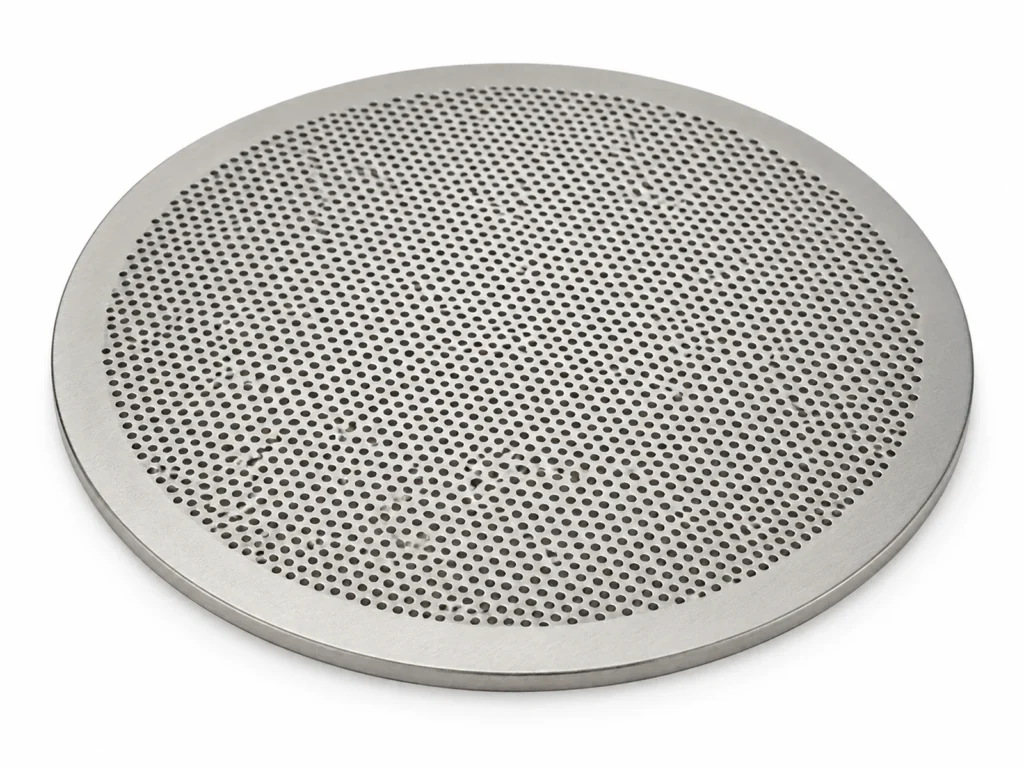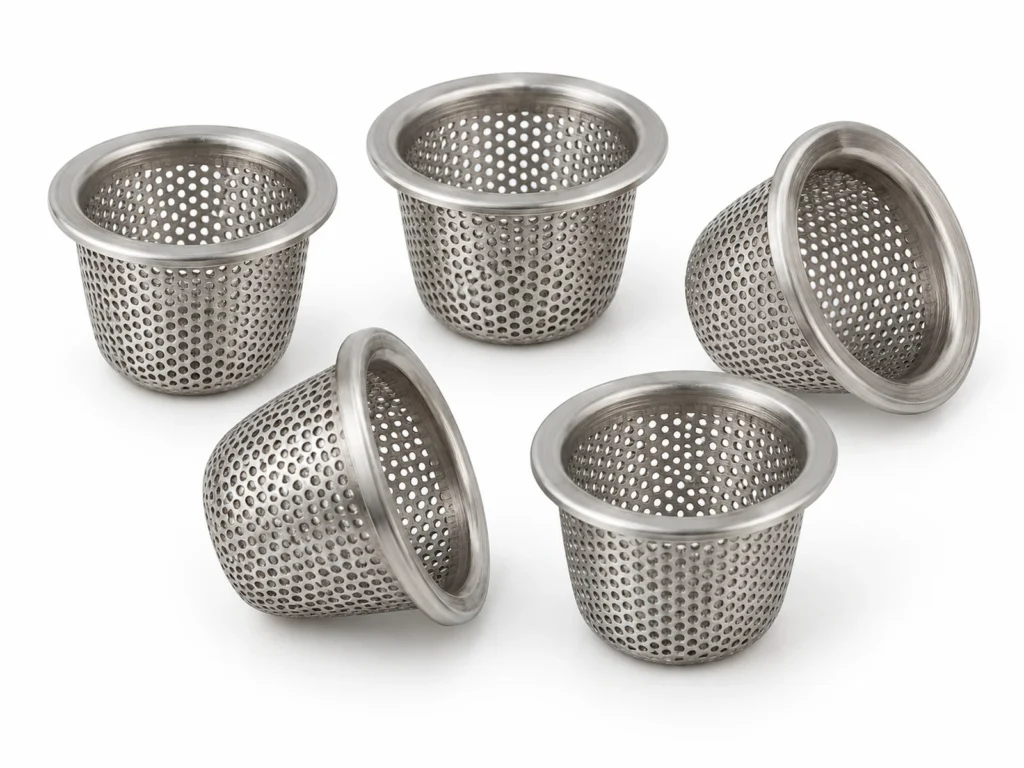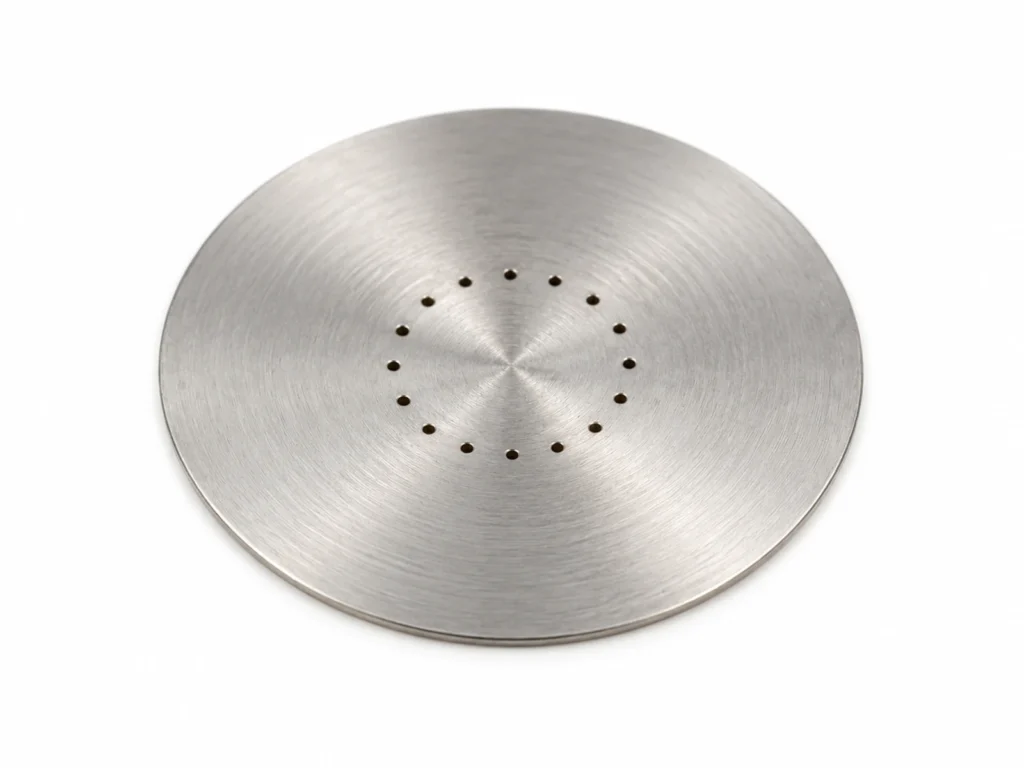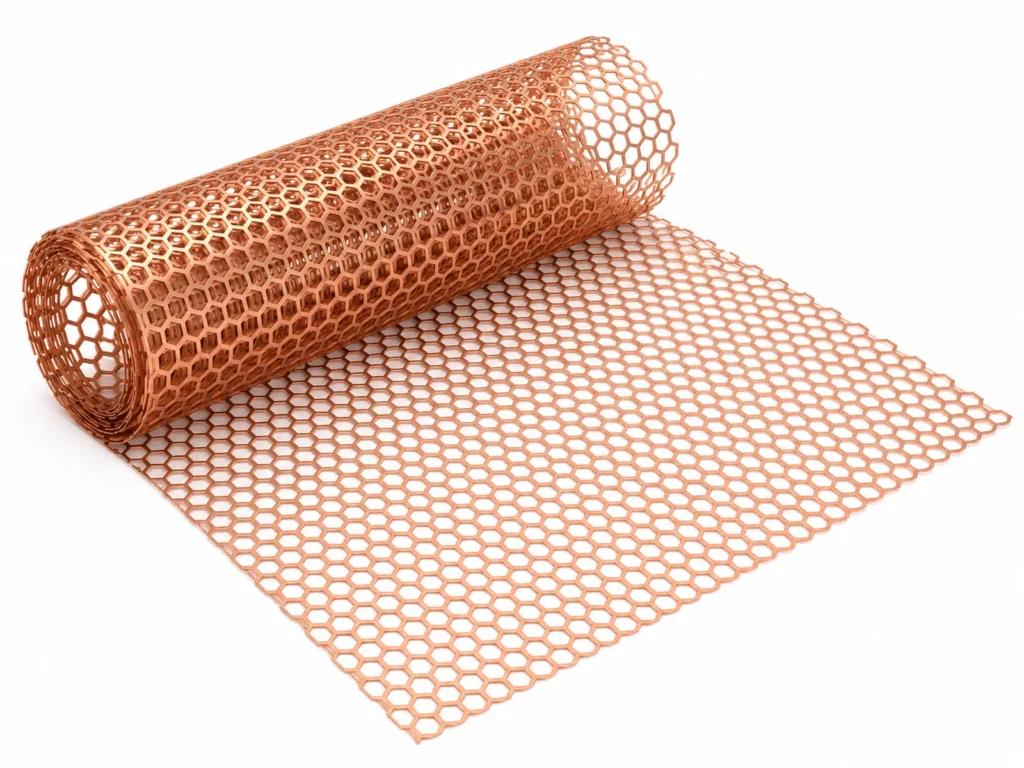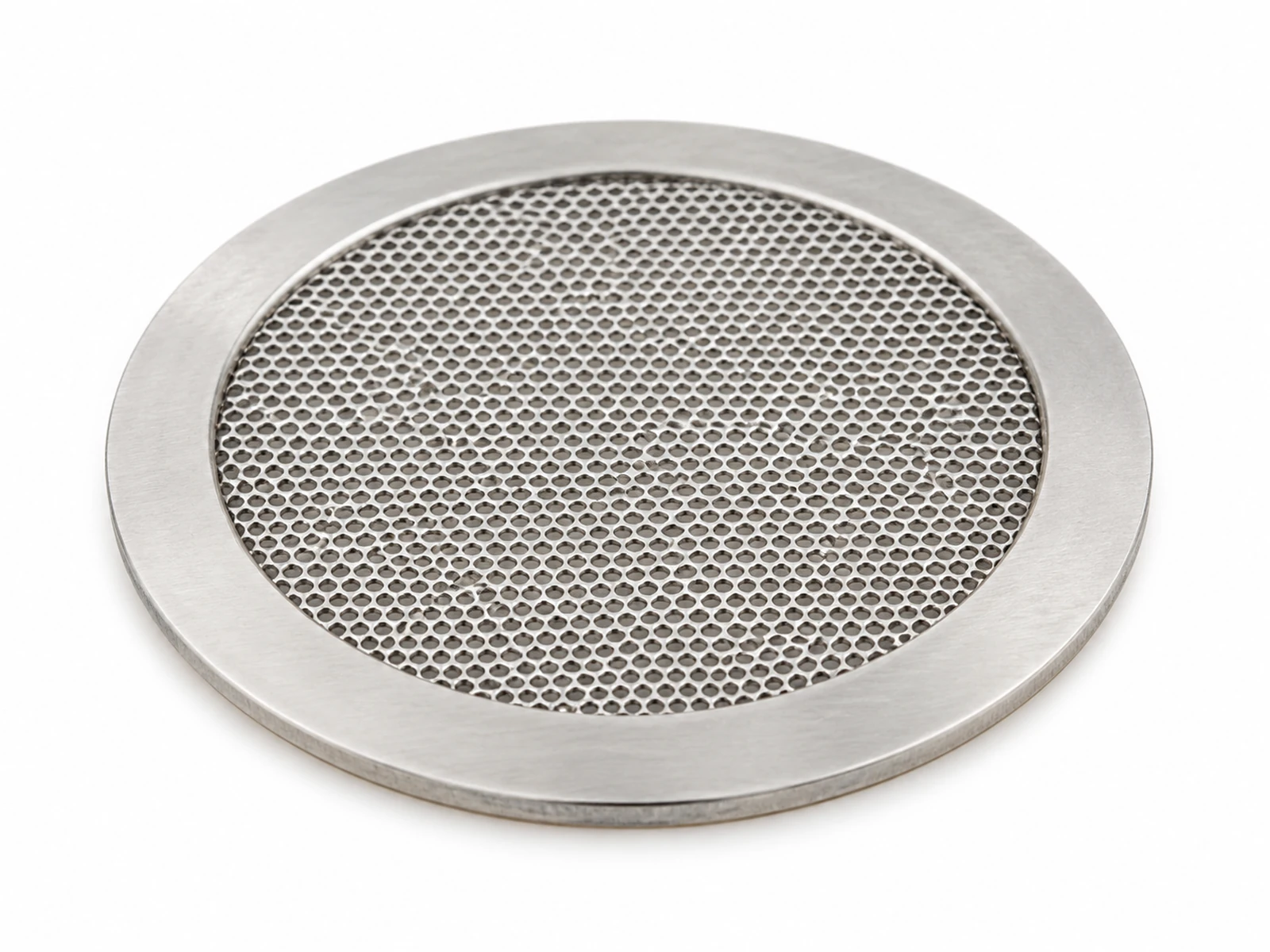
Etched Sensor & Headlamp Vent Mesh (Photo-chemical machining to drawing (ISO 2768-f)) is specified where the duty calls for letting automotive headlamps, ECUs, cameras and LiDAR housings breathe through etched vent meshes that block debris and support a waterproof membrane. The sections below cover the typical end-uses by industry, the mesh, micron and material decisions for each, installation practice, and the applications this product type is not suited to.
Typical Applications for Etched Sensor & Headlamp Vent Mesh
Where Etched Sensor & Headlamp Vent Mesh is specified and bought:
- Automotive lighting: headlamp and tail-lamp breather vents that prevent fogging.
- Vehicle electronics: ECU, inverter and sensor housings.
- ADAS sensors: camera and LiDAR housing vents.
- EV components: charge-port and battery junction-box vents.
How to Specify Etched Sensor & Headlamp Vent Mesh for Your Application
- Size: Round Ø6–10 mm or rectangular patches to the housing port.
- Holes: 0.05–0.08 mm etched holes protect the membrane from stone and jet damage.
- Stack: Bond over an ePTFE membrane for IP67/IP69K performance.
- Standard: Quote Photo-chemical machining to drawing (ISO 2768-f) and the size designation from the table on the product page, plus any value you changed in the technical drawing.
Handling & Installation Practice
- Bond onto a clean, primed surface and press the full adhesive ring.
- Position vents away from direct high-pressure wash jets where possible.
Common Selection Mistakes with Etched Sensor & Headlamp Vent Mesh
- Using the mesh without a membrane, so water enters.
- Low-temperature adhesive that lets go under headlamp heat.
Where Etched Sensor & Headlamp Vent Mesh Is Not the Right Choice
Not waterproof on its own; the membrane provides the seal.