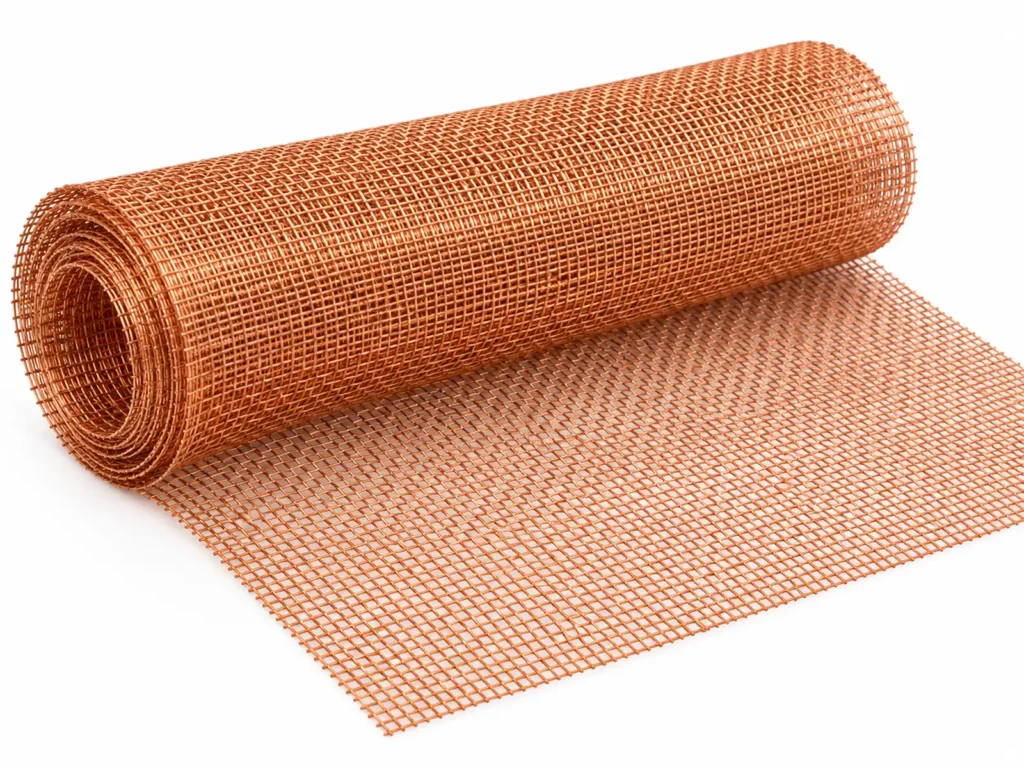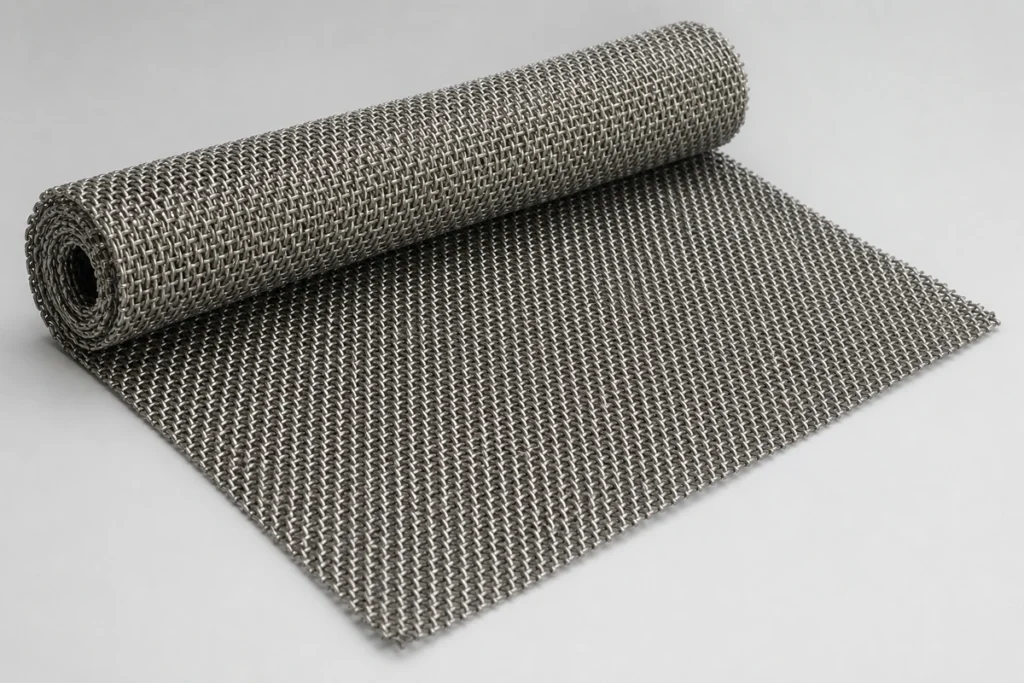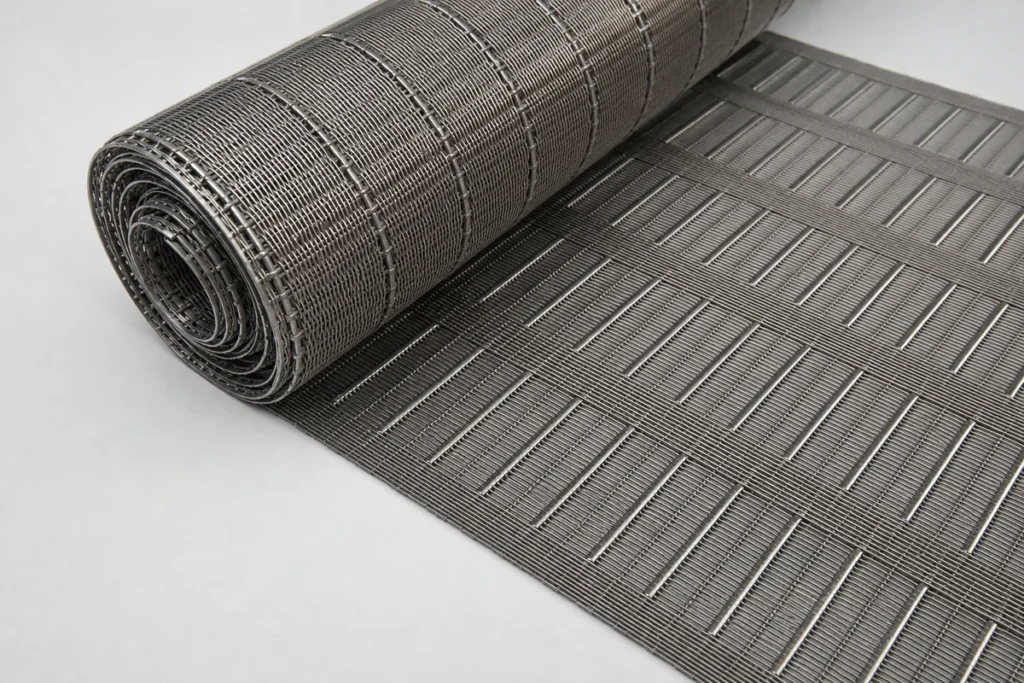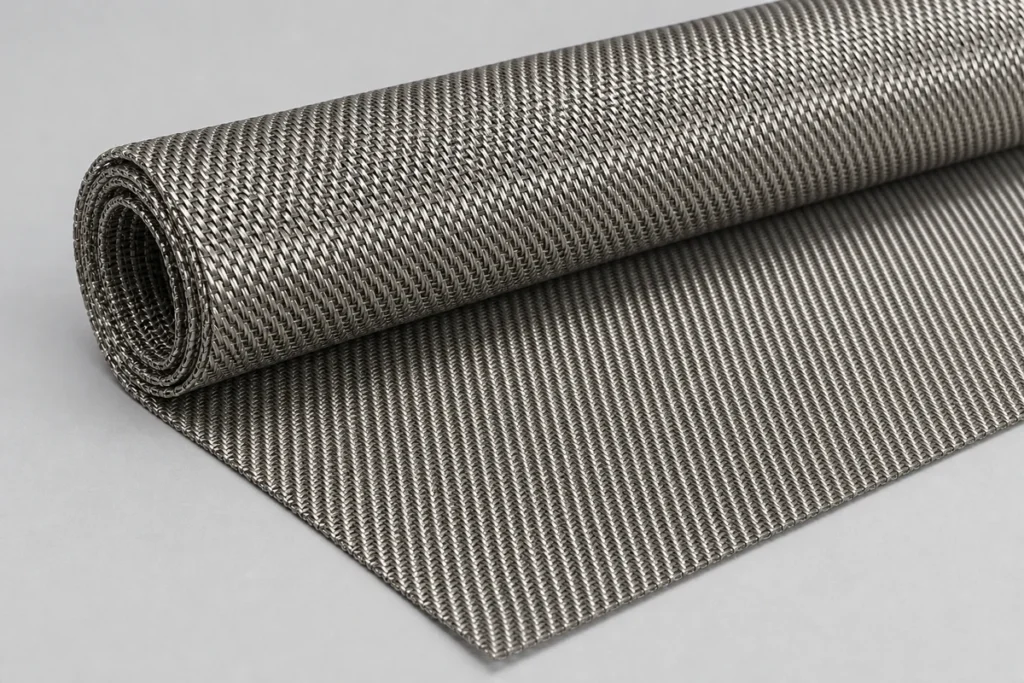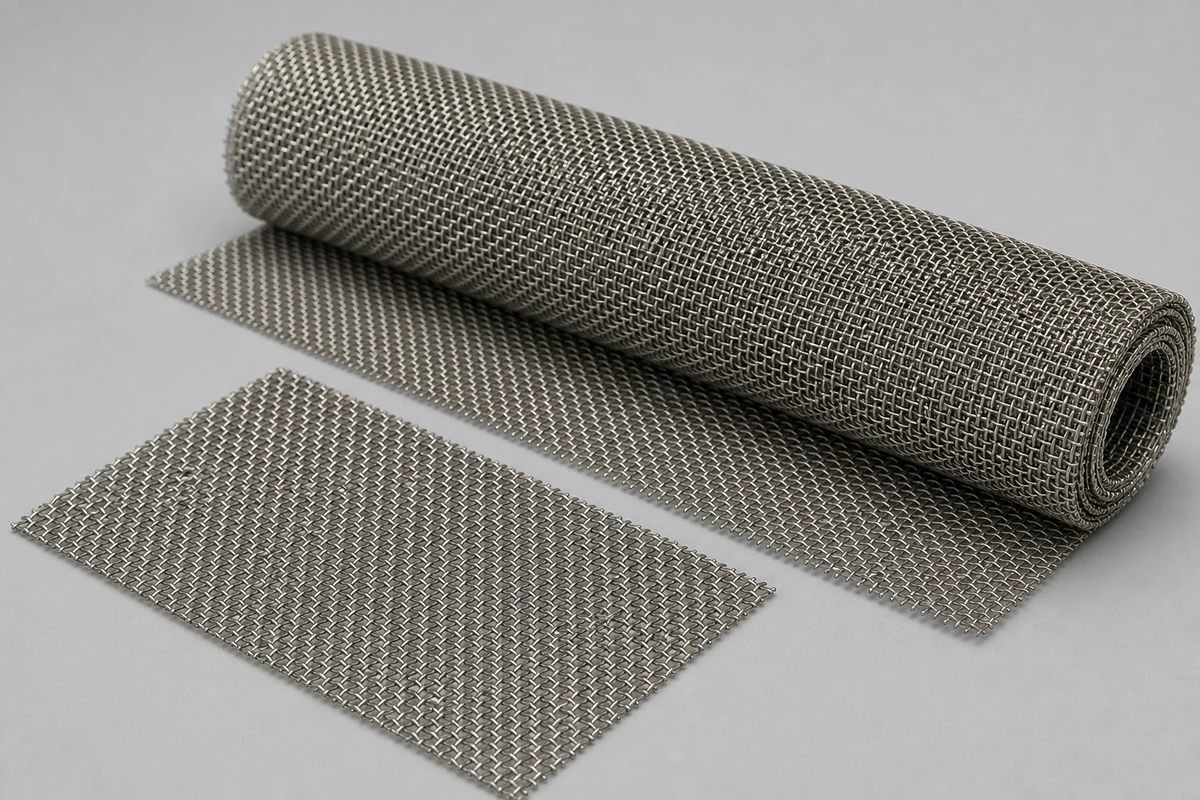
Pure Copper twill weave wire mesh combines the construction of twill weave wire mesh (ISO 9044 / ASTM E2016) with the properties of C11000: good atmospheric resistance with a stable patina; outstanding conductivity, non-magnetic, service to approx. +200 °C. This page summarizes the grade data, its behavior in filtration service, comparable alloys, and the specifications supplied.
Why Choose Pure Copper for Twill Weave Wire Mesh
The EMI/RFI shielding and Faraday-cage mesh material. For twill weave wire mesh, this matters when good atmospheric resistance with a stable patina; outstanding conductivity is the controlling requirement.
Alloy Properties
| Grade designation | C11000 |
|---|---|
| Magnetic response | Non-magnetic |
| Service temperature | approx. +200 °C |
| Corrosion characteristic | Good atmospheric resistance with a stable patina; outstanding conductivity |
Corrosion Behavior in Filtration Service
Copper and brass twill weave wire mesh resist atmospheric corrosion and fresh water well, tarnishing to a stable patina. Avoid ammonia and ammonium compounds (stress-corrosion cracking of brass) and strong oxidizing acids. In marine service, phosphor bronze outperforms plain brass.
Comparable Alloys
Within the copper family: brass for economy and appearance, phosphor bronze for fatigue strength and marine air, pure copper where conductivity (EMI shielding) is the point. For structural filtration duties, stainless 304/316 is the usual alternative.
Specifications of Twill Weave Wire Mesh Available in Pure Copper
| Mesh count | Wire diameter (mm) | Aperture (mm) | Micron rating (u00b5m) | Open area (%) | Weight SS (kg/mu00b2) | Reference standard |
|---|---|---|---|---|---|---|
| 80-Mesh | 0.160 | 0.158 | 158 | 24.6 | 1.05 | ISO 9044 |
| 100-Mesh | 0.120 | 0.134 | 134 | 27.8 | 0.74 | ISO 9044 |
| 150-Mesh | 0.080 | 0.089 | 89 | 27.8 | 0.49 | ISO 9044 |
| 200-Mesh | 0.060 | 0.067 | 67 | 27.8 | 0.37 | ISO 9044 |
| 250-Mesh | 0.050 | 0.052 | 52 | 25.8 | 0.32 | ISO 9044 |
| 325-Mesh | 0.040 | 0.038 | 38 | 23.8 | 0.27 | ISO 9044 |
| 400-Mesh | 0.036 | 0.028 | 28 | 18.8 | 0.27 | ISO 9044 |
| 500-Mesh | 0.030 | 0.021 | 21 | 16.8 | 0.23 | ISO 9044 |
| 635-Mesh | 0.024 | 0.016 | 16 | 16.0 | 0.19 | ISO 9044 |
Where Pure Copper Twill Weave Wire Mesh Is Used
- Fine sieving & powders: pharmaceutical, chemical and metal-powder screening from 200 to 500 mesh.
- Hydraulic & fuel filters: strong fine filter layers that resist pulse loads.
- Screen printing & electronics: stable fine mesh for printing and electroforming screens.
- Aerospace: fine stainless filter discs where a robust cloth is mandatory.
Ordering Twill Weave Wire Mesh in Pure Copper
- Mesh count: Twill weave is standard from about 200 mesh upward; below that it is chosen for strength.
- Wire diameter: Twill allows a thicker wire at the same count — confirm the aperture in the table.
- Flatness: Calendered twill cloth gives a thinner, flatter filter layer for discs and packs.
Mistakes to Avoid with Twill Weave Wire Mesh
- Choosing plain weave at 325+ mesh, which is weak and distorts.
- Assuming twill weave is finer than plain at the same count — only the wire changes, not the count.