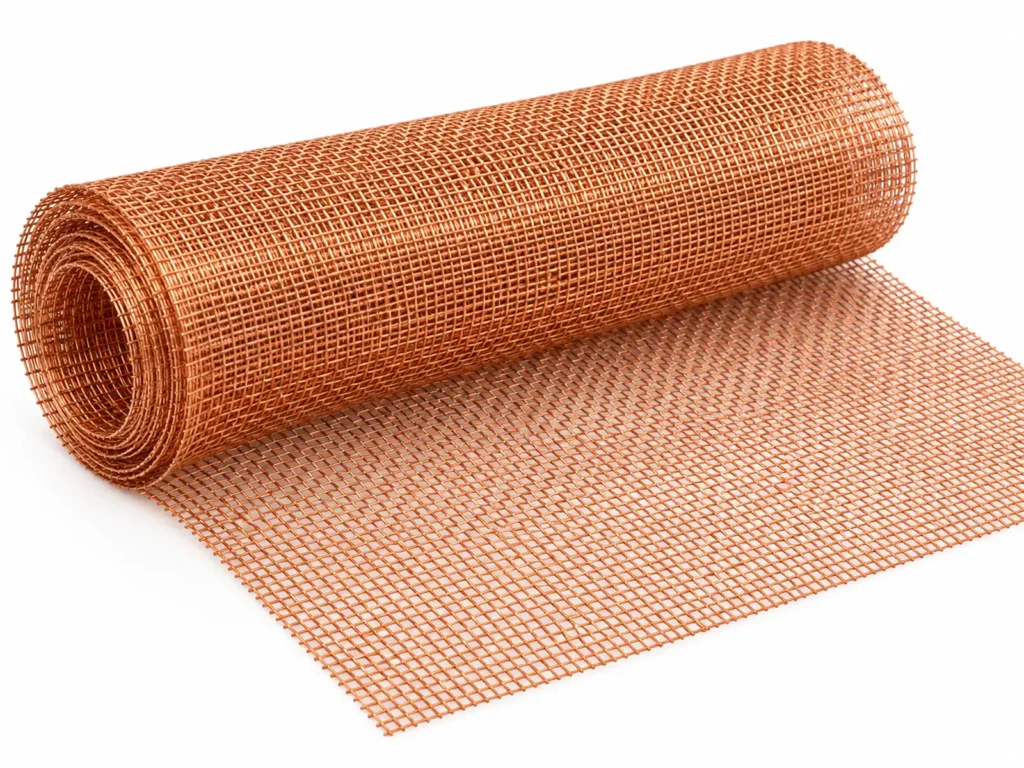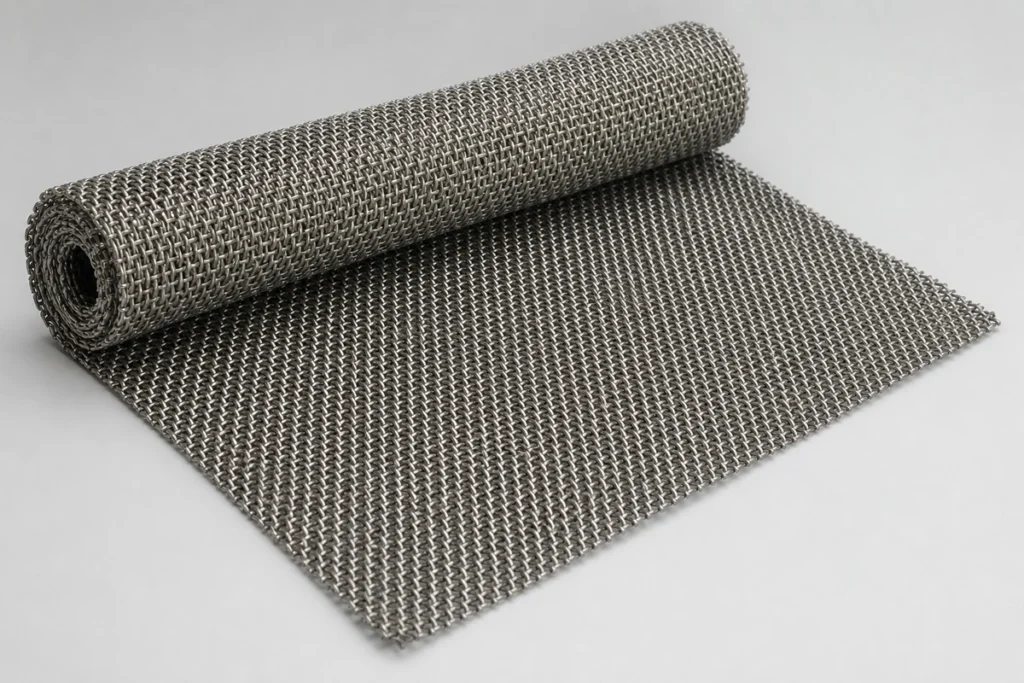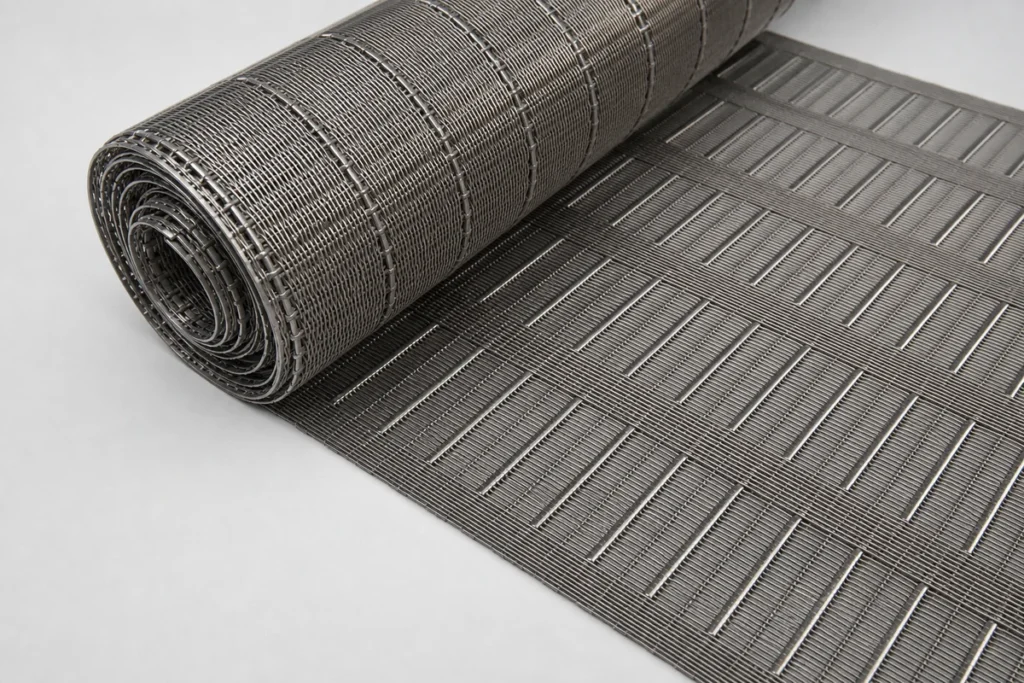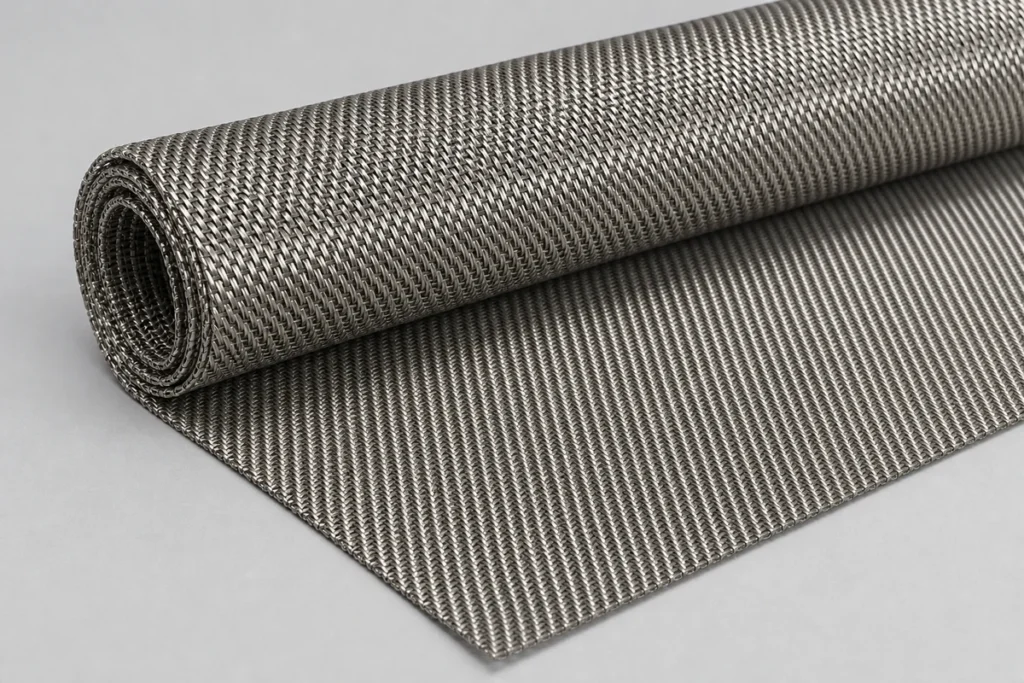
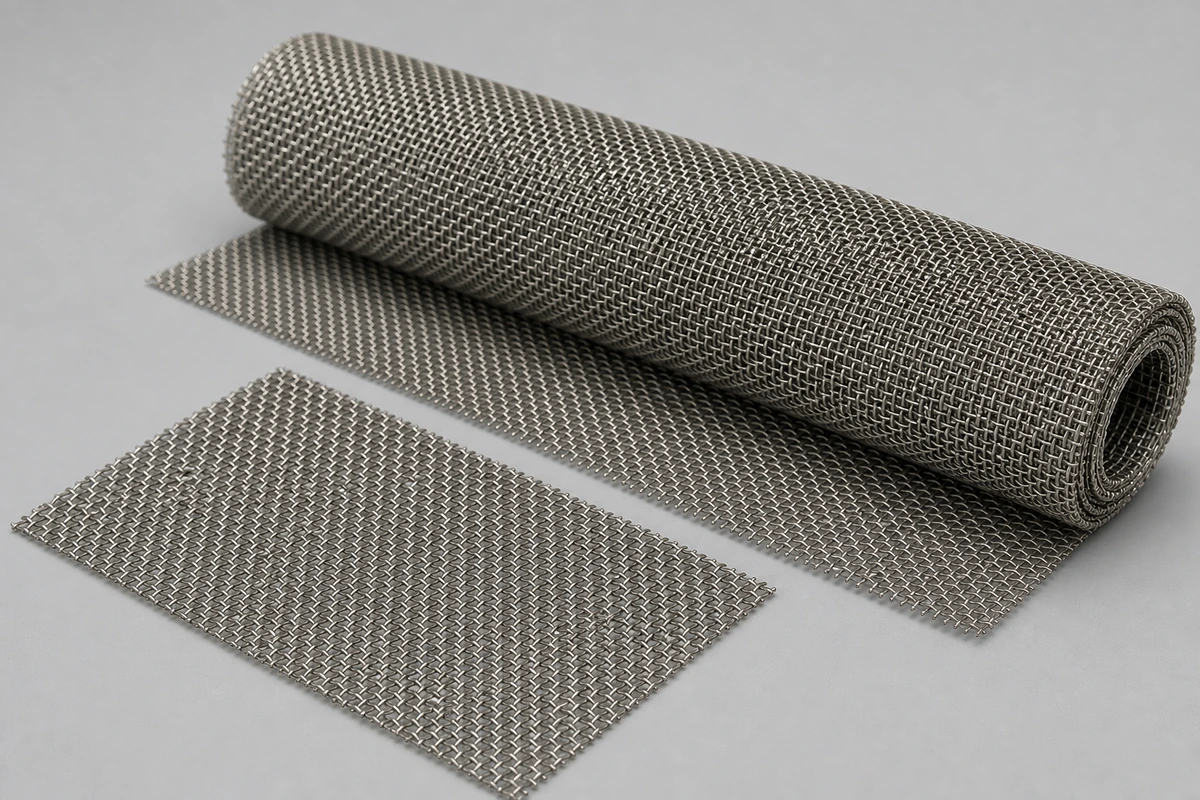
For twill weave wire mesh in Brass, the controlling selection factors are the media being filtered, the cleaning regime and the service temperature. The grade data for Brass is summarized below together with every specification supplied.
Why Choose Brass for Twill Weave Wire Mesh
The decorative and spark-resistant screening alloy. For twill weave wire mesh, this matters when good atmospheric and fresh-water resistance; unsuitable for ammonia service is the controlling requirement.
Alloy Properties
| Grade designation | H65 / CuZn35 |
|---|---|
| Magnetic response | Non-magnetic |
| Service temperature | approx. +200 °C |
| Corrosion characteristic | Good atmospheric and fresh-water resistance; unsuitable for ammonia service |
Cleaning & Compatibility
Clean copper-alloy mesh with mild detergent or dilute citric acid; avoid ammonia-based cleaners entirely. In contact with more noble metals in wet service the copper alloy becomes the sacrificial partner — isolate or accept the loss rate.
Comparable Alloys
Within the copper family: brass for economy and appearance, phosphor bronze for fatigue strength and marine air, pure copper where conductivity (EMI shielding) is the point. For structural filtration duties, stainless 304/316 is the usual alternative.
Specifications of Twill Weave Wire Mesh Available in Brass
| Mesh count | Wire diameter (mm) | Aperture (mm) | Micron rating (u00b5m) | Open area (%) | Weight SS (kg/mu00b2) | Reference standard |
|---|---|---|---|---|---|---|
| 80-Mesh | 0.160 | 0.158 | 158 | 24.6 | 1.05 | ISO 9044 |
| 100-Mesh | 0.120 | 0.134 | 134 | 27.8 | 0.74 | ISO 9044 |
| 150-Mesh | 0.080 | 0.089 | 89 | 27.8 | 0.49 | ISO 9044 |
| 200-Mesh | 0.060 | 0.067 | 67 | 27.8 | 0.37 | ISO 9044 |
| 250-Mesh | 0.050 | 0.052 | 52 | 25.8 | 0.32 | ISO 9044 |
| 325-Mesh | 0.040 | 0.038 | 38 | 23.8 | 0.27 | ISO 9044 |
| 400-Mesh | 0.036 | 0.028 | 28 | 18.8 | 0.27 | ISO 9044 |
| 500-Mesh | 0.030 | 0.021 | 21 | 16.8 | 0.23 | ISO 9044 |
| 635-Mesh | 0.024 | 0.016 | 16 | 16.0 | 0.19 | ISO 9044 |
Where Brass Twill Weave Wire Mesh Is Used
- Fine sieving & powders: pharmaceutical, chemical and metal-powder screening from 200 to 500 mesh.
- Hydraulic & fuel filters: strong fine filter layers that resist pulse loads.
- Screen printing & electronics: stable fine mesh for printing and electroforming screens.
- Aerospace: fine stainless filter discs where a robust cloth is mandatory.
Ordering Twill Weave Wire Mesh in Brass
- Mesh count: Twill weave is standard from about 200 mesh upward; below that it is chosen for strength.
- Wire diameter: Twill allows a thicker wire at the same count — confirm the aperture in the table.
- Flatness: Calendered twill cloth gives a thinner, flatter filter layer for discs and packs.
Mistakes to Avoid with Twill Weave Wire Mesh
- Choosing plain weave at 325+ mesh, which is weak and distorts.
- Assuming twill weave is finer than plain at the same count — only the wire changes, not the count.