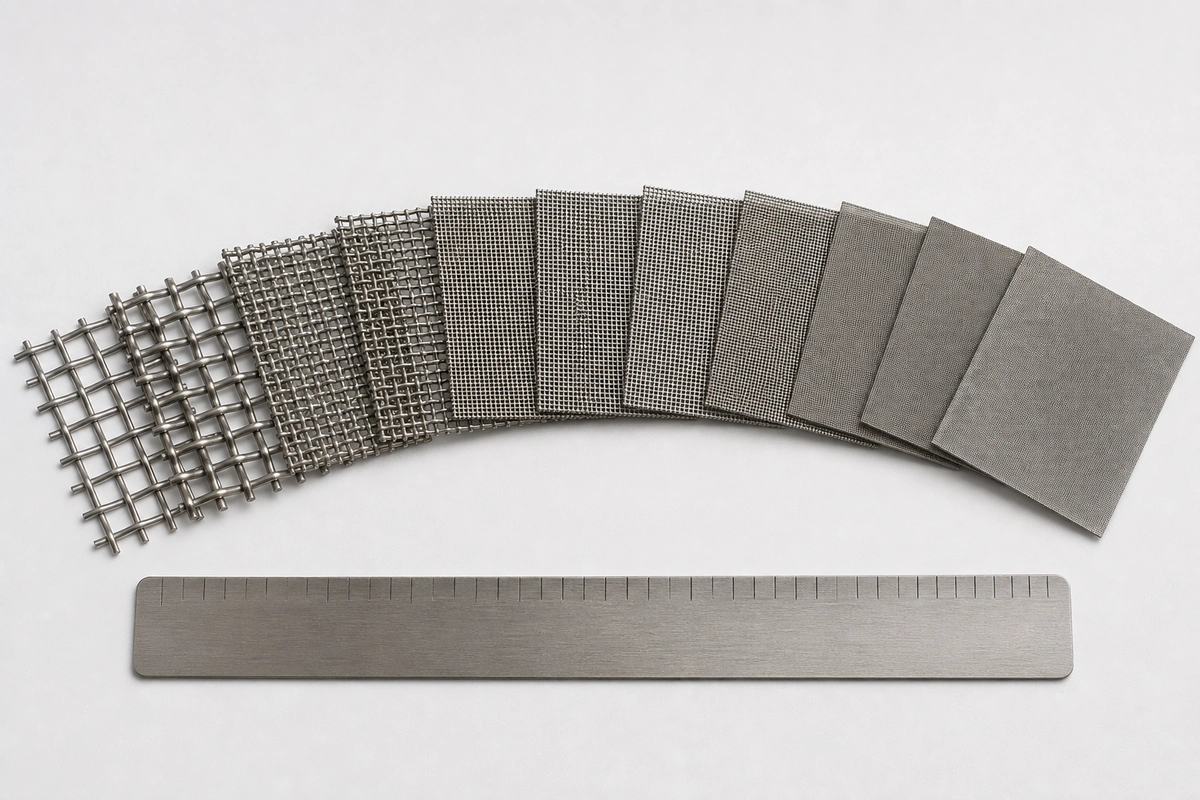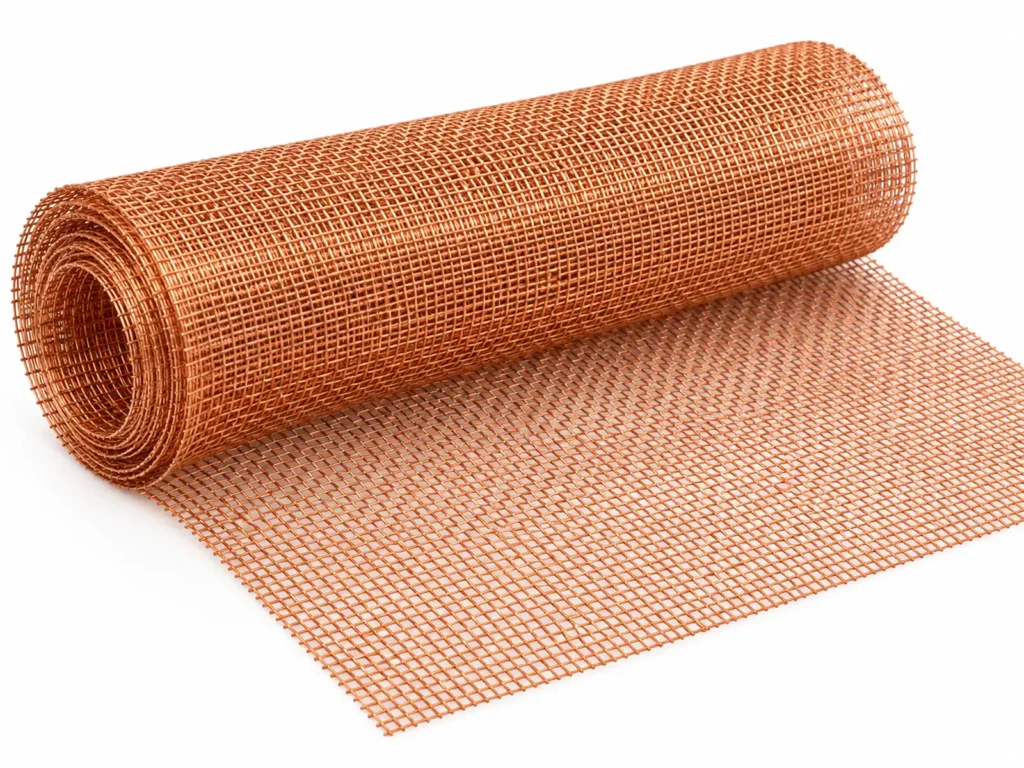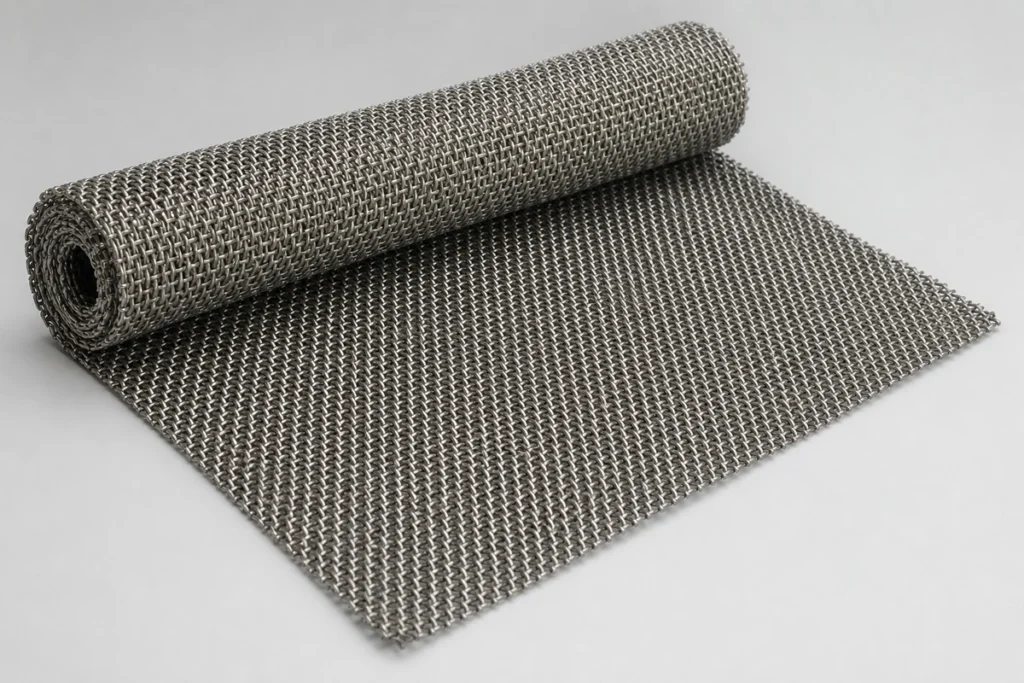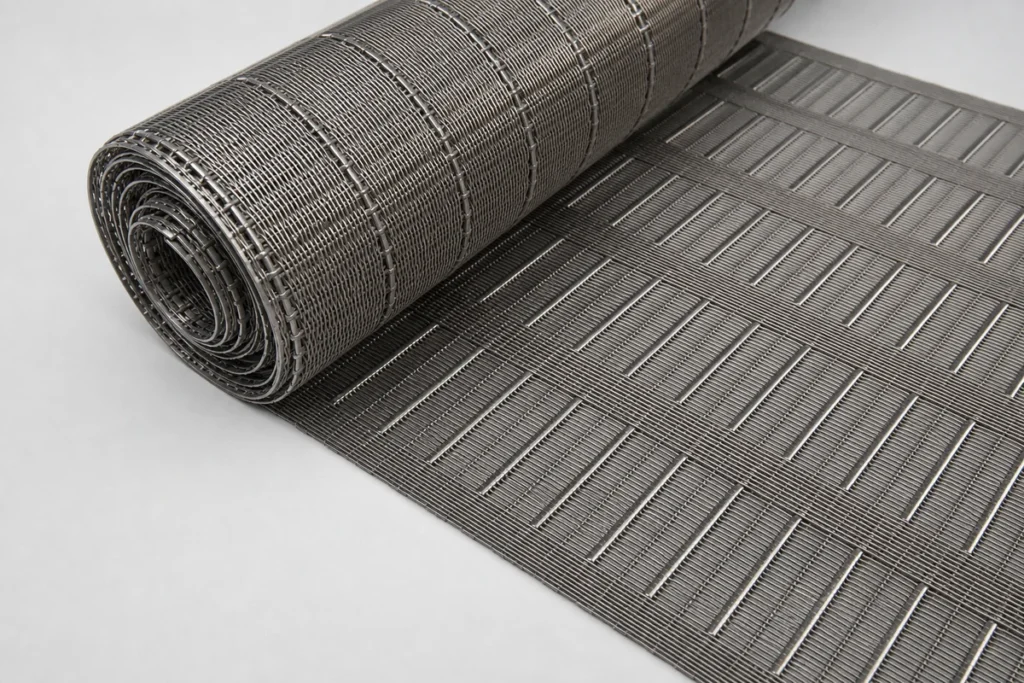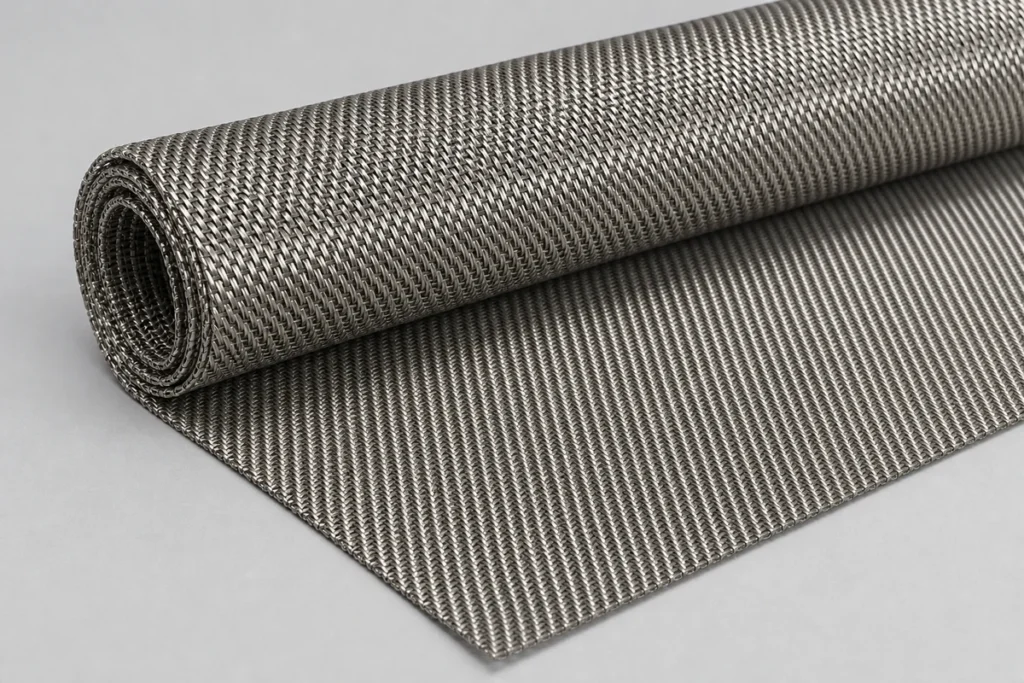
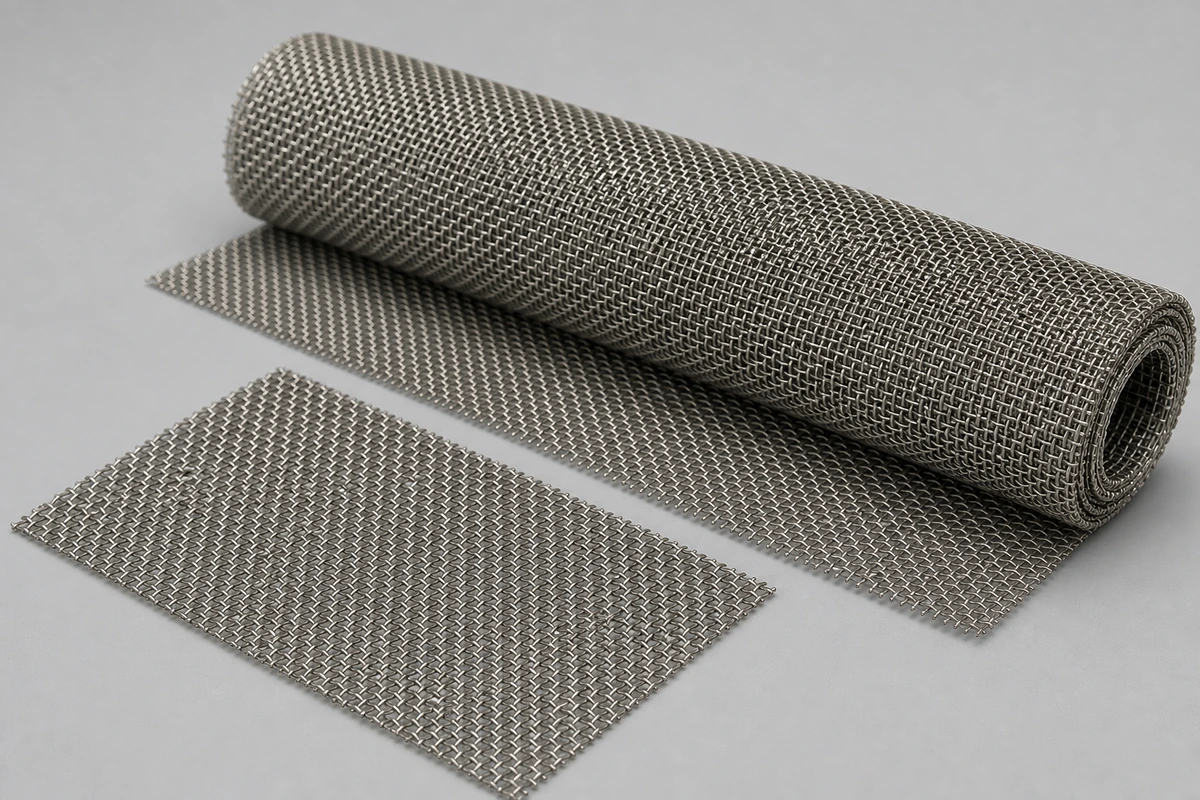
Specification data for 150 mesh twill weave wire mesh to ISO 9044 / ASTM E2016: aperture and micron rating, standard and alternative wire diameters, open area, weight per square metre, and the applications this fineness is commonly used for.
150 Mesh Specification Row (ISO 9044 / ASTM E2016)
| Mesh count | Wire diameter (mm) | Aperture (mm) | Micron rating (u00b5m) | Open area (%) | Weight SS (kg/mu00b2) | Reference standard |
|---|---|---|---|---|---|---|
| 150-Mesh | 0.080 | 0.089 | 89 | 27.8 | 0.49 | ISO 9044 |
150 Mesh to Micron & Aperture
| Openings per inch | 150 |
|---|---|
| Aperture (opening width) | 0.103 mm |
| Micron rating | 103 µm |
| Standard wire diameter | 0.066 mm |
| Open area | 37.1 % |
Aperture = (25.4 mm ÷ mesh count) − wire diameter. The micron rating equals the aperture in micrometres; actual retention also depends on particle shape and cake formation.
Wire Diameter Options at 150 Mesh
| Option | Wire dia | Aperture | Micron | Open area | Weight (SS) |
|---|---|---|---|---|---|
| Heavy wire | 0.086 mm | 0.084 mm | 84 µm | 24.3 % | 0.57 kg/m² |
| Standard wire | 0.066 mm | 0.103 mm | 103 µm | 37.2 % | 0.34 kg/m² |
| Fine wire | 0.050 mm | 0.120 mm | 120 µm | 50.1 % | 0.19 kg/m² |
Heavier wire adds strength and abrasion life but closes the aperture; finer wire opens the aperture and raises throughput at the cost of durability. Specify mesh count AND wire diameter to fix the aperture unambiguously.
Open Area & Flow at 150 Mesh
The standard 150 mesh weave presents an open area of about 37.1%. A common design rule is to keep the clean-mesh approach velocity low enough that initial pressure drop is negligible; the mesh then acts as the cake support.
150 Mesh Cloth Weight
Standard 150 mesh stainless cloth weighs approximately 0.49 kg/m² (density 7.93 g/cm³ basis; brass and copper weave roughly 10% heavier, aluminum about one third). Use this figure for roll handling and freight estimation.
Typical Applications for 150 Mesh Twill Weave Wire Mesh
150 mesh twill weave wire mesh is commonly specified for liquid filtration and clarification, extruder screen packs, hydraulic and fuel strainers, pharmaceutical and food sieving, and laboratory test work.
Plain, Twill or Dutch Weave at This Rating?
Twill weave passes each weft over and under two warps, which allows a heavier wire at a fine count than plain weave can accommodate. Specify twill when the aperture is fine but the cloth still needs body — typically 200 mesh and finer.
When to Step Up or Down from 150 Mesh
Move to 200 mesh when particles are passing that must be retained; drop back to 120 mesh when the element blinds too quickly or the pressure drop is excessive. In a multi-layer pack, pair this count with a coarser support mesh downstream to carry the pressure load.
What Twill Weave Wire Mesh Does
Fine screening and filtration with twill-woven stainless steel mesh, where each wire passes over two and under two so heavier wire can be woven at fine mesh counts for extra strength.
Fitting & Care
- Handle fine twill cloth on rolls without creasing; a crease permanently opens the weave.
- Weld or rim edges before forming discs, since fine wire frays quickly.