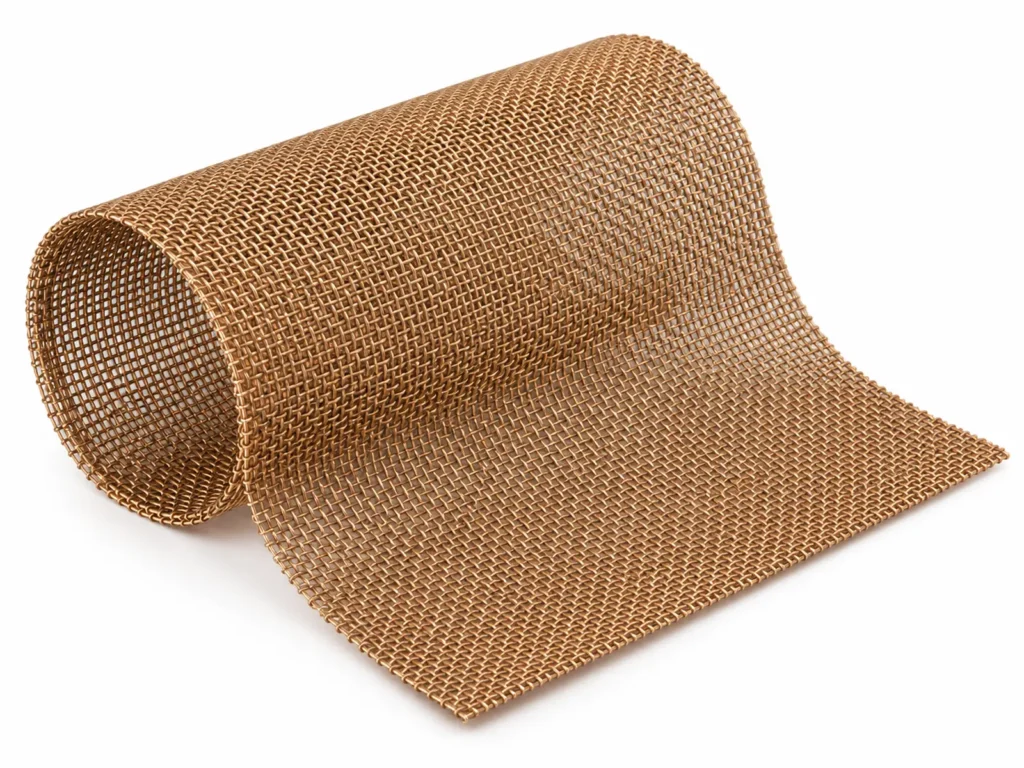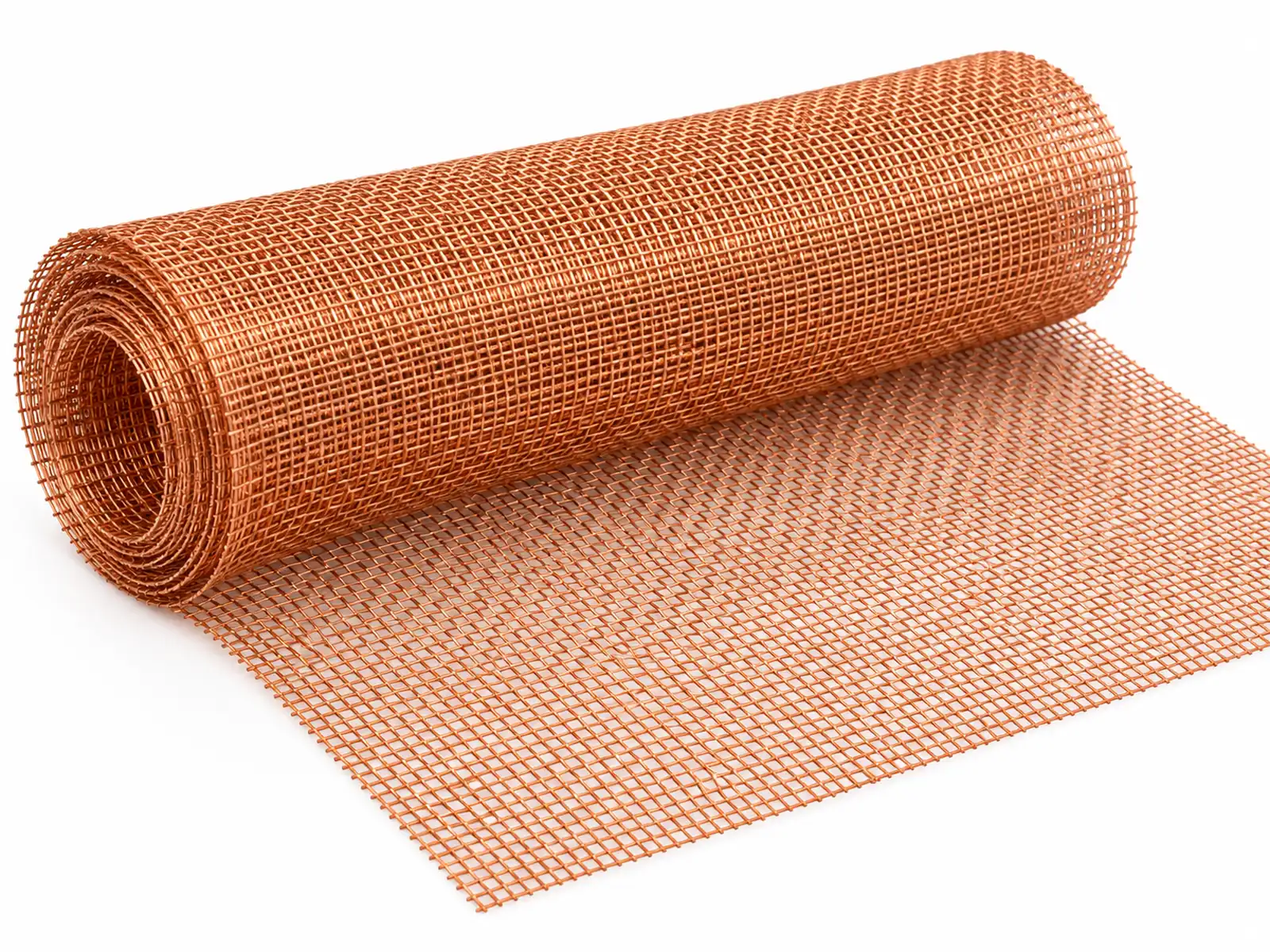
Copper Wire Mesh is selected when an assembly or process calls for conducting, shielding and screening with woven pure copper cloth — the go-to metal mesh for RF shielding, grounding grids, battery and electrochemical work and copper-specific screening. This application guide to the ASTM E2016 / ISO 9044 type covers concrete end-uses, the specification checklist, correct installation, and where an alternative mesh or filter medium performs better.
Typical Applications for Copper Wire Mesh
Where Copper Wire Mesh is specified and bought:
- EMI / RF shielding: shielded enclosures, cable windows and test-fixture lids where conductivity matters most.
- Electrochemistry & batteries: current collectors, electrodes and electroplating anodes baskets in lab and pilot cells.
- Architecture & interiors: warm-toned copper screens that patina naturally over time.
- Gardening & pest control: copper barriers that slugs and snails will not cross.
How to Specify Copper Wire Mesh for Your Application
- Mesh & wire: Finer mesh with heavier wire improves high-frequency shielding; coarser, thinner wire keeps it flexible and light.
- Purity: C11000 ETP (99.9 % Cu) for conductivity; specify C10200 oxygen-free where it will be brazed or used in hydrogen.
- Temper & finish: Soft annealed for forming around frames; bright or tinned to slow tarnish on contact faces.
- Standard: Quote ASTM E2016 / ISO 9044 and the size designation from the table on the product page, plus any value you changed in the technical drawing.
Handling & Installation Practice
- Handle with gloves; skin oils start tarnish spots that raise contact resistance on shielding seams.
- Bond seams by soldering or with conductive gasket — a mechanical overlap alone leaks RF.
Common Selection Mistakes with Copper Wire Mesh
- Pairing copper mesh with an aluminum frame in damp service without isolation, so the aluminum corrodes galvanically.
- Using copper in ammonia, acetylene or sulfide-bearing environments, which attack it.
Where Copper Wire Mesh Is Not the Right Choice
Not a structural mesh and not suitable for drinking water, ammonia or acidic process streams — choose stainless steel there.