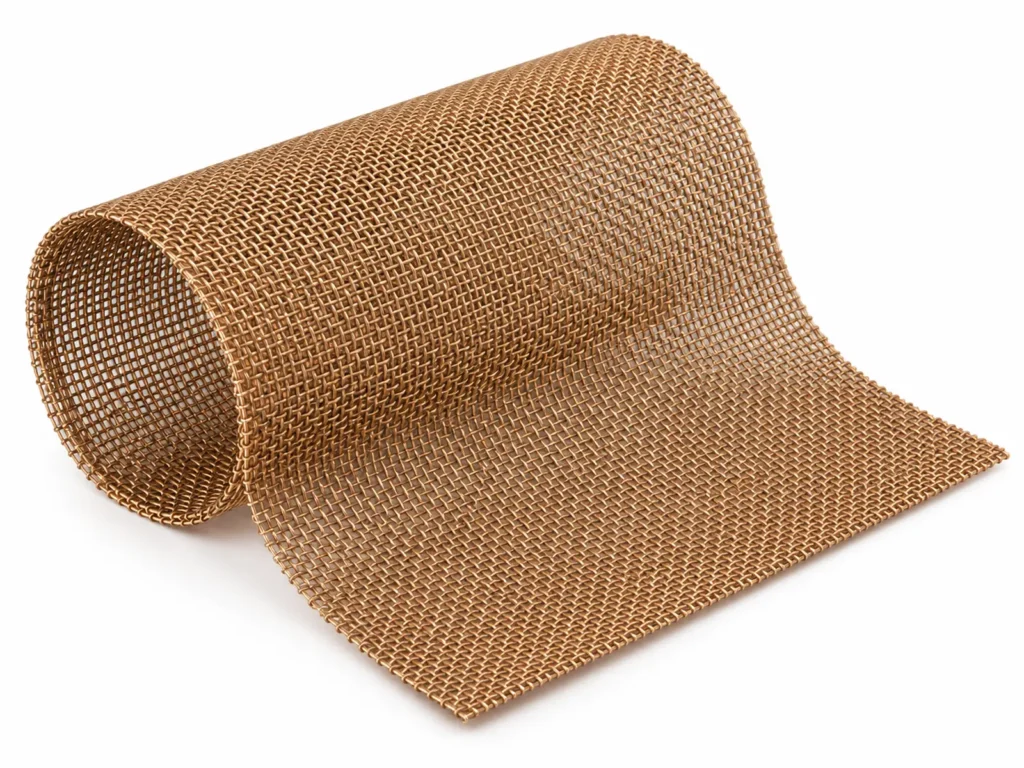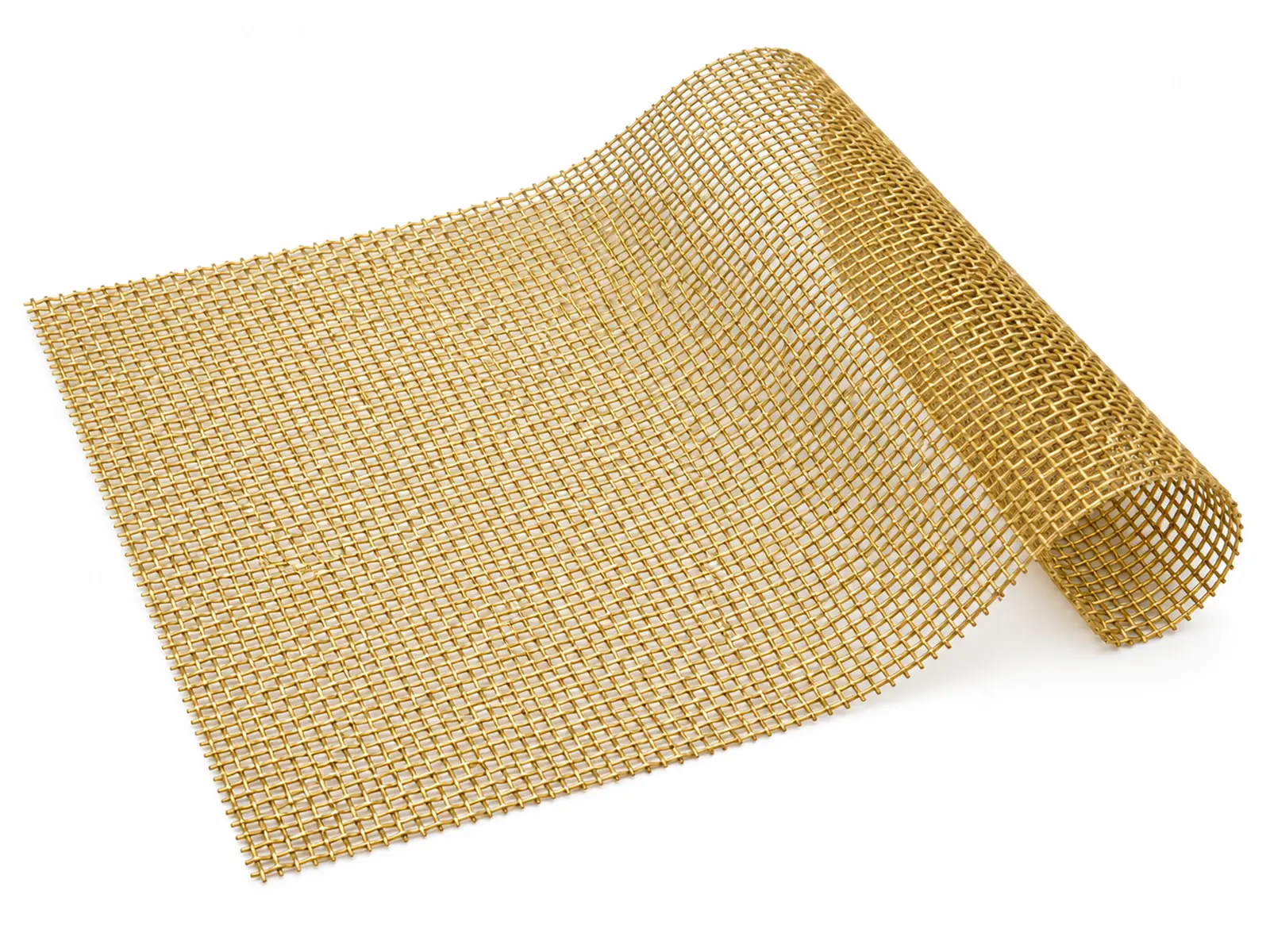
Brass Wire Mesh (ASTM E2016 / ISO 9044) is specified where the duty calls for screening, sieving and decorating with woven brass cloth that is spark-resistant, non-magnetic and keeps a warm gold color. The sections below cover the typical end-uses by industry, the mesh, micron and material decisions for each, installation practice, and the applications this product type is not suited to.
Typical Applications for Brass Wire Mesh
Where Brass Wire Mesh is specified and bought:
- Fuel & gas handling: non-sparking strainer screens where steel mesh could cause sparks.
- Papermaking & pulp: traditional brass forming and backing wires.
- Architecture & lighting: decorative brass mesh panels, lamp shades and cabinet inserts.
- Laboratories: brass-frame test sieve cloth and sample screens.
How to Specify Brass Wire Mesh for Your Application
- Alloy: CuZn35 (H65) is standard; specify H62 for stiffer cloth or lead-free brass where water contact is regulated.
- Mesh: 8–20 mesh for decorative and strainer use; 40–100 mesh for sieving.
- Finish: Natural, lacquered to hold the gold tone, or antique-dark for interiors.
- Standard: Quote ASTM E2016 / ISO 9044 and the size designation from the table on the product page, plus any value you changed in the technical drawing.
Handling & Installation Practice
- Cut with sharp snips and fold edges back; brass work-hardens and cracks if bent repeatedly.
- Clean decorative brass mesh with mild soap; avoid ammonia-based cleaners entirely.
Common Selection Mistakes with Brass Wire Mesh
- Using brass in ammonia or seawater service, where it dezincifies and cracks.
- Expecting brass mesh to hold its color outdoors without lacquer.
Where Brass Wire Mesh Is Not the Right Choice
Not for chloride-rich water, ammonia, or food CIP chemistry — use phosphor bronze or stainless instead.