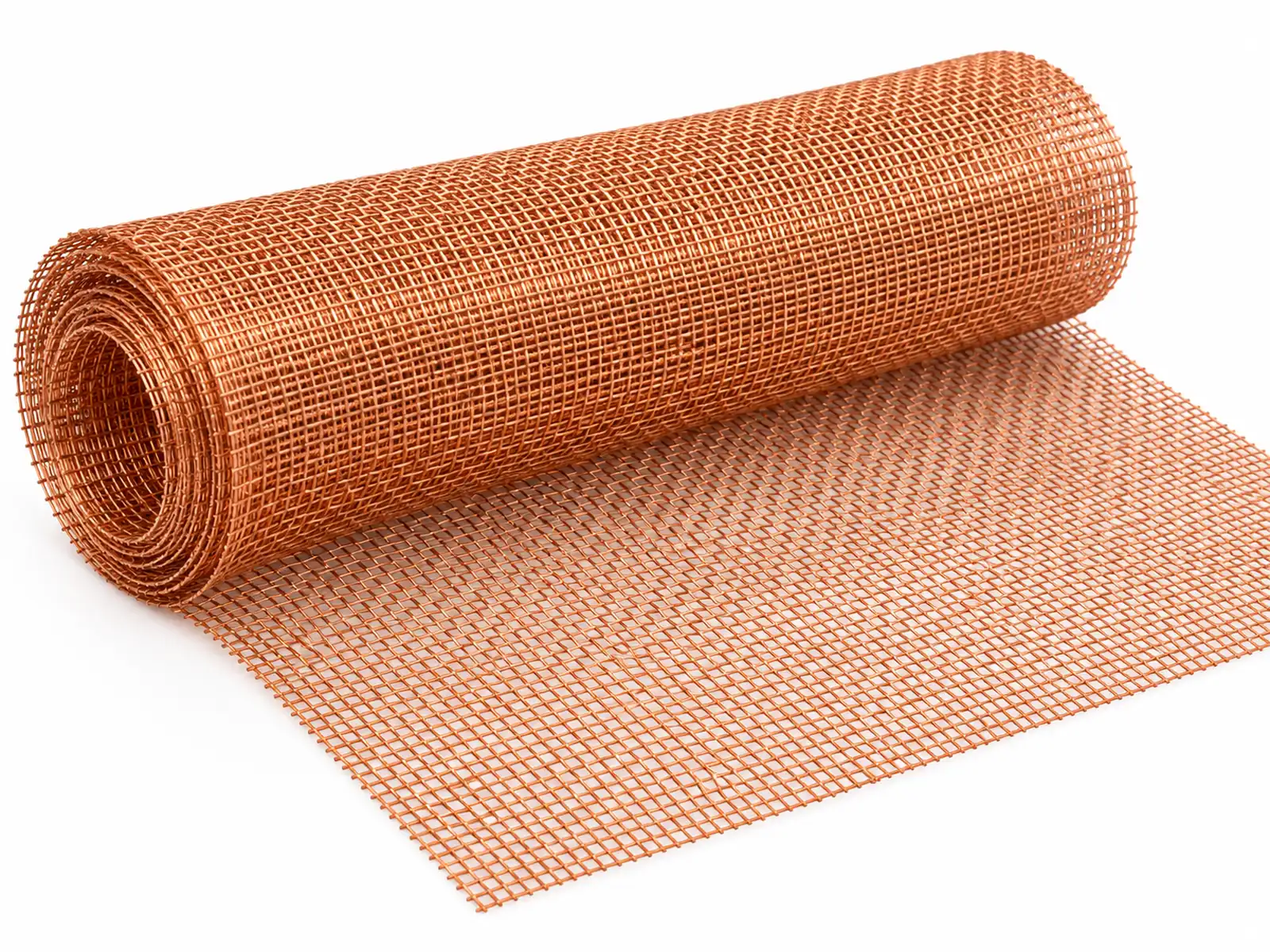
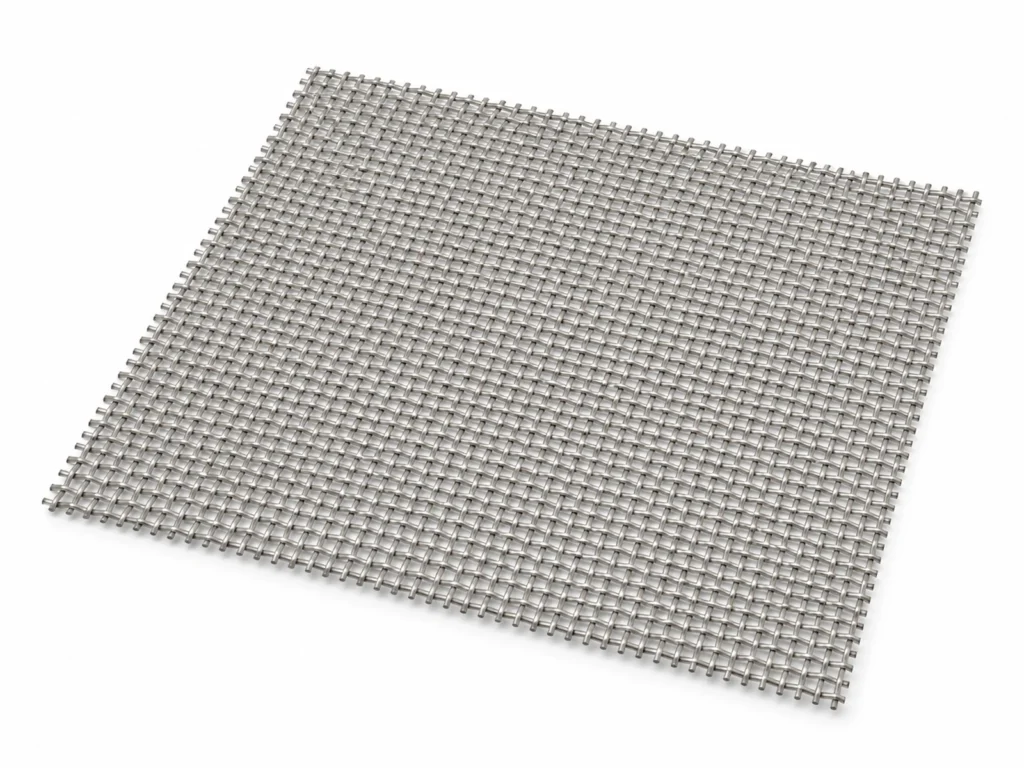
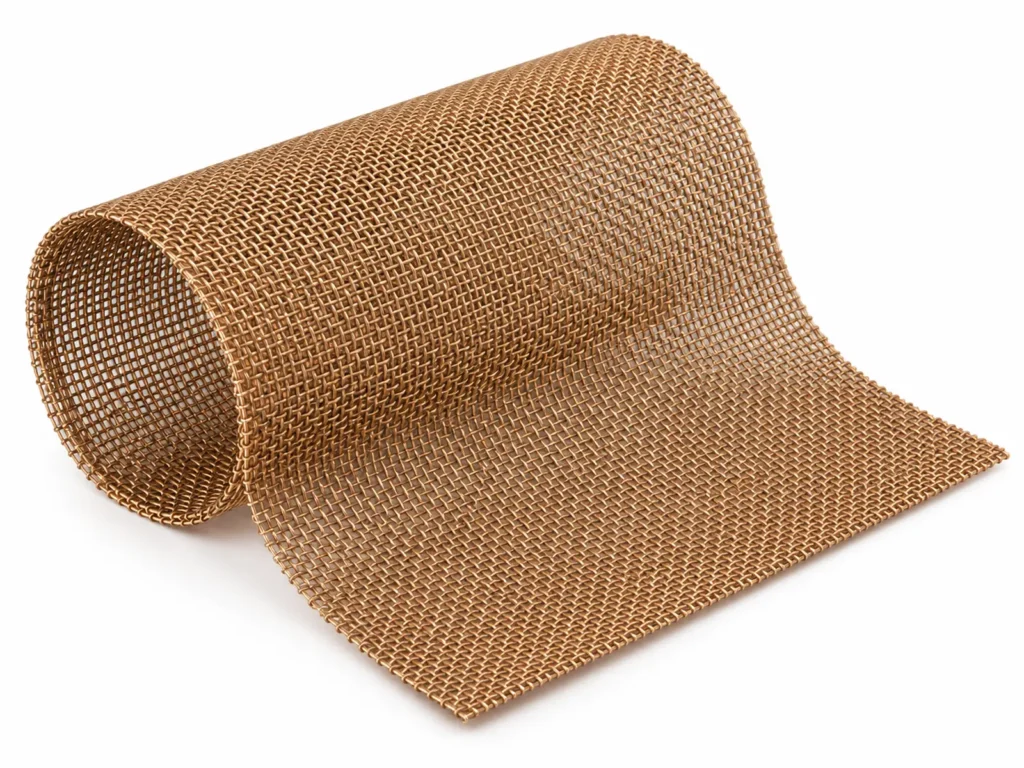
Copper Wire Mesh in Pure Copper (C11000) is used for conducting, shielding and screening with woven pure copper cloth — the go-to metal mesh for RF shielding, grounding grids, battery and electrochemical work and copper-specific screening. The alloy gives good atmospheric resistance with a stable patina; outstanding conductivity and is non-magnetic, with a practical service limit of approx. +200 °C.
Alloy Properties
| Grade designation | C11000 |
|---|
| Magnetic response | Non-magnetic |
|---|
| Service temperature | approx. +200 °C |
|---|
| Corrosion characteristic | Good atmospheric resistance with a stable patina; outstanding conductivity |
|---|
Specifications of Copper Wire Mesh Available in Pure Copper
| Mesh count | Wire diameter (mm) | Aperture (mm) | Micron rating (u00b5m) | Open area (%) | Alloy |
|---|
| 16-Mesh | 0.280 | 1.308 | 1308 | 67.6 | C11000 ETP copper |
| 22-Mesh | 0.115 | 1.040 | 1040 | 81.0 | C11000 ETP copper |
| 40-Mesh | 0.250 | 0.385 | 385 | 36.8 | C11000 ETP copper |
| 60-Mesh | 0.110 | 0.313 | 313 | 55.0 | C11000 ETP copper |
| 100-Mesh | 0.110 | 0.144 | 144 | 32.0 | C11000 ETP copper |
| 150-Mesh | 0.066 | 0.103 | 103 | 37.2 | C11000 ETP copper |
Where Pure Copper Copper Wire Mesh Is Used
- EMI / RF shielding: shielded enclosures, cable windows and test-fixture lids where conductivity matters most.
- Electrochemistry & batteries: current collectors, electrodes and electroplating anodes baskets in lab and pilot cells.
- Architecture & interiors: warm-toned copper screens that patina naturally over time.
- Gardening & pest control: copper barriers that slugs and snails will not cross.
Ordering Copper Wire Mesh in Pure Copper
- Mesh & wire: Finer mesh with heavier wire improves high-frequency shielding; coarser, thinner wire keeps it flexible and light.
- Purity: C11000 ETP (99.9 % Cu) for conductivity; specify C10200 oxygen-free where it will be brazed or used in hydrogen.
- Temper & finish: Soft annealed for forming around frames; bright or tinned to slow tarnish on contact faces.
Mistakes to Avoid with Copper Wire Mesh
- Pairing copper mesh with an aluminum frame in damp service without isolation, so the aluminum corrodes galvanically.
- Using copper in ammonia, acetylene or sulfide-bearing environments, which attack it.