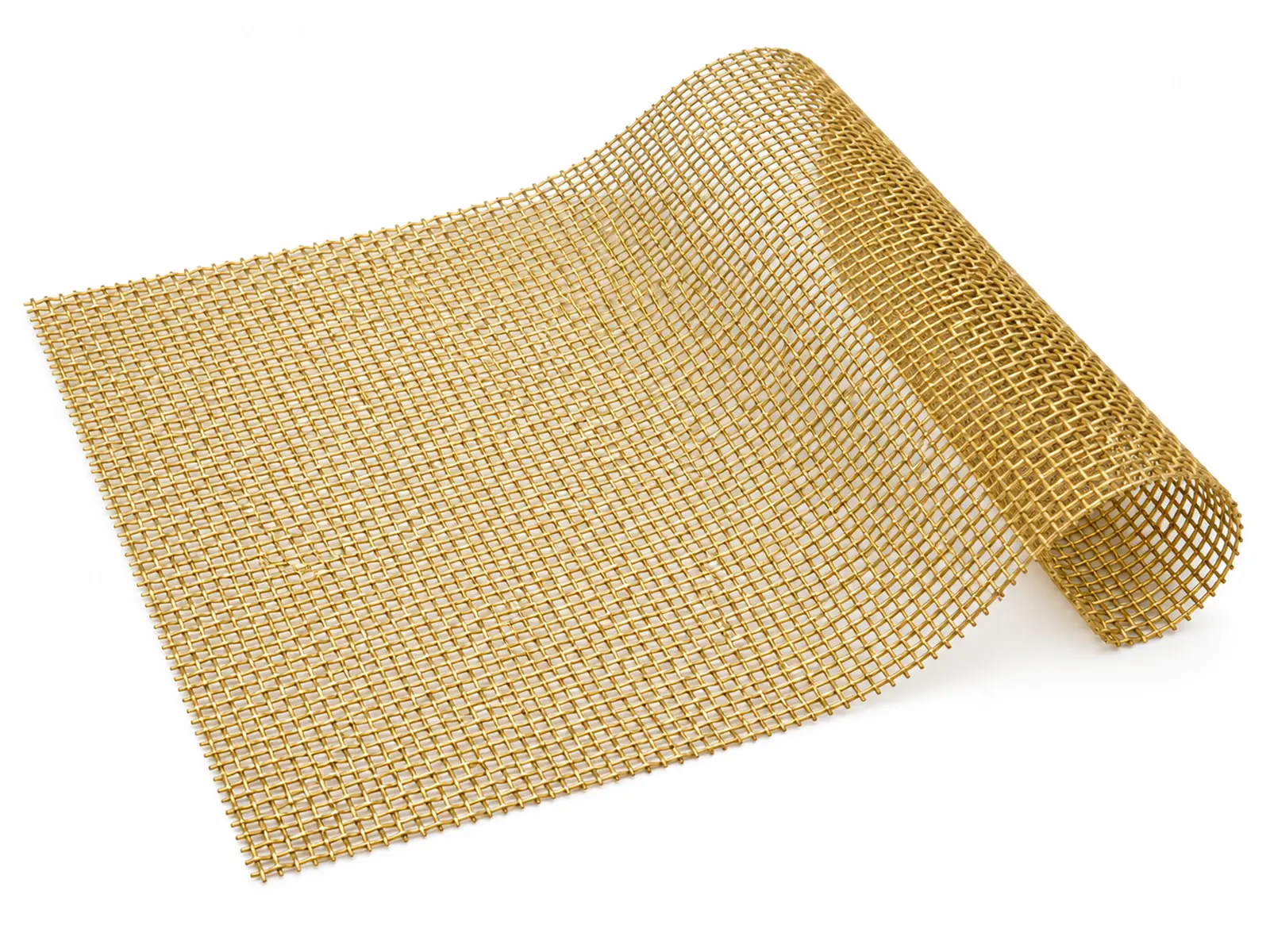
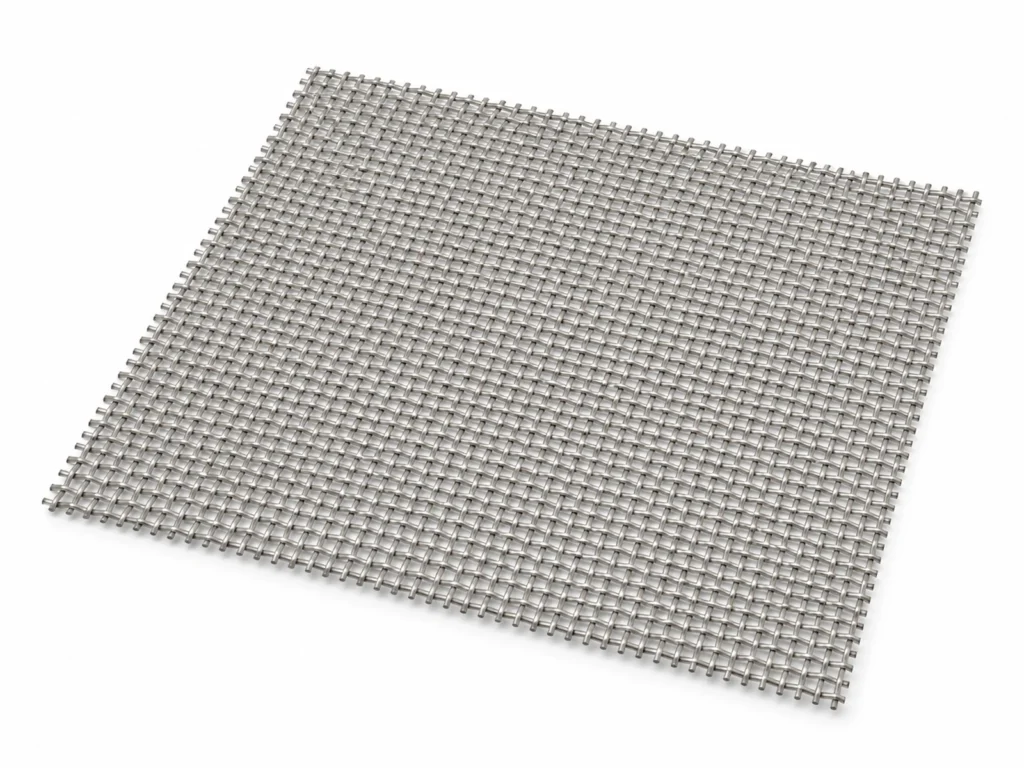
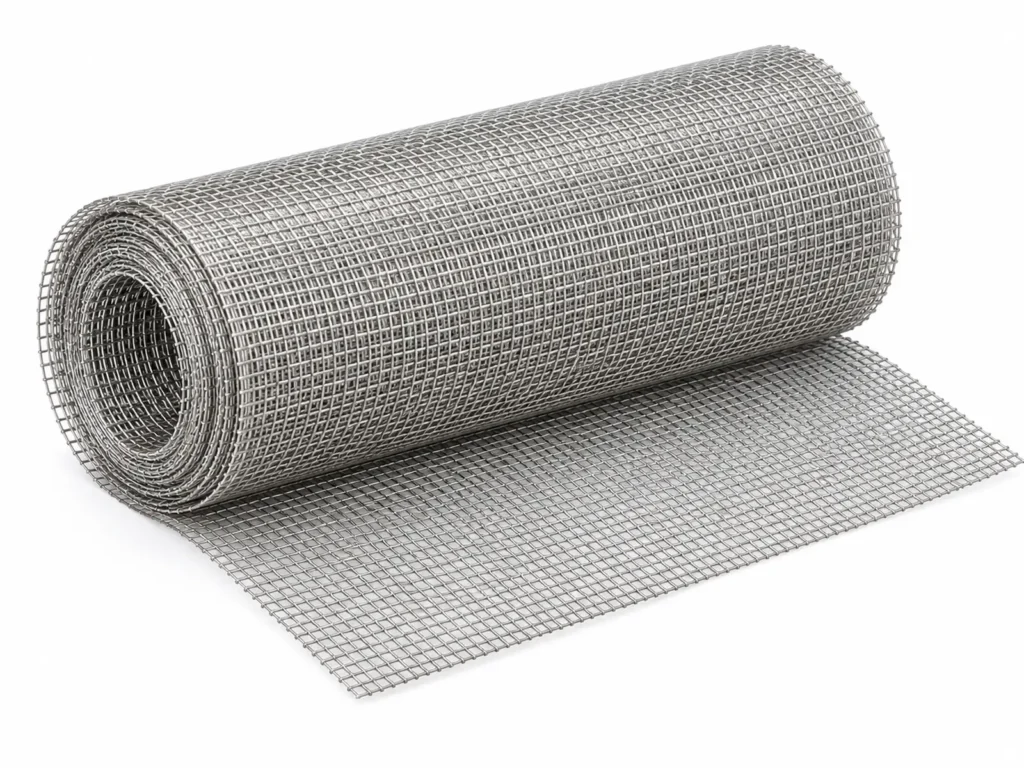
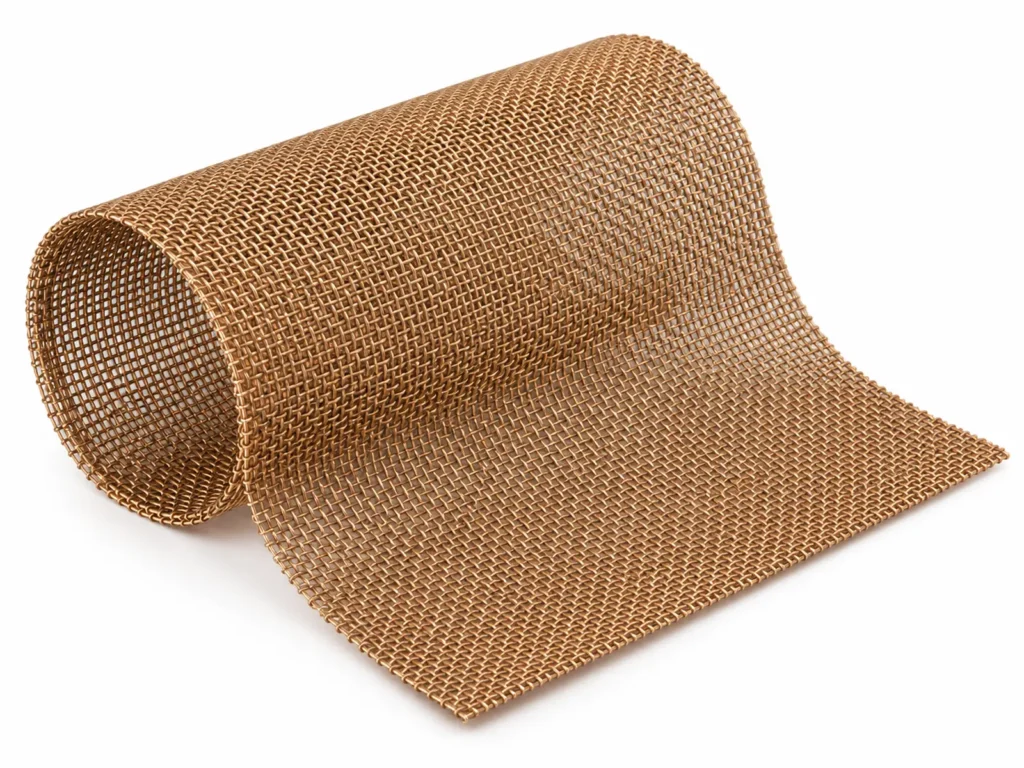
Brass Wire Mesh in Brass (H65 / CuZn35) is used for screening, sieving and decorating with woven brass cloth that is spark-resistant, non-magnetic and keeps a warm gold color. The alloy gives good atmospheric and fresh-water resistance; unsuitable for ammonia service and is non-magnetic, with a practical service limit of approx. +200 °C.
Alloy Properties
| Grade designation | H65 / CuZn35 |
|---|
| Magnetic response | Non-magnetic |
|---|
| Service temperature | approx. +200 °C |
|---|
| Corrosion characteristic | Good atmospheric and fresh-water resistance; unsuitable for ammonia service |
|---|
Specifications of Brass Wire Mesh Available in Brass
| Mesh count | Wire diameter (mm) | Aperture (mm) | Micron rating (u00b5m) | Open area (%) | Alloy |
|---|
| 8-Mesh | 0.710 | 2.465 | 2465 | 60.3 | CuZn35 (H65) |
| 20-Mesh | 0.400 | 0.870 | 870 | 46.9 | CuZn35 (H65) |
| 40-Mesh | 0.250 | 0.385 | 385 | 36.8 | CuZn35 (H65) |
| 60-Mesh | 0.180 | 0.243 | 243 | 33.0 | CuZn35 (H65) |
| 80-Mesh | 0.140 | 0.177 | 178 | 31.3 | CuZn35 (H65) |
| 100-Mesh | 0.100 | 0.154 | 154 | 36.8 | CuZn35 (H65) |
Where Brass Brass Wire Mesh Is Used
- Fuel & gas handling: non-sparking strainer screens where steel mesh could cause sparks.
- Papermaking & pulp: traditional brass forming and backing wires.
- Architecture & lighting: decorative brass mesh panels, lamp shades and cabinet inserts.
- Laboratories: brass-frame test sieve cloth and sample screens.
Ordering Brass Wire Mesh in Brass
- Alloy: CuZn35 (H65) is standard; specify H62 for stiffer cloth or lead-free brass where water contact is regulated.
- Mesh: 8–20 mesh for decorative and strainer use; 40–100 mesh for sieving.
- Finish: Natural, lacquered to hold the gold tone, or antique-dark for interiors.
Mistakes to Avoid with Brass Wire Mesh
- Using brass in ammonia or seawater service, where it dezincifies and cracks.
- Expecting brass mesh to hold its color outdoors without lacquer.