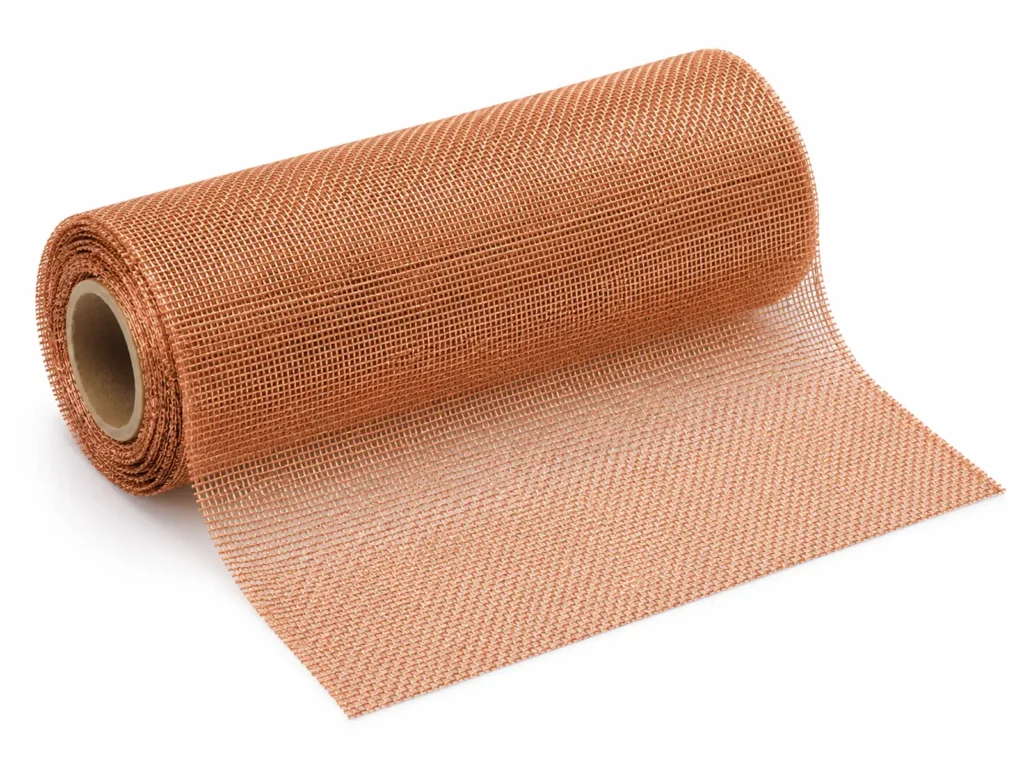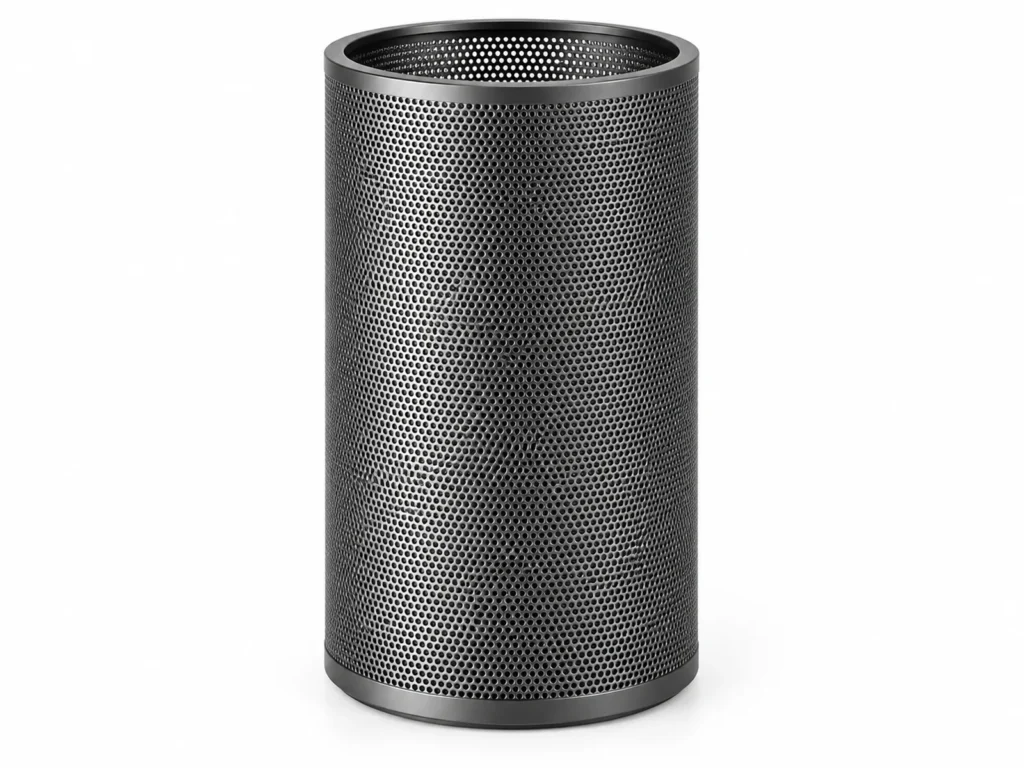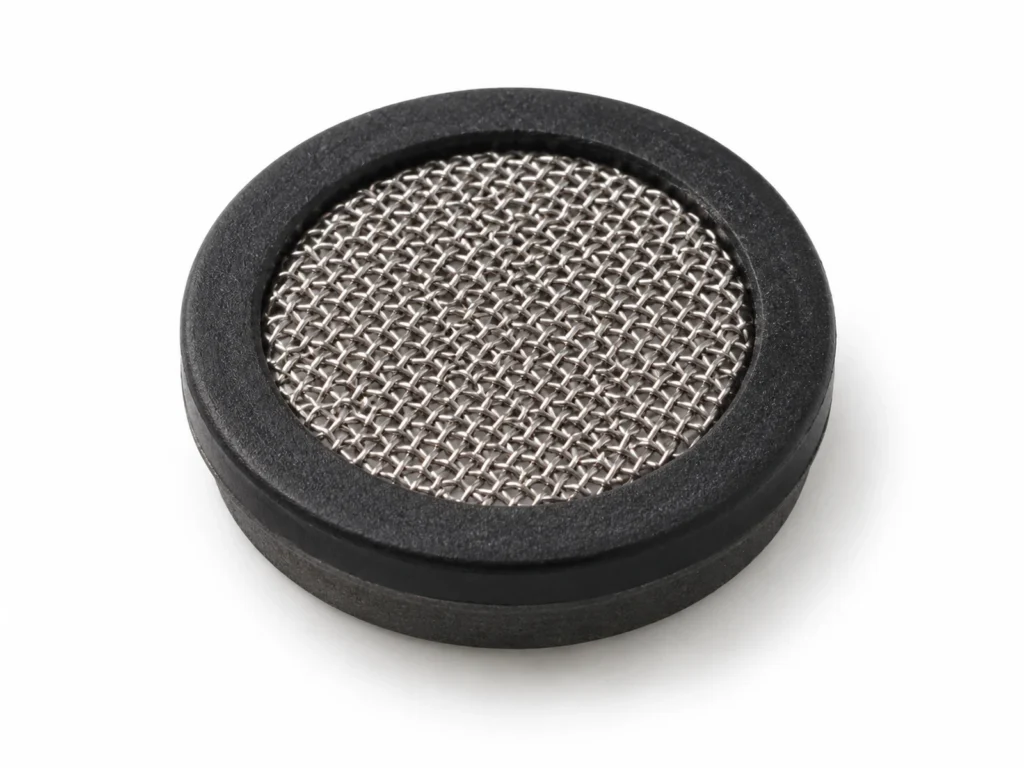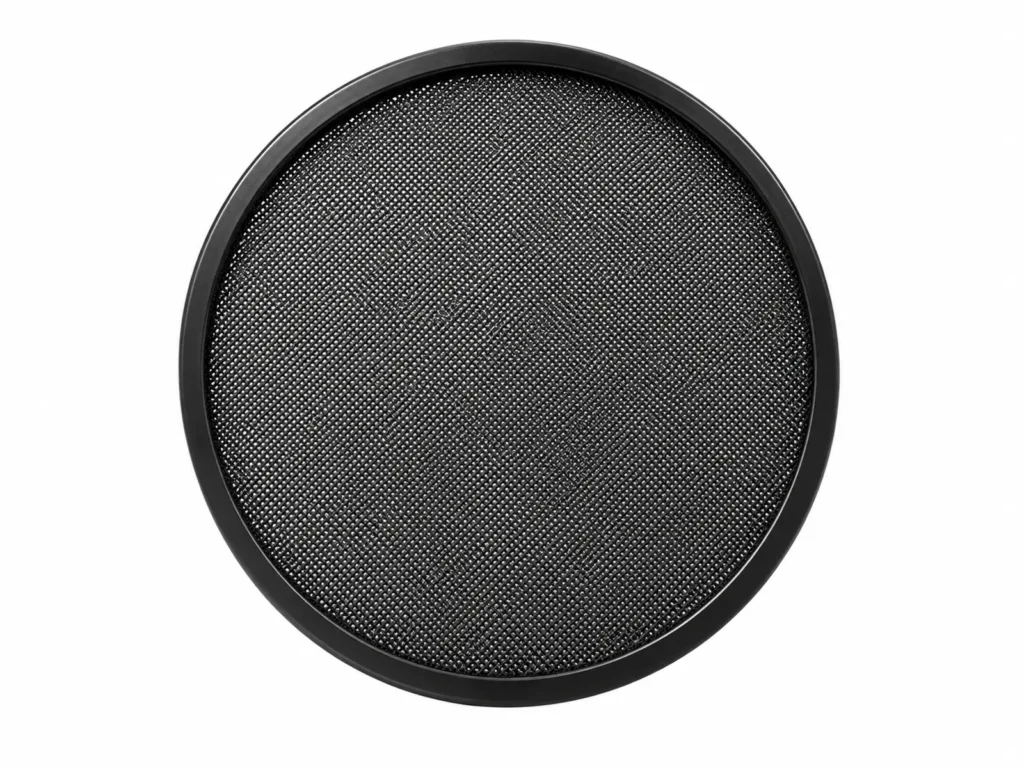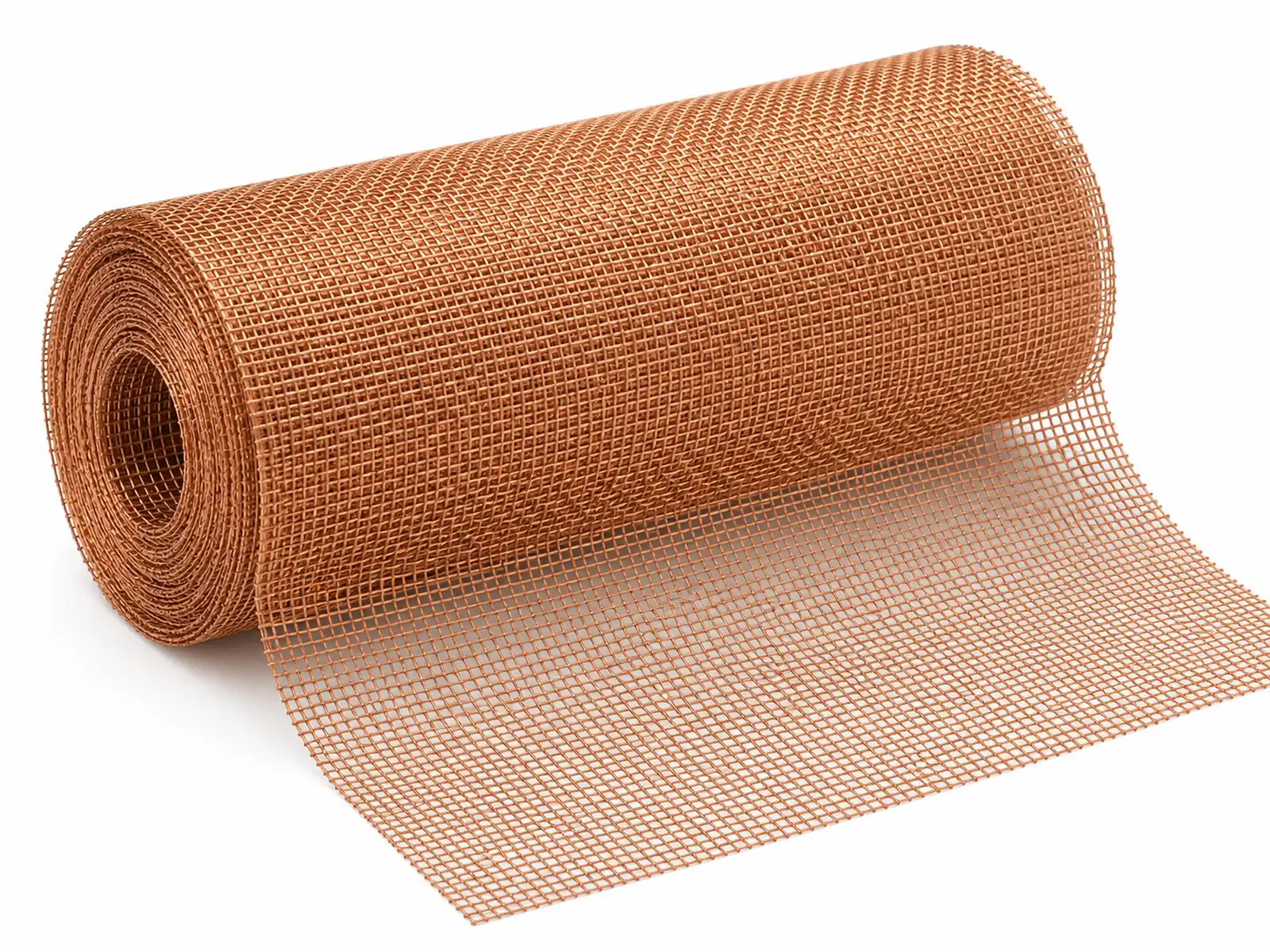
Faraday Cage Shielding Mesh is used for building Faraday cages, RF-shielded rooms and EMP-protected enclosures from conductive woven metal mesh that blocks external radio-frequency fields while staying light, ventilated and see-through. MIL-STD-188-125 is the reference cited for it on drawings, datasheets and purchase orders.
What MIL-STD-188-125 Means for Faraday Cage Shielding Mesh
The dimensions in the table below are supplied to suit MIL-STD-188-125. Where the standard sets requirements for the finished appliance, device or system, compliance testing of that assembly stays with its manufacturer; we supply the metal mesh part to the drawing and can provide material certificates and dimensional reports with the shipment.
Faraday Cage Shielding Mesh Dimensions
| Mesh count | Wire diameter (mm) | Aperture (mm) | Open area (%) | Material | Roll width (mm) |
|---|---|---|---|---|---|
| 16-Mesh | 0.280 | 1.308 | 67 | Copper | 1000 |
| 22-Mesh | 0.115 | 1.040 | 81 | Copper | 1000 |
| 30-Mesh | 0.250 | 0.597 | 50 | Galvanized steel | 1220 |
| 40-Mesh | 0.180 | 0.455 | 51 | Copper | 1000 |
| 60-Mesh | 0.110 | 0.313 | 55 | Tinned copper | 1000 |
Specifying Faraday Cage Shielding Mesh Beyond the Standard
- Mesh count & material: Copper 16–60 mesh gives the best attenuation per weight; galvanized steel mesh is cheaper and also shields magnetic fields at low frequency.
- Opening vs frequency: Holes must be much smaller than the wavelength — finer mesh for higher frequencies (Wi-Fi, 5G).
- Seams & grounding: Overlap seams by at least 50 mm, bond them continuously and ground the cage at a single point.
When Faraday Cage Shielding Mesh Is Not the Right Choice
Not a lightning-protection system, and a mesh cage alone does not stop very low-frequency magnetic fields — those need solid steel or mu-metal shielding.