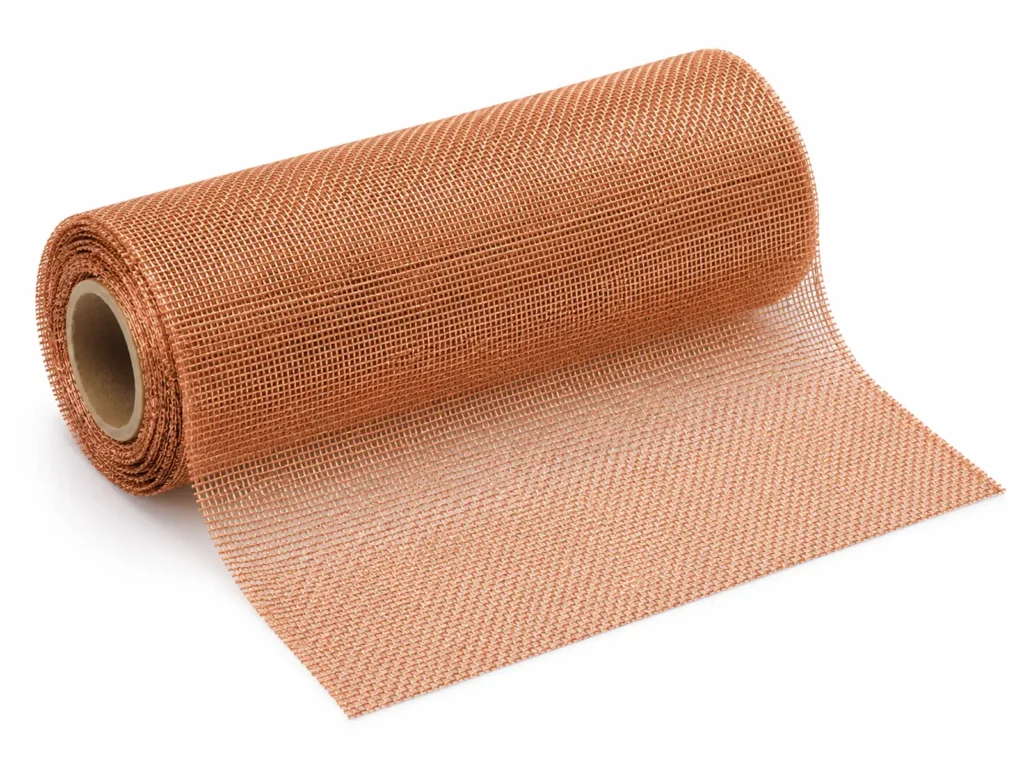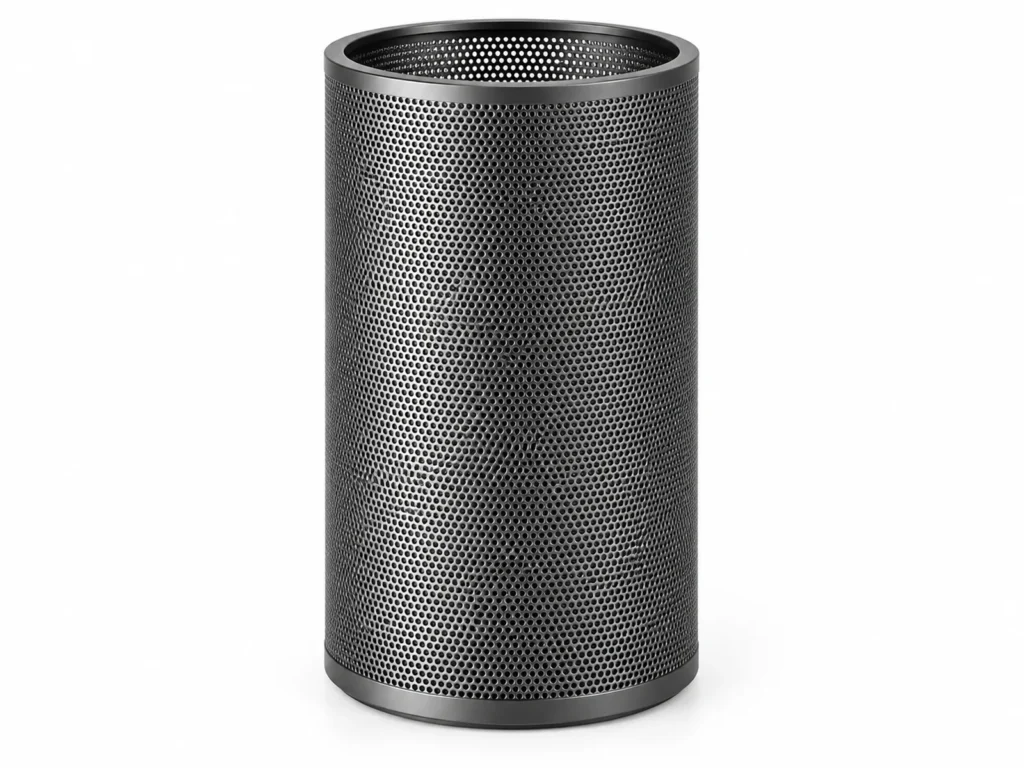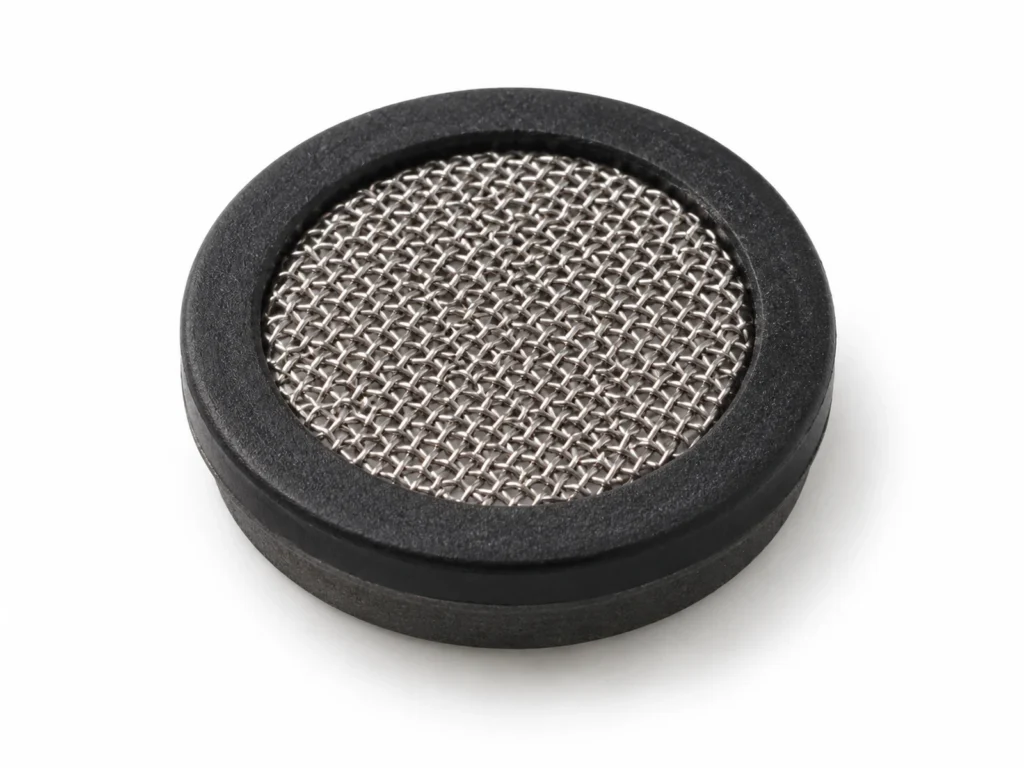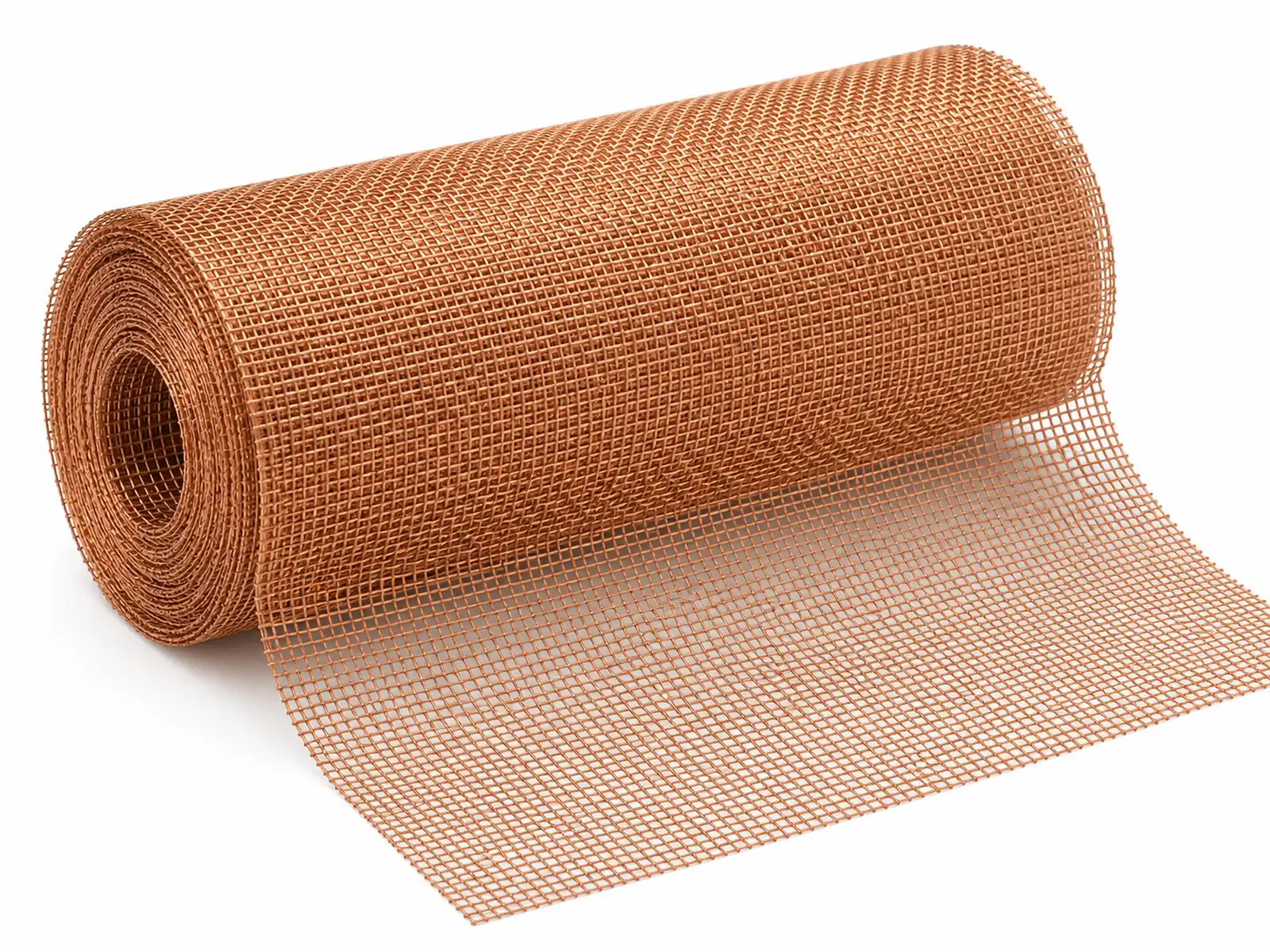
Faraday Cage Shielding Mesh is used for building Faraday cages, RF-shielded rooms and EMP-protected enclosures from conductive woven metal mesh that blocks external radio-frequency fields while staying light, ventilated and see-through. IEEE 299 is the reference cited for it on drawings, datasheets and purchase orders.
What IEEE 299 Means for Faraday Cage Shielding Mesh
The dimensions in the table below are supplied to suit IEEE 299. Where the standard sets requirements for the finished appliance, device or system, compliance testing of that assembly stays with its manufacturer; we supply the metal mesh part to the drawing and can provide material certificates and dimensional reports with the shipment.
Faraday Cage Shielding Mesh Dimensions
| Mesh count | Wire diameter (mm) | Aperture (mm) | Open area (%) | Material | Roll width (mm) |
|---|---|---|---|---|---|
| 16-Mesh | 0.280 | 1.308 | 67 | Copper | 1000 |
| 22-Mesh | 0.115 | 1.040 | 81 | Copper | 1000 |
| 30-Mesh | 0.250 | 0.597 | 50 | Galvanized steel | 1220 |
| 40-Mesh | 0.180 | 0.455 | 51 | Copper | 1000 |
| 60-Mesh | 0.110 | 0.313 | 55 | Tinned copper | 1000 |
Specifying Faraday Cage Shielding Mesh Beyond the Standard
- Mesh count & material: Copper 16–60 mesh gives the best attenuation per weight; galvanized steel mesh is cheaper and also shields magnetic fields at low frequency.
- Opening vs frequency: Holes must be much smaller than the wavelength — finer mesh for higher frequencies (Wi-Fi, 5G).
- Seams & grounding: Overlap seams by at least 50 mm, bond them continuously and ground the cage at a single point.
When Faraday Cage Shielding Mesh Is Not the Right Choice
Not a lightning-protection system, and a mesh cage alone does not stop very low-frequency magnetic fields — those need solid steel or mu-metal shielding.