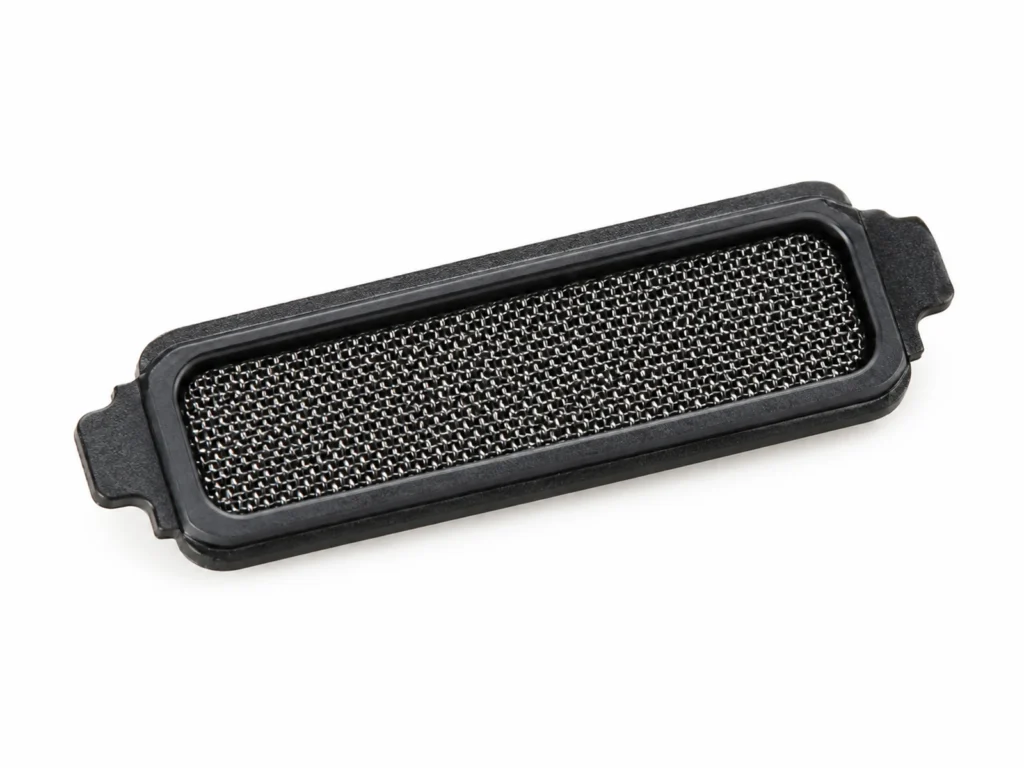
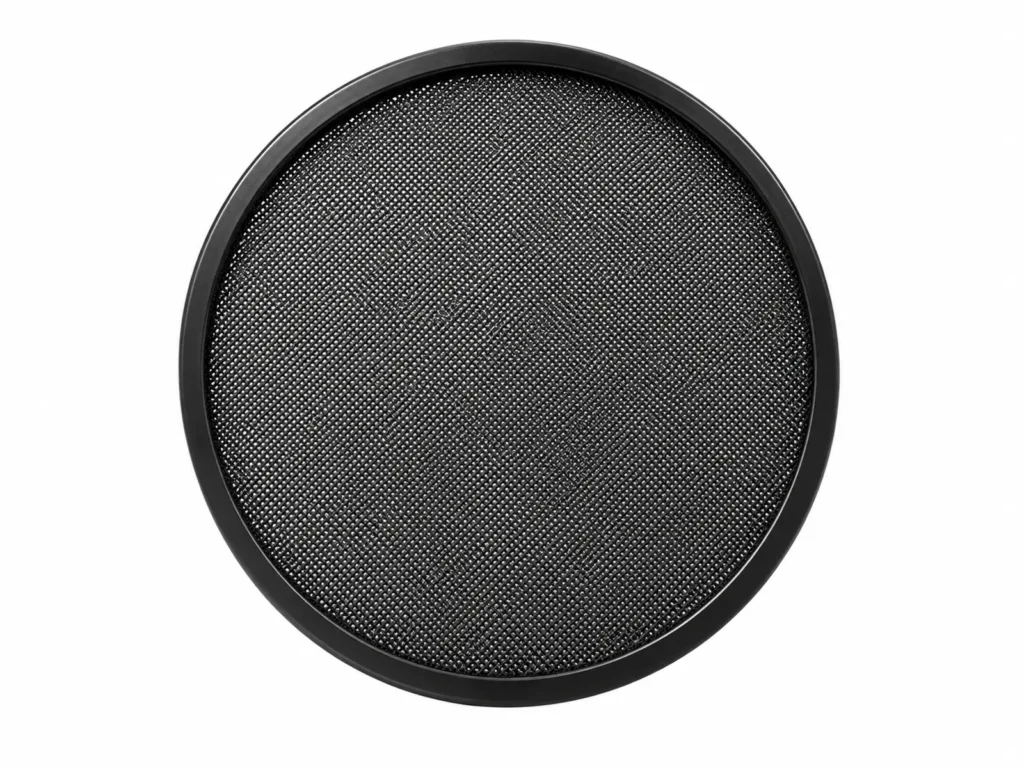
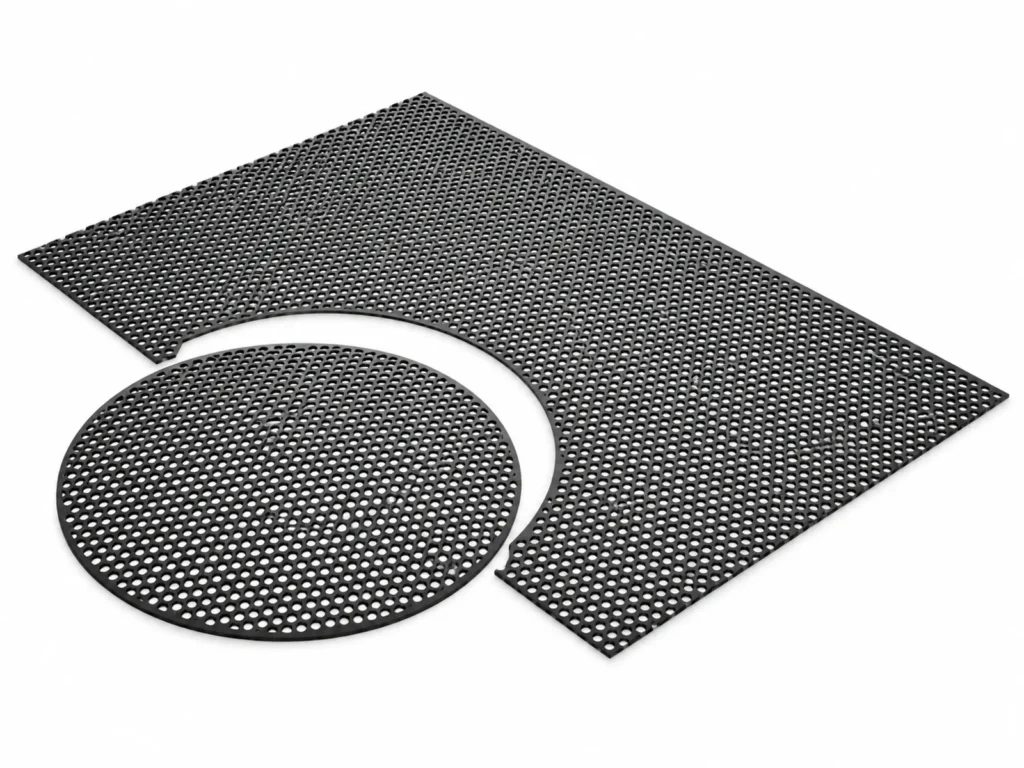
MEMS Microphone Dust Mesh for shielding the acoustic port of MEMS microphones from dust, lint and splashes with a tiny die-cut mesh whose acoustic resistance is matched to the microphone. 4 sizes listed, with technical drawing and quotation.
Customize the parameters below — every spec field is editable, and the drawing redraws to match the values you choose. Changing the size will snap the other fields to that size's standard values; you can then override any individual value.
Sends the selected values to the quote form below.
Request a Quotation for MEMS Microphone Dust Mesh
Tell us the specification (mesh count / micron / dimensions), material and quantity you need for MEMS Microphone Dust Mesh (IEC 60529 IP67 / IP68 designs) and our team will respond within one business day. Click "Request this configuration" on the drawing above to send the parameters you just chose straight into this form.
Every row below is a starting point for the customizer above — pick any specification row and the drawing will redraw to it.
Part
Length (mm)
Width (mm)
Thickness (mm)
Hole diameter (mm)
Open area (%)
Acoustic resistance (MKS Rayl)
u00d82.0 port
2.0
2.0
0.04
0.030
15
260
u00d83.0 port
3.0
3.0
0.04
0.030
15
260
u00d84.0 port
4.0
4.0
0.05
0.040
20
180
Oval 3 u00d7 2
3.0
2.0
0.04
0.030
15
260
MEMS Microphone Dust Mesh (IEC 60529 IP67 / IP68 designs) is used for shielding the acoustic port of MEMS microphones from dust, lint and splashes with a tiny die-cut mesh whose acoustic resistance is matched to the microphone.
Port geometry: Specify the port as round (Ø2–4 mm) or oval, and the adhesive ring inner diameter so glue never overlaps the open mesh.
Acoustic resistance: Higher MKS Rayl gives better ingress protection but costs sensitivity and SNR; specify a target with a tolerance band (typically ±15 %).
Array matching: For beam-forming arrays order all meshes from one etching lot so resistance does not vary port to port.
Materials
Standard supply is stainless steel 304, stainless steel 316/316L; the material column in the table and the drawing options show the exact grade for each size. Other alloys and finishes can be quoted to your drawing.
Fitting & Care
Place the mesh centered on the port with an automated pick-and-place or a vision-guided fixture; manual placement drifts by more than the adhesive land.
Cure the pressure-sensitive adhesive under the specified pressure and dwell time before the housing is closed.
Common Mistakes
Mixing mesh lots across a mic array, so beam-forming and echo cancellation lose accuracy.
Treating a mesh as a wind screen — it does not reduce wind noise; foam or a labyrinth path is needed for that.
When MEMS Microphone Dust Mesh Is Not the Right Choice
Not a waterproof barrier by itself; IPX7/IPX8 microphones combine the metal mesh with a hydrophobic ePTFE membrane.
MEMS Microphone Dust Mesh is made to order as finished parts. Indicative pricing starts from about US$0.030 per piece for a standard size at production quantity; the final price depends on size, material, finish, tooling and order volume. Send your configuration from the drawing above for a quotation.
Shielding the acoustic port of MEMS microphones from dust, lint and splashes with a tiny die-cut mesh whose acoustic resistance is matched to the microphone.
Does a dust mesh reduce MEMS microphone sensitivity?
Slightly. A well-chosen mesh costs well under 1 dB of sensitivity; a mesh that is too fine can cost several dB and flatten high frequencies.
Why must all microphones in an array use matched meshes?
Beam-forming relies on equal phase and amplitude at each mic. A mismatched mesh shifts one channel and degrades direction finding.
Can a MEMS microphone mesh be cleaned?
Only gently with a dry soft brush or low-tack putty from outside; probing the port tears the mesh and can damage the MEMS diaphragm.
What specifications are available for MEMS Microphone Dust Mesh?
The table on this page lists 4 standard specifications for MEMS Microphone Dust Mesh, from u00d82.0 port to Oval 3 u00d7 2. Specifications outside the table — custom mesh counts, wire diameters, roll widths and fabricated pieces — can be quoted on request.
How do I request a quotation?
Use the parametric drawing on this page to set the exact configuration (specification, material, treatment) and click "Request this configuration" — a specialist from custommetalfilters.com will respond within one business day.
Related Mesh Products
Closely related constructions in Acoustic & Electronics Mesh — compare aperture range, open area and cleanability.
This website uses only necessary and functional cookies to operate, secure, and improve basic website performance.
We do not use advertising cookies, Google Analytics, or cross-site tracking technologies.
Privacy Policy