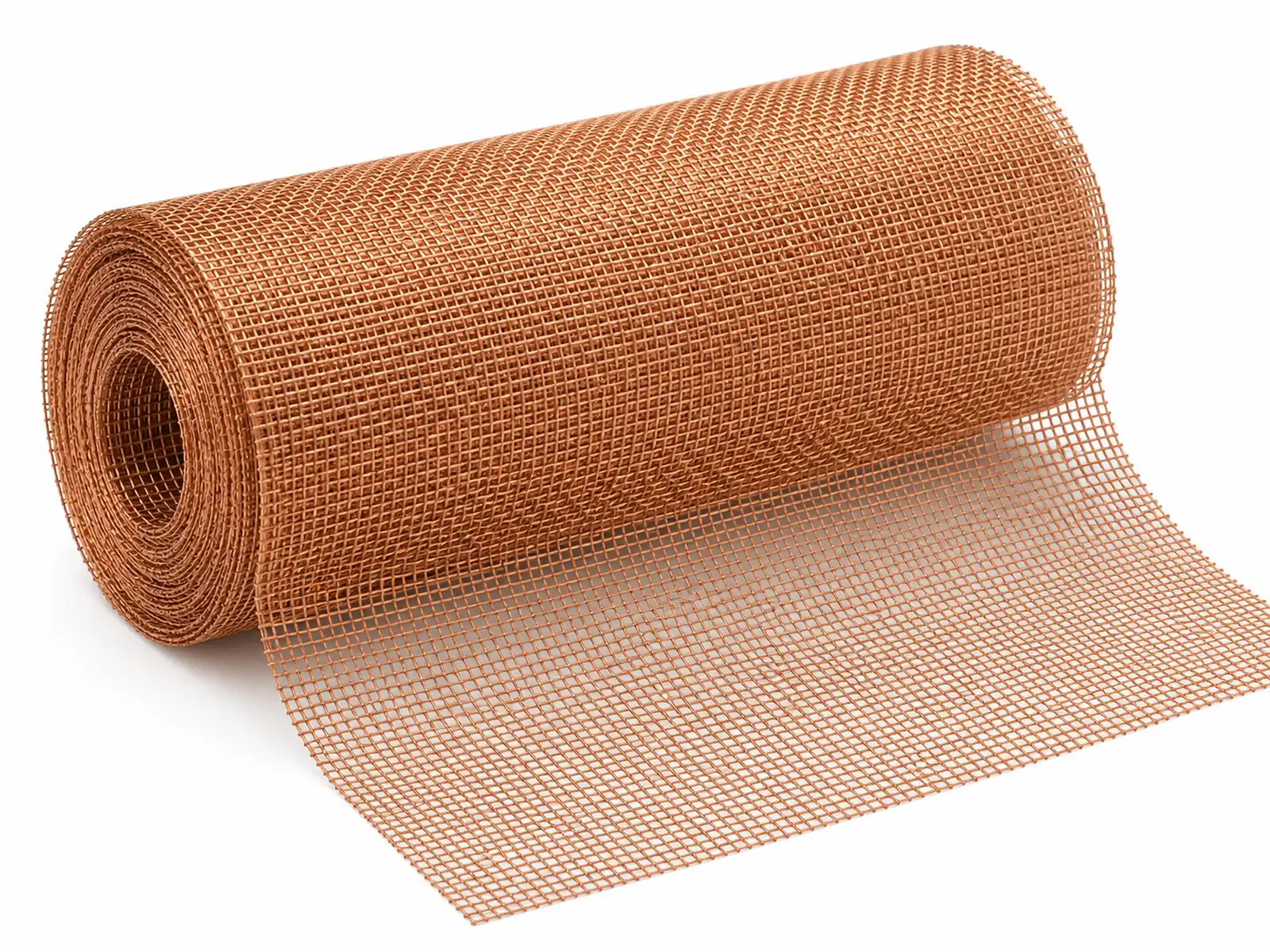
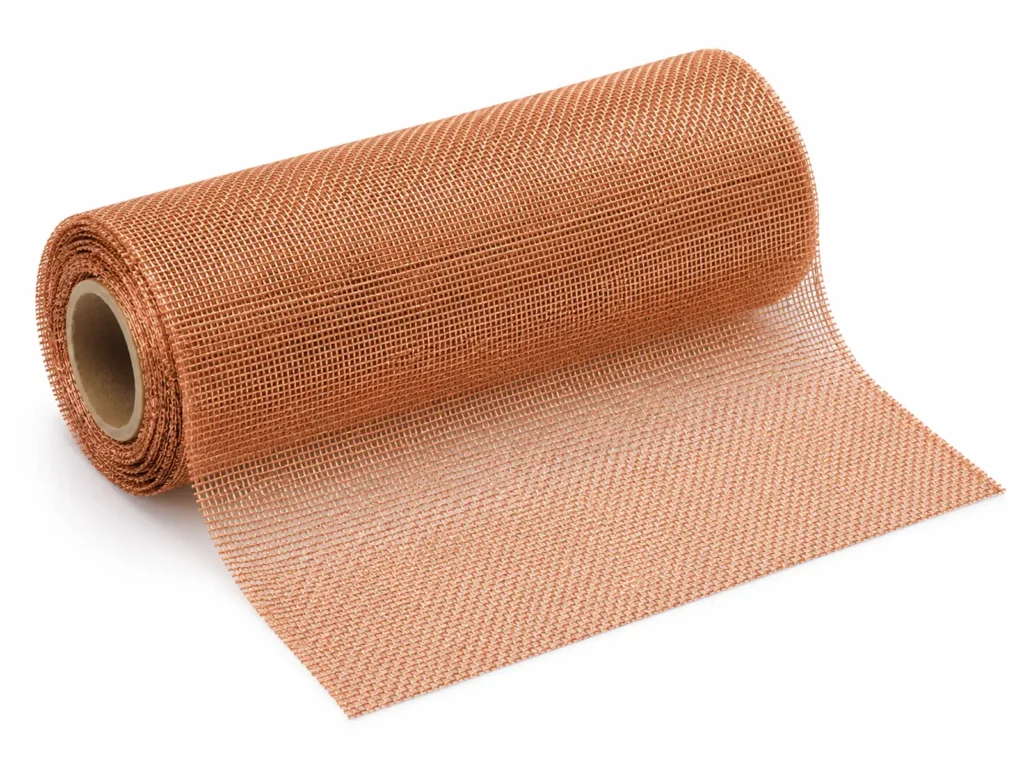
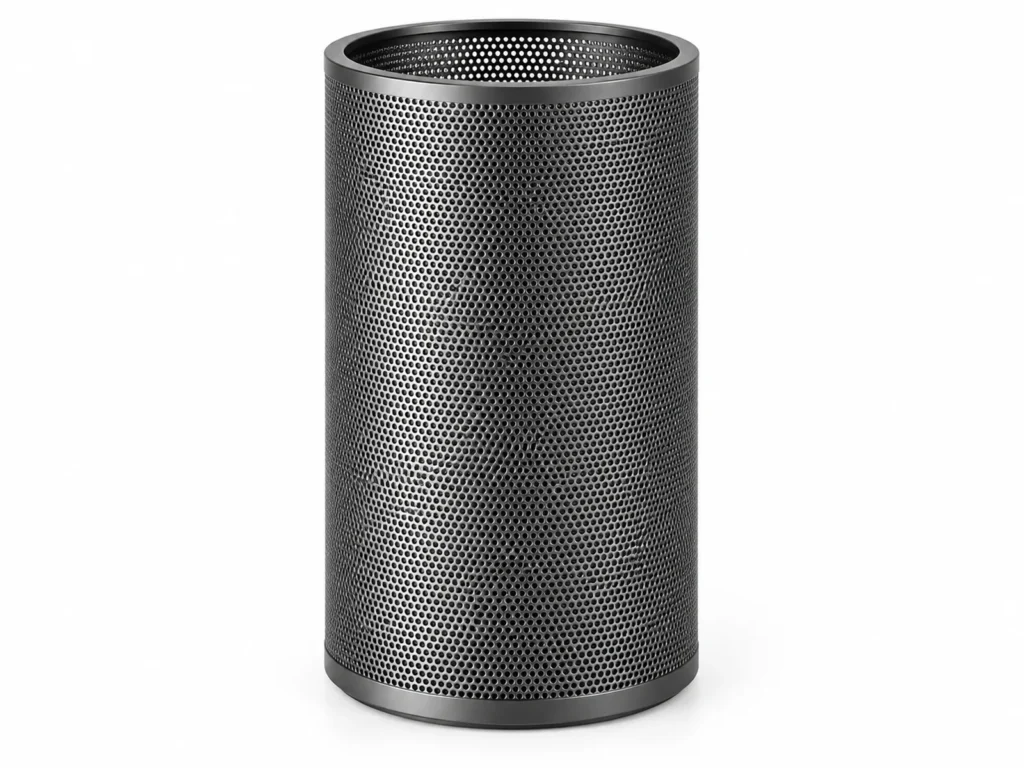
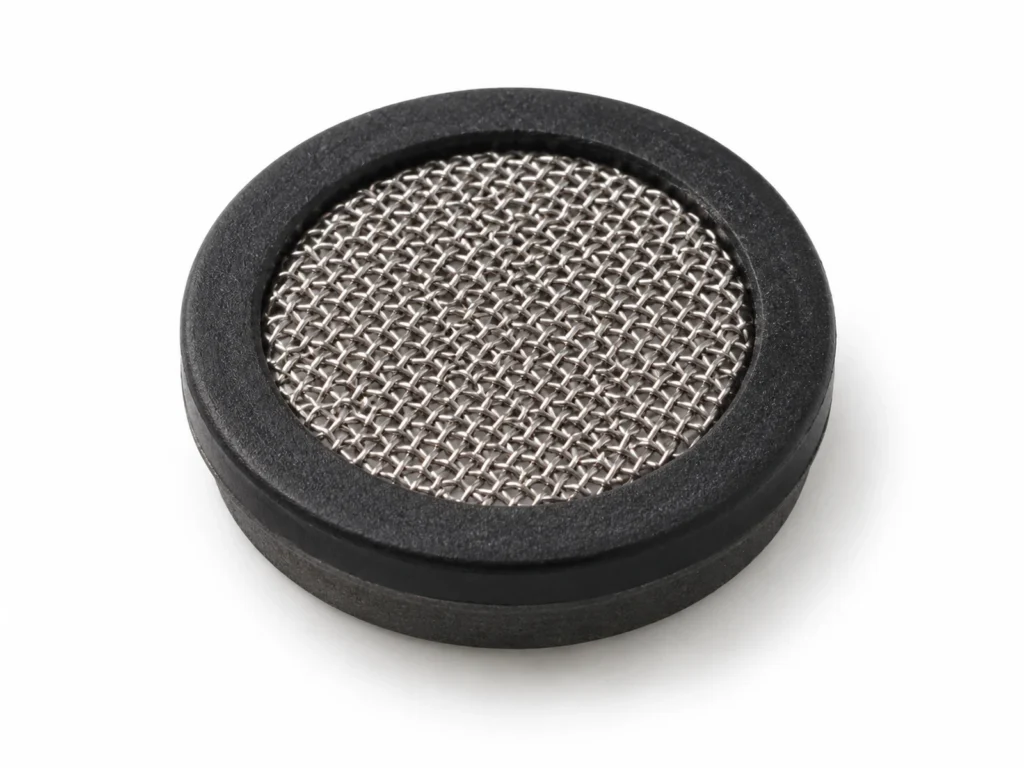
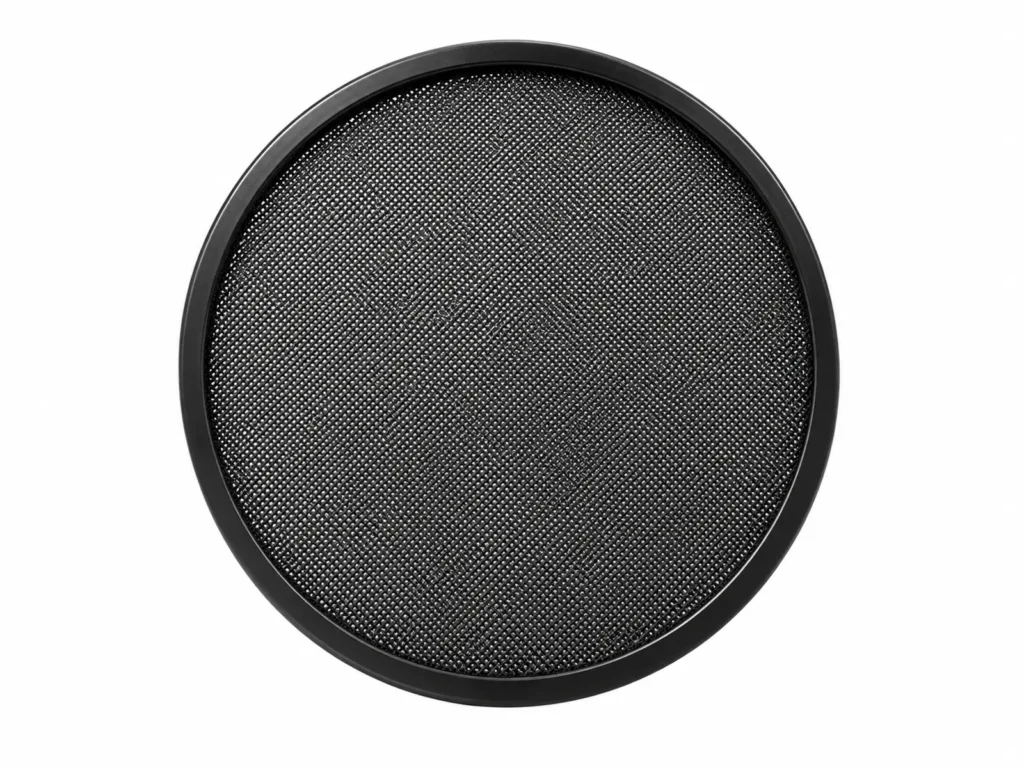
Faraday Cage Shielding Mesh in 304 Stainless Steel (AISI 304 (1.4301)) is used for building Faraday cages, RF-shielded rooms and EMP-protected enclosures from conductive woven metal mesh that blocks external radio-frequency fields while staying light, ventilated and see-through. The alloy gives good general corrosion resistance in atmosphere and fresh water and is essentially non-magnetic (annealed), with a practical service limit of approx. +450 °C continuous.
Alloy Properties
| Grade designation | AISI 304 (1.4301) |
|---|
| Magnetic response | Essentially non-magnetic (annealed) |
|---|
| Service temperature | approx. +450 °C continuous |
|---|
| Corrosion characteristic | Good general corrosion resistance in atmosphere and fresh water |
|---|
Specifications of Faraday Cage Shielding Mesh Available in 304 Stainless Steel
| Mesh count | Wire diameter (mm) | Aperture (mm) | Open area (%) | Material | Roll width (mm) |
|---|
| 16-Mesh | 0.280 | 1.308 | 67 | Copper | 1000 |
| 22-Mesh | 0.115 | 1.040 | 81 | Copper | 1000 |
| 30-Mesh | 0.250 | 0.597 | 50 | Galvanized steel | 1220 |
| 40-Mesh | 0.180 | 0.455 | 51 | Copper | 1000 |
| 60-Mesh | 0.110 | 0.313 | 55 | Tinned copper | 1000 |
Where 304 Stainless Steel Faraday Cage Shielding Mesh Is Used
- EMC test labs: shielded rooms, test cages and anechoic chamber linings.
- Data security: shielded server rooms, SCIFs and secure meeting rooms.
- EMP & prepper protection: Faraday boxes and cabinets for spare electronics and radios.
- Research & medical: RF-quiet enclosures for sensitive measurements and EEG rooms.
Ordering Faraday Cage Shielding Mesh in 304 Stainless Steel
- Mesh count & material: Copper 16–60 mesh gives the best attenuation per weight; galvanized steel mesh is cheaper and also shields magnetic fields at low frequency.
- Opening vs frequency: Holes must be much smaller than the wavelength — finer mesh for higher frequencies (Wi-Fi, 5G).
- Seams & grounding: Overlap seams by at least 50 mm, bond them continuously and ground the cage at a single point.
Mistakes to Avoid with Faraday Cage Shielding Mesh
- Unbonded seams or doors, which leak far more RF than the mesh itself.
- Running unfiltered power or data cables through the cage wall, which carries RF straight in.