Skip to content

Process Industry Screens · Sifter OEM frames / ISO 3310-1 cloth · Application guide

What Is Ultrasonic Vibrating Sieve Screen Used For?

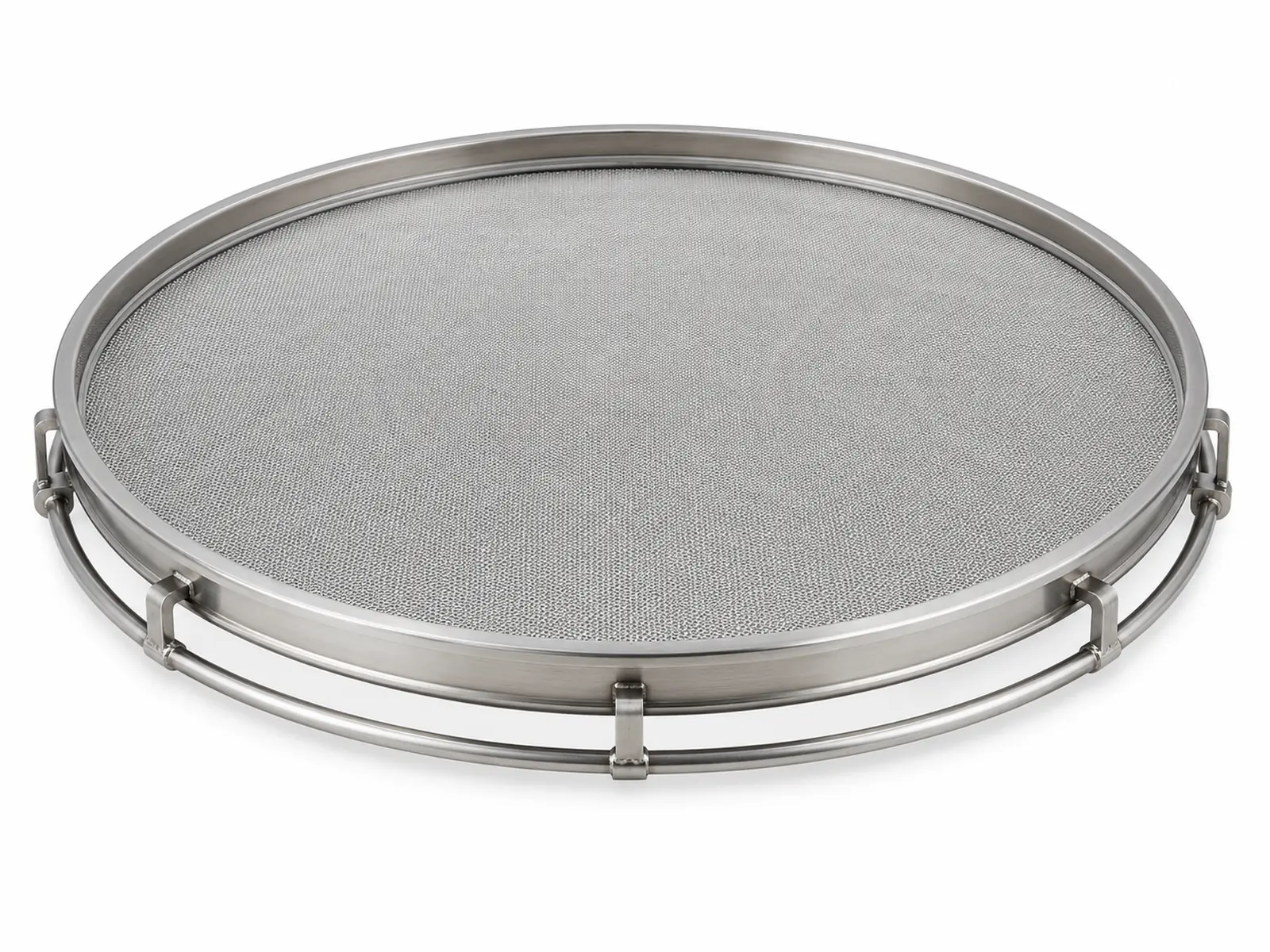
A round stainless steel ultrasonic sieve screen with transducer ring and cable mounted on a vibratory sifter

Ultrasonic Vibrating Sieve Screen is used primarily for sieving fine and electrostatic powders on vibratory sifters with a stainless mesh screen driven by an ultrasonic transducer ring that stops blinding. This page lists the industries and assemblies where it is specified, the selection criteria that matter for each application, handling and installation practice, and the cases where a different mesh, screen or filter type is the correct choice. It is supplied to Sifter OEM frames / ISO 3310-1 cloth.

Typical Applications for Ultrasonic Vibrating Sieve Screen

Where Ultrasonic Vibrating Sieve Screen is specified and bought:

  • Metal powders & additive manufacturing: sieving titanium, nickel and stainless powders at 15–60 µm.
  • Battery materials: cathode and anode powder screening.
  • Pharmaceutical & nutraceutical: fine API and excipient sieving.
  • Pigments & toners: fine powder classification.

How to Specify Ultrasonic Vibrating Sieve Screen for Your Application

  • Frame size: Match the sifter diameter (600–1500 mm).
  • Mesh: 200–500 mesh; ultrasonic drive becomes essential below about 100 µm.
  • Transducer & cable: Ring transducer frequency and generator compatibility.
  • Standard: Quote Sifter OEM frames / ISO 3310-1 cloth and the size designation from the table on the product page, plus any value you changed in the technical drawing.

Handling & Installation Practice

  • Keep the transducer ring bonded tight to the frame; a loose ring loses energy.
  • Check mesh tension and transducer output each shift.

Common Selection Mistakes with Ultrasonic Vibrating Sieve Screen

  • Running ultrasonics on slack cloth, which tears it.
  • Mixing generator and transducer from different makers.

Where Ultrasonic Vibrating Sieve Screen Is Not the Right Choice

Not needed for coarse free-flowing products.
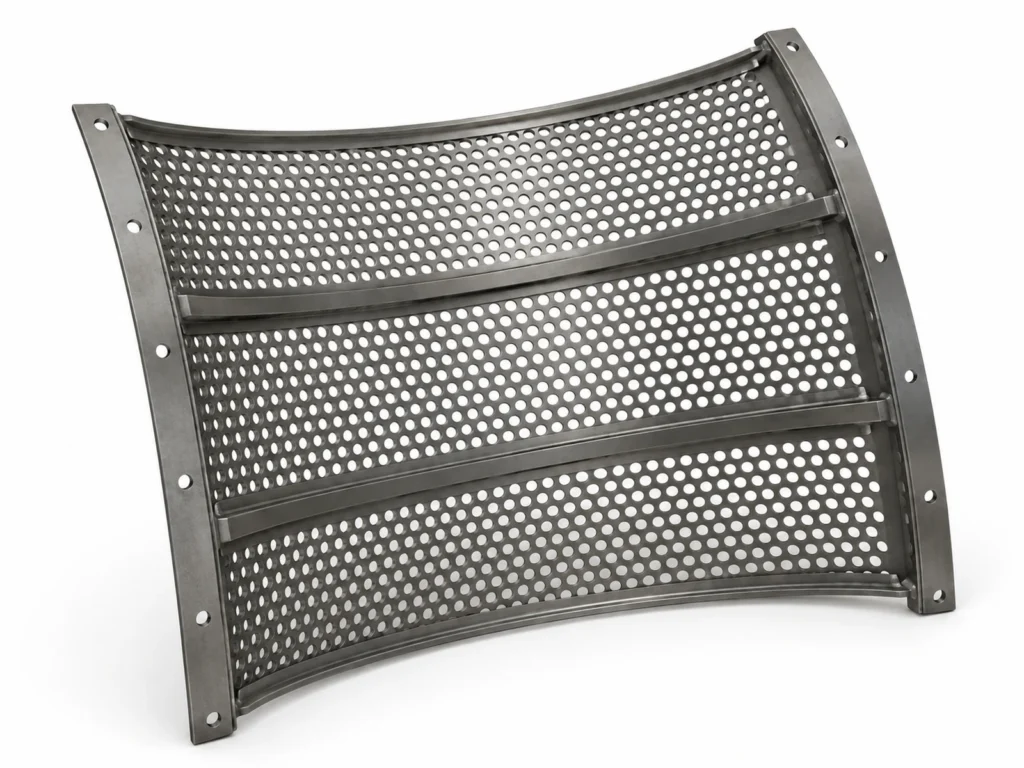
If This Construction Is Not the Right Fit

Closely related mesh types for the same duty — compare open area, aperture range and cleanability before you commit.

Technical Drawing

Customize the parameters below — every spec field is editable, and the drawing redraws to match the values you choose. Changing the size will snap the other fields to that size's standard values; you can then override any individual value.

Sends the selected values to the quote form below.

Request a Quote

Set the size and options in the drawing above, then send the exact configuration straight to this form.

Request a Quotation

Specification
Business Information

Dimensions & Specifications (Sifter OEM frames / ISO 3310-1 cloth)

SizeFrame diameter (mm)Frame height (mm)Mesh countAperture (mm)Transducer
600 / 200-mesh60060200-Mesh0.07436 kHz ring
800 / 325-mesh80060325-Mesh0.04236 kHz ring
1000 / 400-mesh100080400-Mesh0.0342 u00d7 36 kHz
1500 / 500-mesh150080500-Mesh0.0263 u00d7 36 kHz

Frequently Asked Questions

What is Ultrasonic Vibrating Sieve Screen used for?

Sieving fine and electrostatic powders on vibratory sifters with a stainless mesh screen driven by an ultrasonic transducer ring that stops blinding.

What does ultrasonic sieving do?

High-frequency vibration on the mesh prevents fine powder from blinding it.

How fine can ultrasonic sieves go?

Down to about 20–25 µm in production.

Can I retrofit ultrasonics?

Yes, with a matched screen and transducer ring.

Can I get a quote for Ultrasonic Vibrating Sieve Screen to my own drawing?

Yes. Set the size and any custom value in the technical drawing on the product page and send it with the quote form; we reply within one business day.