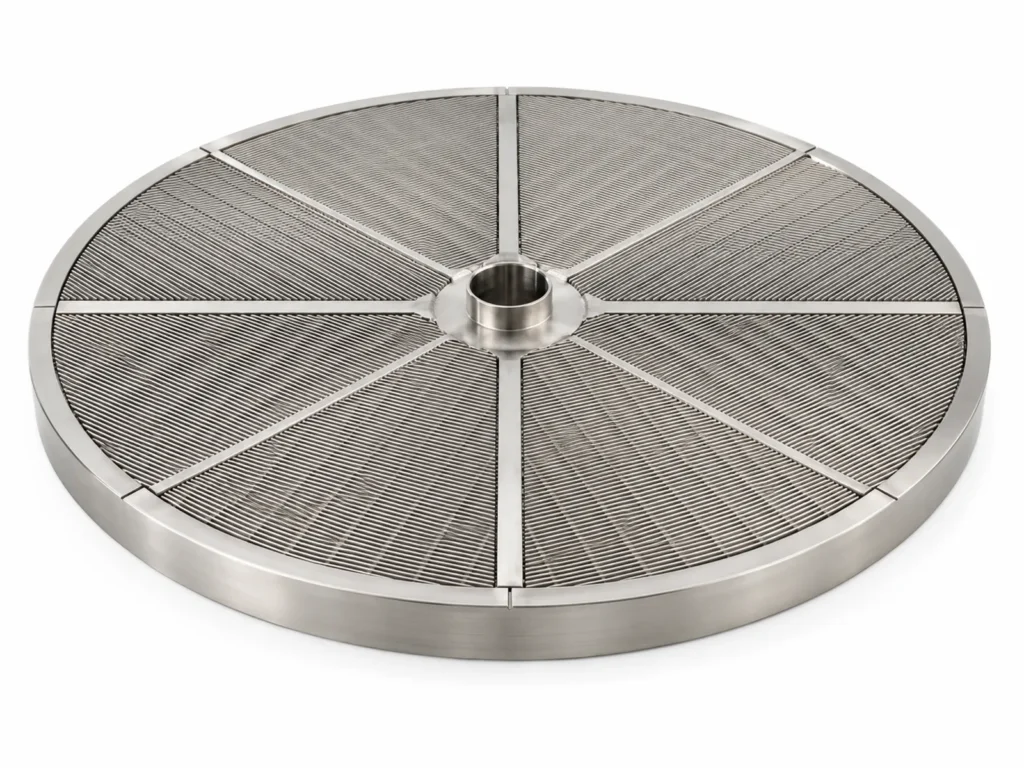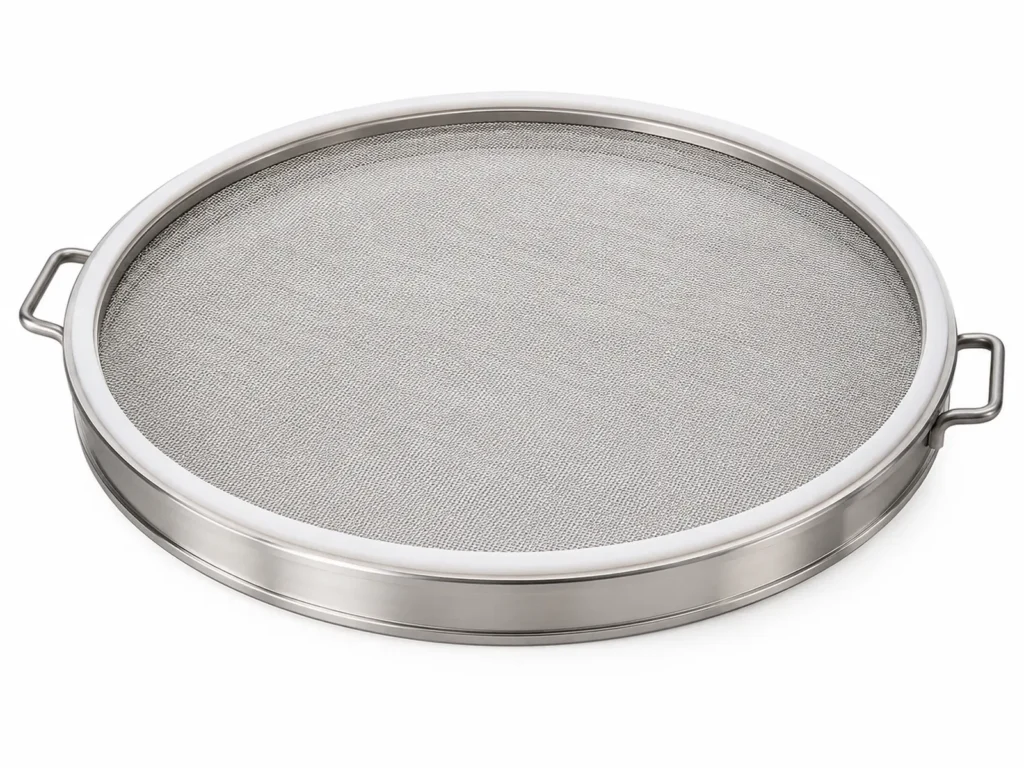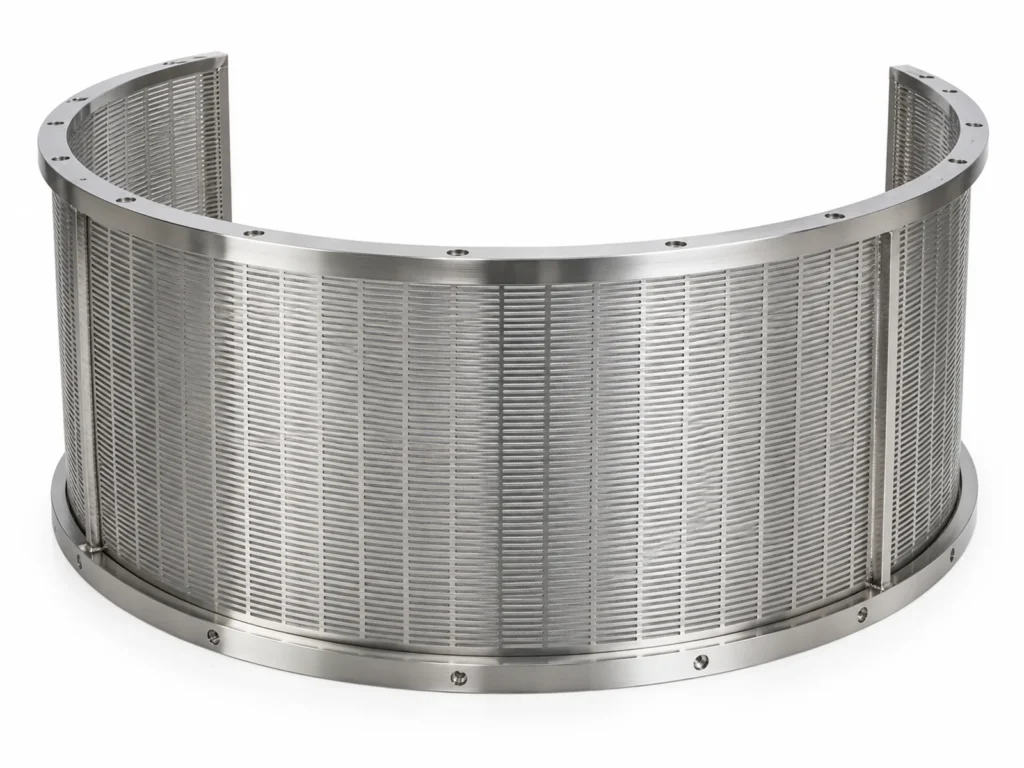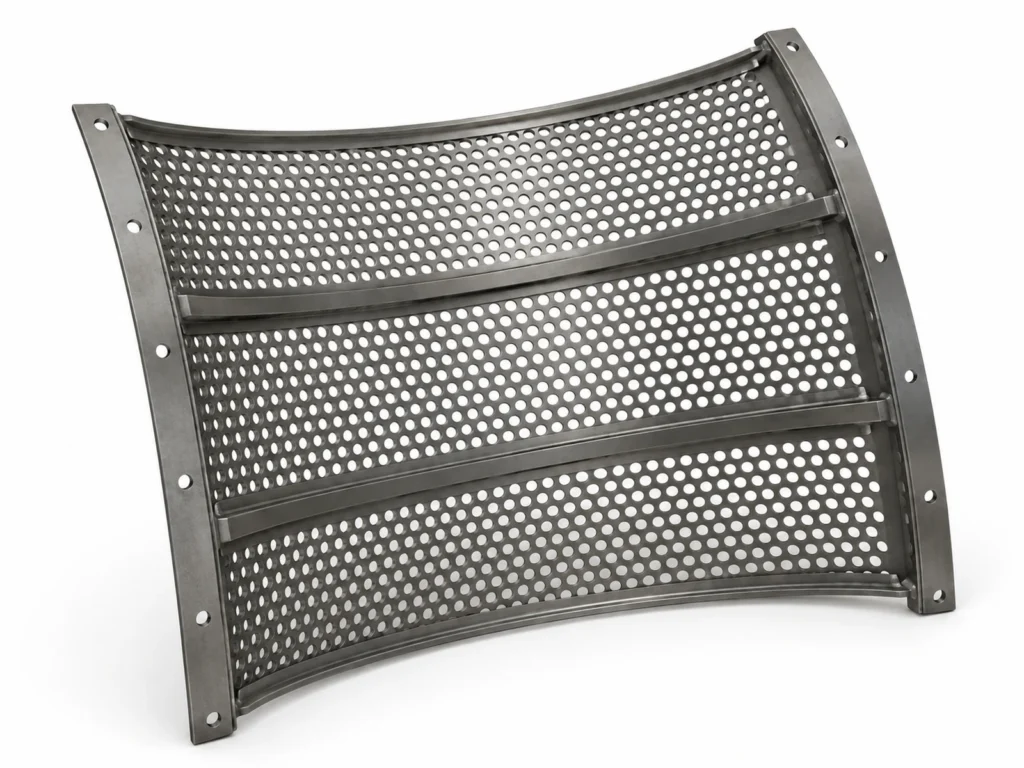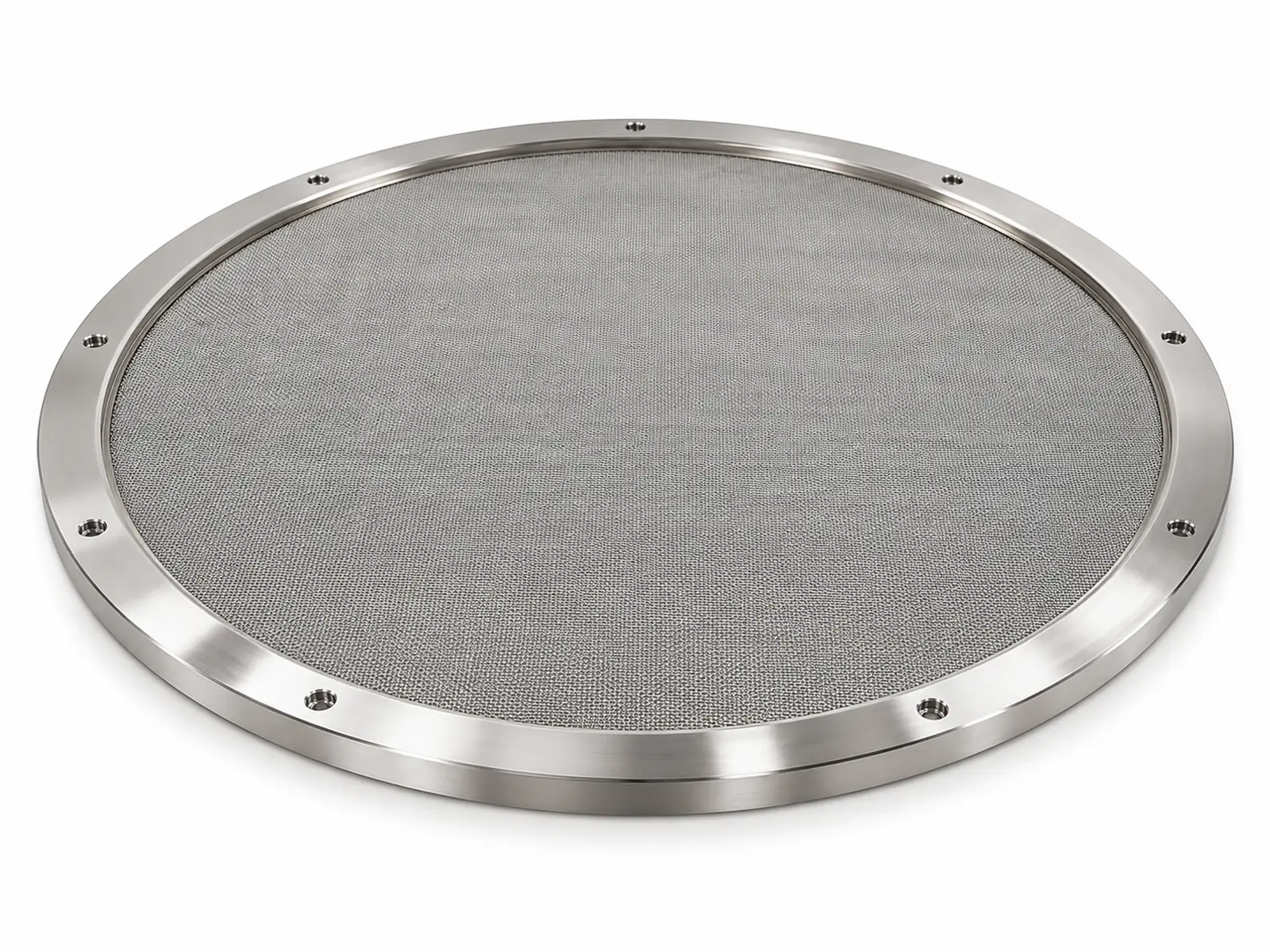
The primary duty of Fluid Bed Dryer Filter Screen is holding product in fluid bed dryers and granulators while drying air passes up through a fine dutch-weave or sintered stainless screen. Below: the sectors that specify it in volume, the checklist used to select the right mesh and alloy for the application, handling notes, and the known limits of the type.
Typical Applications for Fluid Bed Dryer Filter Screen
Where Fluid Bed Dryer Filter Screen is specified and bought:
- Pharmaceutical granulation: fluid bed dryer and granulator product bowls.
- Food powders: instant coffee, milk and flavor agglomeration.
- Chemicals: drying of crystalline products.
- Agrochemicals: granule coating and drying.
How to Specify Fluid Bed Dryer Filter Screen for Your Application
- Bowl size: Diameter matched to the dryer model and batch size.
- Micron rating: 25–100 µm so fines stay in the bed while air flows freely.
- Construction: Dutch weave on a support grid, or rigid five-layer sintered mesh welded into a ring.
- Standard: Quote GMP / ASME BPE finishes and the size designation from the table on the product page, plus any value you changed in the technical drawing.
Handling & Installation Practice
- Seal the screen ring fully so no product escapes to the air plenum.
- Wash in place, inspect under light for holes, and dry before the next batch.
Common Selection Mistakes with Fluid Bed Dryer Filter Screen
- Using too coarse a screen, losing fines into the plenum.
- Flexible woven screens without support, which sag and crack at the ring.
Where Fluid Bed Dryer Filter Screen Is Not the Right Choice
Not an exhaust filter — the bag or cartridge filter above the bed catches fines carried out with the air.