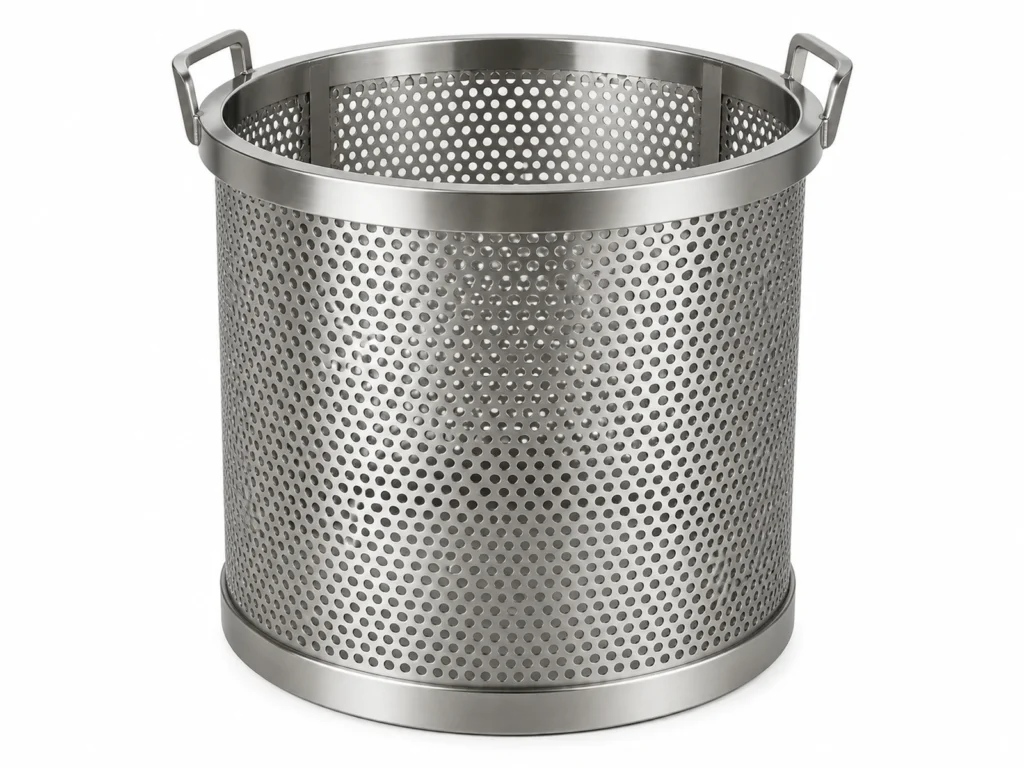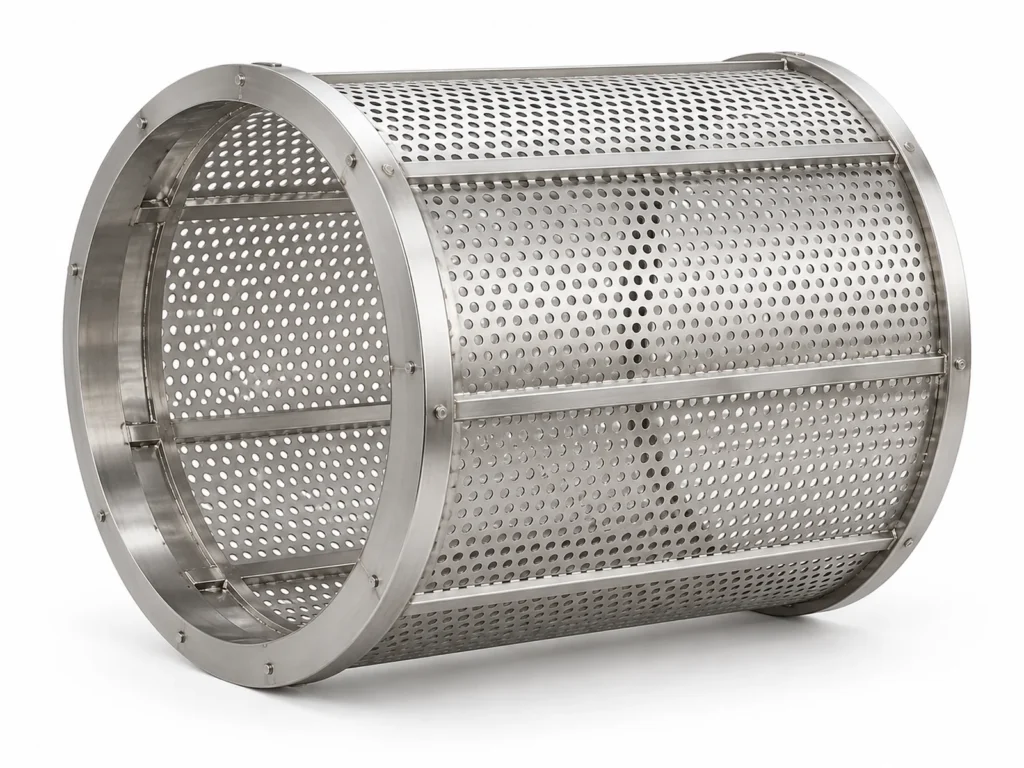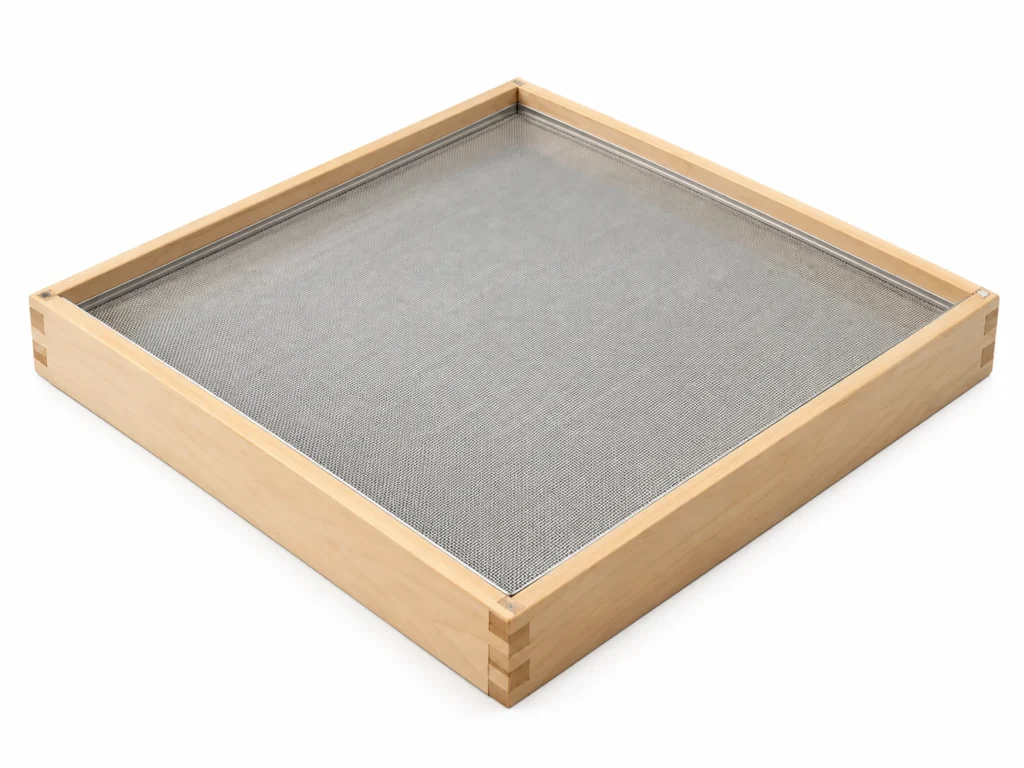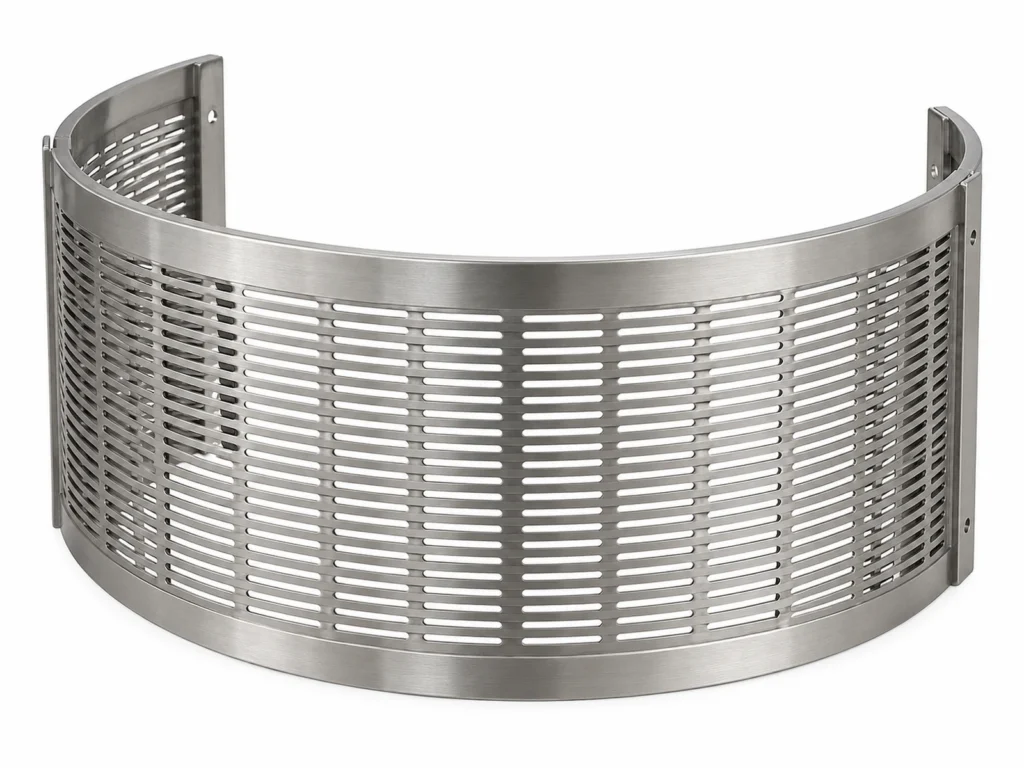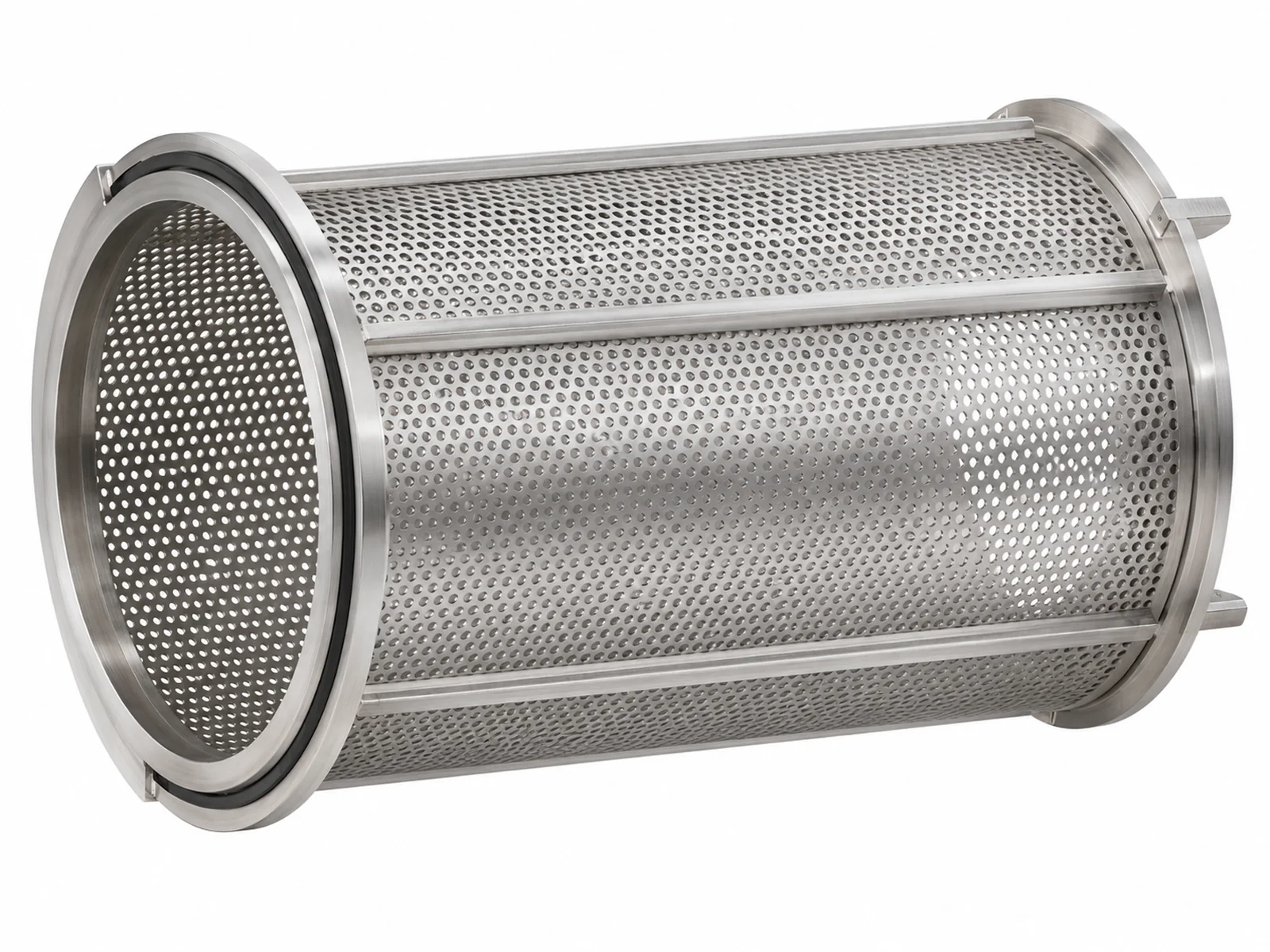
The primary duty of Pulper Finisher Screen is separating smooth pulp and juice from seeds, skins and fibers in tomato and fruit pulper-finishers, where rotating paddles force product through a cylindrical perforated screen. Below: the sectors that specify it in volume, the checklist used to select the right mesh and alloy for the application, handling notes, and the known limits of the type.
Typical Applications for Pulper Finisher Screen
Where Pulper Finisher Screen is specified and bought:
- Tomato processing: hot- and cold-break pulping and finishing for paste and sauce.
- Fruit purée: mango, apricot, banana and berry purées.
- Citrus processing: juice finishers that remove pulp and seeds.
- Baby food: ultra-smooth purée finishing.
How to Specify Pulper Finisher Screen for Your Application
- Hole size by stage: 1.2–1.5 mm on the pulper, 0.5–0.8 mm on the finisher.
- Screen size: Diameter and length must match the machine and paddle rotor.
- Alloy: SS316 for acidic tomato and fruit products.
- Standard: Quote FDA 21 CFR / EU 1935/2004 food contact and the size designation from the table on the product page, plus any value you changed in the technical drawing.
Handling & Installation Practice
- Set paddle-to-screen clearance after every screen change.
- Run CIP at the end of each shift so skins do not dry in the holes.
Common Selection Mistakes with Pulper Finisher Screen
- Paddles touching the screen, which tears it.
- Using a finisher screen on the pulper stage, so seeds blind it immediately.
Where Pulper Finisher Screen Is Not the Right Choice
Not a juice clarifier; centrifuges or filters remove fine solids afterwards.