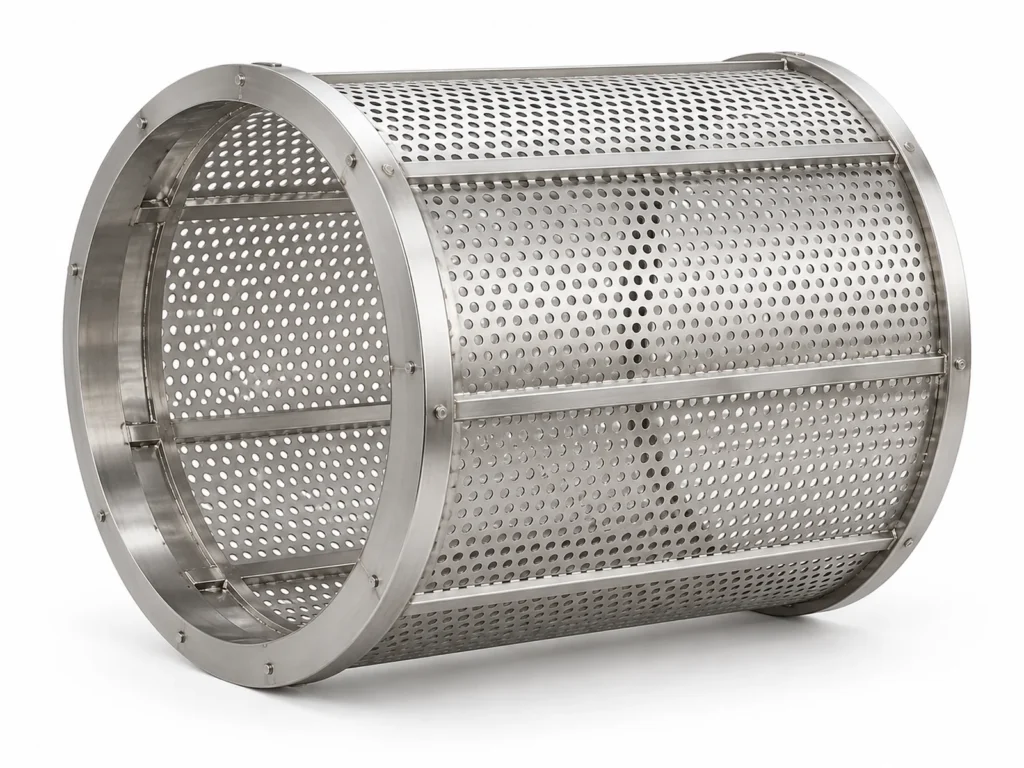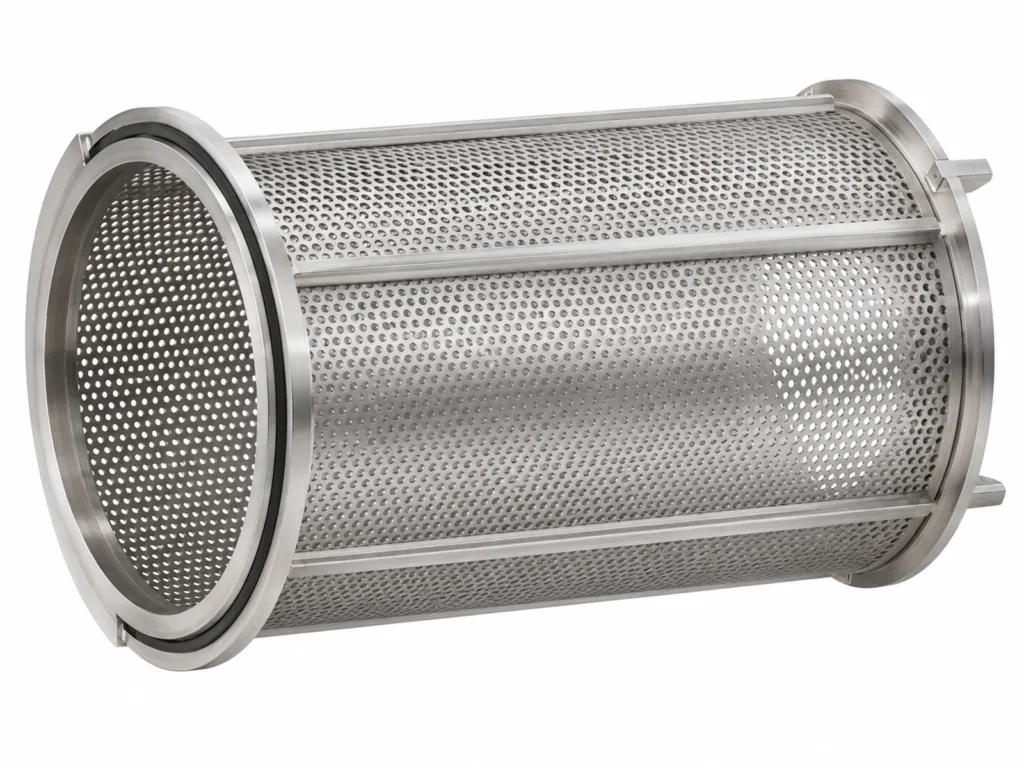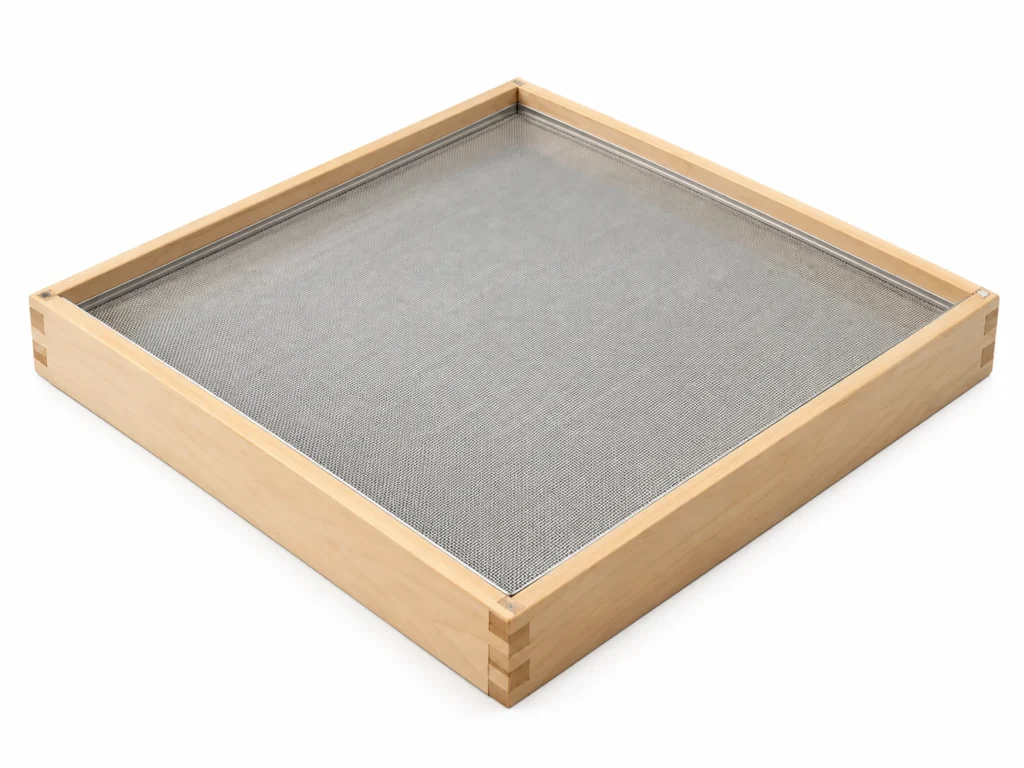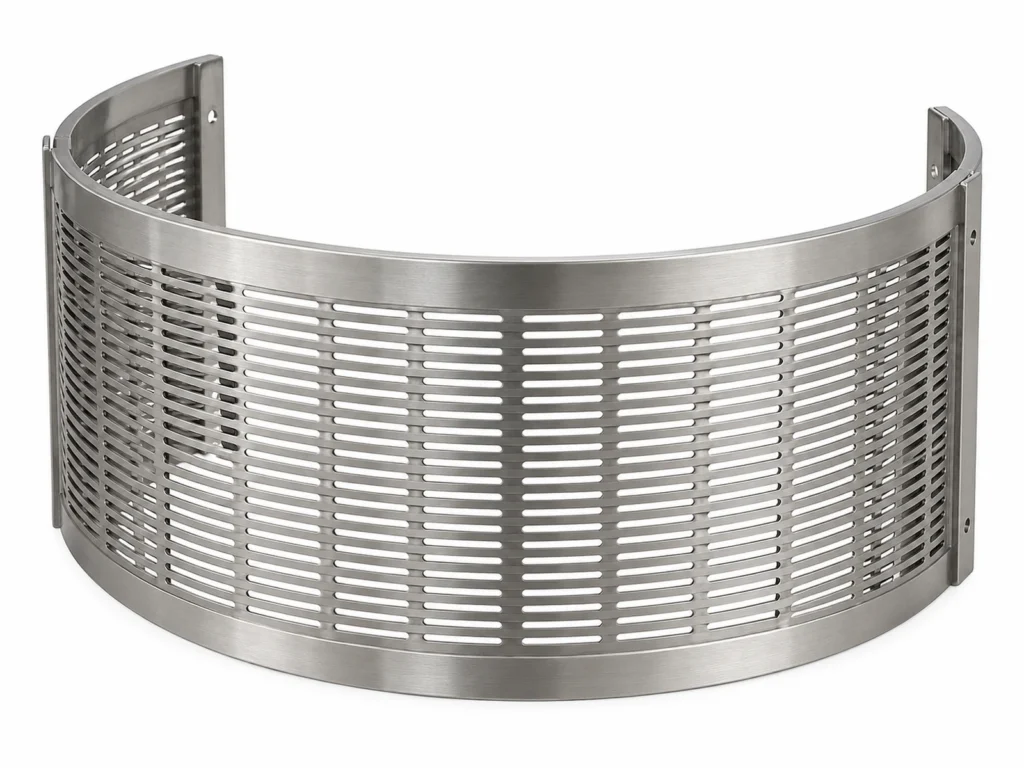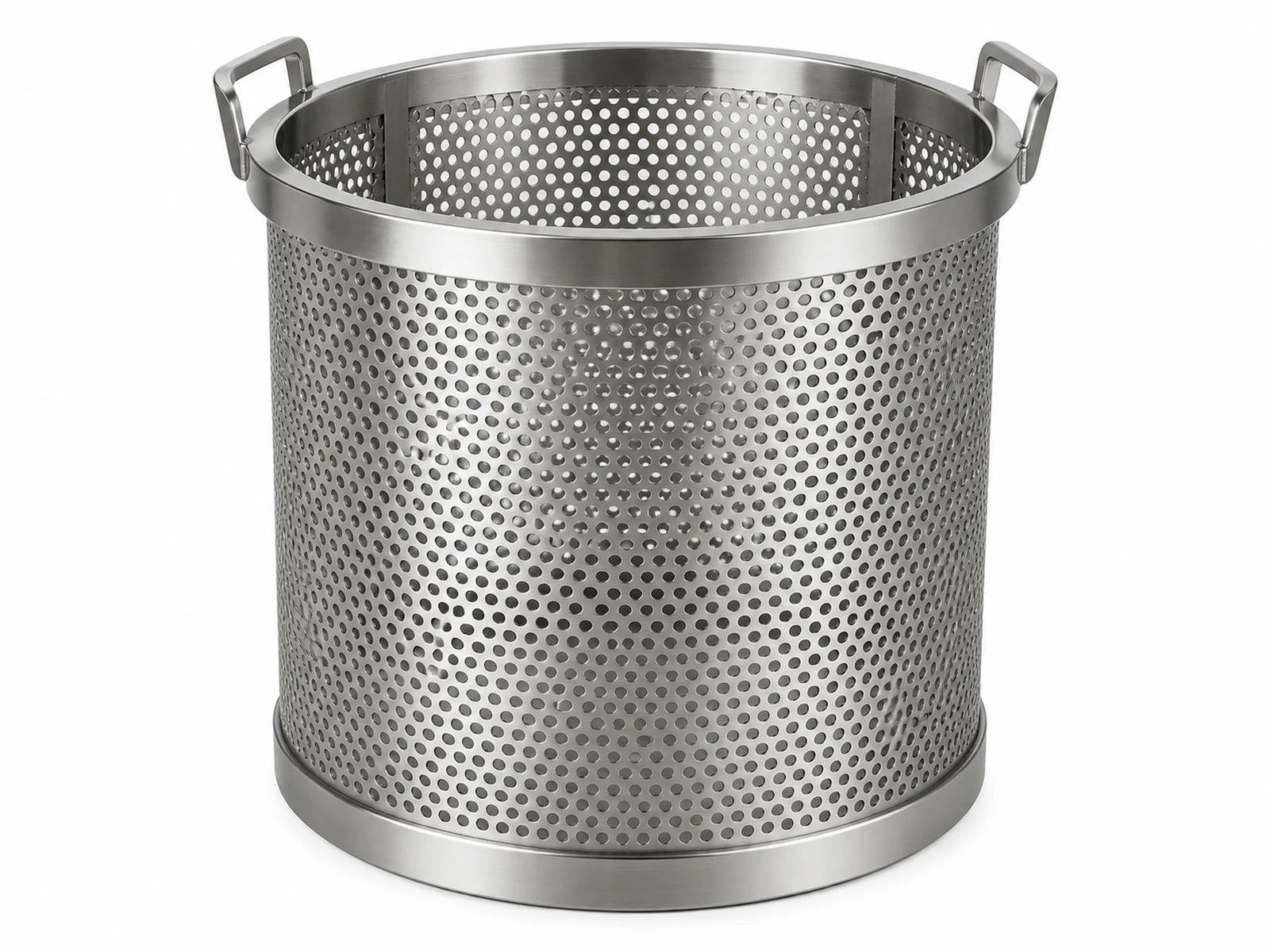
Fruit & Juice Press Filter Screen is used primarily for separating juice from pomace in belt presses, hydraulic basket presses and cider racks with perforated stainless screens that resist acid and constant pressing loads. This page lists the industries and assemblies where it is specified, the selection criteria that matter for each application, handling and installation practice, and the cases where a different mesh, screen or filter type is the correct choice. It is supplied to FDA 21 CFR / EU 1935/2004 food contact.
Typical Applications for Fruit & Juice Press Filter Screen
Where Fruit & Juice Press Filter Screen is specified and bought:
- Juice processors: belt press and pneumatic press screens for apple, pear and grape.
- Cideries & wineries: hydraulic basket and rack-and-cloth presses.
- Citrus processing: extractor strainer tubes.
- Cold-pressed juice bars: hydraulic press plates and baskets.
How to Specify Fruit & Juice Press Filter Screen for Your Application
- Hole size: 0.5–1.5 mm: finer for clearer juice, coarser for higher throughput and less blinding.
- Thickness & support: Plate thickness and backing for the press force.
- Alloy: SS316 resists fruit acids and cleaning chemicals.
- Standard: Quote FDA 21 CFR / EU 1935/2004 food contact and the size designation from the table on the product page, plus any value you changed in the technical drawing.
Handling & Installation Practice
- Clean immediately after pressing; dried pectin and sugar are hard to remove.
- Inspect for cracked holes or worn edges at season start.
Common Selection Mistakes with Fruit & Juice Press Filter Screen
- Choosing holes so fine they blind with pulp.
- Using SS304 with acidic citrus.
Where Fruit & Juice Press Filter Screen Is Not the Right Choice
Not a final clarification filter — juice still needs centrifuging or fine filtration.