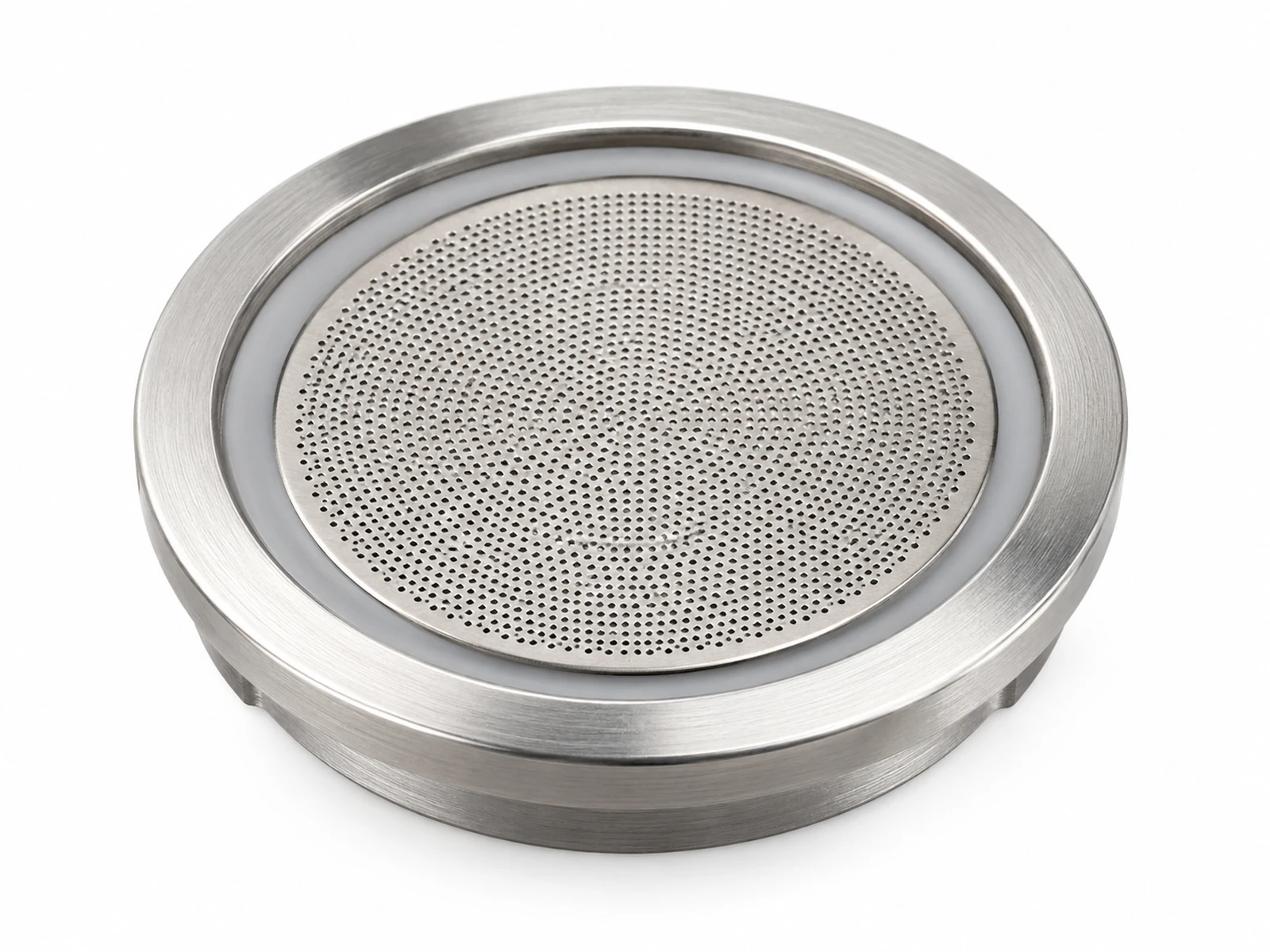
Application guide for Vibrating Mesh Nebulizer Plate to ISO 27427 nebulizer designs. The core duty of the type is generating inhalable aerosol in vibrating-mesh nebulizers by pushing liquid medication through thousands of micron-scale laser-drilled holes. The typical industries, the how-to-specify checklist, handling practice and the exclusion cases are set out below.
Typical Applications for Vibrating Mesh Nebulizer Plate
Where Vibrating Mesh Nebulizer Plate is specified and bought:
- Medical device OEMs: portable and handheld nebulizers.
- Hospital respiratory therapy: in-line ventilator nebulizers.
- Veterinary medicine: animal nebulizers.
- Pharmaceutical R&D: aerosol drug delivery studies.
How to Specify Vibrating Mesh Nebulizer Plate for Your Application
- Hole size: Sets droplet MMAD — about 3–5 µm for deep-lung delivery.
- Plate diameter: Matches the piezo actuator and housing.
- Material: Biocompatible stainless or palladium-nickel alloys.
- Standard: Quote ISO 27427 nebulizer designs and the size designation from the table on the product page, plus any value you changed in the technical drawing.
Handling & Installation Practice
- Clean after every use per the device instructions.
- Never touch or wipe the mesh.
Common Selection Mistakes with Vibrating Mesh Nebulizer Plate
- Saline crystal buildup that blocks holes.
- Using a mesh with the wrong MMAD.
Where Vibrating Mesh Nebulizer Plate Is Not the Right Choice
Not for suspensions with large particles that cannot pass the holes.