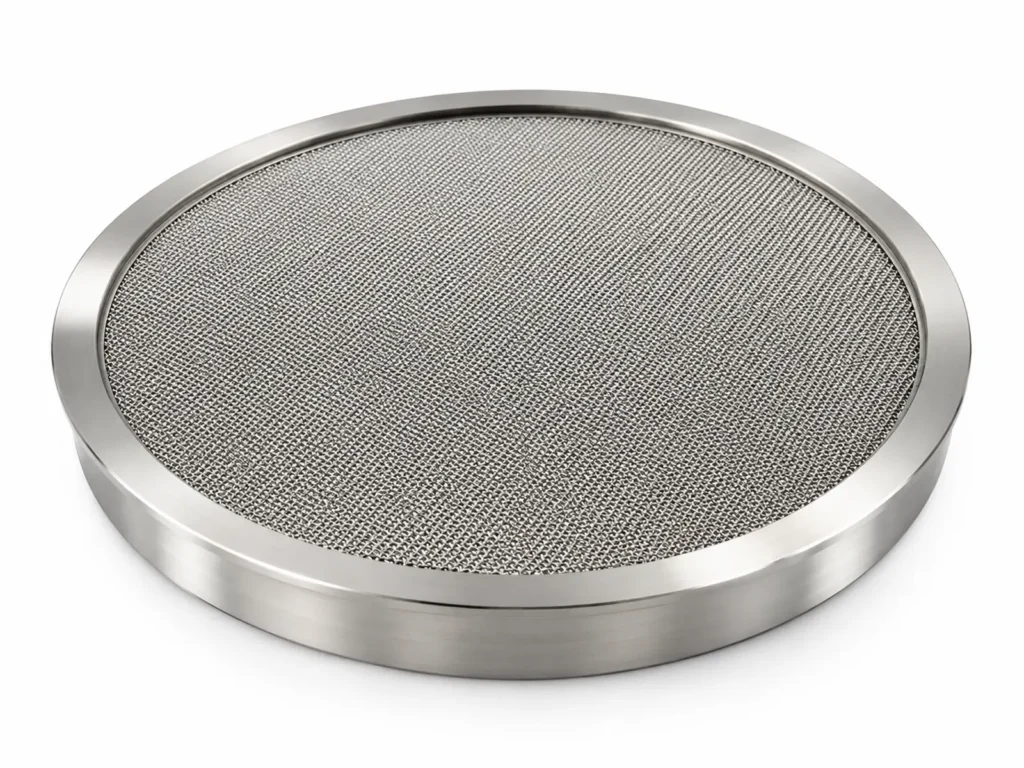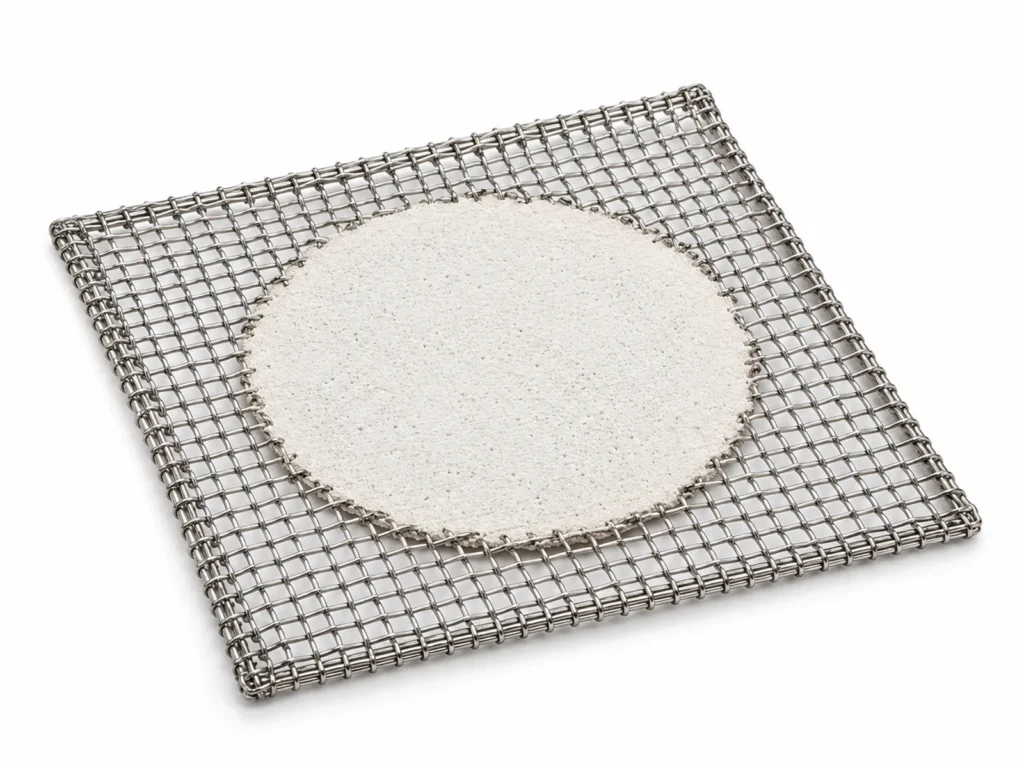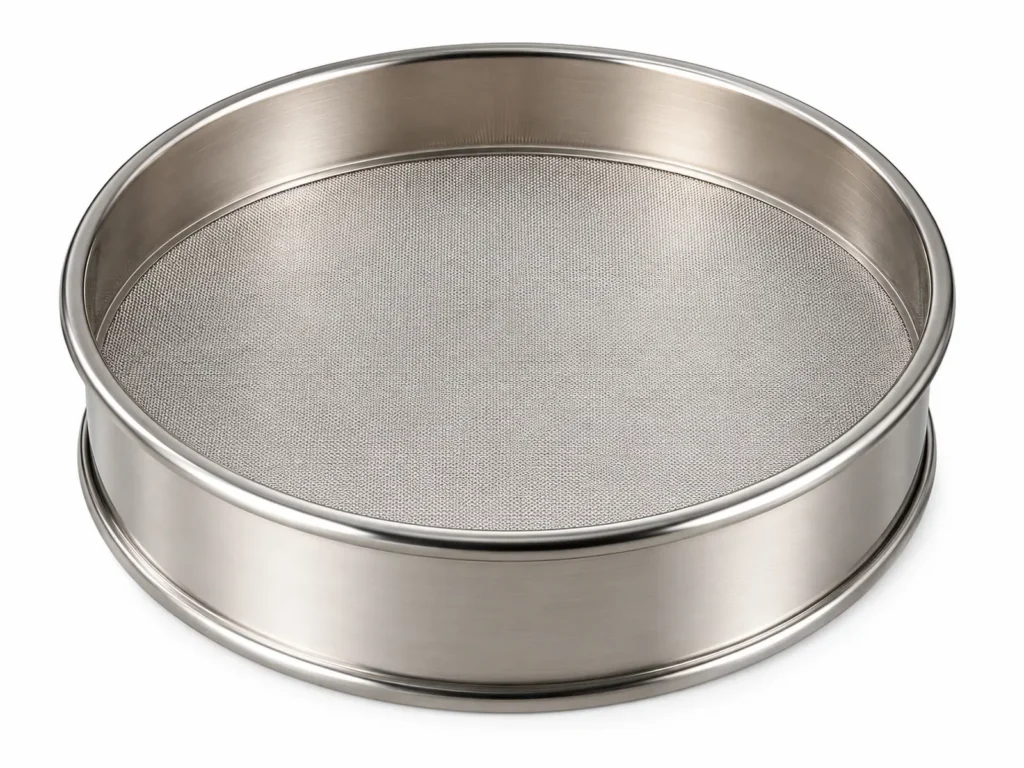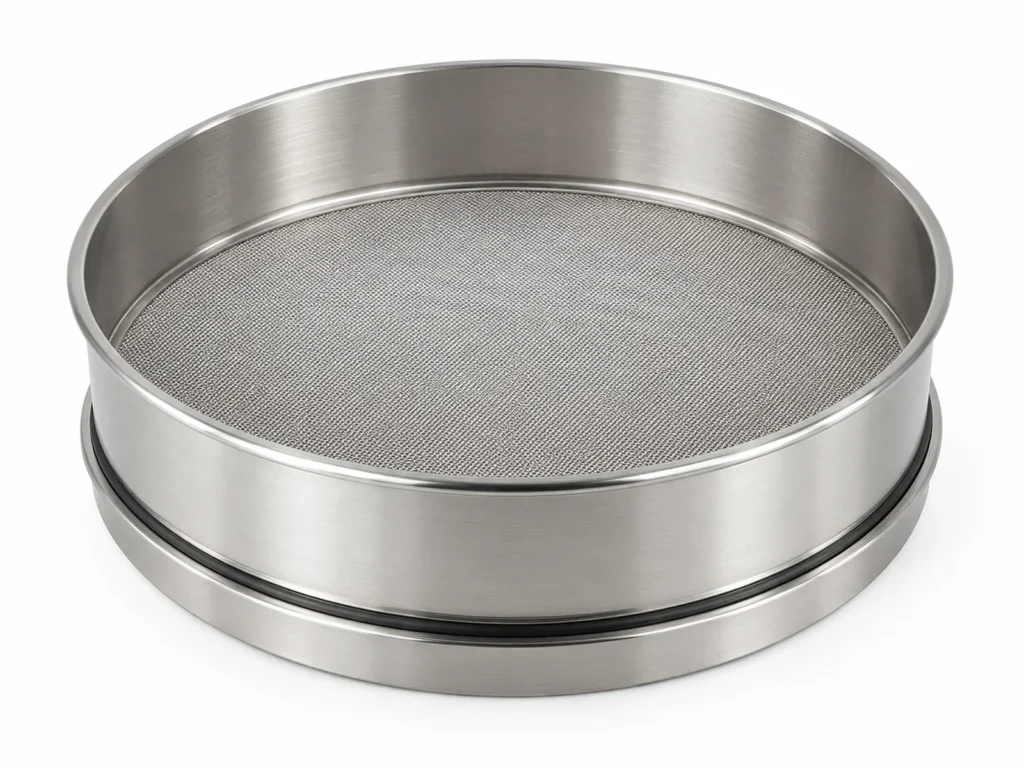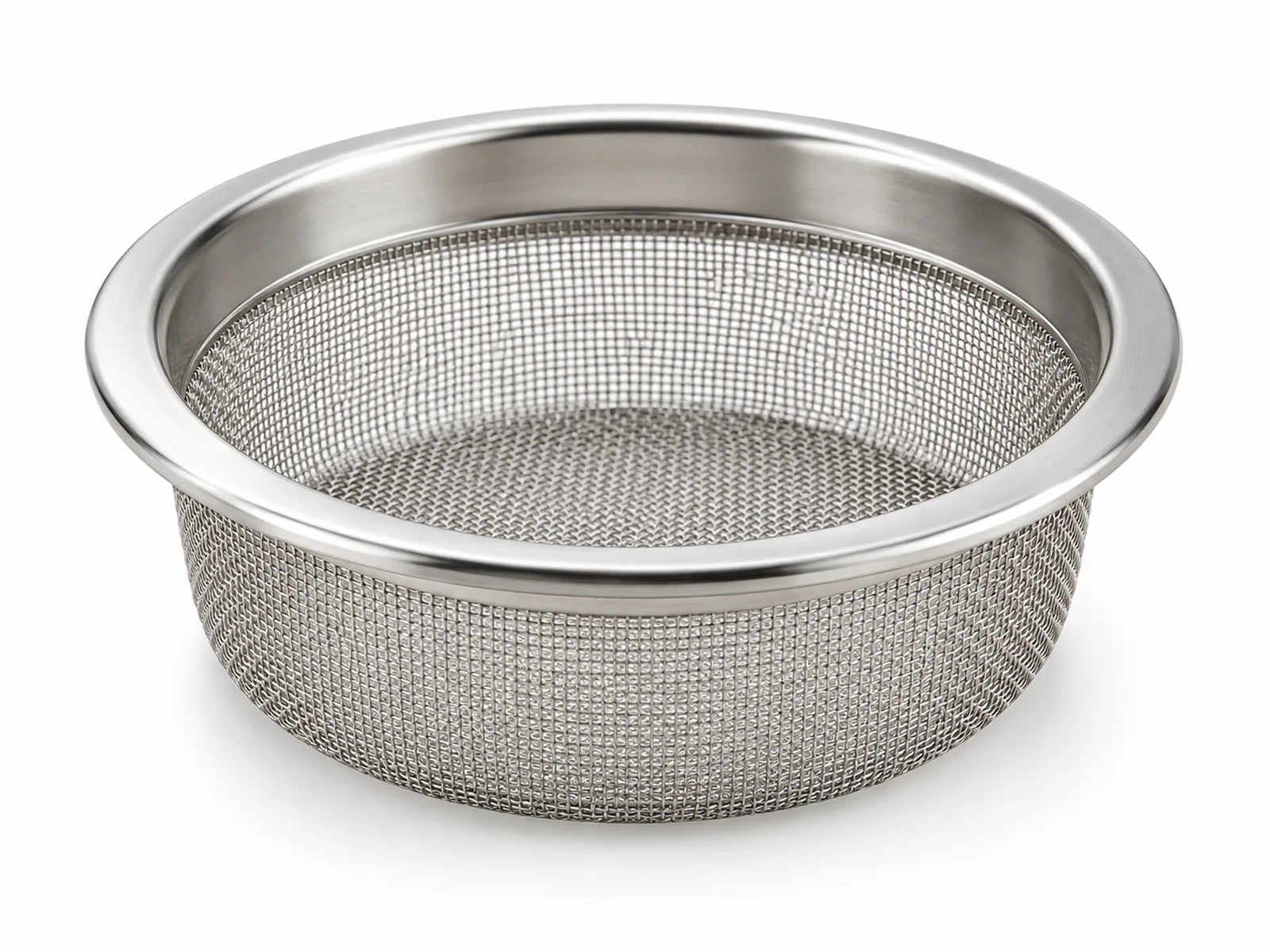
Application guide for Stainless Tissue & Cell Dissociation Sieve to ISO 3310-1 cloth. The core duty of the type is pressing tissue through, and straining cell suspensions with, autoclavable stainless mesh as a reusable alternative to plastic cell strainers. The typical industries, the how-to-specify checklist, handling practice and the exclusion cases are set out below.
Typical Applications for Stainless Tissue & Cell Dissociation Sieve
Where Stainless Tissue & Cell Dissociation Sieve is specified and bought:
- Cell biology & immunology labs: single-cell suspensions from spleen, lymph node and tumor tissue.
- Pathology & histology: tissue processing.
- Organoid & stem-cell work: sizing organoid fragments.
- Food & environmental science: micro-sieving of samples.
How to Specify Stainless Tissue & Cell Dissociation Sieve for Your Application
- Aperture: 40, 70, 100 or 250 µm to match the cell or fragment size.
- Format: 75 mm diameter fits standard dishes.
- Material: SS316 withstands repeated autoclave cycles.
- Standard: Quote ISO 3310-1 cloth and the size designation from the table on the product page, plus any value you changed in the technical drawing.
Handling & Installation Practice
- Autoclave before each use and rinse immediately after.
- Use a syringe plunger to press tissue gently through the mesh.
Common Selection Mistakes with Stainless Tissue & Cell Dissociation Sieve
- Generating single-use plastic waste with every prep.
- Choosing too small an aperture, which loses cells.
Where Stainless Tissue & Cell Dissociation Sieve Is Not the Right Choice
Not for sterile filtration of liquids; use a 0.22 µm membrane for that.