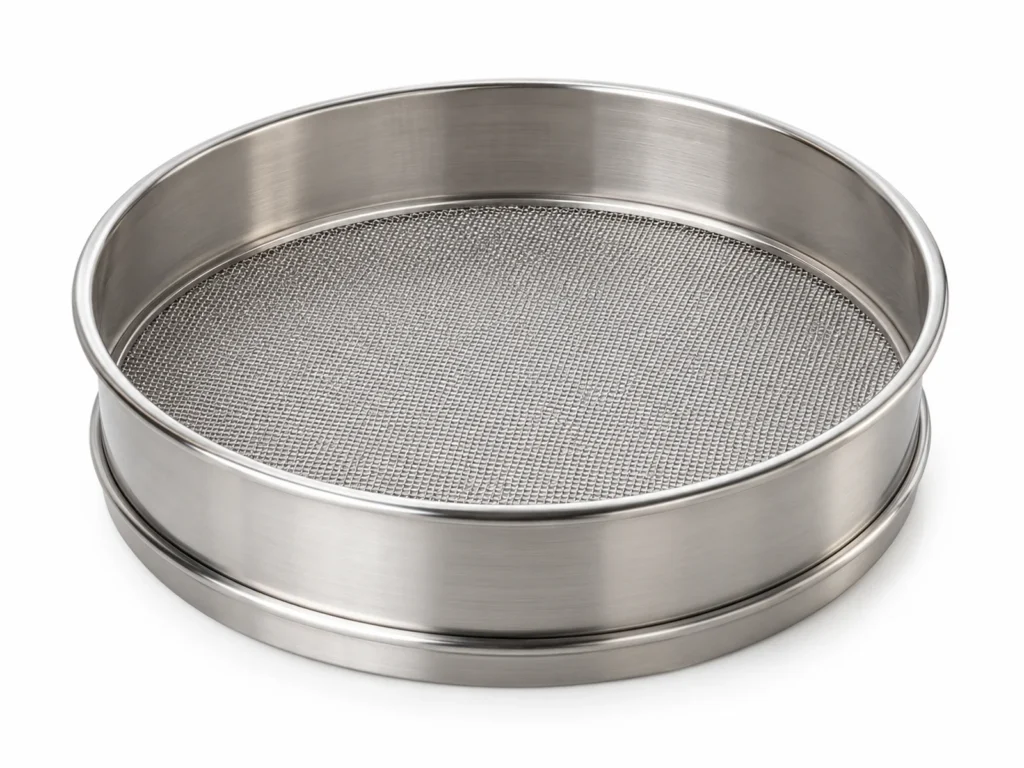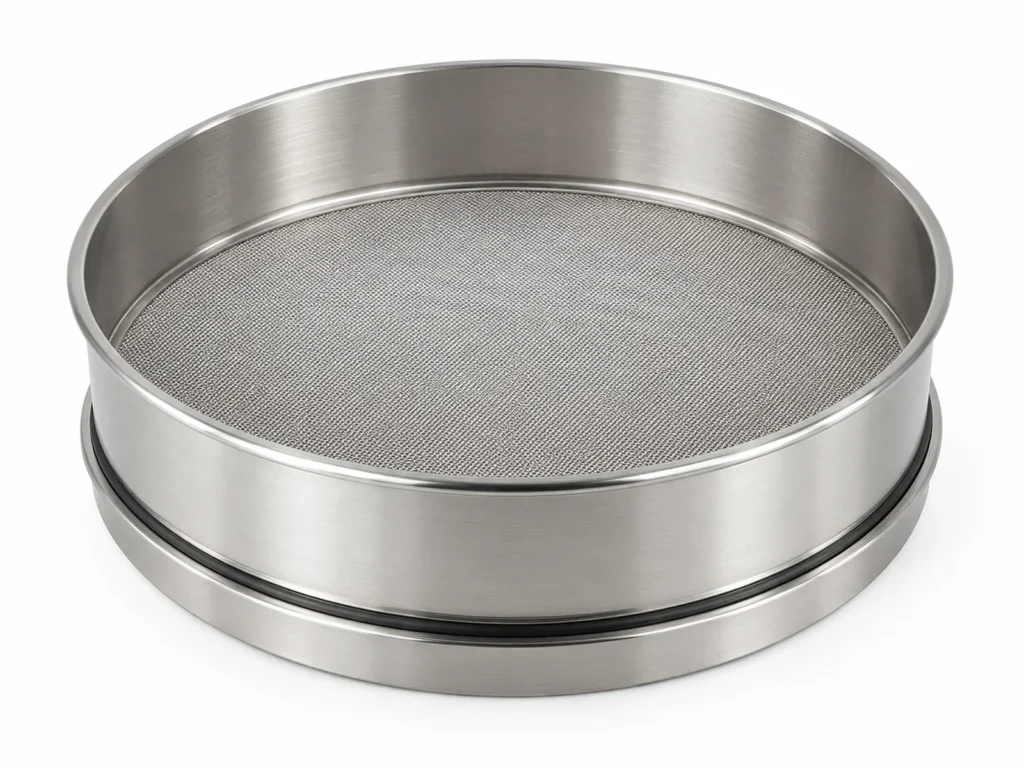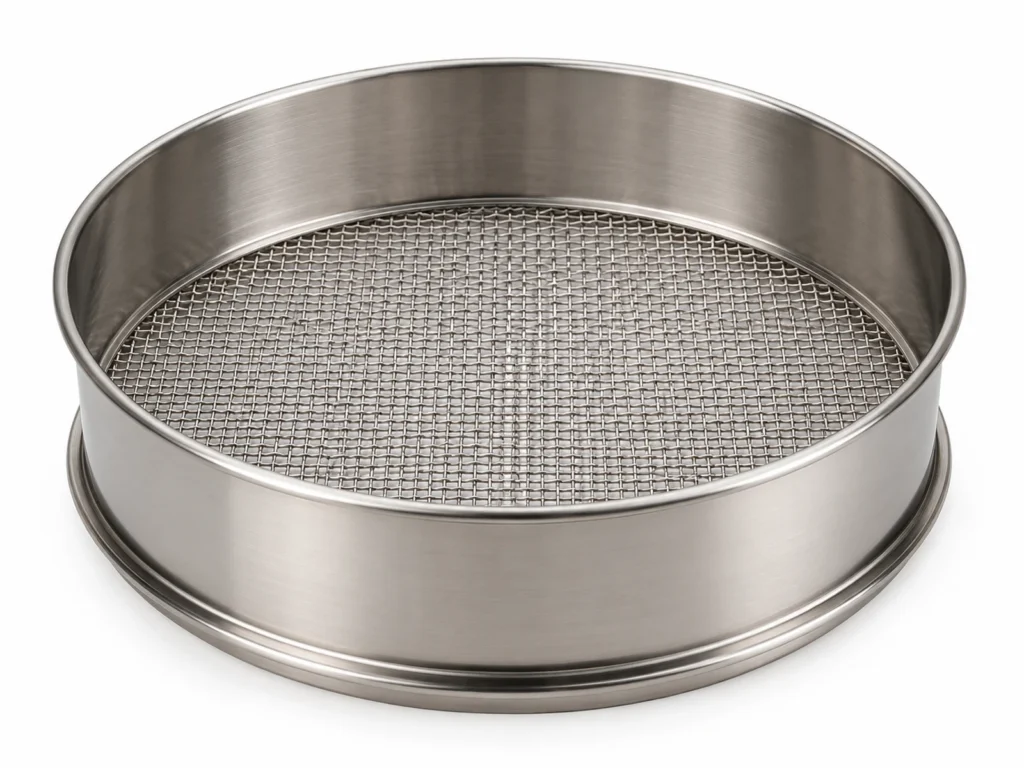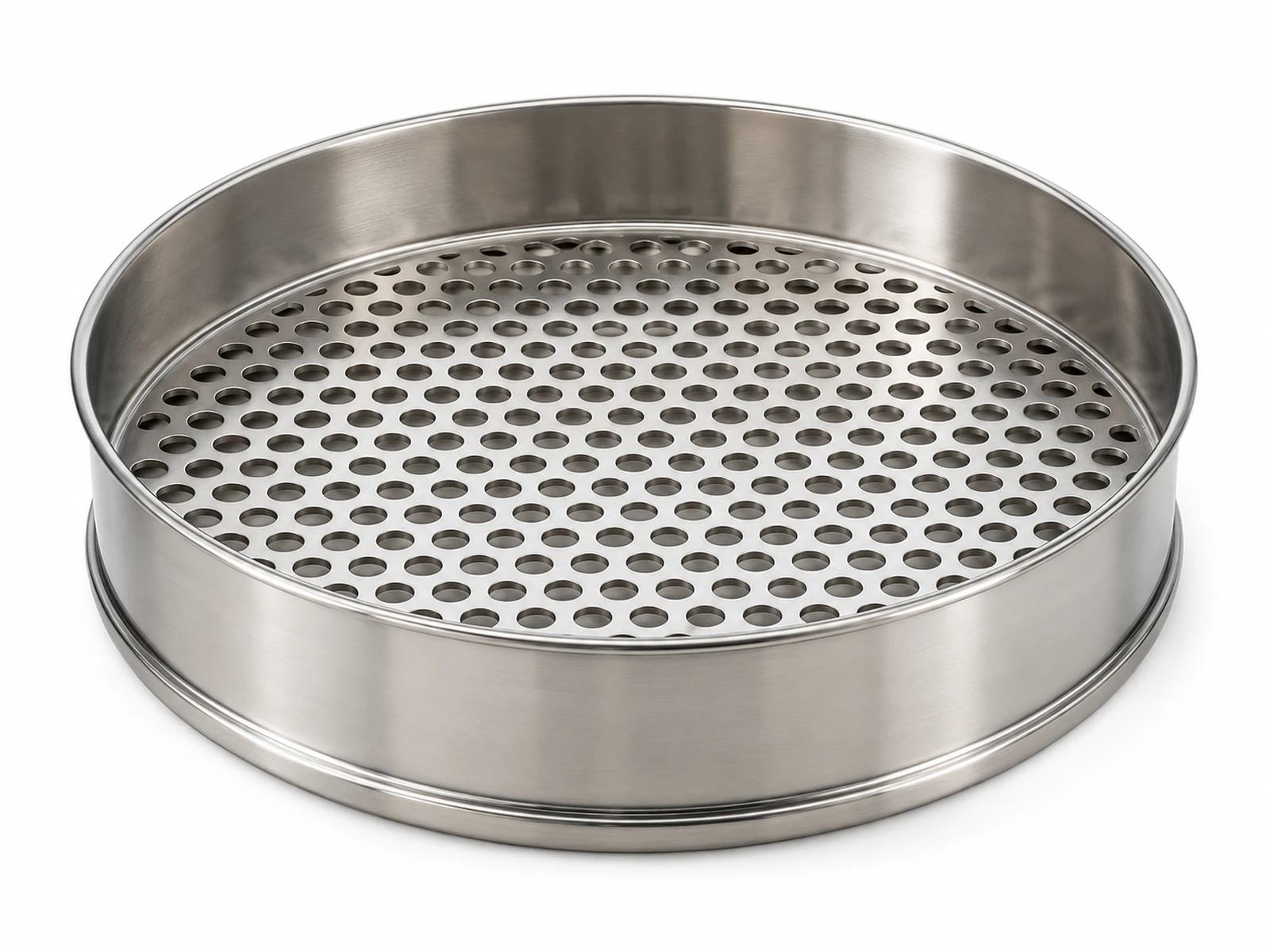
ISO 3310-2 Perforated Plate Test Sieve (ISO 3310-2) is specified where the duty calls for sizing coarse aggregates, ores, fertilizer granules and pellets with round- or square-hole perforated plates whose holes are certified to ISO 3310-2. The sections below cover the typical end-uses by industry, the mesh, micron and material decisions for each, installation practice, and the applications this product type is not suited to.
Typical Applications for ISO 3310-2 Perforated Plate Test Sieve
Where ISO 3310-2 Perforated Plate Test Sieve is specified and bought:
- Aggregate & road materials labs: coarse gradation from 4 mm upward.
- Fertilizer producers: granule size distribution checks.
- Mining & minerals: crushed ore and coal sizing.
- Plastics & feed pelleting: pellet length and diameter QC.
How to Specify ISO 3310-2 Perforated Plate Test Sieve for Your Application
- Hole shape: Round or square holes as the test method specifies — results differ between them.
- Frame size: 300 mm for routine coarse work; 450 mm for very coarse material.
- Plate thickness: 1–2 mm; thicker plates resist denting by heavy stones.
- Standard: Quote ISO 3310-2 and the size designation from the table on the product page, plus any value you changed in the technical drawing.
Handling & Installation Practice
- Load samples gently — dropped stones dent the plate and distort holes.
- Check holes periodically with a gauge; worn holes oversize results.
Common Selection Mistakes with ISO 3310-2 Perforated Plate Test Sieve
- Substituting wire cloth where the standard calls for plate.
- Ignoring hole wear on heavily used aggregate sieves.
Where ISO 3310-2 Perforated Plate Test Sieve Is Not the Right Choice
Not for fine powders below about 1 mm; woven-wire test sieves are used there.