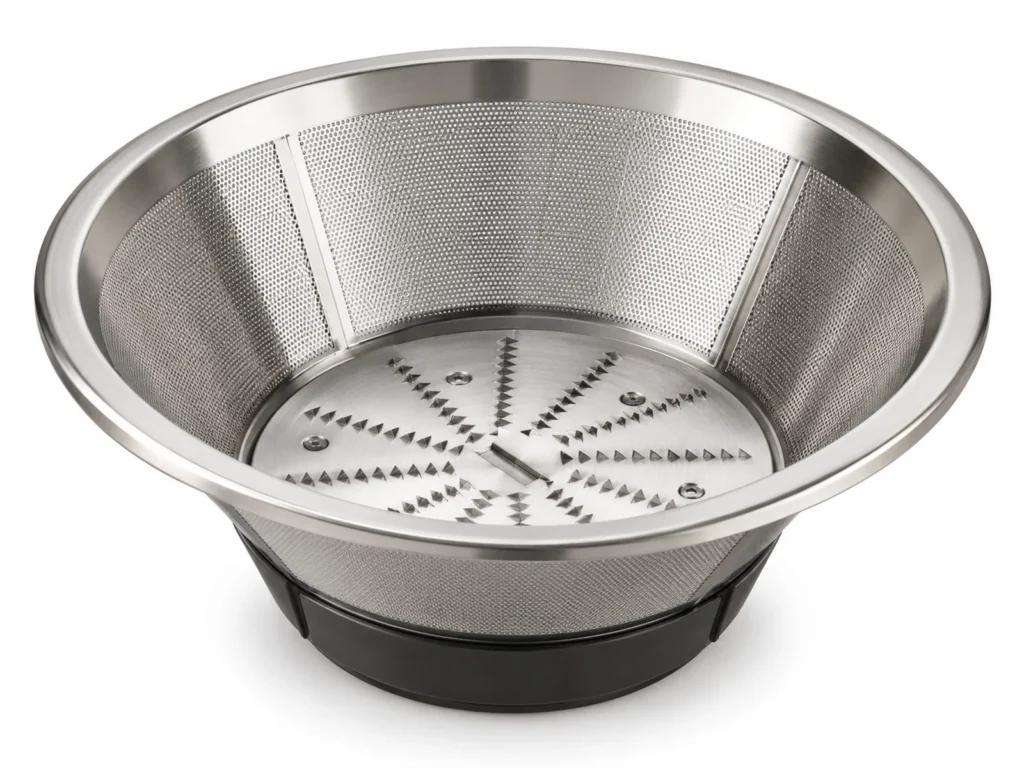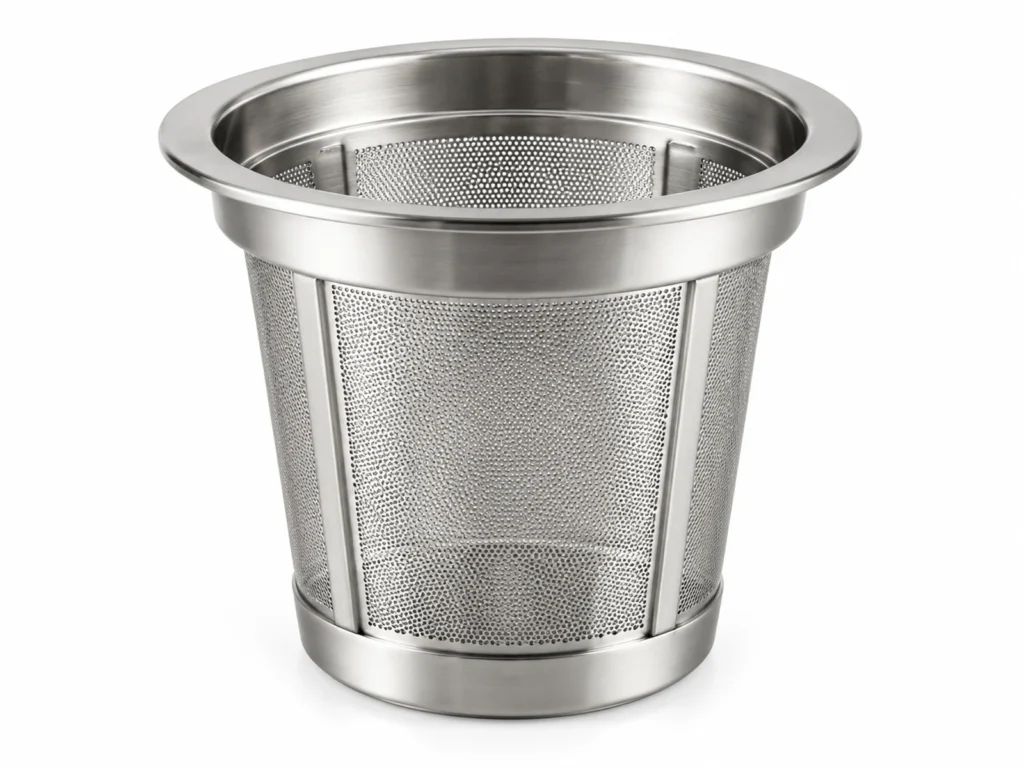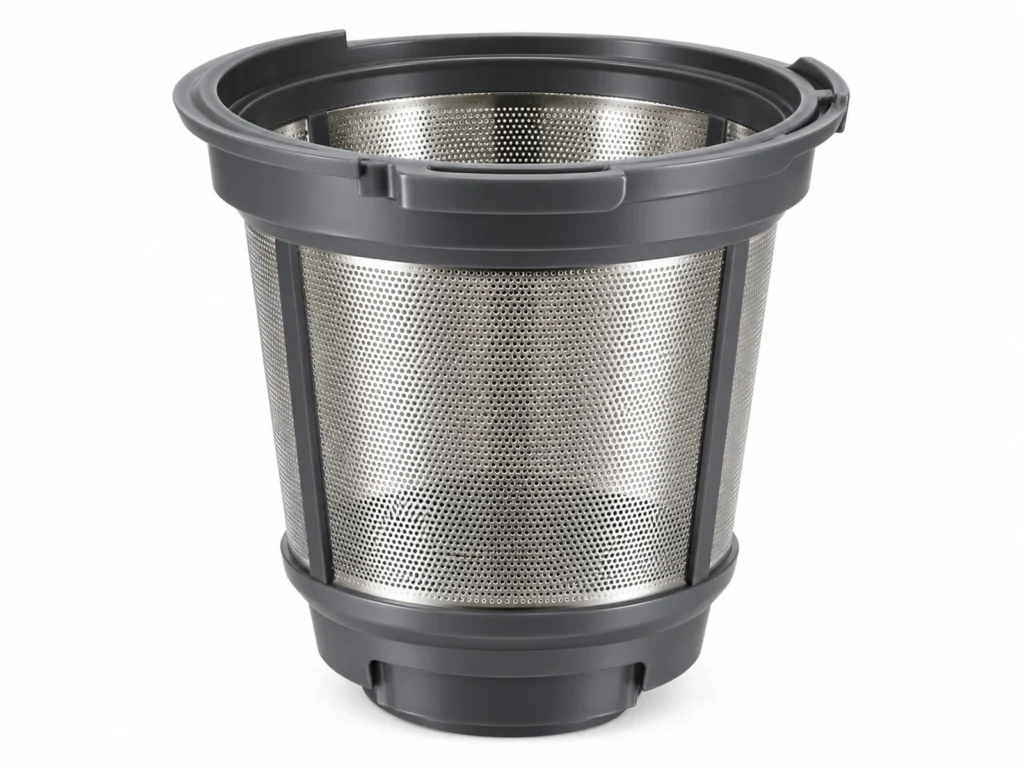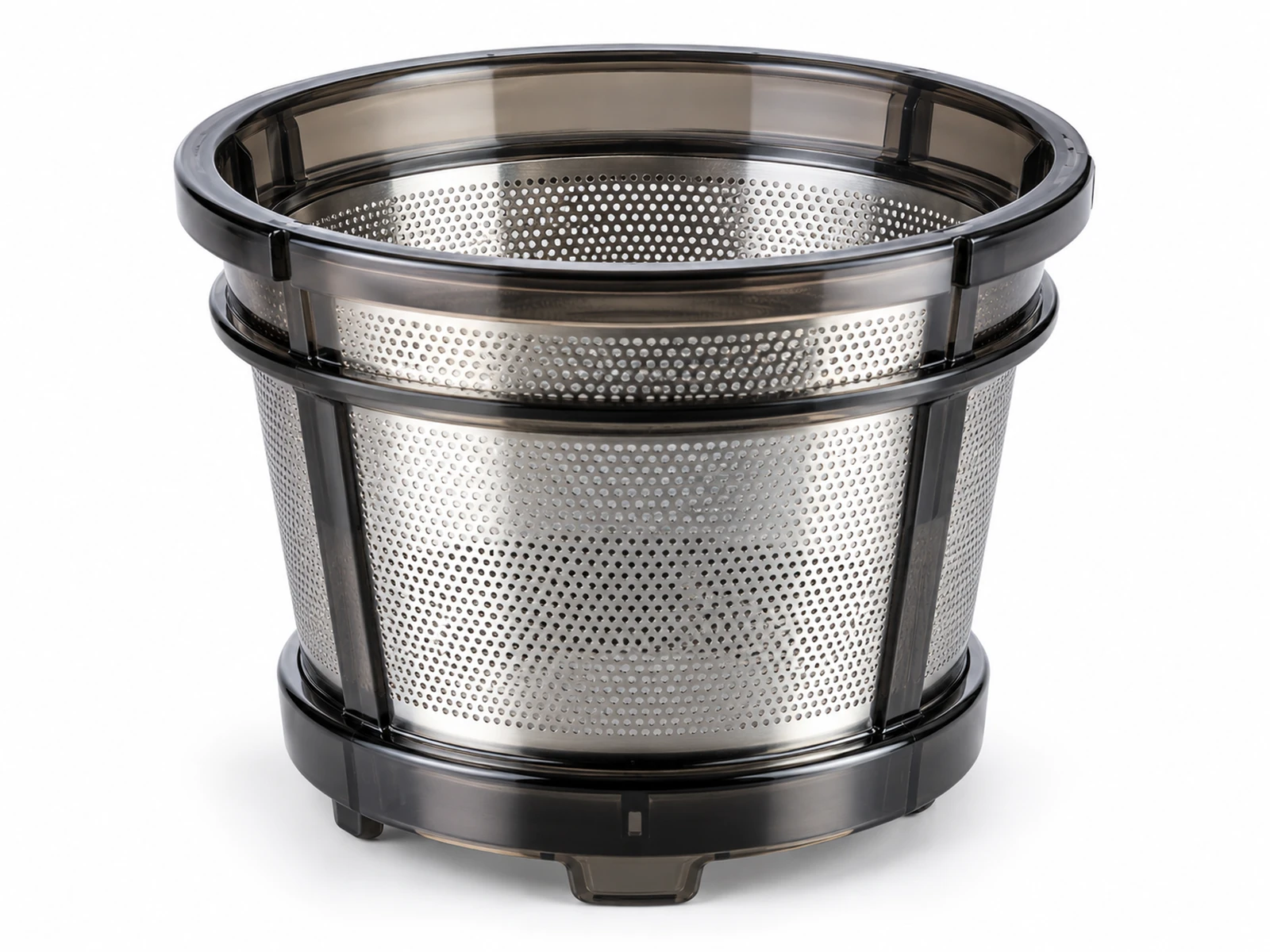
The primary duty of Slow (Masticating) Juicer Strainer Screen is separating juice from pulp in a masticating juicer as the auger presses produce against an etched drum. Below: the sectors that specify it in volume, the checklist used to select the right mesh and alloy for the application, handling notes, and the known limits of the type.
Typical Applications for Slow (Masticating) Juicer Strainer Screen
Where Slow (Masticating) Juicer Strainer Screen is specified and bought:
- Slow-juicer OEMs: vertical and horizontal strainer drums.
- Health-food retailers: replacement fine and coarse strainers.
- Juice bars: smoothie strainers for thicker blends.
- Restaurant kitchens: cold-pressed juice for menus.
How to Specify Slow (Masticating) Juicer Strainer Screen for Your Application
- Drum size: Match outer diameter and length to the auger and chamber; tolerances are tight.
- Hole diameter: 0.25 mm for clear juice, 0.6 mm for smoothies and sorbets.
- Material: SS316 resists citrus and tomato acids better than plastic or 304 drums.
- Standard: Quote FDA 21 CFR / EU 1935/2004 food contact and the size designation from the table on the product page, plus any value you changed in the technical drawing.
Handling & Installation Practice
- Pre-cut fibrous stalks such as celery into short lengths so they do not wrap the auger.
- Clean with the supplied rotating brush immediately after juicing.
Common Selection Mistakes with Slow (Masticating) Juicer Strainer Screen
- Fitting a fine strainer for frozen-fruit sorbet; it jams the auger.
- Leaving pulp to dry in the drum, which permanently blocks the micro-holes.
Where Slow (Masticating) Juicer Strainer Screen Is Not the Right Choice
Not for fast, high-volume hard-fruit juicing where a centrifugal juicer is quicker.