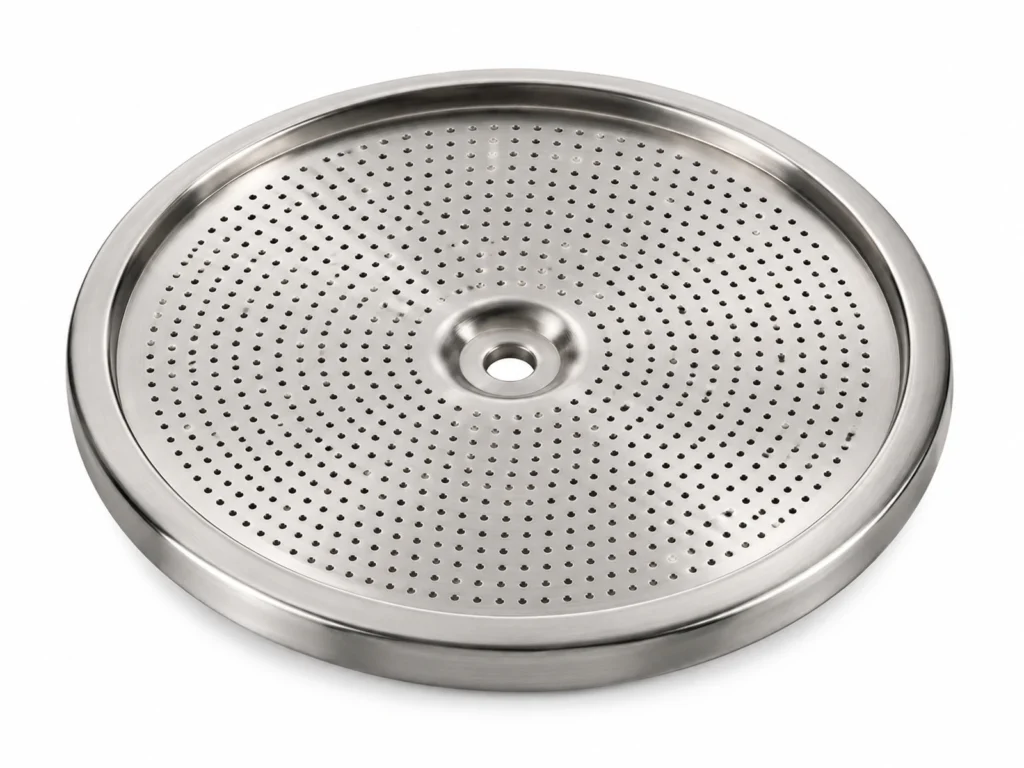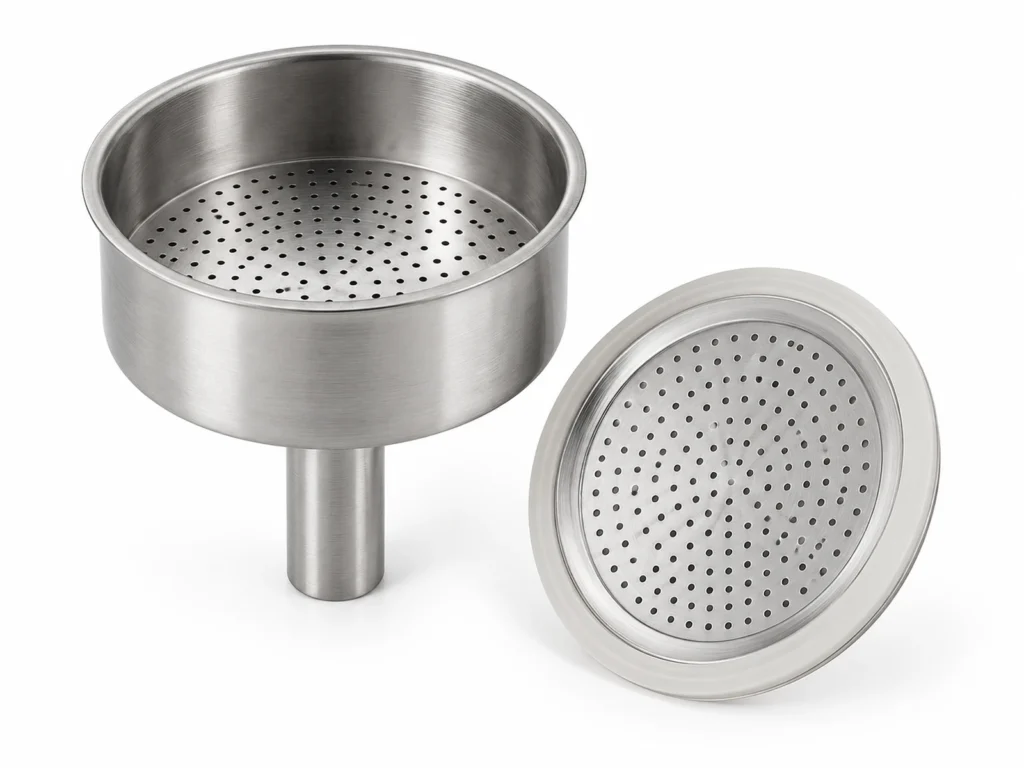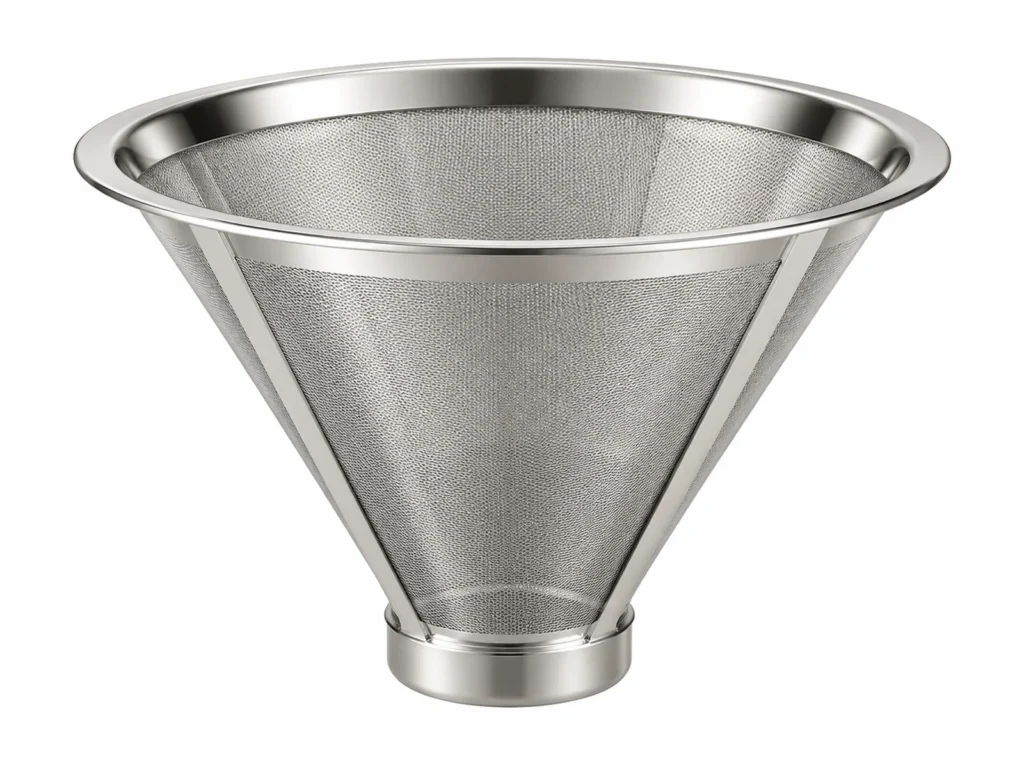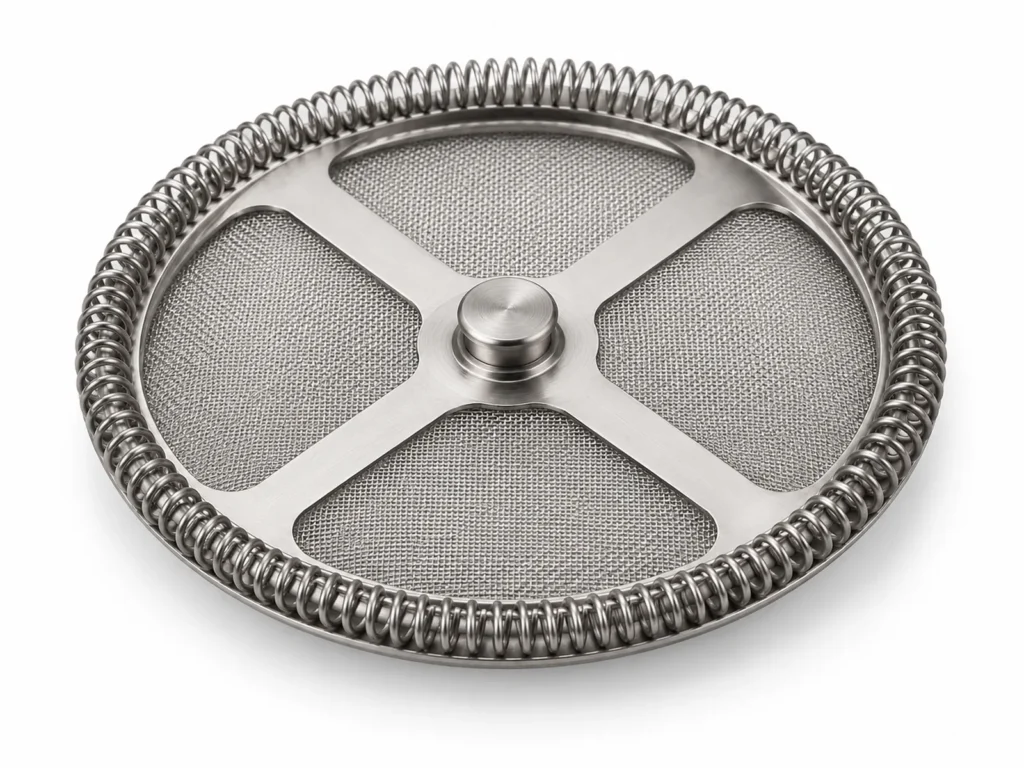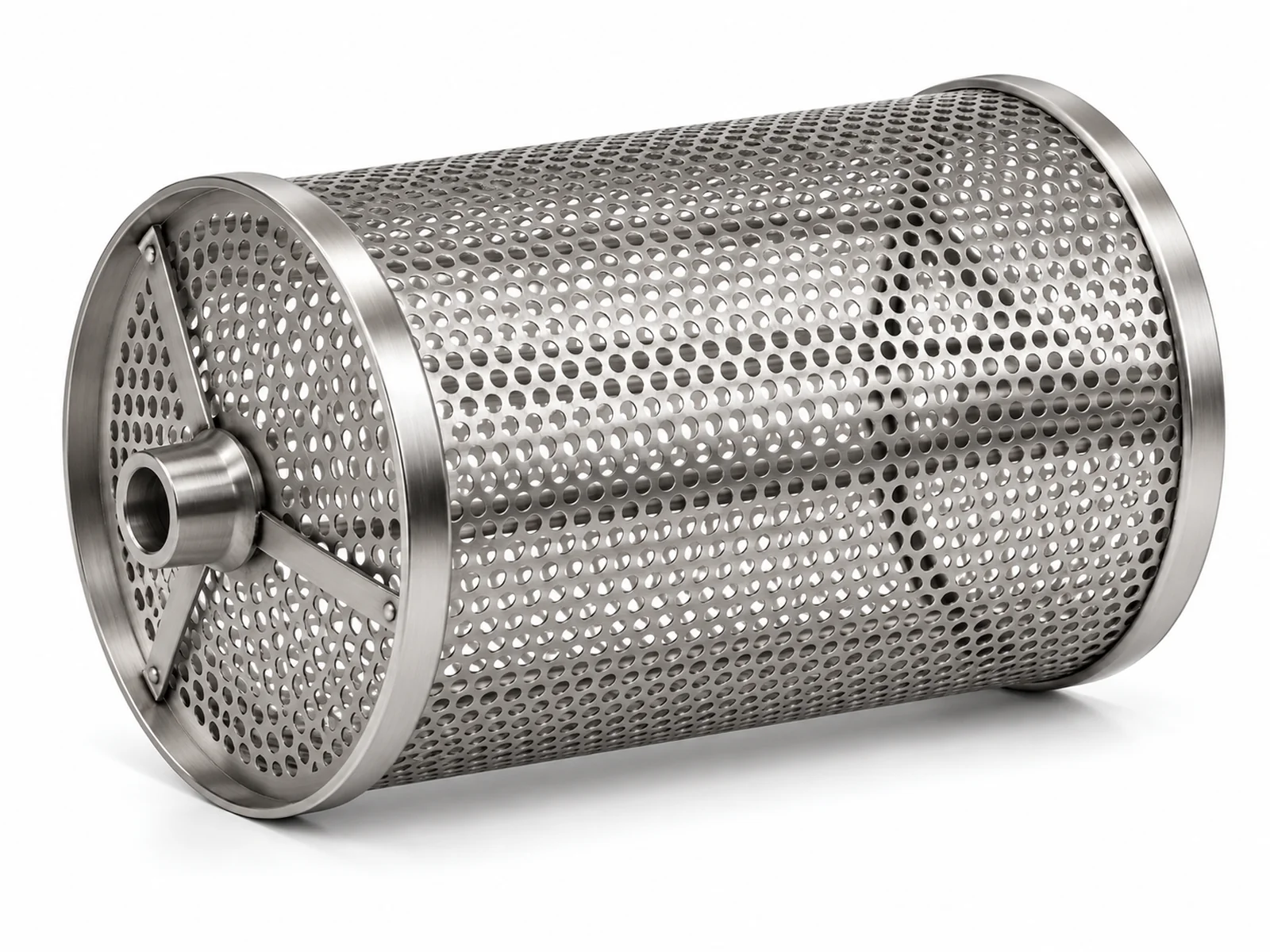
Application guide for Coffee Roaster Drum & Chaff Screen to NSF/ANSI 4 equipment. The core duty of the type is forming the perforated drum and chaff collector of coffee roasters so hot air passes the beans while chaff is carried away. The typical industries, the how-to-specify checklist, handling practice and the exclusion cases are set out below.
Typical Applications for Coffee Roaster Drum & Chaff Screen
Where Coffee Roaster Drum & Chaff Screen is specified and bought:
- Roaster OEMs: drum shells and chaff collectors.
- Specialty roasteries: replacement cooling-tray floors.
- Home roaster makers: small drum shells.
- Nut & seed roasting: perforated drums for peanuts and cocoa beans.
How to Specify Coffee Roaster Drum & Chaff Screen for Your Application
- Hole size: Below the smallest bean (about 4 mm); 2–2.5 mm is typical.
- Thickness: 1.0–1.5 mm for thermal stability and stiffness.
- Open area: 30–35 % balances airflow and drum strength.
- Standard: Quote NSF/ANSI 4 equipment and the size designation from the table on the product page, plus any value you changed in the technical drawing.
Handling & Installation Practice
- Roll the perforated sheet with the burr side outward so beans tumble without catching.
- Vacuum the chaff collector every few batches — accumulated chaff is a fire risk.
Common Selection Mistakes with Coffee Roaster Drum & Chaff Screen
- Choosing holes large enough for peaberries or broken beans to fall through.
- Thin drum shells that warp at roast temperature.
Where Coffee Roaster Drum & Chaff Screen Is Not the Right Choice
Not for direct-flame roasting without a solid drum section where uniform conduction is wanted.