Skip to content

Woven Wire Mesh · ISO 9044 / ASTM E2016 · Application guide

What Is Plain Weave Wire Mesh Used For?

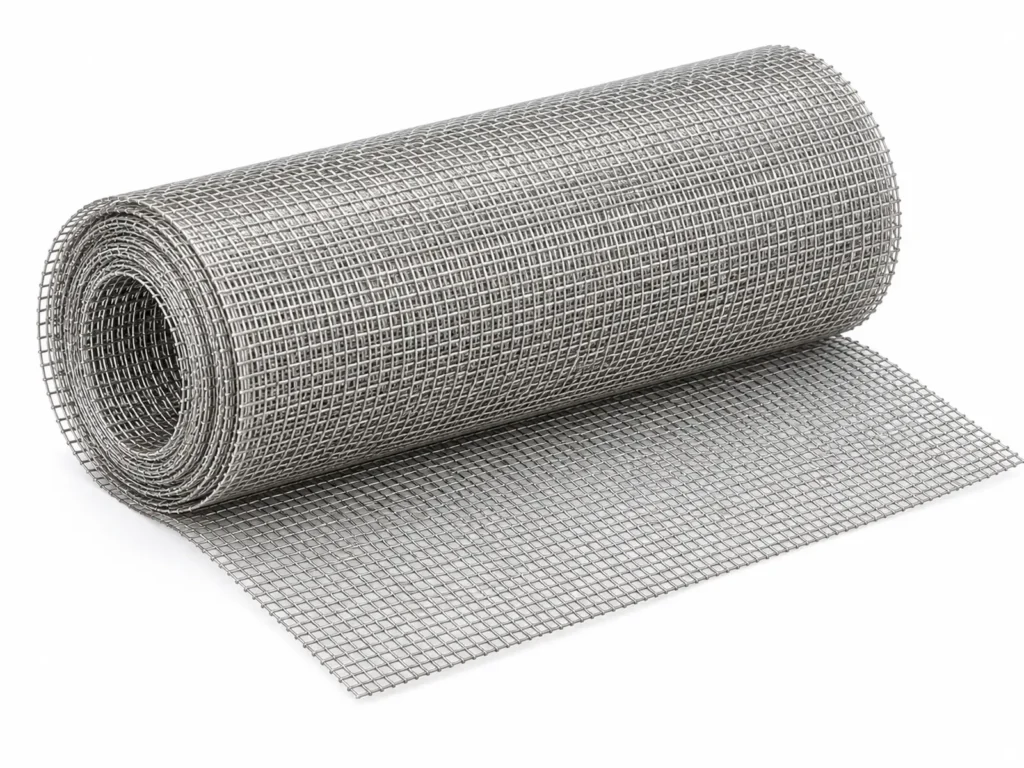
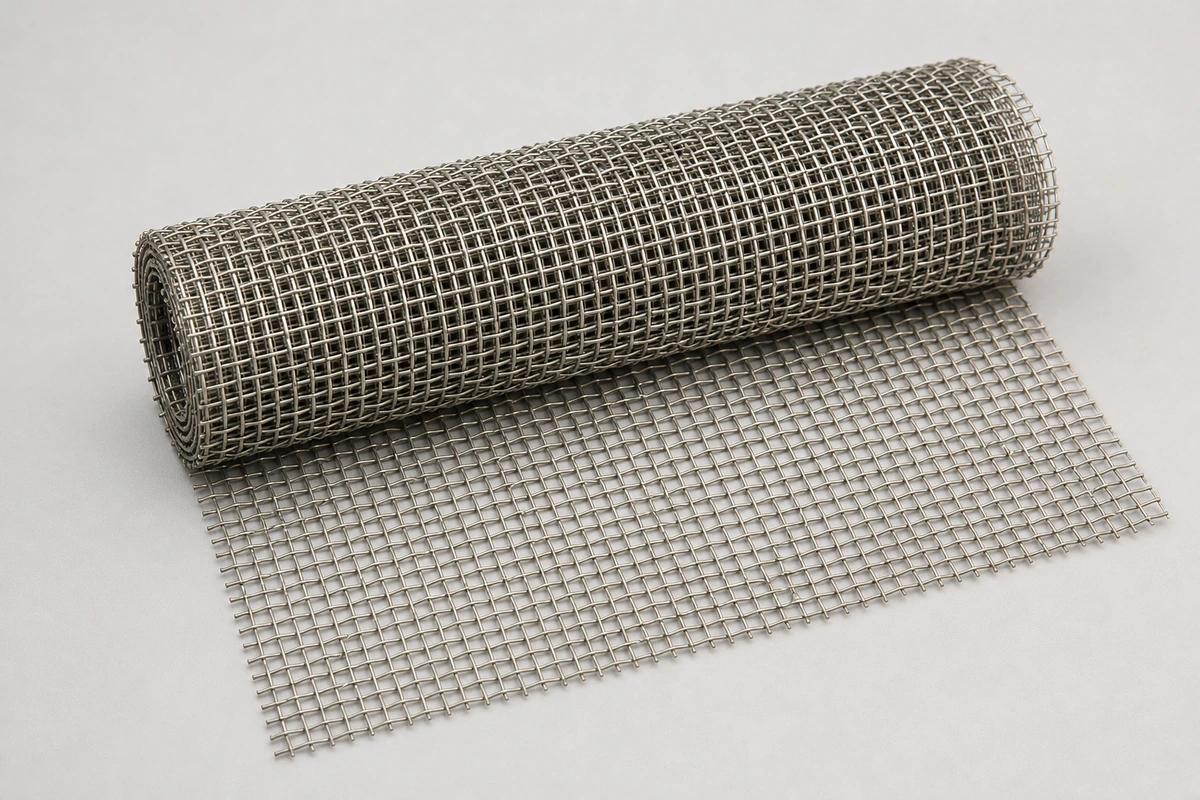
Plain Weave Wire Mesh is used primarily for precision filtration, sieving and separation where a defined aperture and open area are required. This page lists the industries and assemblies where it is specified, the selection criteria that matter for each application, handling and installation practice, and the cases where a different mesh, screen or filter type is the correct choice. It is supplied to ISO 9044 / ASTM E2016.

Typical Applications for Plain Weave Wire Mesh

The most common settings where this is specified:

  • Oil, gas & petrochemical: sand screens, strainers and catalyst support in refining and production.
  • Food, beverage & pharma: sieving, sifting and CIP-friendly filtration in 316L stainless.
  • Water treatment: intake, sludge and process screening.
  • Chemical processing: filtration and separation resistant to the process fluid.
  • Industrial filtration & separation: removing particulates from liquids, gases and slurries in process plant.

How to Specify Plain Weave Wire Mesh for Your Application

  • Mesh count / micron rating: Match the aperture or micron rating to the smallest particle you must retain or pass. The table below lists mesh count, aperture and micron for each option — for woven cloth, specify the aperture or micron, not just the mesh count.
  • Weave: Choose the weave: plain and twill for square-aperture sieving, plain/twill dutch for the finest pore filtration, reverse dutch for high flow.
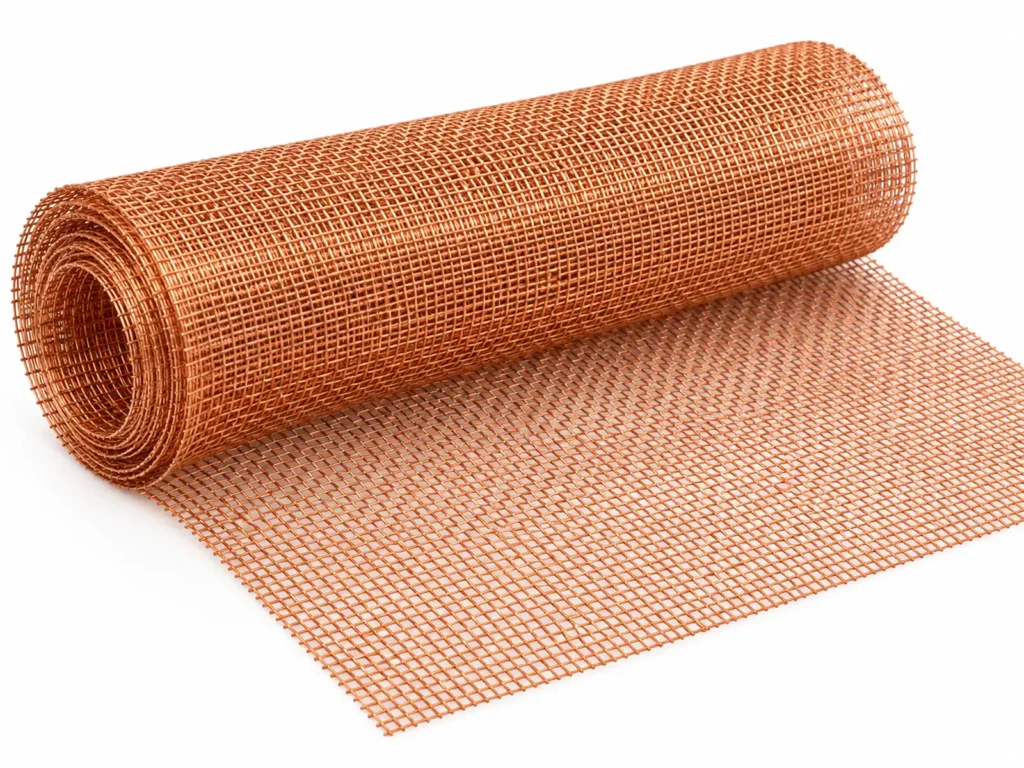
  • Material / alloy: Select the alloy for the environment — 304 for general use, 316L for chlorides, food and chemicals, brass or copper for shielding, and Monel, Inconel or Hastelloy for marine, acid and high-temperature service.
  • Environment: For damp, coastal, chemical or high-temperature service move up to 316L or a nickel alloy; for dry indoor duty 304 or a coated steel is usually enough.
  • Standard: This product is supplied to ISO 9044 / ASTM E2016. Quoting the standard on your order guarantees interchangeable dimensions and filtration data between suppliers.

Handling & Installation Practice

  • Seal or lock-crimp cut edges, or fit a binding/frame, so fine wires cannot fray and shed into the filtrate.
  • Support the cloth on a backing grid or perforated plate when it works against pressure — unsupported fine mesh distorts and the aperture opens up.
  • In a multi-layer pack, keep the coarse guard layer facing upstream and the fine layer downstream.

Common Selection Mistakes with Plain Weave Wire Mesh

  • Specifying by mesh count alone — two cloths of the same mesh but different wire diameters have very different apertures and open areas; quote aperture or micron as well.
  • Assuming mesh count equals micron rating; a woven cloth passes particles larger than its nominal aperture, so confirm the actual micron rating for the weave.
  • Using a plain square weave for fine filtration where a dutch weave, with its much finer effective pore, is the correct choice.

Where Plain Weave Wire Mesh Is Not the Right Choice

Not for structural containment or where sharp, heavy solids will tear fine cloth — use welded or perforated mesh there; and filtration below the weave limit needs a sintered or membrane medium.

Technical Drawing

Customize the parameters below — every spec field is editable, and the drawing redraws to match the values you choose. Changing the size will snap the other fields to that size's standard values; you can then override any individual value.

Sends the selected values to the quote form below.

Request a Quote

Set the size and options in the drawing above, then send the exact configuration straight to this form.

Request a Quotation

Specification
Business Information

Dimensions & Specifications (ISO 9044 / ASTM E2016)

Mesh countWire diameter (mm)Aperture (mm)Micron rating (u00b5m)Open area (%)Weight SS (kg/mu00b2)Reference standard
2-Mesh1.60011.1001110076.42.64ISO 9044
4-Mesh1.0005.350535071.02.06ISO 9044
8-Mesh0.8002.375237556.02.64ISO 9044
10-Mesh0.5501.990199061.41.56ISO 9044
20-Mesh0.4000.87087046.91.65ISO 9044
30-Mesh0.3000.54754741.71.39ISO 9044
40-Mesh0.2500.38538536.81.29ISO 9044
50-Mesh0.2200.28828832.11.25ISO 9044
60-Mesh0.1900.23323330.41.12ISO 9044
80-Mesh0.1400.17717831.30.81ISO 9044
100-Mesh0.1000.15415436.80.51ISO 9044
120-Mesh0.0900.12212233.00.50ISO 9044
150-Mesh0.0660.10310337.20.34ISO 9044
200-Mesh0.0530.0747434.00.29ISO 9044
250-Mesh0.0400.0626236.80.21ISO 9044
325-Mesh0.0360.0424229.10.22ISO 9044
400-Mesh0.0300.0343427.80.19ISO 9044
500-Mesh0.0250.0262625.80.16ISO 9044
635-Mesh0.0200.0202025.00.13ISO 9044

Frequently Asked Questions

What is Plain Weave Wire Mesh used for?

Precision filtration, sieving and separation where a defined aperture and open area are required. It is supplied to ISO 9044 / ASTM E2016.

Which industries use Plain Weave Wire Mesh?

It is commonly specified in oem & fabrication, maintenance & replacement (mro) and oil, gas & petrochemical, among other sectors.

How do I choose the right Plain Weave Wire Mesh for my duty?

Match the aperture or micron rating to the particle size, then the alloy to the environment and the construction (weave, pattern or element type) to the flow and pressure. The dimension and filtration table on this page lists each option.

Does the mesh count of Plain Weave Wire Mesh equal its micron rating?

No. Mesh count is wires per inch; the actual opening (aperture) and micron rating also depend on the wire diameter. Two cloths of the same mesh can pass very different particle sizes — always check the aperture or micron in the table.

Can I get a quote for Plain Weave Wire Mesh in the mesh and material I need?

Yes. Use the technical drawing and quote form on this page to set the mesh, micron and alloy, then send the exact configuration to our team for pricing and lead time.