Skip to content

Woven Wire Mesh · ISO 9044 / ASTM E2016

500 Mesh Plain Weave Wire Mesh Specifications

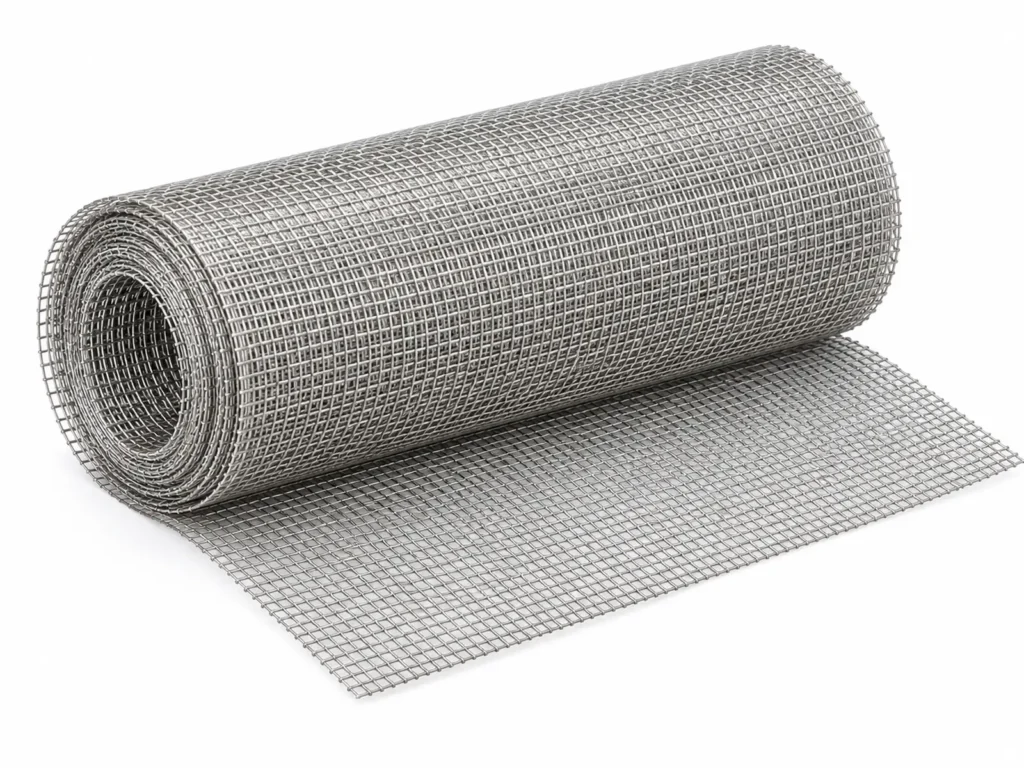
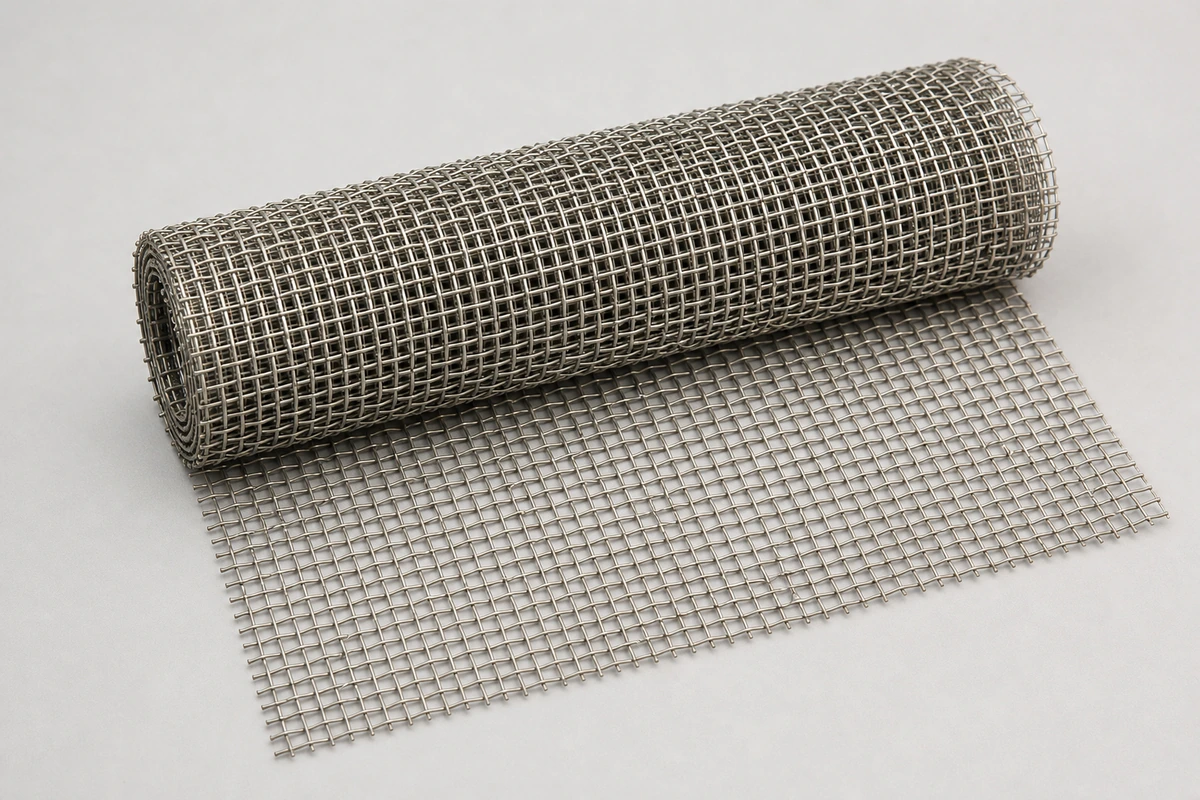
A roll of stainless steel plain weave wire mesh partially unrolled on a workbench, square weave clearly visible, industrial

500 mesh denotes 500 wires per inch in each direction. For plain weave wire mesh the governing document is ISO 9044 / ASTM E2016; the specification row, aperture-micron conversion and selection guidance for this count follow.

500 Mesh Specification Row (ISO 9044 / ASTM E2016)

Mesh countWire diameter (mm)Aperture (mm)Micron rating (u00b5m)Open area (%)Weight SS (kg/mu00b2)Reference standard
500-Mesh0.0250.0262625.80.16ISO 9044

500 Mesh to Micron & Aperture

Openings per inch500
Aperture (opening width)0.026 mm
Micron rating26 µm
Standard wire diameter0.025 mm
Open area25.6 %

Aperture = (25.4 mm ÷ mesh count) − wire diameter. The micron rating equals the aperture in micrometres; actual retention also depends on particle shape and cake formation.

Wire Diameter Options at 500 Mesh

OptionWire diaApertureMicronOpen areaWeight (SS)
Heavy wire0.033 mm0.018 mm18 µm13.0 %0.27 kg/m²
Standard wire0.025 mm0.026 mm26 µm25.8 %0.16 kg/m²
Fine wire0.019 mm0.032 mm32 µm39.8 %0.09 kg/m²

Heavier wire adds strength and abrasion life but closes the aperture; finer wire opens the aperture and raises throughput at the cost of durability. Specify mesh count AND wire diameter to fix the aperture unambiguously.

Open Area & Flow at 500 Mesh

The standard 500 mesh weave presents an open area of about 25.6%. At this fineness, pressure drop rises quickly as cake builds — size the element area generously and plan a cleaning or backwash cycle.

500 Mesh Cloth Weight

Standard 500 mesh stainless cloth weighs approximately 0.16 kg/m² (density 7.93 g/cm³ basis; brass and copper weave roughly 10% heavier, aluminum about one third). Use this figure for roll handling and freight estimation.

Typical Applications for 500 Mesh Plain Weave Wire Mesh

500 mesh plain weave wire mesh is commonly specified for micro-filtration of process liquids and gases, catalyst recovery, fine chemical and pharmaceutical processing, and precision laboratory analysis.

When to Step Up or Down from 500 Mesh

Move to 635 mesh when particles are passing that must be retained; drop back to 400 mesh when the element blinds too quickly or the pressure drop is excessive. In a multi-layer pack, pair this count with a coarser support mesh downstream to carry the pressure load.

What Plain Weave Wire Mesh Does

General screening, sieving and filtration with square-aperture stainless steel wire mesh, where each wire passes alternately over and under the next — the most widely used woven wire cloth from coarse 2 mesh to fine 635 mesh.

Fitting & Care

  • Cut on a guillotine or with sharp shears and bind or weld the edges of fine cloth so wires do not unravel.
  • Support fine stainless steel wire mesh with a coarse backing screen whenever it filters against pressure.
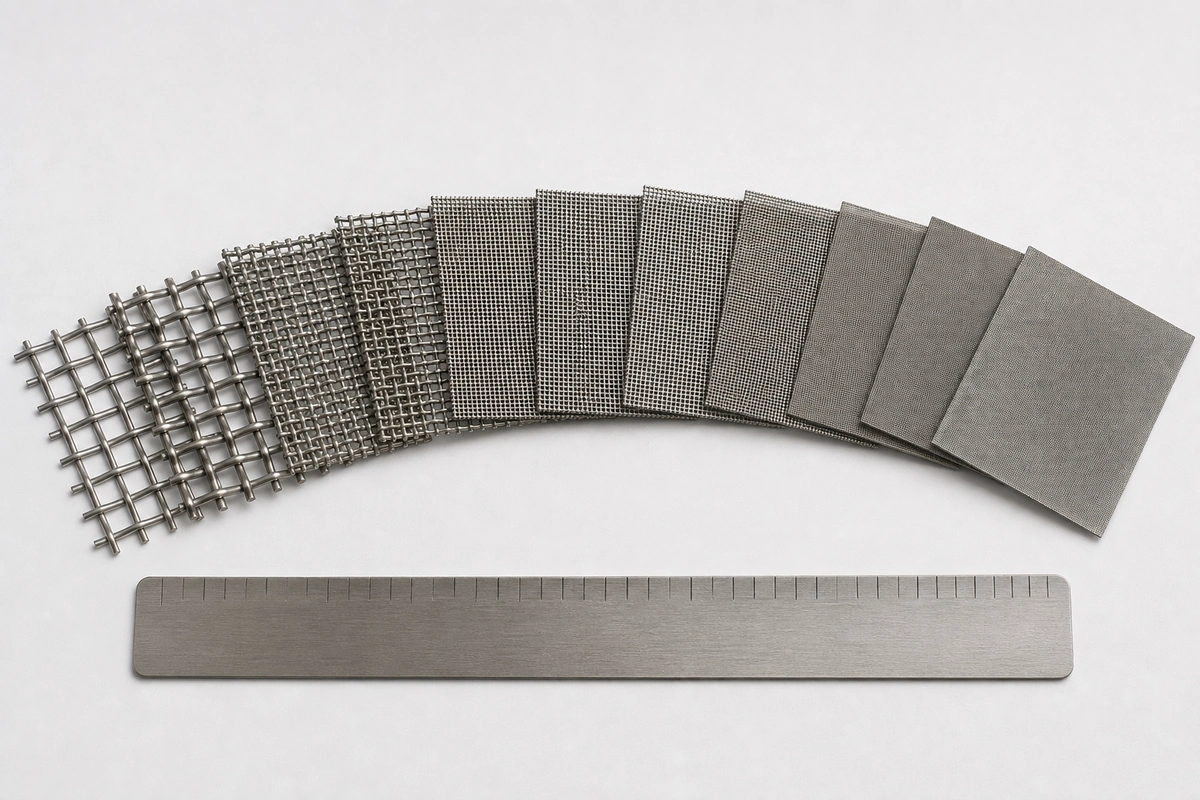
Mesh count to micron conversion chart
Mesh count to aperture and micron rating. Confirm the exact figure against the specification table below — wire diameter, not mesh count alone, sets the aperture.

Technical Drawing

Customize the parameters below — every spec field is editable, and the drawing redraws to match the values you choose. Changing the size will snap the other fields to that size's standard values; you can then override any individual value.

Sends the selected values to the quote form below.

Request a Quote

Adjust the parameters in the drawing above and click "Request this configuration" to send the exact specification straight to this form.

Request a Quotation

Specification
Business Information

Dimensions & Specifications (ISO 9044 / ASTM E2016)

Mesh countWire diameter (mm)Aperture (mm)Micron rating (u00b5m)Open area (%)Weight SS (kg/mu00b2)Reference standard
2-Mesh1.60011.1001110076.42.64ISO 9044
4-Mesh1.0005.350535071.02.06ISO 9044
8-Mesh0.8002.375237556.02.64ISO 9044
10-Mesh0.5501.990199061.41.56ISO 9044
20-Mesh0.4000.87087046.91.65ISO 9044
30-Mesh0.3000.54754741.71.39ISO 9044
40-Mesh0.2500.38538536.81.29ISO 9044
50-Mesh0.2200.28828832.11.25ISO 9044
60-Mesh0.1900.23323330.41.12ISO 9044
80-Mesh0.1400.17717831.30.81ISO 9044
100-Mesh0.1000.15415436.80.51ISO 9044
120-Mesh0.0900.12212233.00.50ISO 9044
150-Mesh0.0660.10310337.20.34ISO 9044
200-Mesh0.0530.0747434.00.29ISO 9044
250-Mesh0.0400.0626236.80.21ISO 9044
325-Mesh0.0360.0424229.10.22ISO 9044
400-Mesh0.0300.0343427.80.19ISO 9044
500-Mesh0.0250.0262625.80.16ISO 9044
635-Mesh0.0200.0202025.00.13ISO 9044

Frequently Asked Questions

What is plain weave stainless steel wire mesh?

Woven wire cloth in which every warp and weft wire passes alternately over and under the next, giving a square opening.

What is the difference between wire mesh and wire cloth?

Nothing in practice — "wire cloth" is the trade term for finer woven wire mesh; both describe the same woven product.

What particle size will 500 mesh remove?

Hard, roughly spherical particles larger than about 26 µm are retained. Fibrous or plate-like particles can pass an aperture larger than their smallest dimension, so validate with the real contaminant where retention is critical.

Is 500 mesh suitable for micro-filtration?

Yes — counts in this range are used for micro-filtration and laboratory work. For absolute ratings below ~20 µm, compare against twill dutch weave and sintered media, which hold their pore size under pressure better than fine square weave.

In which materials is 500 mesh plain weave wire mesh available?

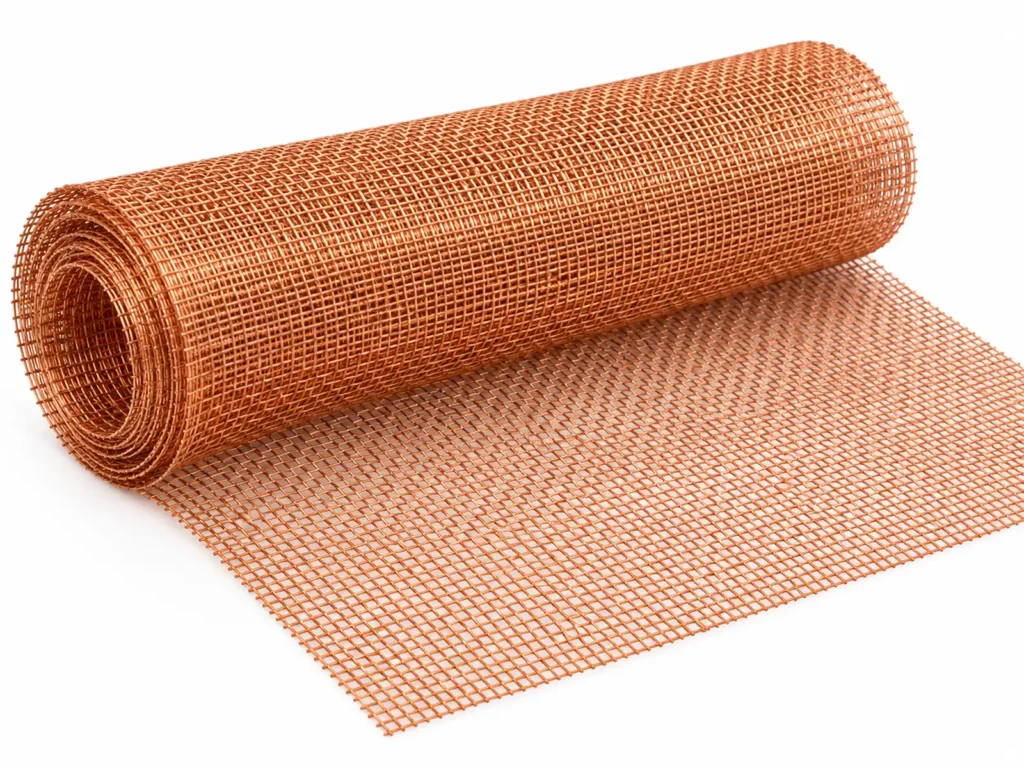
Stainless 304 and 316/316L are standard; brass, phosphor bronze, copper, Monel, Inconel, Hastelloy, nickel and titanium are woven to order for special chemistry or temperature.

How do I request a quotation?

Use the technical drawing on this page to pick the exact specification, then submit it with the quote form. We respond within one business day.