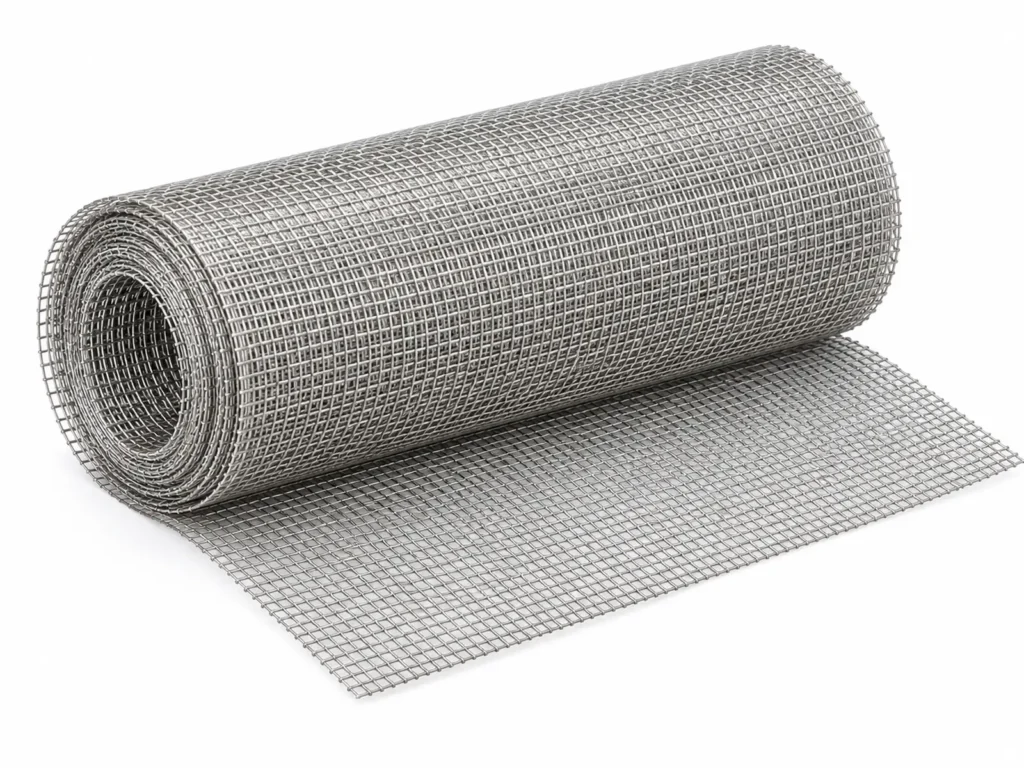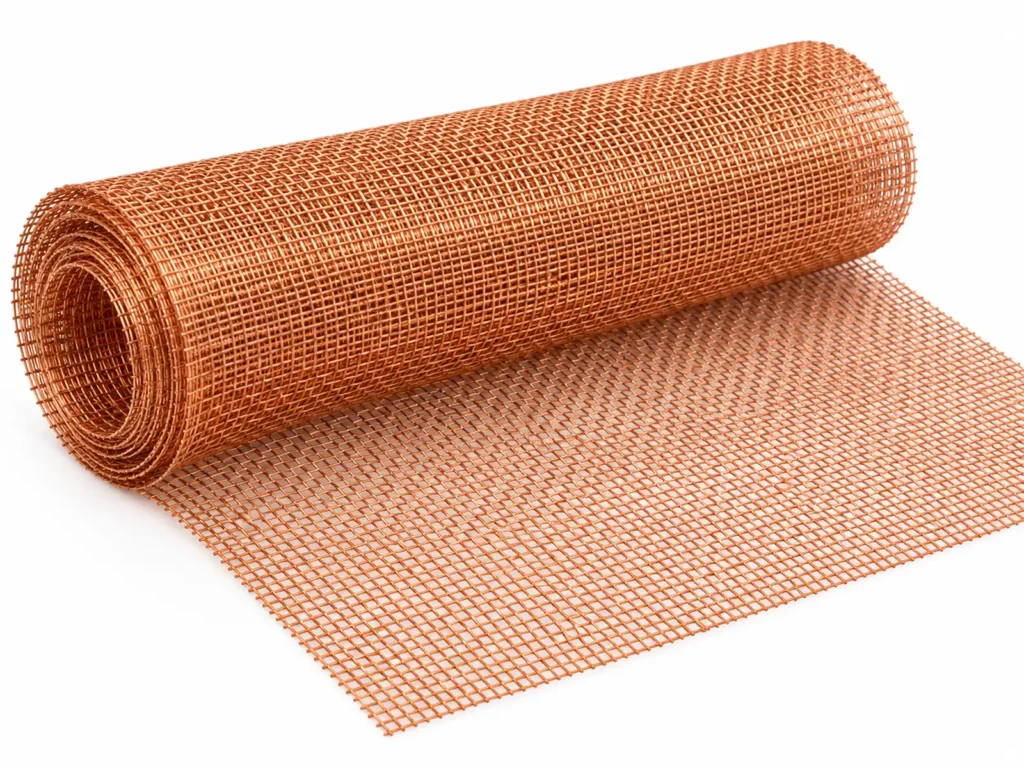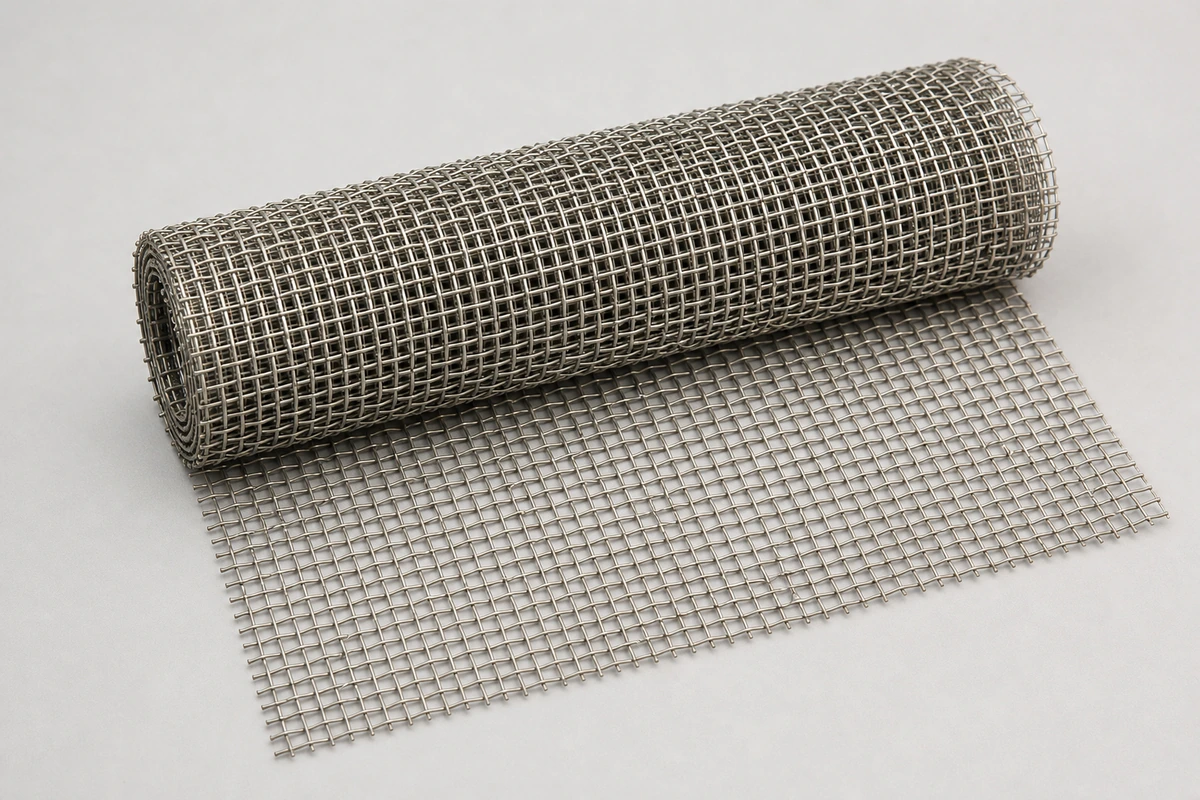
Pure Copper plain weave wire mesh combines the construction of plain weave wire mesh (ISO 9044 / ASTM E2016) with the properties of C11000: good atmospheric resistance with a stable patina; outstanding conductivity, non-magnetic, service to approx. +200 °C. This page summarizes the grade data, its behavior in filtration service, comparable alloys, and the specifications supplied.
Why Choose Pure Copper for Plain Weave Wire Mesh
The EMI/RFI shielding and Faraday-cage mesh material. For plain weave wire mesh, this matters when good atmospheric resistance with a stable patina; outstanding conductivity is the controlling requirement.
Alloy Properties
| Grade designation | C11000 |
|---|---|
| Magnetic response | Non-magnetic |
| Service temperature | approx. +200 °C |
| Corrosion characteristic | Good atmospheric resistance with a stable patina; outstanding conductivity |
Corrosion Behavior in Filtration Service
Copper and brass plain weave wire mesh resist atmospheric corrosion and fresh water well, tarnishing to a stable patina. Avoid ammonia and ammonium compounds (stress-corrosion cracking of brass) and strong oxidizing acids. In marine service, phosphor bronze outperforms plain brass.
Cleaning & Compatibility
Clean copper-alloy mesh with mild detergent or dilute citric acid; avoid ammonia-based cleaners entirely. In contact with more noble metals in wet service the copper alloy becomes the sacrificial partner — isolate or accept the loss rate.
Specifications of Plain Weave Wire Mesh Available in Pure Copper
| Mesh count | Wire diameter (mm) | Aperture (mm) | Micron rating (u00b5m) | Open area (%) | Weight SS (kg/mu00b2) | Reference standard |
|---|---|---|---|---|---|---|
| 2-Mesh | 1.600 | 11.100 | 11100 | 76.4 | 2.64 | ISO 9044 |
| 4-Mesh | 1.000 | 5.350 | 5350 | 71.0 | 2.06 | ISO 9044 |
| 8-Mesh | 0.800 | 2.375 | 2375 | 56.0 | 2.64 | ISO 9044 |
| 10-Mesh | 0.550 | 1.990 | 1990 | 61.4 | 1.56 | ISO 9044 |
| 20-Mesh | 0.400 | 0.870 | 870 | 46.9 | 1.65 | ISO 9044 |
| 30-Mesh | 0.300 | 0.547 | 547 | 41.7 | 1.39 | ISO 9044 |
| 40-Mesh | 0.250 | 0.385 | 385 | 36.8 | 1.29 | ISO 9044 |
| 50-Mesh | 0.220 | 0.288 | 288 | 32.1 | 1.25 | ISO 9044 |
| 60-Mesh | 0.190 | 0.233 | 233 | 30.4 | 1.12 | ISO 9044 |
| 80-Mesh | 0.140 | 0.177 | 178 | 31.3 | 0.81 | ISO 9044 |
| 100-Mesh | 0.100 | 0.154 | 154 | 36.8 | 0.51 | ISO 9044 |
| 120-Mesh | 0.090 | 0.122 | 122 | 33.0 | 0.50 | ISO 9044 |
| 150-Mesh | 0.066 | 0.103 | 103 | 37.2 | 0.34 | ISO 9044 |
| 200-Mesh | 0.053 | 0.074 | 74 | 34.0 | 0.29 | ISO 9044 |
| 250-Mesh | 0.040 | 0.062 | 62 | 36.8 | 0.21 | ISO 9044 |
| 325-Mesh | 0.036 | 0.042 | 42 | 29.1 | 0.22 | ISO 9044 |
| 400-Mesh | 0.030 | 0.034 | 34 | 27.8 | 0.19 | ISO 9044 |
| 500-Mesh | 0.025 | 0.026 | 26 | 25.8 | 0.16 | ISO 9044 |
| 635-Mesh | 0.020 | 0.020 | 20 | 25.0 | 0.13 | ISO 9044 |
Where Pure Copper Plain Weave Wire Mesh Is Used
- Process filtration: strainer baskets, filter discs and pump-intake screens cut from stainless steel wire cloth.
- Food & beverage: sifter screens, dewatering and rinse screens in 304 and 316L.
- OEM fabrication: stainless steel mesh screens pressed, rimmed or spot-welded into appliance and machine parts.
- Laboratory & QA: routine sieving and sample screening where a certified test sieve is not required.
Ordering Plain Weave Wire Mesh in Pure Copper
- Mesh count and wire diameter: Specify both — two 100-mesh cloths with different wires have different apertures and open areas.
- Aperture or micron: Quote the opening (mm or µm) you need to retain; the table converts mesh count to micron for every size.
- Alloy & supply form: 304 for general use, 316L for chlorides and food CIP; rolls of 1–1.5 m width, cut sheets, discs or slit strip.
Mistakes to Avoid with Plain Weave Wire Mesh
- Ordering by mesh count only and receiving a heavier or lighter wire than expected.
- Using plain weave below about 40 µm, where twill or dutch weave carries the fine wire far better.