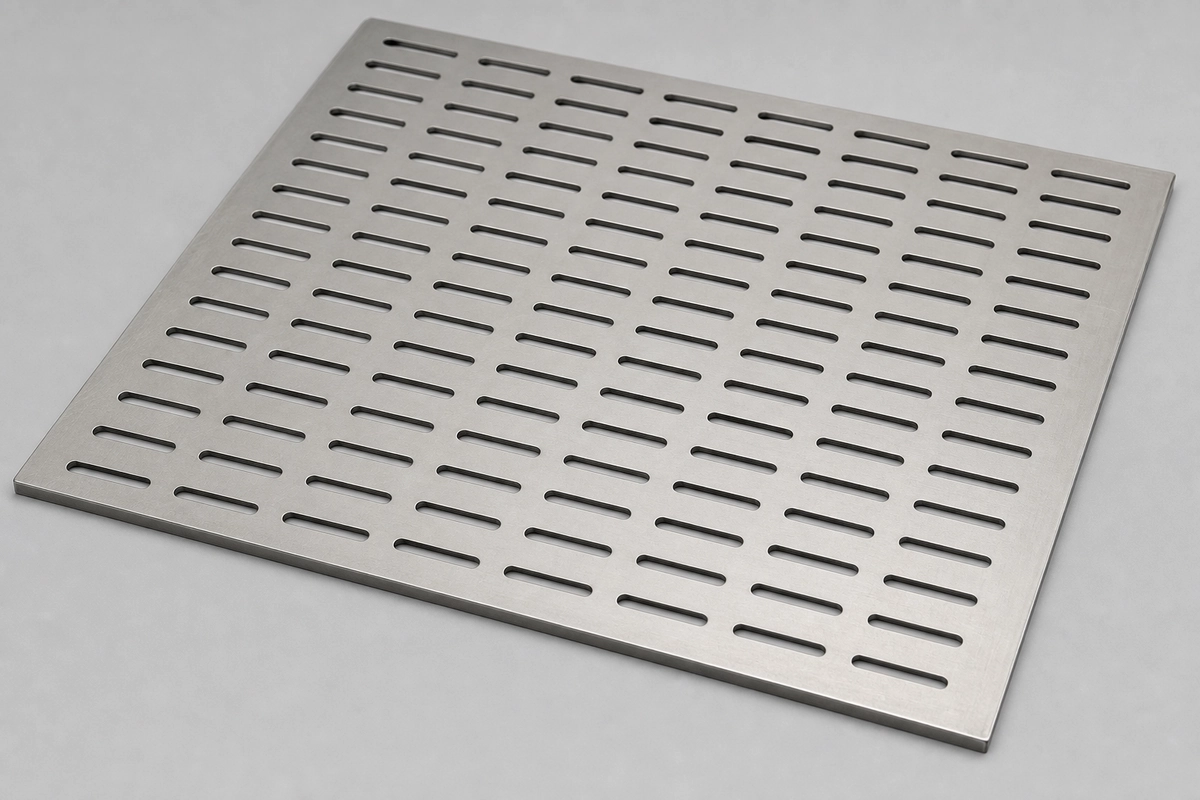
Slotted Hole Perforated Sheet is used primarily for dewatering, draining and sizing with slotted perforated metal, whose elongated openings give more open area than round holes and resist blinding by flat or fibrous particles. This page lists the industries and assemblies where it is specified, the selection criteria that matter for each application, handling and installation practice, and the cases where a different mesh, screen or filter type is the correct choice. It is supplied to DIN 24041 (Lg).
Typical Applications for Slotted Hole Perforated Sheet
Where Slotted Hole Perforated Sheet is specified and bought:
- Grain & seed handling: dryer floors, aeration floors and sorting screens.
- Mining & aggregate: dewatering screens and sizing panels.
- Food processing: vegetable washers, blanchers and draining conveyors.
- HVAC & architecture: linear vent panels and sunscreens.
How to Specify Slotted Hole Perforated Sheet for Your Application
- Slot size: Width × length, e.g. 1 × 10 mm; the width controls retention.
- Pattern: Staggered slots for strength, straight rows for maximum open area.
- Orientation: State whether slots run along or across the material flow.
- Standard: Quote DIN 24041 (Lg) and the size designation from the table on the product page, plus any value you changed in the technical drawing.
Handling & Installation Practice
- Run the slots in the direction of material travel so water drains and particles do not catch.
- Support long spans — slotted sheet is less stiff across the slots.
Common Selection Mistakes with Slotted Hole Perforated Sheet
- Turning the sheet 90° in fabrication, so the slots face the wrong way.
- Choosing a sheet thinner than the slot width, which tears around the ends.
Where Slotted Hole Perforated Sheet Is Not the Right Choice
Not for retaining round particles smaller than the slot width — a round-hole sheet or wire cloth is better.