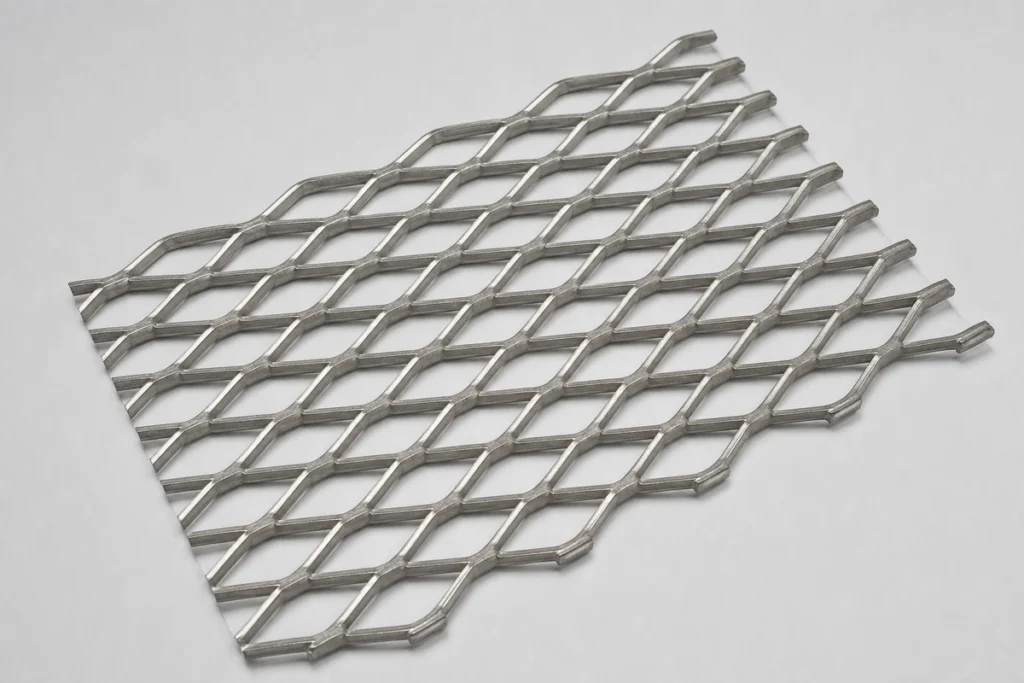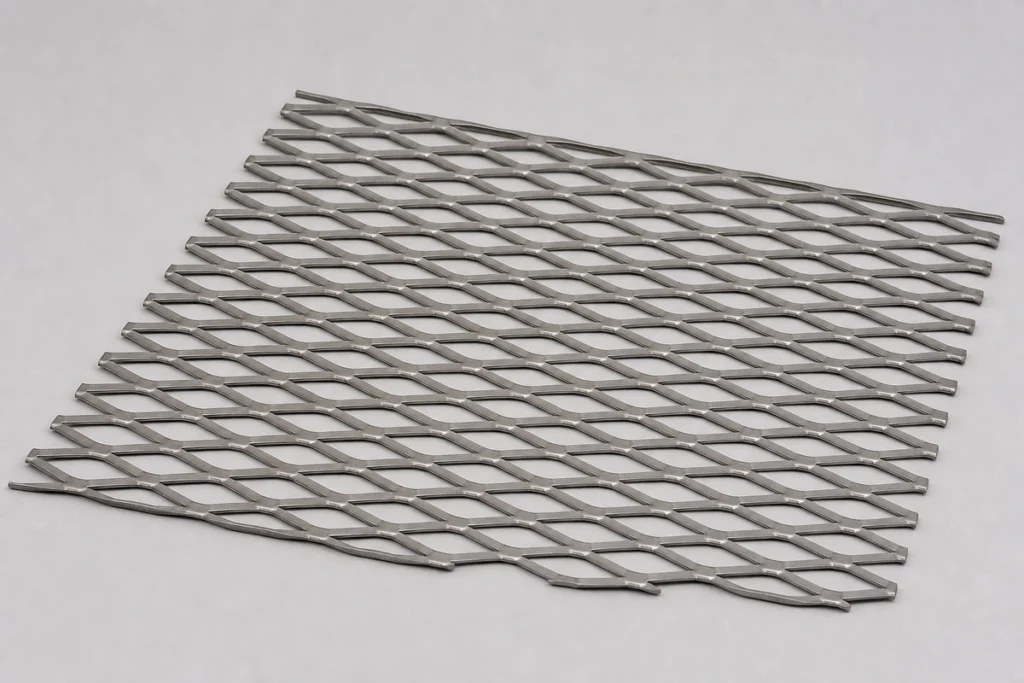
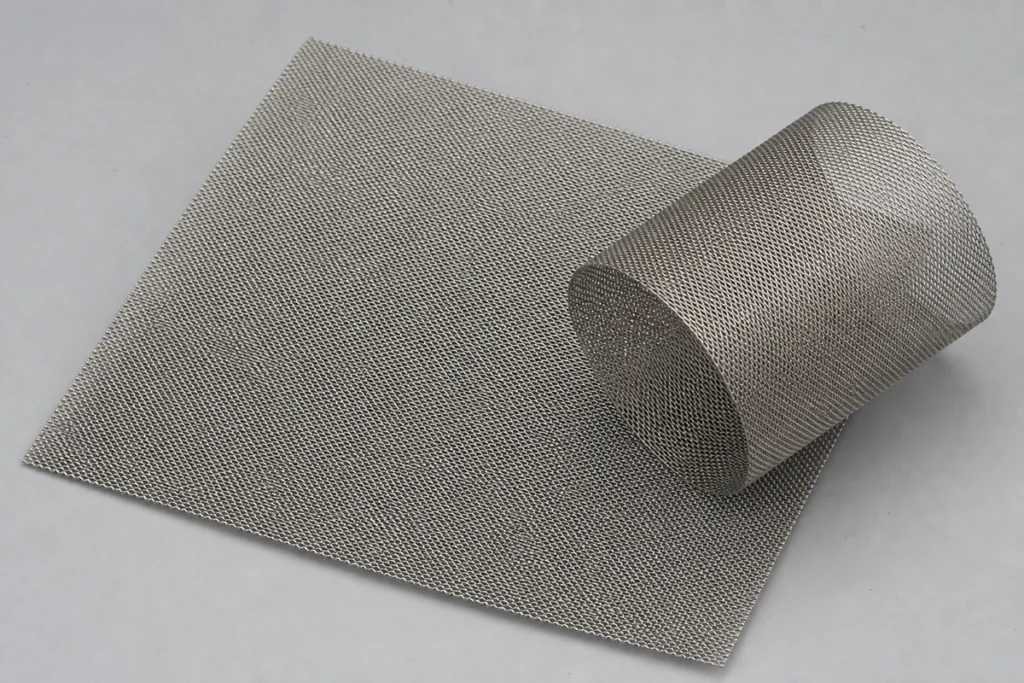
Micro Expanded Metal Mesh (DIN 791) is specified where the duty calls for battery current collectors, lightning-strike protection, EMI shielding and fine supports made from thin foil expanded into a micro diamond mesh. The sections below cover the typical end-uses by industry, the mesh, micron and material decisions for each, installation practice, and the applications this product type is not suited to.
Typical Applications for Micro Expanded Metal Mesh
Where Micro Expanded Metal Mesh is specified and bought:
- Batteries & fuel cells: expanded copper, nickel and aluminum current collectors.
- Aerospace composites: lightning-strike protection layers.
- EMI shielding: conductive layers in enclosures and gaskets.
- Filtration & acoustics: fine supports and speaker screens.
How to Specify Micro Expanded Metal Mesh for Your Application
- Foil thickness: 0.03–0.3 mm.
- Pattern: Micro SWD × LWD and strand width set conductivity and weight.
- Alloy: Copper, nickel, aluminum, stainless steel or titanium.
- Standard: Quote DIN 791 and the size designation from the table on the product page, plus any value you changed in the technical drawing.
Handling & Installation Practice
- Handle like foil to avoid kinks and creases.
- Store copper and nickel mesh dry and sealed to prevent oxidation.
Common Selection Mistakes with Micro Expanded Metal Mesh
- Choosing too narrow a strand for the current it must carry.
- Using oxidized copper mesh for electrical contact.
Where Micro Expanded Metal Mesh Is Not the Right Choice
Not a structural mesh — it is a thin functional layer.