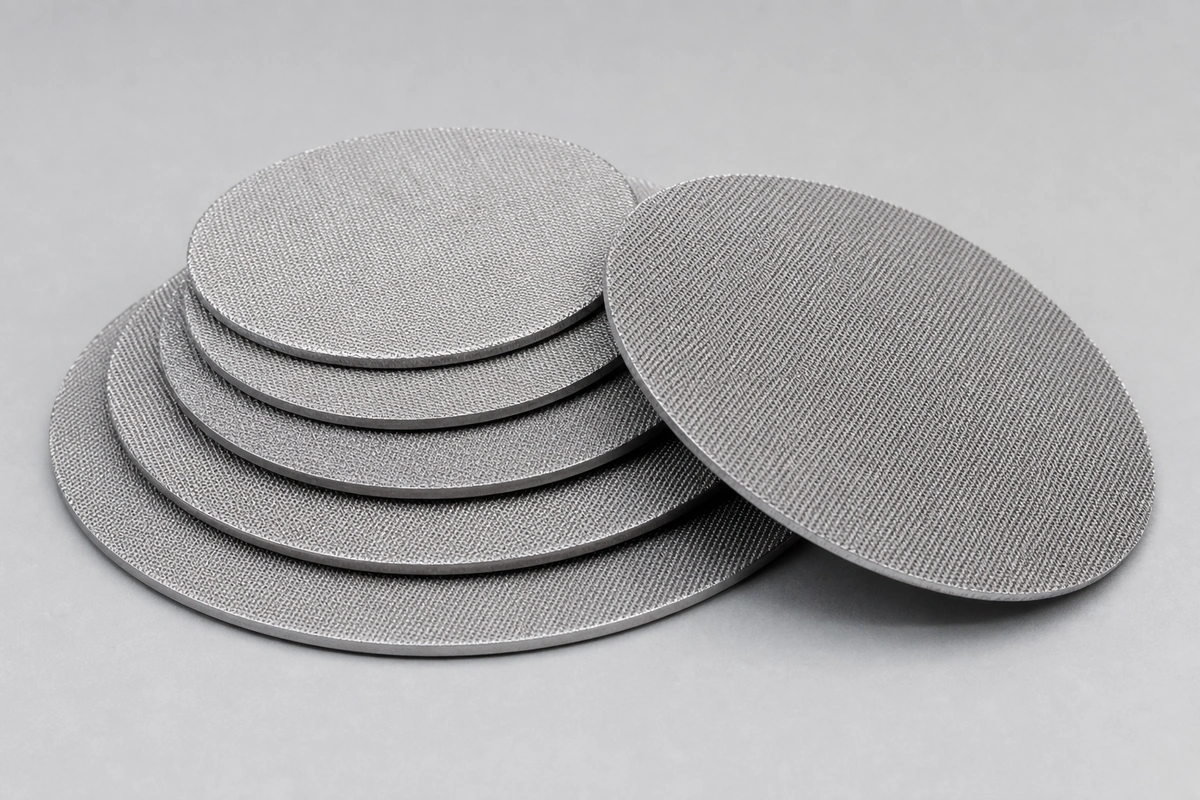
Filter Discs is used primarily for straining fluids inside fittings, nozzles, pumps and extruders with wire mesh filter discs cut, rimmed or spot-welded from woven stainless cloth. This page lists the industries and assemblies where it is specified, the selection criteria that matter for each application, handling and installation practice, and the cases where a different mesh, screen or filter type is the correct choice. It is supplied to ISO 9044 base cloth.
Typical Applications for Filter Discs
Where Filter Discs is specified and bought:
- Plastic extrusion: single and multi-layer extruder screens.
- Fuel, oil & hydraulics: inlet strainer discs in pumps and fittings.
- Spray & nozzles: nozzle filter screens.
- Appliances & medical: small metal mesh filter discs in valves and devices.
How to Specify Filter Discs for Your Application
- Diameter & shape: Round, rectangular, kidney or custom shapes cut to drawing.
- Mesh & layers: Single layer or a stack of different meshes for strength and rating.
- Edge: Plain cut, spot-welded, aluminum/copper/stainless rimmed or sintered edge.
- Standard: Quote ISO 9044 base cloth and the size designation from the table on the product page, plus any value you changed in the technical drawing.
Handling & Installation Practice
- Install multi-layer discs with the fine layer downstream of the coarse protective layer.
- Replace extruder discs at a set pressure rise rather than waiting for a pressure alarm.
Common Selection Mistakes with Filter Discs
- Plain-cut fine discs that fray and shed wires.
- Stacking layers in the wrong order.
Where Filter Discs Is Not the Right Choice
Not designed for high dirt loads over long runs — a cartridge or basket gives more area.