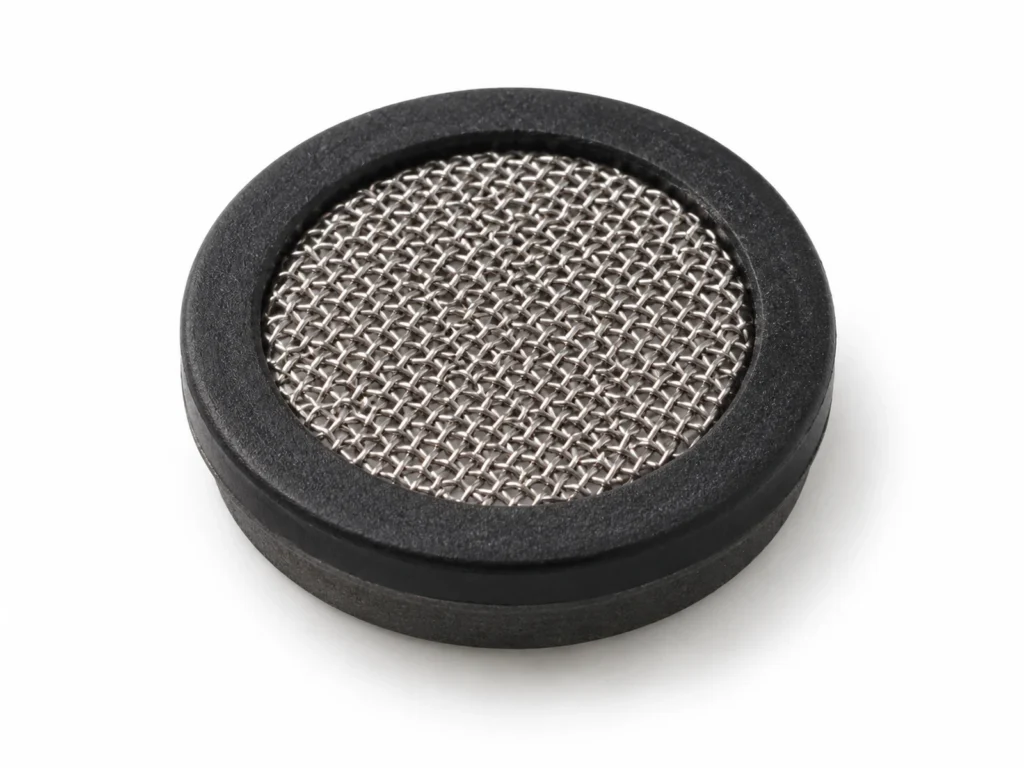
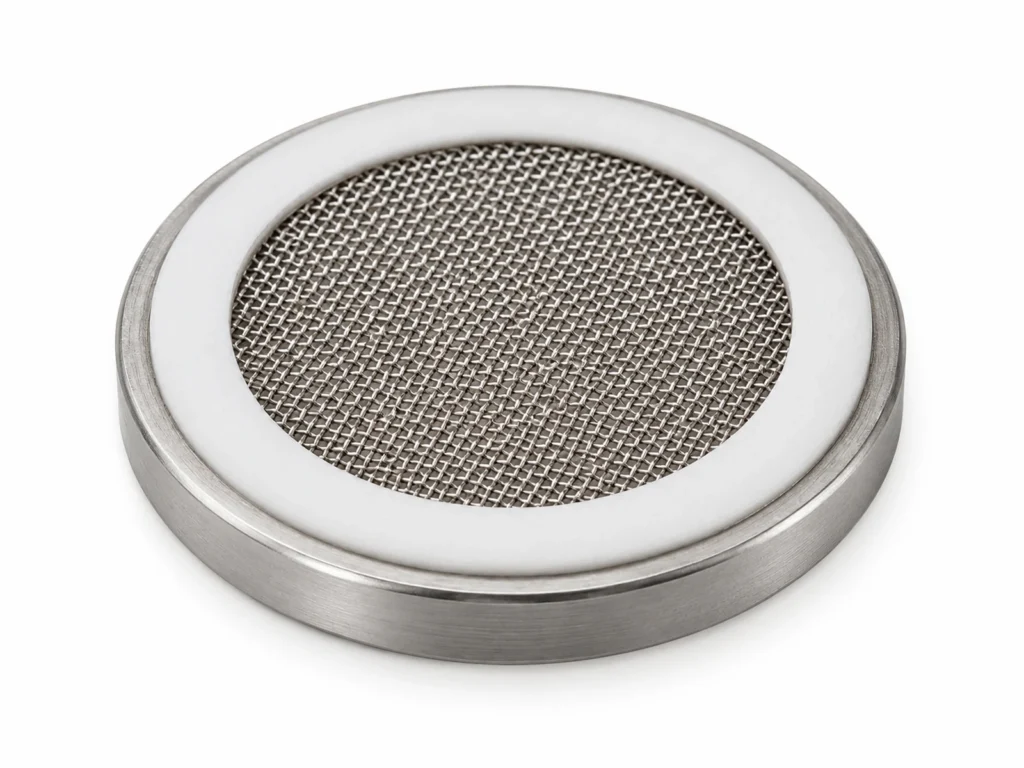
Smartphone Speaker & Receiver Dust Mesh for sealing smartphone receiver and loudspeaker openings against dust and water while passing sound with a controlled acoustic resistance. 4 sizes listed, with technical drawing and quotation.
Customize the parameters below — every spec field is editable, and the drawing redraws to match the values you choose. Changing the size will snap the other fields to that size's standard values; you can then override any individual value.
Sends the selected values to the quote form below.
Request a Quotation for Smartphone Speaker & Receiver Dust Mesh
Tell us the specification (mesh count / micron / dimensions), material and quantity you need for Smartphone Speaker & Receiver Dust Mesh (IEC 60529 IP67 / IP68 designs) and our team will respond within one business day. Click "Request this configuration" on the drawing above to send the parameters you just chose straight into this form.
Every row below is a starting point for the customizer above — pick any specification row and the drawing will redraw to it.
Part
Length (mm)
Width (mm)
Thickness (mm)
Hole diameter (mm)
Open area (%)
Acoustic resistance (MKS Rayl)
Receiver slot
12.0
1.6
0.05
0.035
18
160
Bottom speaker
16.0
3.0
0.05
0.045
22
120
Stereo speaker
20.0
2.4
0.06
0.045
22
120
Tablet speaker
28.0
4.0
0.08
0.060
28
80
Smartphone Speaker & Receiver Dust Mesh (IEC 60529 IP67 / IP68 designs) is used for sealing smartphone receiver and loudspeaker openings against dust and water while passing sound with a controlled acoustic resistance.
How to Specify Smartphone Speaker & Receiver Dust Mesh
Acoustic resistance: Specify MKS Rayl, not only hole size; it sets how much the mesh damps high frequencies.
Die-cut shape: Length, width and corner radius must clear the speaker port with a 0.3–0.5 mm adhesive land.
Adhesive: Double-sided pressure-sensitive adhesive rated for drop and heat-cycle testing.
Materials
Standard supply is stainless steel 304, stainless steel 316/316L; the material column in the table and the drawing options show the exact grade for each size. Other alloys and finishes can be quoted to your drawing.
Fitting & Care
Place with clean tweezers onto a degreased housing; fingerprints weaken the adhesive bond.
Press uniformly with a roller — a lifted edge lets dust bypass the mesh and causes buzz.
Common Mistakes
Choosing the finest mesh available, which muffles the speaker and fails acoustic tuning.
Omitting the adhesive land, so glue squeezes into the open area and changes resistance.
When Smartphone Speaker & Receiver Dust Mesh Is Not the Right Choice
Not a waterproof membrane on its own — IP68 phones need a hydrophobic ePTFE layer with the mesh.
Smartphone Speaker & Receiver Dust Mesh is made to order as finished parts. Indicative pricing starts from about US$0.040 per piece for a standard size at production quantity; the final price depends on size, material, finish, tooling and order volume. Send your configuration from the drawing above for a quotation.
What is Smartphone Speaker & Receiver Dust Mesh used for?
Sealing smartphone receiver and loudspeaker openings against dust and water while passing sound with a controlled acoustic resistance.
What does the speaker mesh in a phone do?
It keeps dust and debris out of the receiver and speaker while letting sound through with predictable damping.
Why is stainless etched mesh used instead of plastic?
It is thin, stiff, durable when cleaned and holds a precise hole size, so acoustic performance is repeatable.
How do I clean a phone speaker mesh?
Use a soft dry brush or putty; never push a pin through it, which tears the mesh.
Which specifications of Smartphone Speaker & Receiver Dust Mesh does custommetalfilters.com supply?
The table on this page lists 4 standard specifications for Smartphone Speaker & Receiver Dust Mesh, from Receiver slot to Tablet speaker. Specifications outside the table — custom mesh counts, wire diameters, roll widths and fabricated pieces — can be quoted on request.
How do I request a quotation?
Use the parametric drawing on this page to set the exact configuration (specification, material, treatment) and click "Request this configuration" — a specialist from custommetalfilters.com will respond within one business day.
Related Mesh Products
Closely related constructions in Acoustic & Electronics Mesh — compare aperture range, open area and cleanability.
This website uses only necessary and functional cookies to operate, secure, and improve basic website performance.
We do not use advertising cookies, Google Analytics, or cross-site tracking technologies.
Privacy Policy