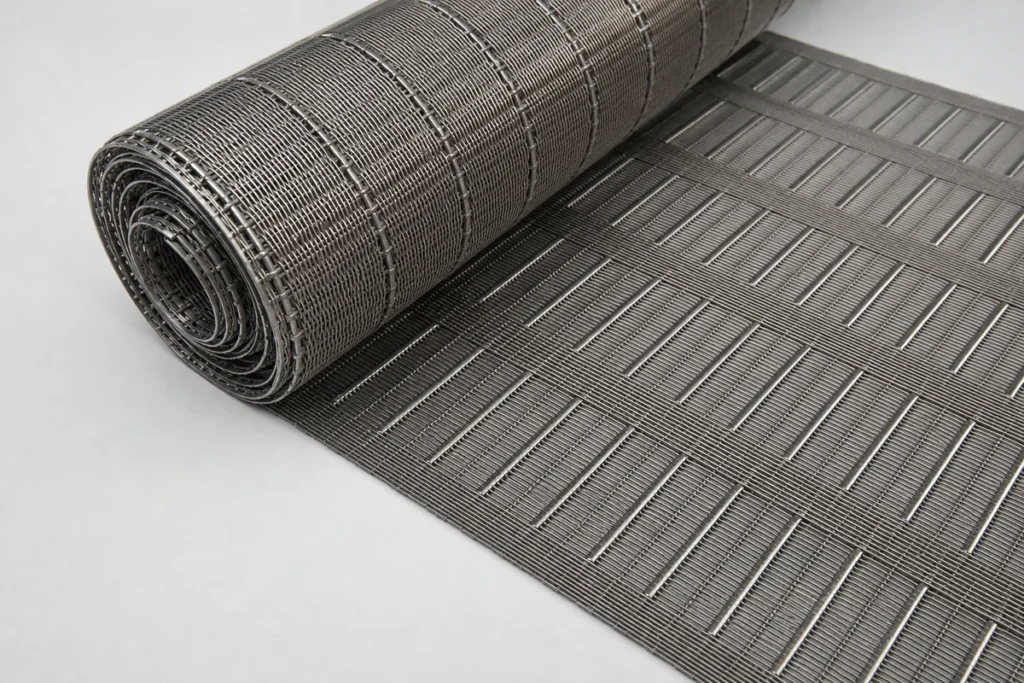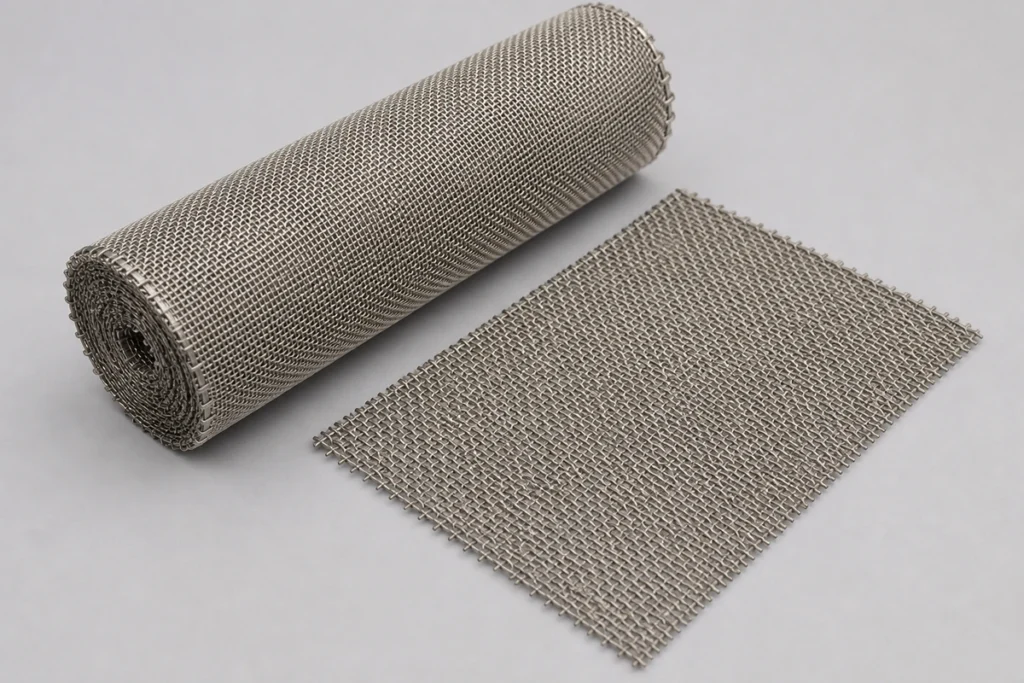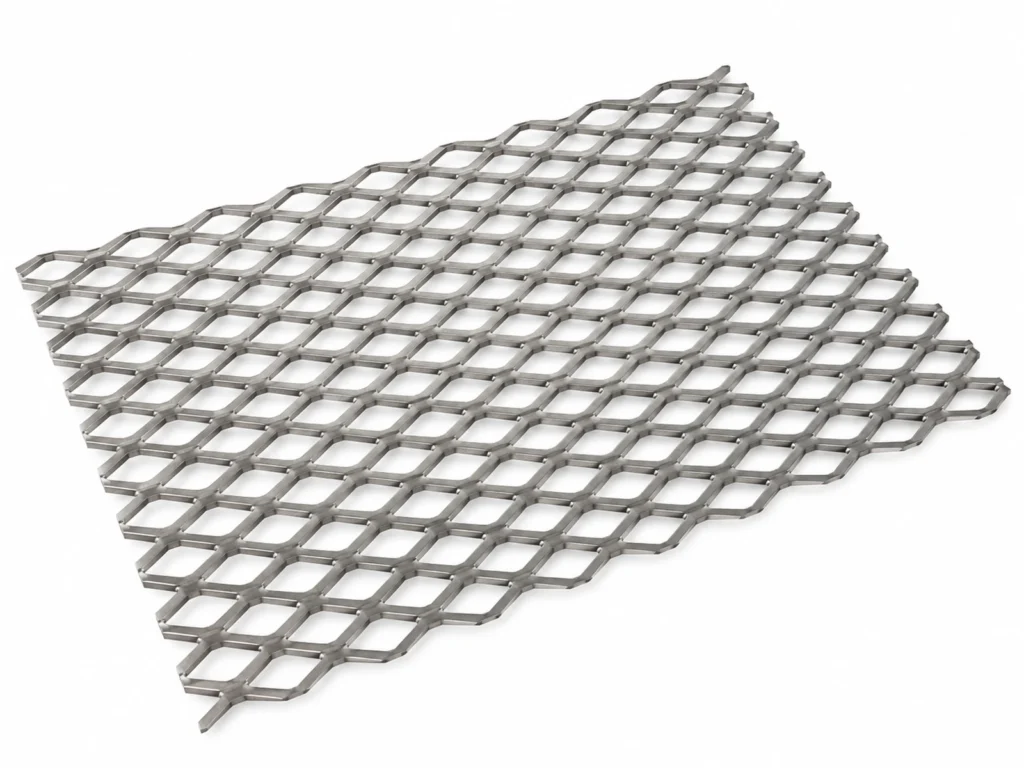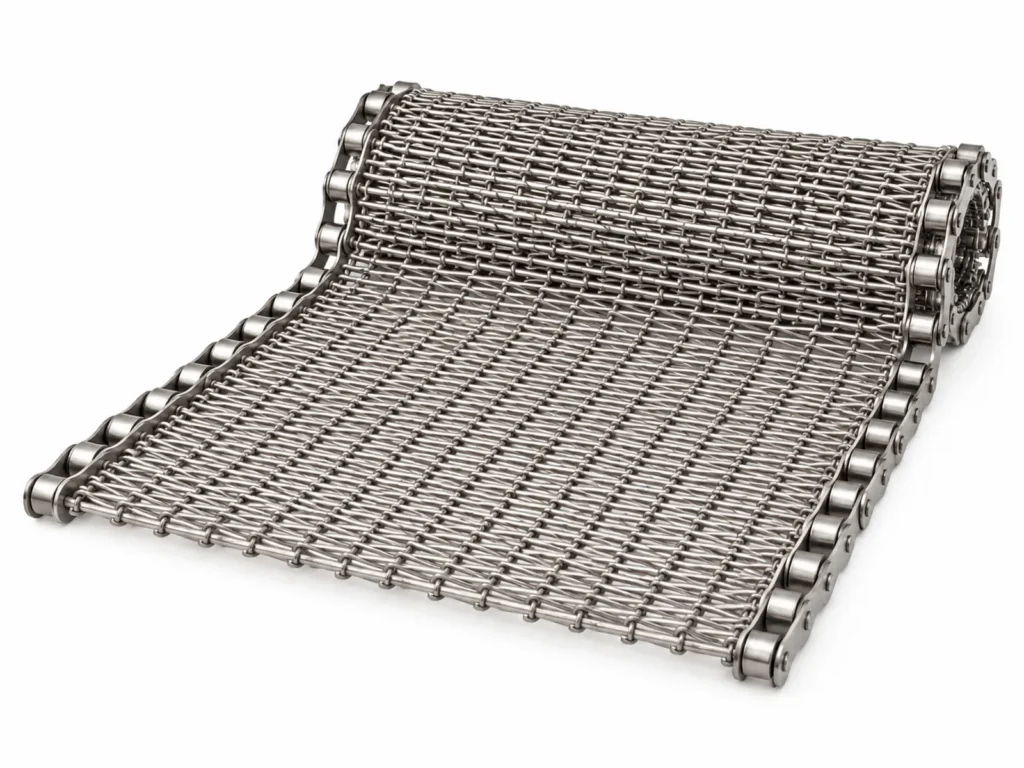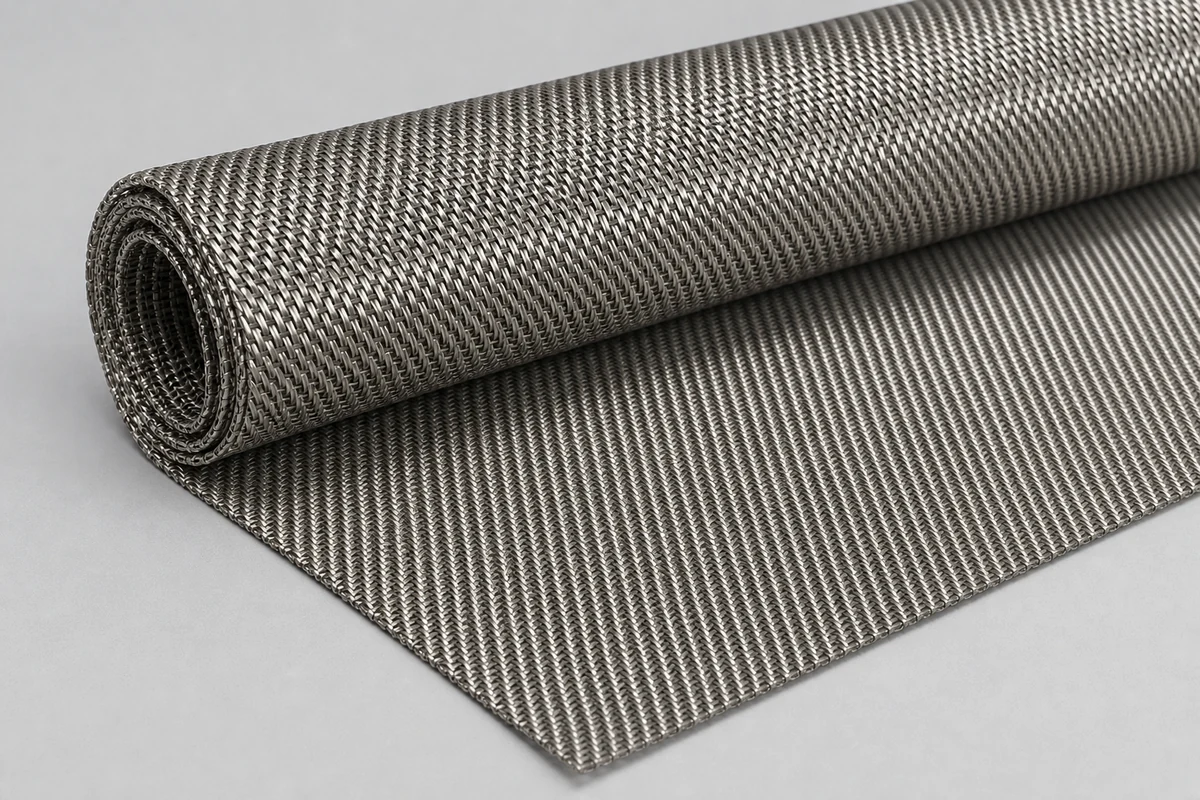
Material page for twill dutch weave mesh in 316L Stainless Steel. The default filtration and process-industry grade. Covers the grade designation (AISI 316L (1.4404)), corrosion and magnetic behavior, cleaning and compatibility notes, and the specifications available.
Why Choose 316L Stainless Steel for Twill Dutch Weave Mesh
The default filtration and process-industry grade. For twill dutch weave mesh, this matters when superior resistance, including chlorides, brines, food CIP and mild acids is the controlling requirement.
Alloy Properties
| Grade designation | AISI 316L (1.4404) |
|---|---|
| Magnetic response | Essentially non-magnetic |
| Service temperature | approx. +550 °C continuous |
| Corrosion characteristic | Superior resistance, including chlorides, brines, food CIP and mild acids |
Corrosion Behavior in Filtration Service
316/316L adds 2–3% molybdenum to the 304 composition, which sharply improves resistance to chloride pitting and mild acids. For twill dutch weave mesh in marine, brine, food-CIP and chemical-process service, 316L is the default filtration grade; the L (low-carbon) variant also resists sensitization where elements are welded into frames.
Cleaning & Compatibility
Stainless twill dutch weave mesh can be cleaned by backflush, ultrasonic bath, steam and most CIP chemistry. Two cautions: (1) avoid extended contact with hydrochloric acid or hypochlorite sanitizers, which pit even 316; (2) where the mesh contacts carbon steel during fabrication or service, iron pick-up can rust-stain the surface — specify passivation after fabrication.
Specifications of Twill Dutch Weave Mesh Available in 316L Stainless Steel
| Mesh (warp x weft) | Warp wire (mm) | Weft wire (mm) | Nominal filtration (u00b5m) | Weight SS (kg/mu00b2) | Reference standard |
|---|---|---|---|---|---|
| 80x700 | 0.10 | 0.08 | 40 | 0.75 | ISO 9044 |
| 165x1400 | 0.071 | 0.041 | 10 | 0.55 | ISO 9044 |
| 200x1400 | 0.071 | 0.041 | 8 | 0.55 | ISO 9044 |
| 325x2300 | 0.038 | 0.025 | 5 | 0.35 | ISO 9044 |
| 400x2800 | 0.030 | 0.020 | 4 | 0.28 | ISO 9044 |
| 510x3600 | 0.025 | 0.015 | 2 | 0.22 | ISO 9044 |
Where 316L Stainless Steel Twill Dutch Weave Mesh Is Used
- Aerospace & hydraulics: servo valve and fuel filters rated 5–40 µm.
- Pharmaceutical & chemical: Nutsche, candle and leaf filters.
- Polymer melt: fine layers in extruder filter packs.
- Gas filtration: instrument and sampling filters.
Ordering Twill Dutch Weave Mesh in 316L Stainless Steel
- Absolute rating: Specify absolute micron with the test method (e.g. glass-bead or bubble point).
- Count: Counts such as 200 × 1400 or 325 × 2300 define the rating.
- Support: Always pair with a coarser support layer in elements.
Mistakes to Avoid with Twill Dutch Weave Mesh
- Using twill dutch where flow is critical — its open area is low.
- Omitting the support layer, so the cloth deforms under pressure.