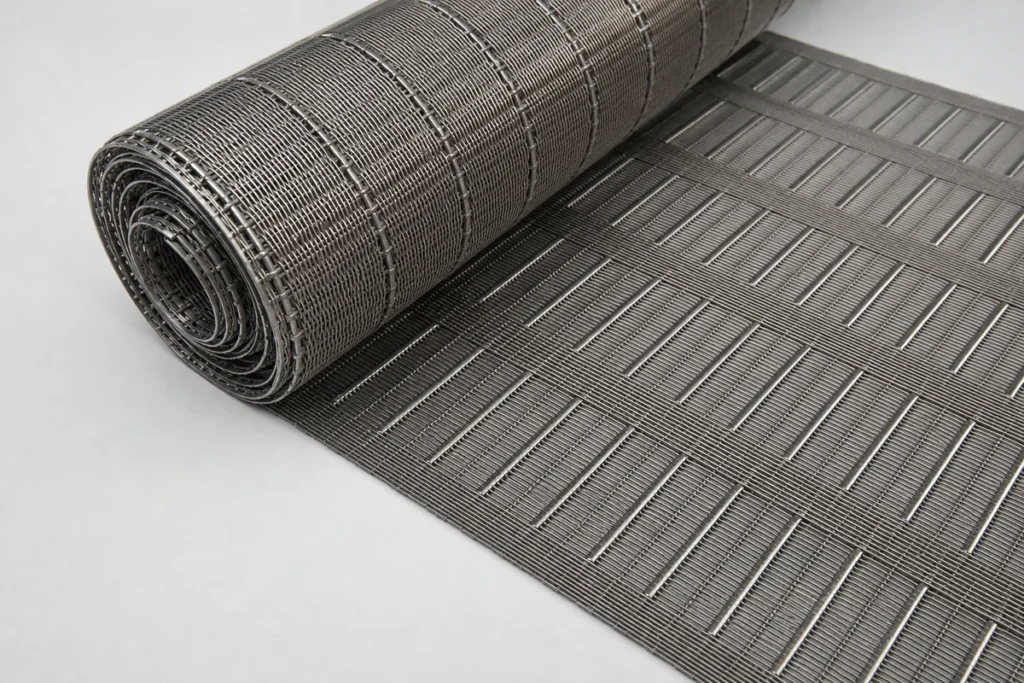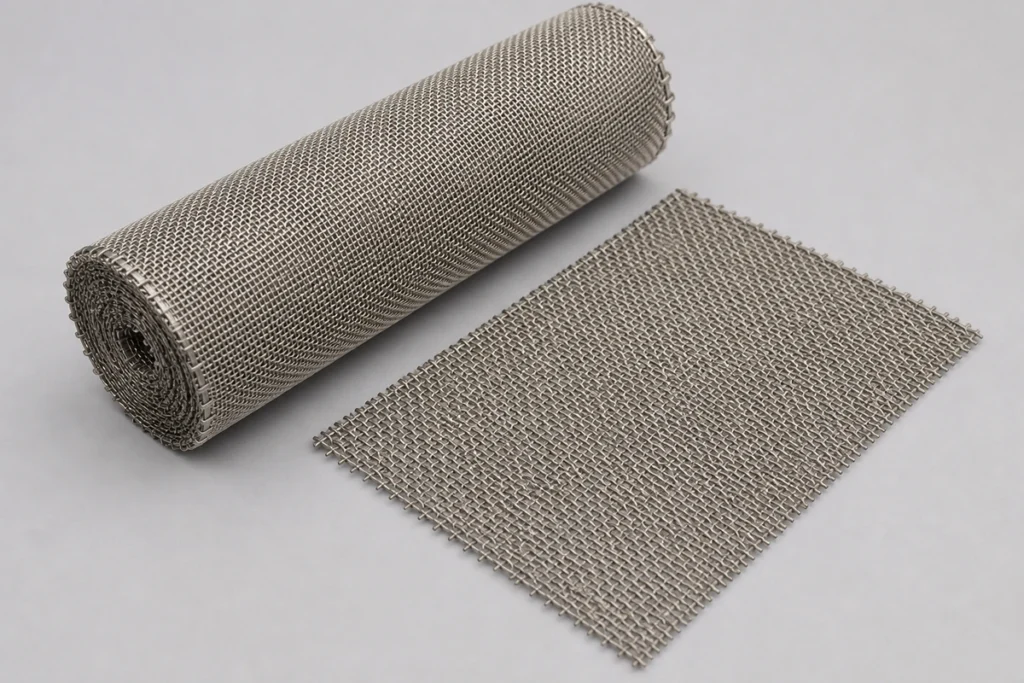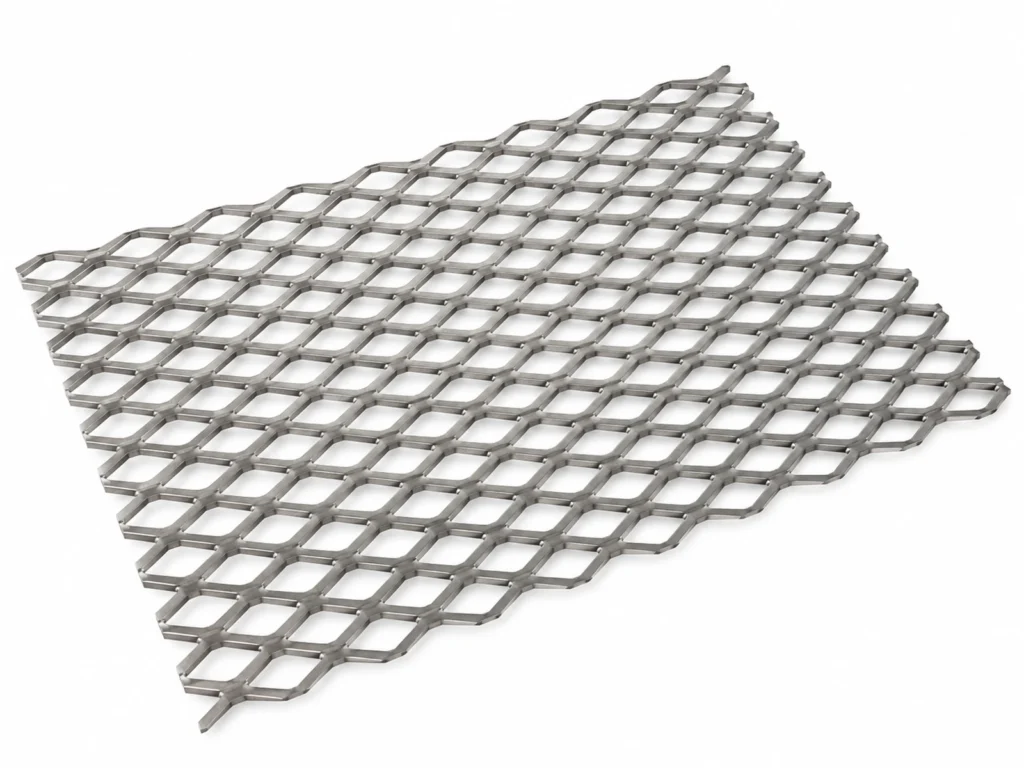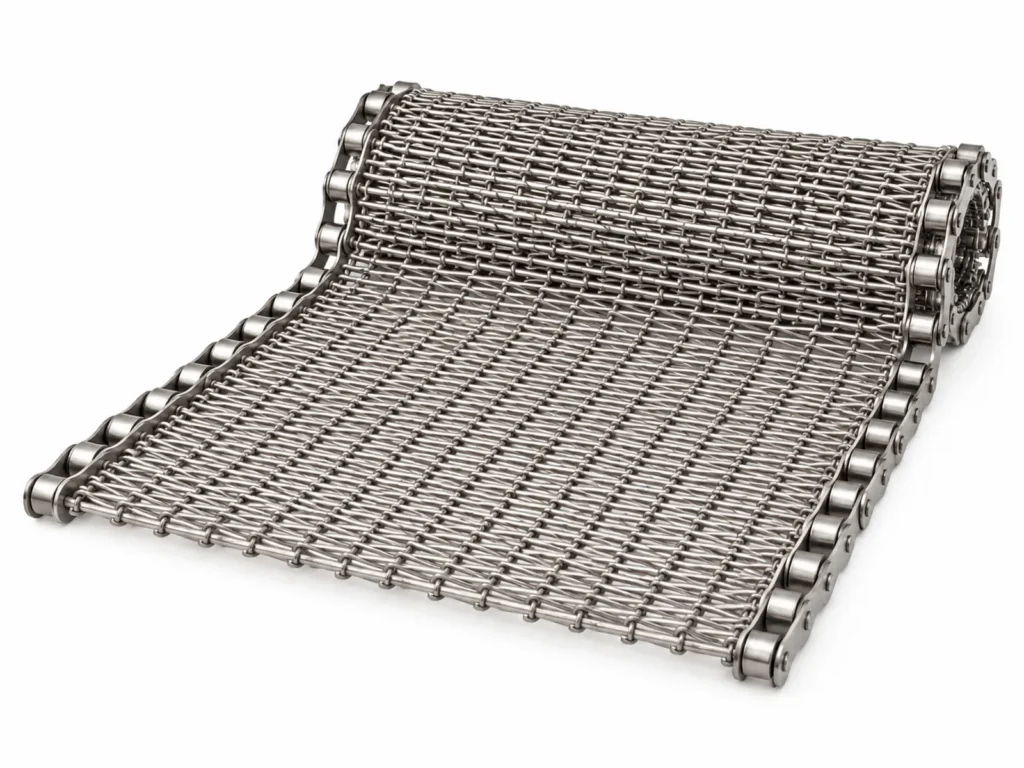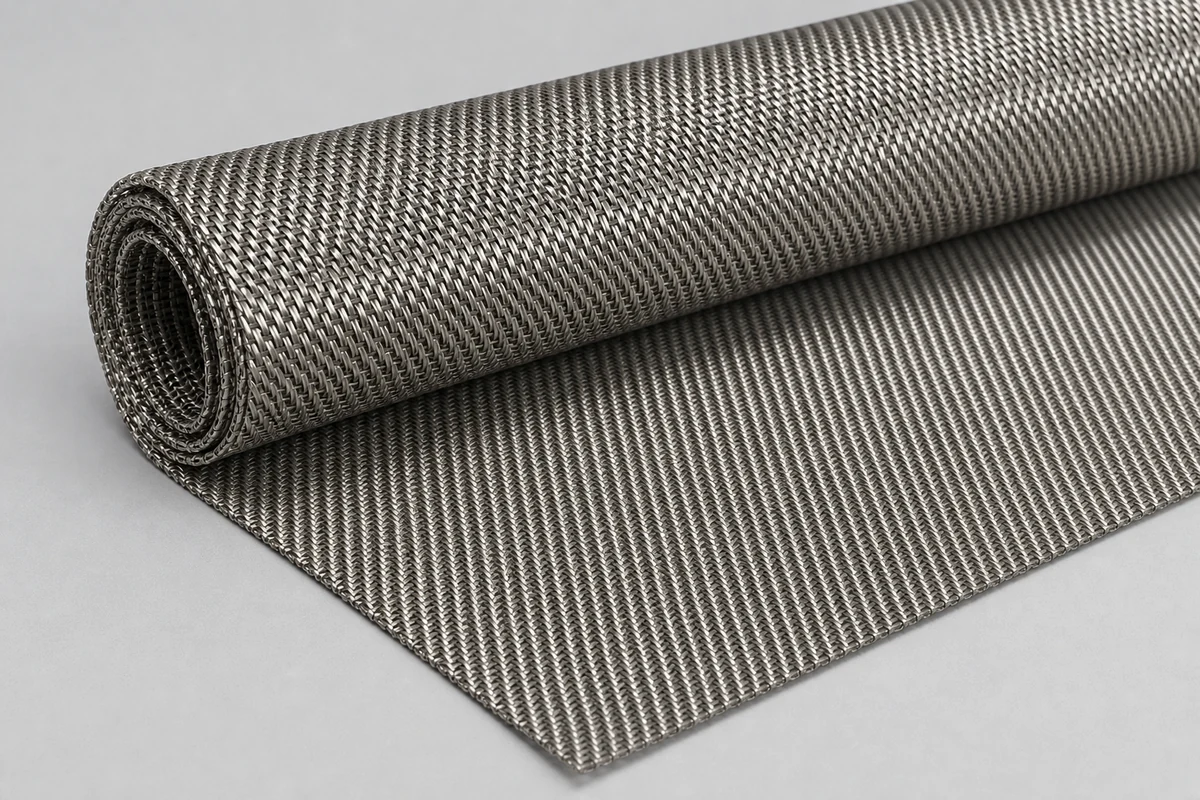
For twill dutch weave mesh in 304 Stainless Steel, the controlling selection factors are the media being filtered, the cleaning regime and the service temperature. The grade data for 304 Stainless Steel is summarized below together with every specification supplied.
Why Choose 304 Stainless Steel for Twill Dutch Weave Mesh
The standard general-purpose stainless mesh alloy. For twill dutch weave mesh, this matters when good general corrosion resistance in atmosphere and fresh water is the controlling requirement.
Alloy Properties
| Grade designation | AISI 304 (1.4301) |
|---|---|
| Magnetic response | Essentially non-magnetic (annealed) |
| Service temperature | approx. +450 °C continuous |
| Corrosion characteristic | Good general corrosion resistance in atmosphere and fresh water |
Corrosion Behavior in Filtration Service
304 gives good resistance to atmospheric exposure, fresh water and most neutral media, and is the standard general-purpose grade for twill dutch weave mesh. In chloride-bearing service (seawater, brines, road-salt spray) step up to 316L; in reducing acids consider a nickel alloy.
Comparable Alloys
The direct upgrade from 304 is 316L (chlorides, acids, CIP). Downgrade options for dry, indoor screening are galvanized or plain steel. For heat beyond ~450 °C move to Inconel 600; for seawater immersion consider Monel 400 or duplex 2205 for twill dutch weave mesh.
Specifications of Twill Dutch Weave Mesh Available in 304 Stainless Steel
| Mesh (warp x weft) | Warp wire (mm) | Weft wire (mm) | Nominal filtration (u00b5m) | Weight SS (kg/mu00b2) | Reference standard |
|---|---|---|---|---|---|
| 80x700 | 0.10 | 0.08 | 40 | 0.75 | ISO 9044 |
| 165x1400 | 0.071 | 0.041 | 10 | 0.55 | ISO 9044 |
| 200x1400 | 0.071 | 0.041 | 8 | 0.55 | ISO 9044 |
| 325x2300 | 0.038 | 0.025 | 5 | 0.35 | ISO 9044 |
| 400x2800 | 0.030 | 0.020 | 4 | 0.28 | ISO 9044 |
| 510x3600 | 0.025 | 0.015 | 2 | 0.22 | ISO 9044 |
Where 304 Stainless Steel Twill Dutch Weave Mesh Is Used
- Aerospace & hydraulics: servo valve and fuel filters rated 5–40 µm.
- Pharmaceutical & chemical: Nutsche, candle and leaf filters.
- Polymer melt: fine layers in extruder filter packs.
- Gas filtration: instrument and sampling filters.
Ordering Twill Dutch Weave Mesh in 304 Stainless Steel
- Absolute rating: Specify absolute micron with the test method (e.g. glass-bead or bubble point).
- Count: Counts such as 200 × 1400 or 325 × 2300 define the rating.
- Support: Always pair with a coarser support layer in elements.
Mistakes to Avoid with Twill Dutch Weave Mesh
- Using twill dutch where flow is critical — its open area is low.
- Omitting the support layer, so the cloth deforms under pressure.