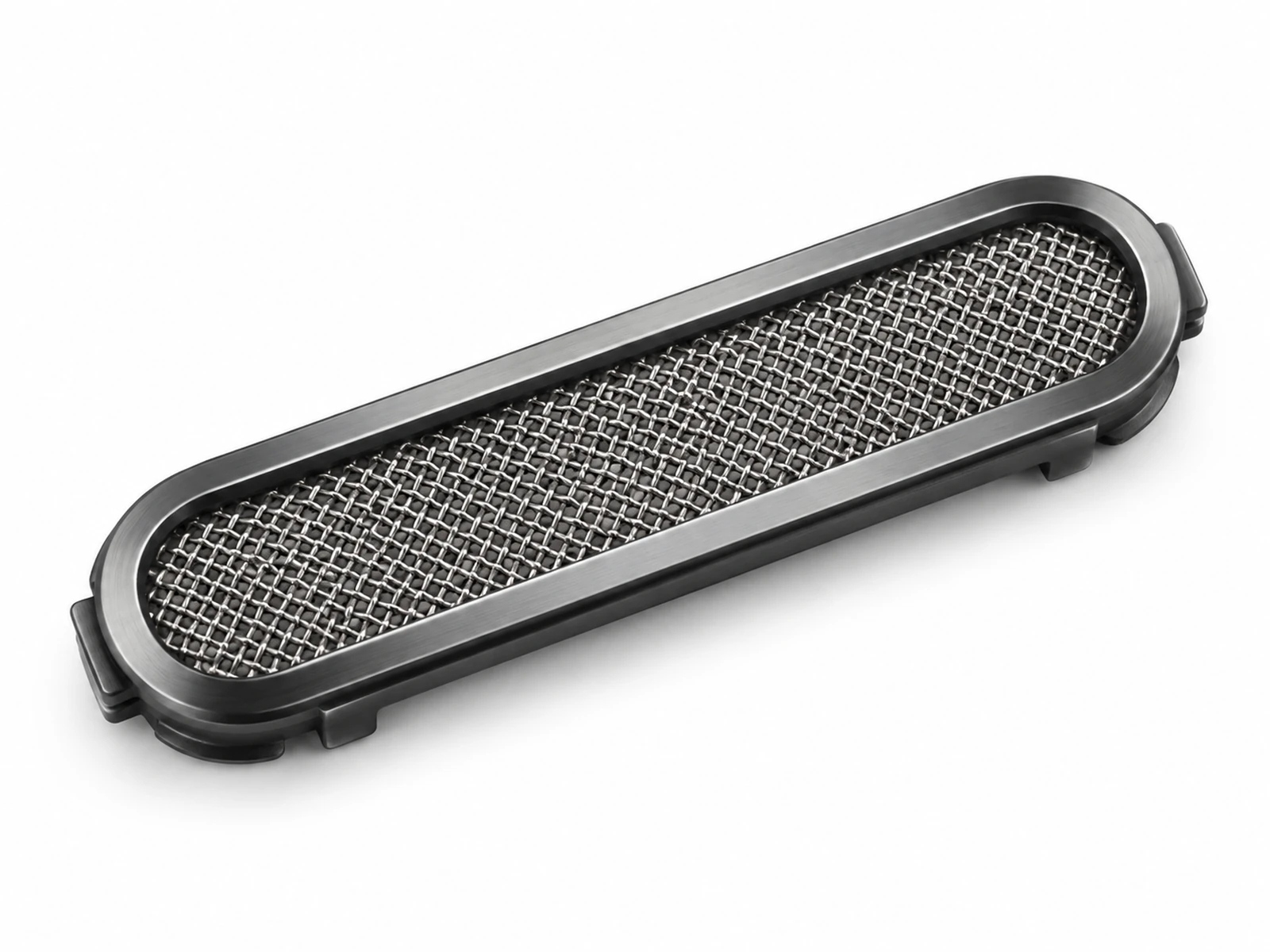
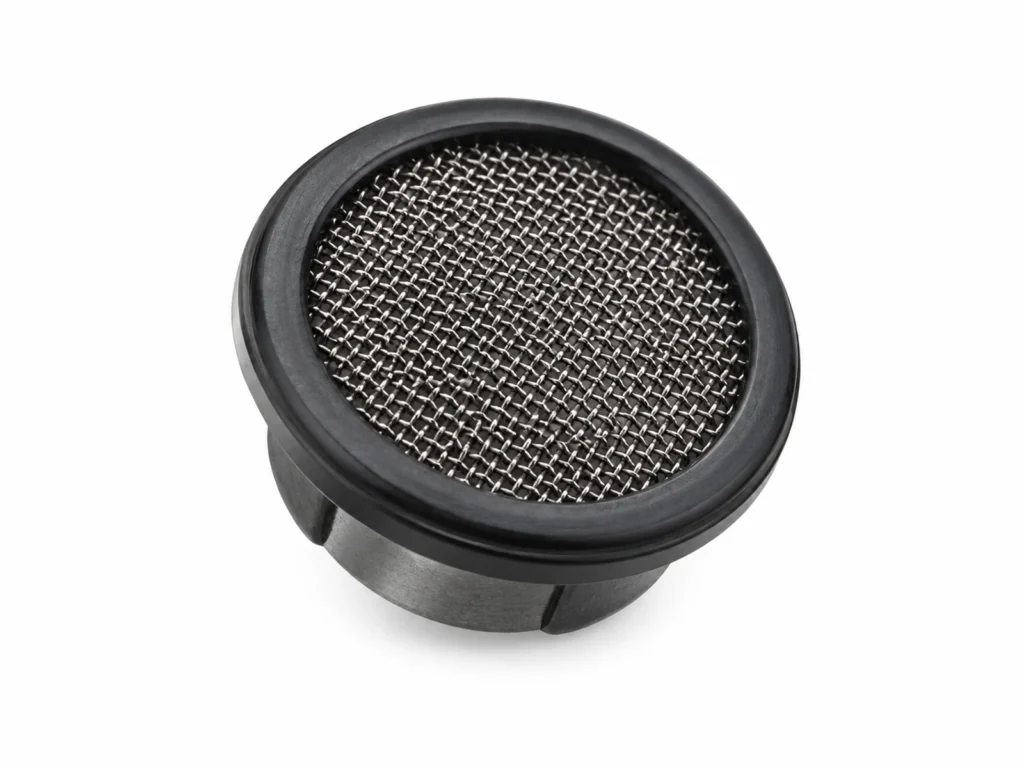
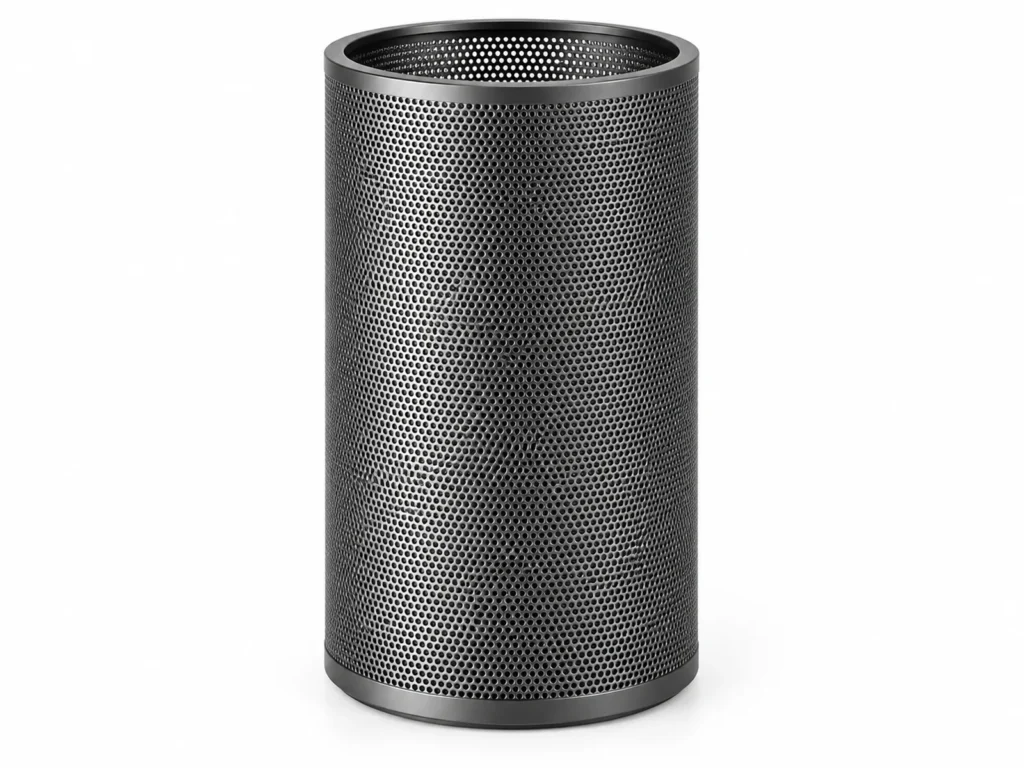
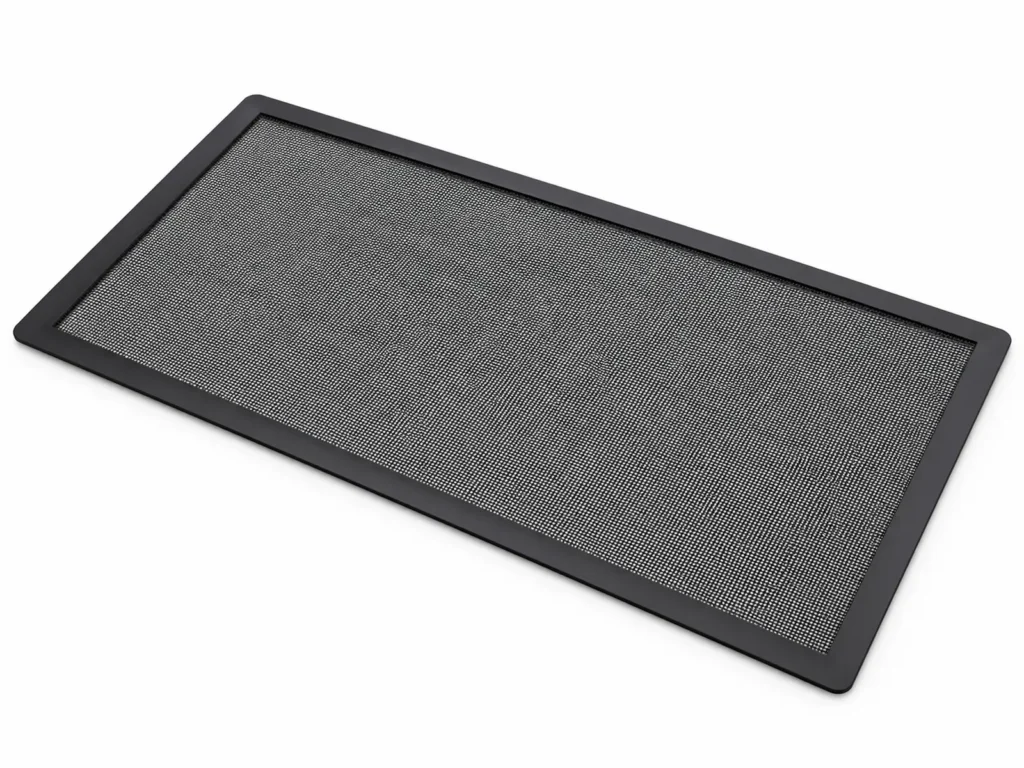
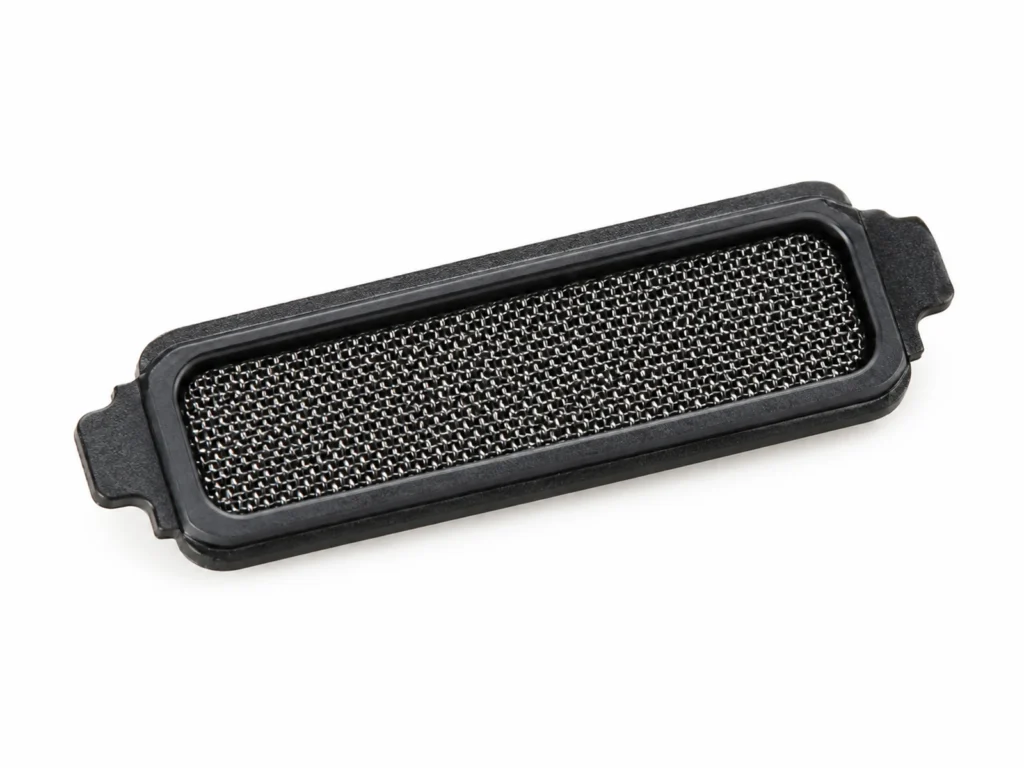
Smartwatch & Wearable Vent Mesh in 316L Stainless Steel (AISI 316L (1.4404)) is used for protecting the speaker, buzzer, barometric pressure and microphone ports of smartwatches and fitness wearables from sweat, sand and water. The alloy gives superior resistance, including chlorides, brines, food CIP and mild acids and is essentially non-magnetic, with a practical service limit of approx. +550 °C continuous.
Alloy Properties
| Grade designation | AISI 316L (1.4404) |
|---|
| Magnetic response | Essentially non-magnetic |
|---|
| Service temperature | approx. +550 °C continuous |
|---|
| Corrosion characteristic | Superior resistance, including chlorides, brines, food CIP and mild acids |
|---|
Specifications of Smartwatch & Wearable Vent Mesh Available in 316L Stainless Steel
| Part | Length (mm) | Width (mm) | Thickness (mm) | Hole diameter (mm) | Open area (%) | Function |
|---|
| Speaker vent | 8.0 | 1.2 | 0.05 | 0.035 | 18 | Speaker / buzzer |
| Barometer port | 2.5 | 2.5 | 0.04 | 0.025 | 12 | Pressure equalizing |
| Mic port | 1.8 | 1.8 | 0.04 | 0.030 | 15 | Microphone |
Where 316L Stainless Steel Smartwatch & Wearable Vent Mesh Is Used
- Smartwatch OEMs: speaker slot and mic port meshes on the case side.
- Dive & outdoor computers: pressure-sensor ports that must respond quickly to depth and altitude.
- Fitness bands & smart rings: tiny buzzer vents in very thin housings.
- Medical wearables: alarm and sensor ports exposed to skin contact all day.
Ordering Smartwatch & Wearable Vent Mesh in 316L Stainless Steel
- Corrosion resistance: Use SS316L — sweat chlorides pit 304 mesh within months.
- Pressure response: Barometer ports need low-resistance mesh so readings follow altitude changes without lag.
- Size & thickness: Slots can be under 1.5 mm wide; 0.04–0.05 mm mesh keeps the stack thin.
Mistakes to Avoid with Smartwatch & Wearable Vent Mesh
- Putting a high-Rayl mesh on the barometer port, which delays altitude and depth readings.
- Using 304 stainless in a product worn during exercise.