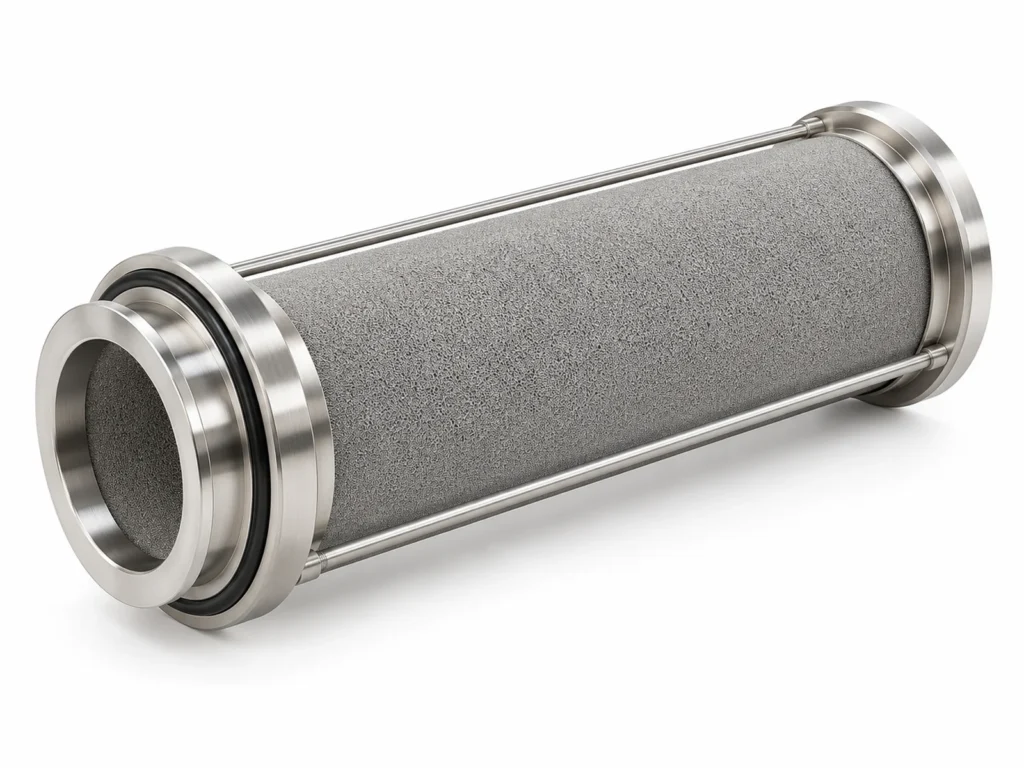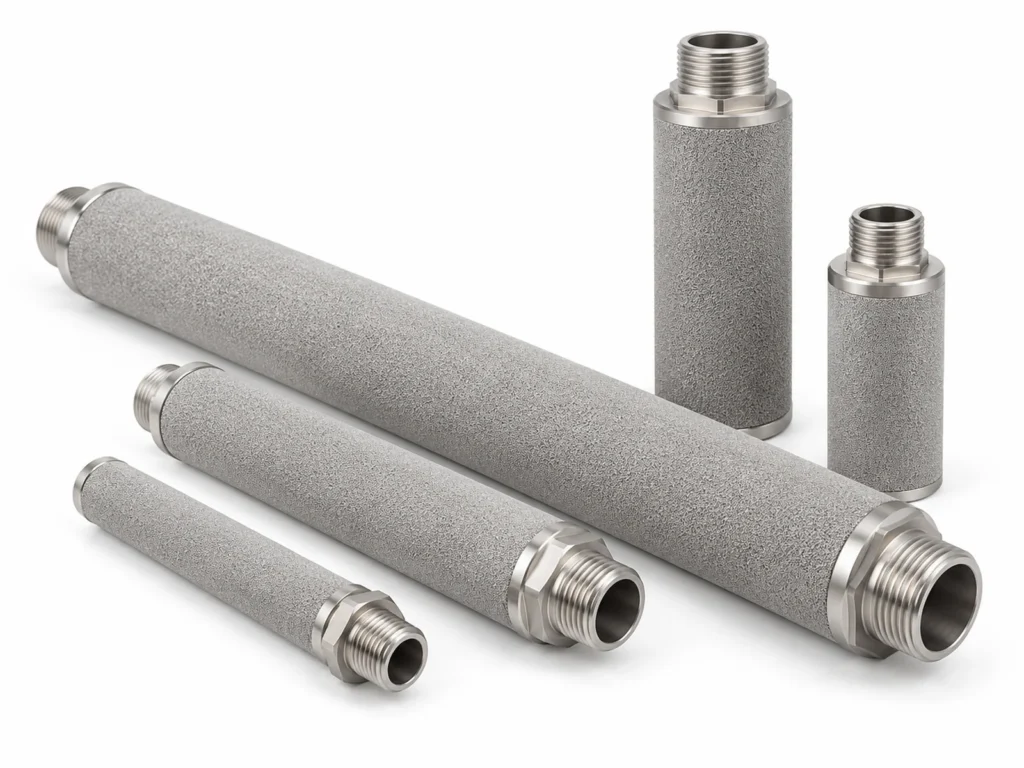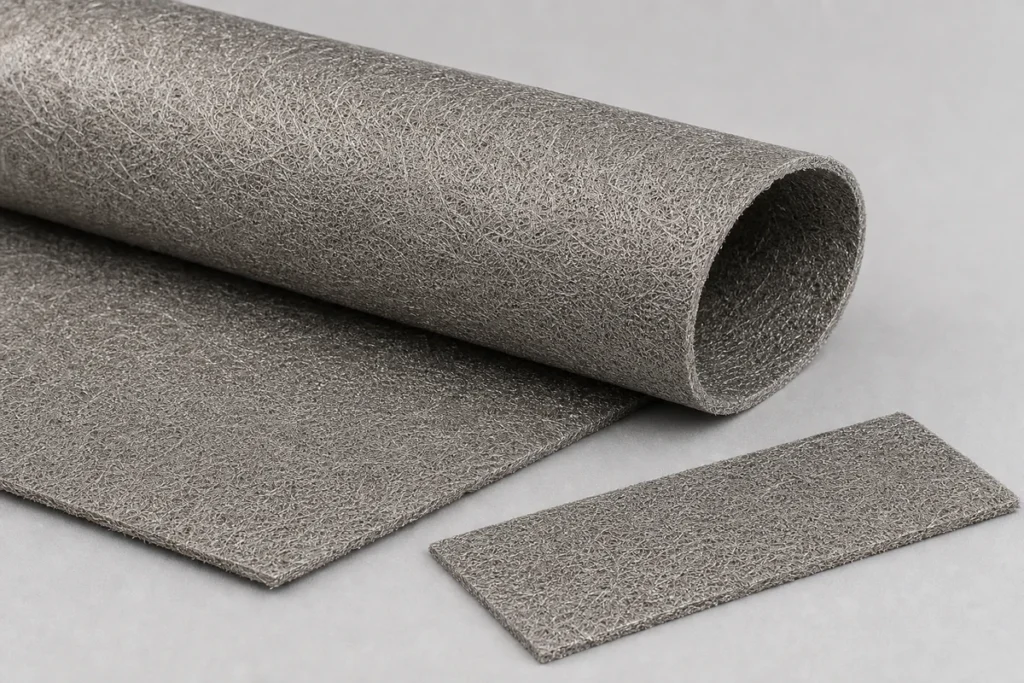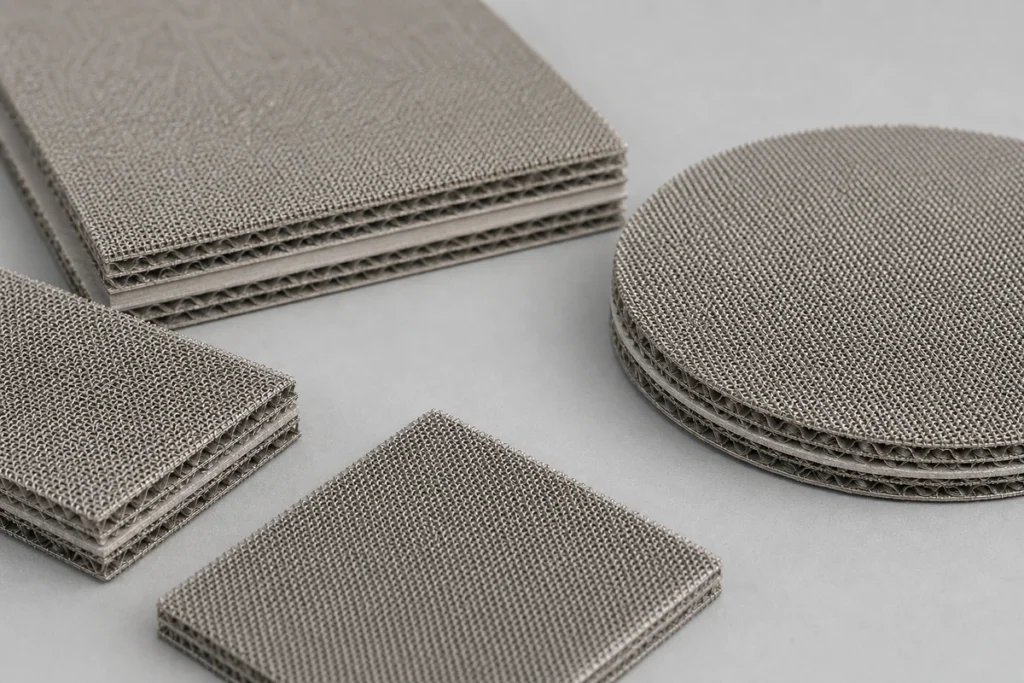
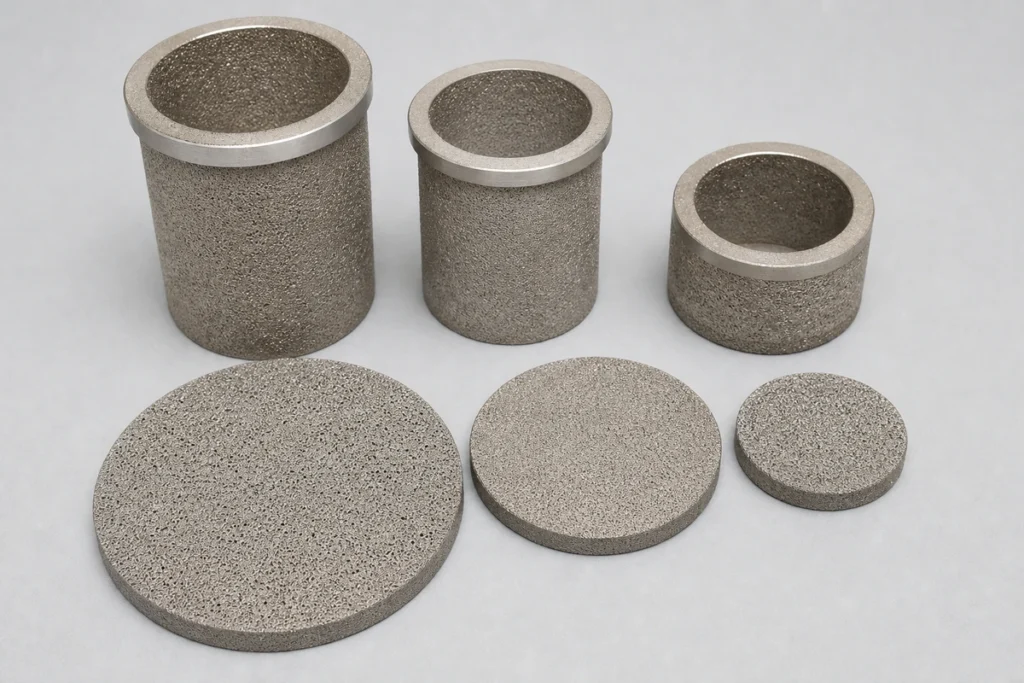
Sintered Metal Powder Filters woven or fabricated in 316L Stainless Steel (AISI 316L (1.4404)) keeps its dimensional specification to ISO 4022; the alloy determines corrosion behavior (superior resistance, including chlorides, brines, food CIP and mild acids) and the service temperature limit (approx. +550 °C continuous). Both are covered below with the full specification table.
Why Choose 316L Stainless Steel for Sintered Metal Powder Filters
The default filtration and process-industry grade. For sintered metal powder filters, this matters when superior resistance, including chlorides, brines, food CIP and mild acids is the controlling requirement.
Alloy Properties
| Grade designation | AISI 316L (1.4404) |
|---|---|
| Magnetic response | Essentially non-magnetic |
| Service temperature | approx. +550 °C continuous |
| Corrosion characteristic | Superior resistance, including chlorides, brines, food CIP and mild acids |
Corrosion Behavior in Filtration Service
316/316L adds 2–3% molybdenum to the 304 composition, which sharply improves resistance to chloride pitting and mild acids. For sintered metal powder filters in marine, brine, food-CIP and chemical-process service, 316L is the default filtration grade; the L (low-carbon) variant also resists sensitization where elements are welded into frames.
Cleaning & Compatibility
Stainless sintered metal powder filters can be cleaned by backflush, ultrasonic bath, steam and most CIP chemistry. Two cautions: (1) avoid extended contact with hydrochloric acid or hypochlorite sanitizers, which pit even 316; (2) where the mesh contacts carbon steel during fabrication or service, iron pick-up can rust-stain the surface — specify passivation after fabrication.
Specifications of Sintered Metal Powder Filters Available in 316L Stainless Steel
| Micron rating (u00b5m) | Thickness (mm) | Form | Available shapes | Reference standard |
|---|---|---|---|---|
| 0.5 | 1.5-3.0 | Powder | Disc / cup / tube / sheet | ISO 4022 |
| 2 | 1.5-3.0 | Powder | Disc / cup / tube / sheet | ISO 4022 |
| 10 | 1.5-3.0 | Powder | Disc / cup / tube / sheet | ISO 4022 |
| 40 | 2.0-3.0 | Powder | Disc / cup / tube / sheet | ISO 4022 |
| 100 | 2.0-3.0 | Powder | Disc / cup / tube / sheet | ISO 4022 |
Where 316L Stainless Steel Sintered Metal Powder Filters Is Used
- Pneumatics: silencers and inlet filters.
- Process gas & semiconductor: point-of-use gas filters.
- Chemical & pharmaceutical: catalyst recovery and solvent filters.
- Instrumentation: sensor and sampling filters.
Ordering Sintered Metal Powder Filters in 316L Stainless Steel
- Powder & alloy: SS316L for corrosion; bronze for low-cost pneumatics; nickel alloys for aggressive media.
- Pore size: 0.5–100 µm; specify liquid or gas rating.
- Shape: Tubes, cups, discs or plates with welded or threaded fittings.
Mistakes to Avoid with Sintered Metal Powder Filters
- Choosing too fine a grade for the allowable pressure drop.
- Threading porous parts directly, which cracks them.