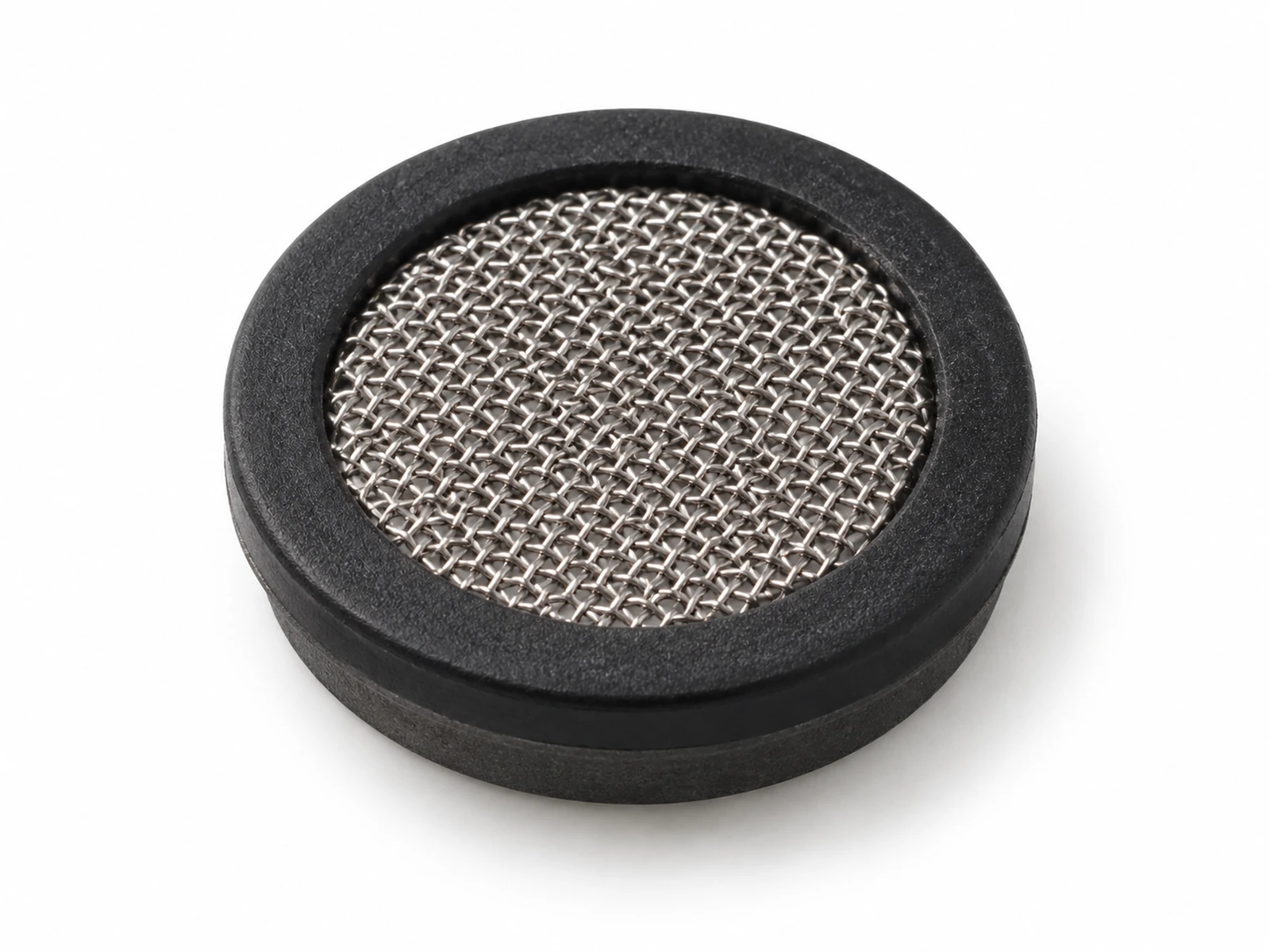
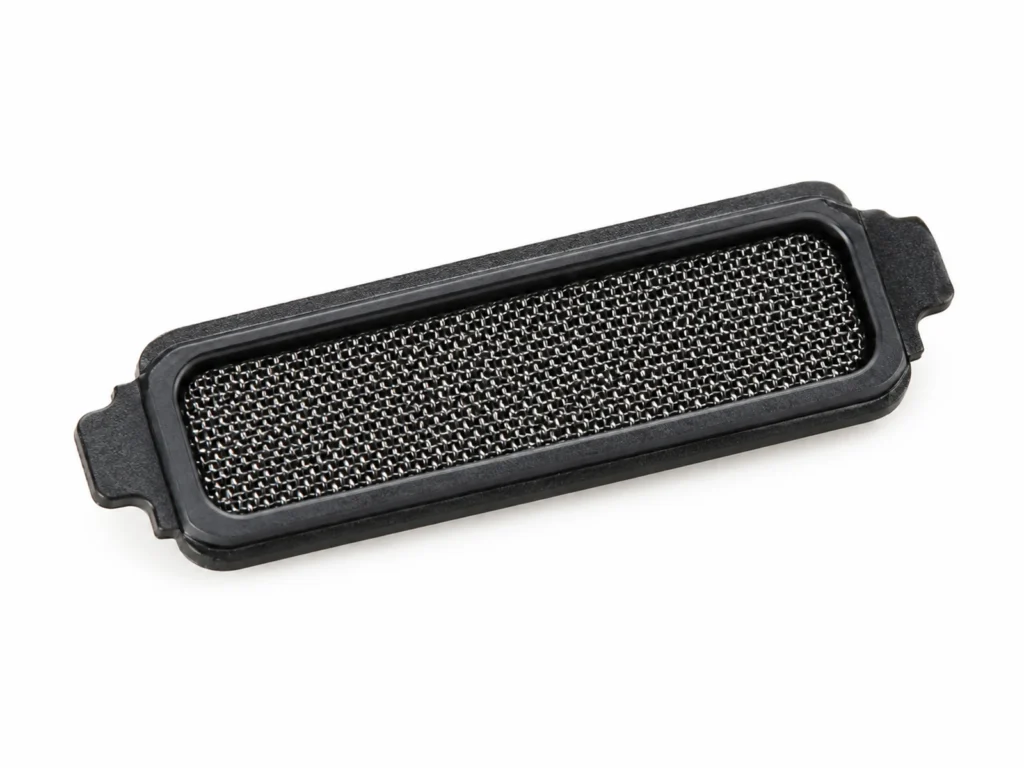
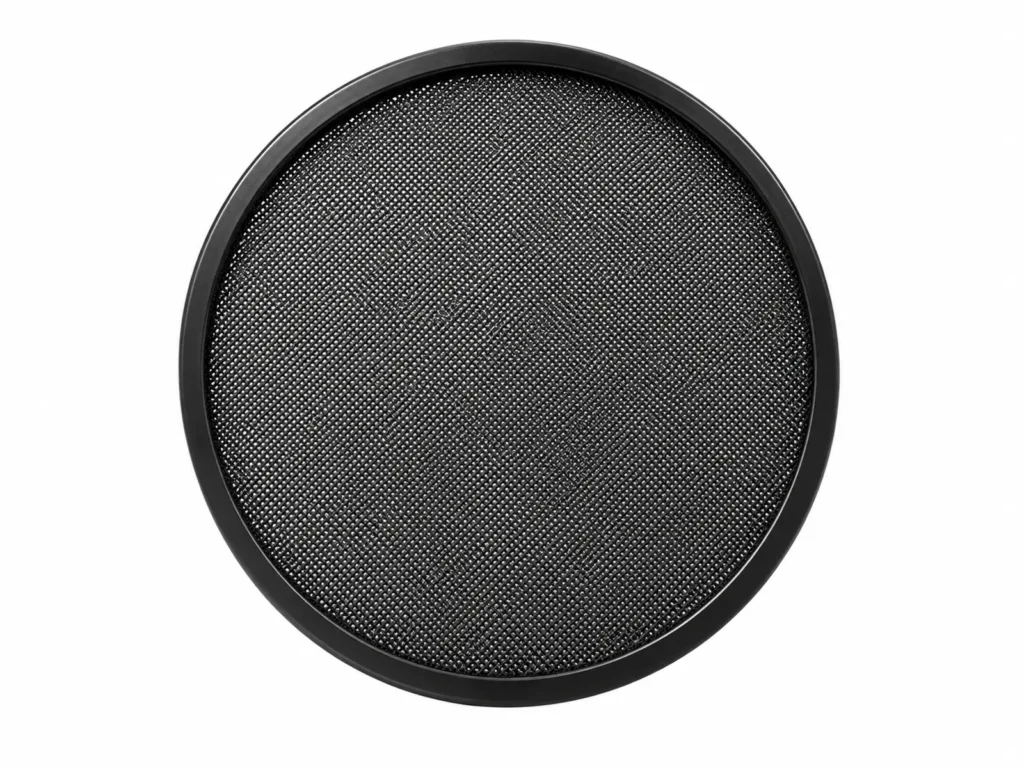
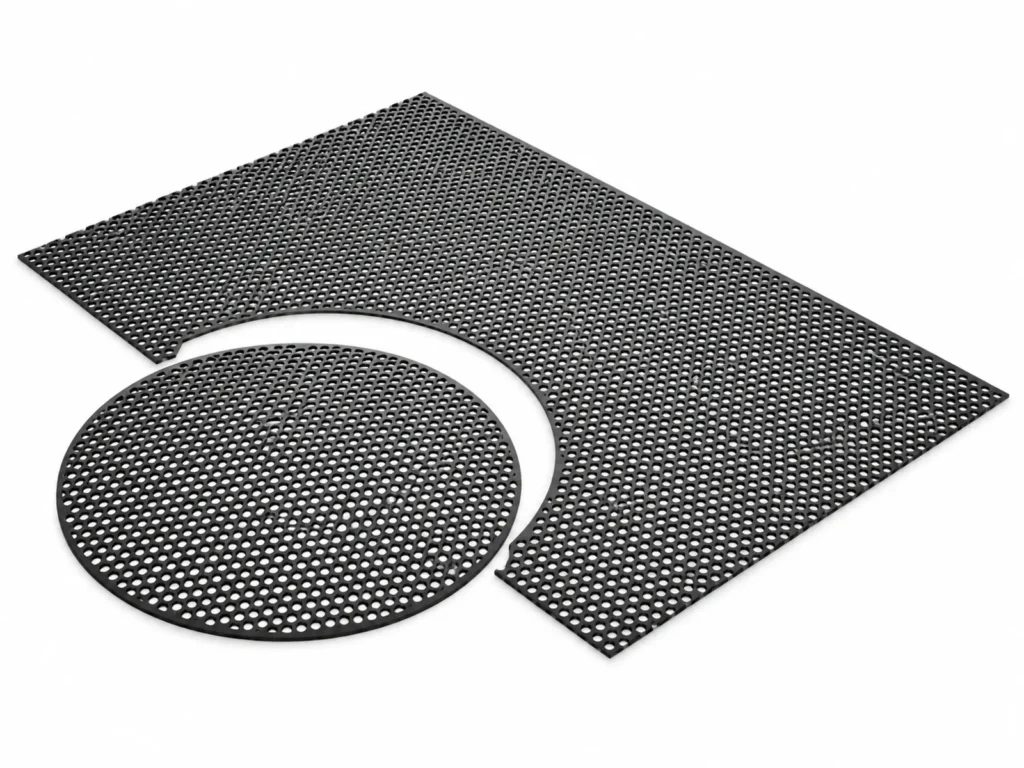
MEMS Microphone Dust Mesh in 304 Stainless Steel (AISI 304 (1.4301)) is used for shielding the acoustic port of MEMS microphones from dust, lint and splashes with a tiny die-cut mesh whose acoustic resistance is matched to the microphone. The alloy gives good general corrosion resistance in atmosphere and fresh water and is essentially non-magnetic (annealed), with a practical service limit of approx. +450 °C continuous.
Alloy Properties
| Grade designation | AISI 304 (1.4301) |
|---|
| Magnetic response | Essentially non-magnetic (annealed) |
|---|
| Service temperature | approx. +450 °C continuous |
|---|
| Corrosion characteristic | Good general corrosion resistance in atmosphere and fresh water |
|---|
Specifications of MEMS Microphone Dust Mesh Available in 304 Stainless Steel
| Part | Length (mm) | Width (mm) | Thickness (mm) | Hole diameter (mm) | Open area (%) | Acoustic resistance (MKS Rayl) |
|---|
| u00d82.0 port | 2.0 | 2.0 | 0.04 | 0.030 | 15 | 260 |
| u00d83.0 port | 3.0 | 3.0 | 0.04 | 0.030 | 15 | 260 |
| u00d84.0 port | 4.0 | 4.0 | 0.05 | 0.040 | 20 | 180 |
| Oval 3 u00d7 2 | 3.0 | 2.0 | 0.04 | 0.030 | 15 | 260 |
Where 304 Stainless Steel MEMS Microphone Dust Mesh Is Used
- Smartphone & tablet OEMs: primary, secondary and noise-cancelling mic ports on the frame and bottom edge.
- Smart speakers & conference bars: six- and eight-mic far-field arrays where every port must match acoustically.
- Hearing aids & hearables: mic inlets that face skin oils, sweat and earwax every day.
- Automotive cabins: overhead-console hands-free microphones exposed to dust and HVAC airflow.
Ordering MEMS Microphone Dust Mesh in 304 Stainless Steel
- Port geometry: Specify the port as round (Ø2–4 mm) or oval, and the adhesive ring inner diameter so glue never overlaps the open mesh.
- Acoustic resistance: Higher MKS Rayl gives better ingress protection but costs sensitivity and SNR; specify a target with a tolerance band (typically ±15 %).
- Array matching: For beam-forming arrays order all meshes from one etching lot so resistance does not vary port to port.
Mistakes to Avoid with MEMS Microphone Dust Mesh
- Mixing mesh lots across a mic array, so beam-forming and echo cancellation lose accuracy.
- Treating a mesh as a wind screen — it does not reduce wind noise; foam or a labyrinth path is needed for that.