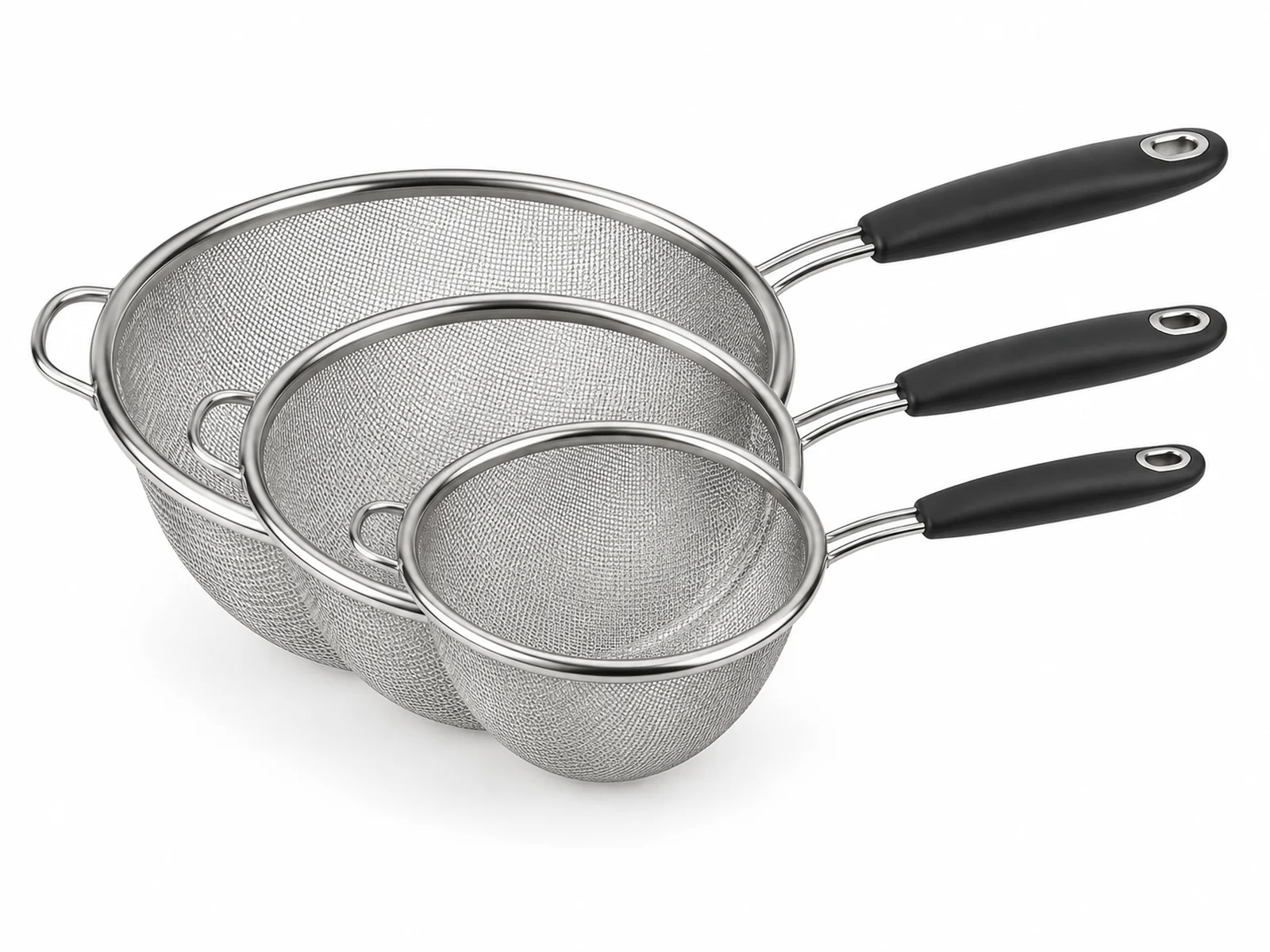
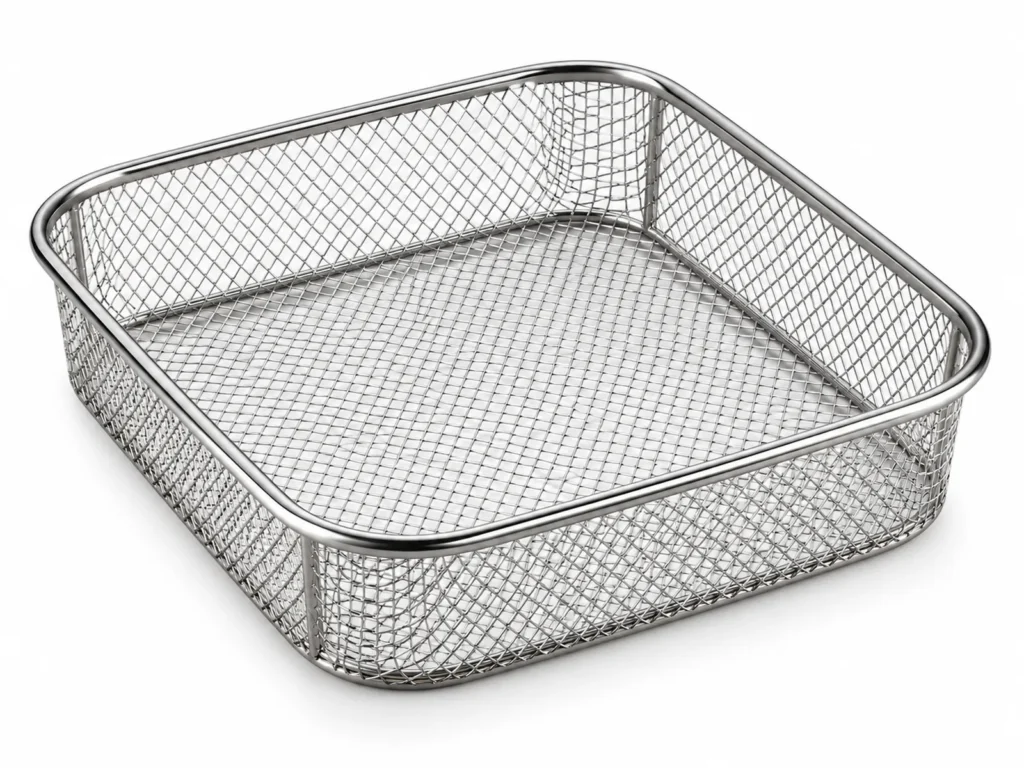
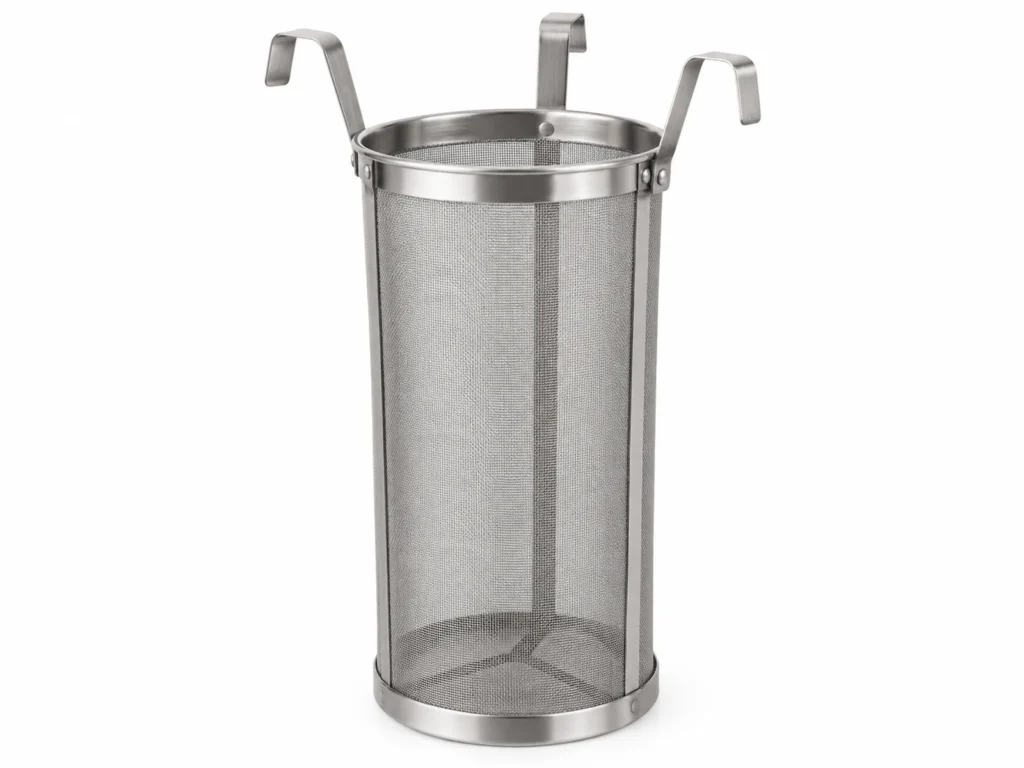
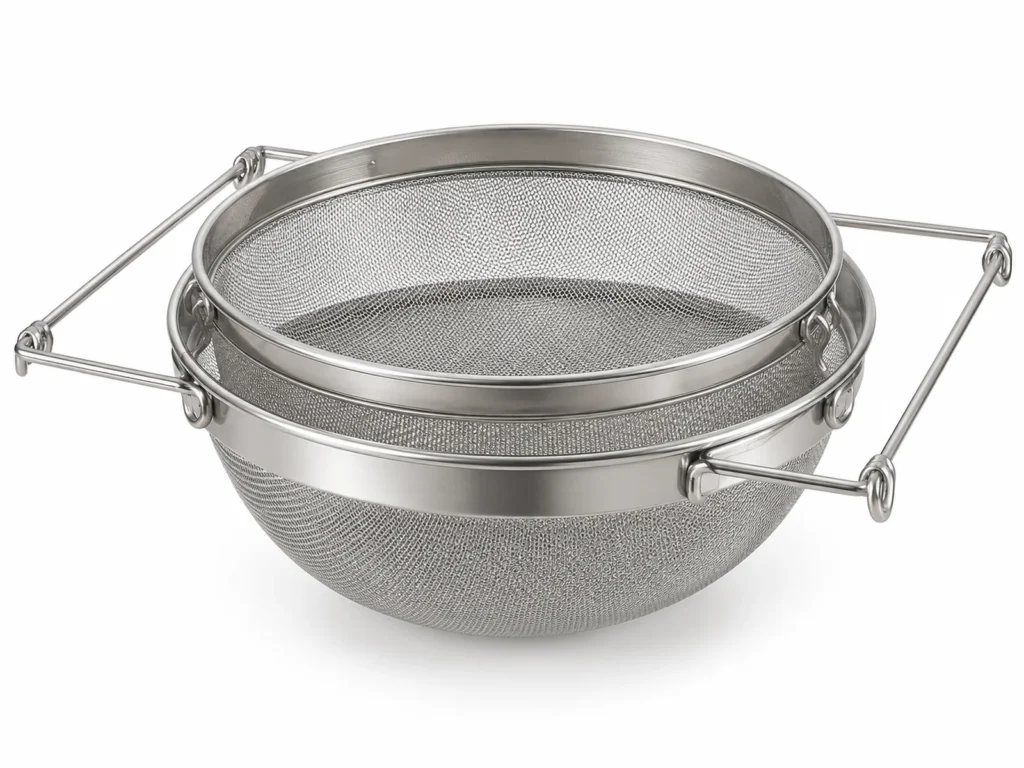
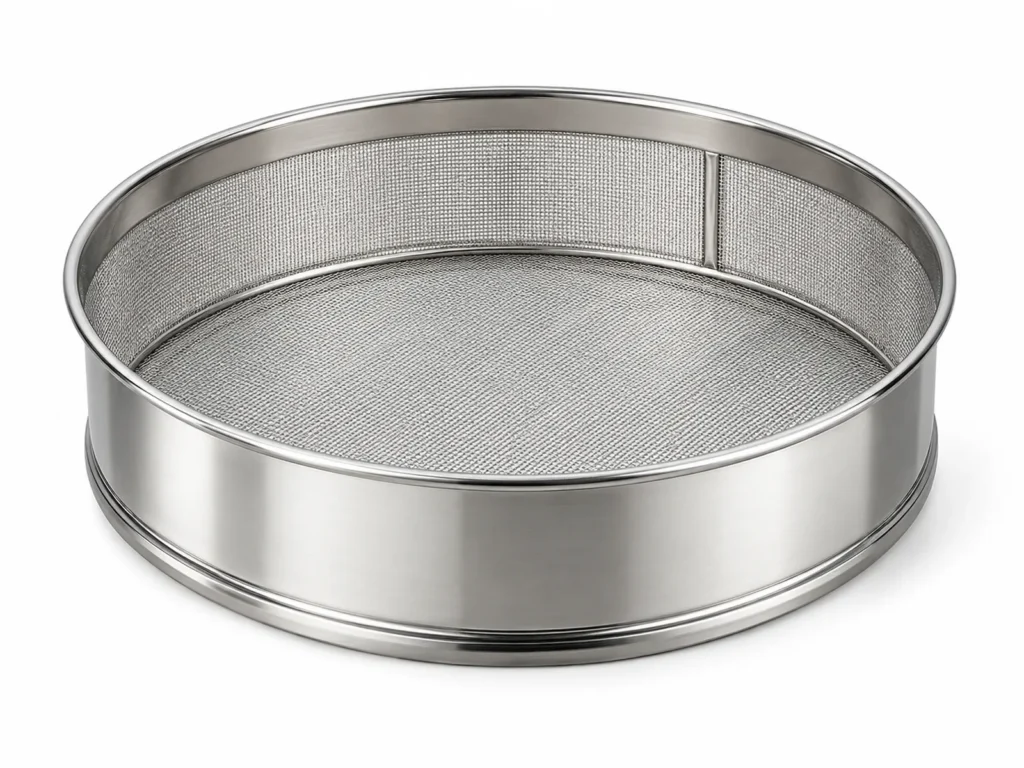
Fine Mesh Kitchen Sieve & Strainer in 304 Stainless Steel (AISI 304 (1.4301)) is used for rinsing grains, draining small batches, dusting and pressing sauces through a hand-held woven stainless bowl or conical chinois. The alloy gives good general corrosion resistance in atmosphere and fresh water and is essentially non-magnetic (annealed), with a practical service limit of approx. +450 °C continuous.
Alloy Properties
| Grade designation | AISI 304 (1.4301) |
|---|
| Magnetic response | Essentially non-magnetic (annealed) |
|---|
| Service temperature | approx. +450 °C continuous |
|---|
| Corrosion characteristic | Good general corrosion resistance in atmosphere and fresh water |
|---|
Specifications of Fine Mesh Kitchen Sieve & Strainer Available in 304 Stainless Steel
| Size | Top diameter (mm) | Depth (mm) | Mesh | Aperture (mm) | Handle |
|---|
| 8 cm | 80 | 40 | 40-Mesh | 0.385 | Wire handle + hook |
| 14 cm | 140 | 65 | 40-Mesh | 0.385 | Wire handle + hook |
| 20 cm | 200 | 90 | 30-Mesh | 0.547 | Riveted handle + ear |
| Chinois 20 | 200 | 230 | 60-Mesh | 0.233 | Conical, long handle |
Where 304 Stainless Steel Fine Mesh Kitchen Sieve & Strainer Is Used
- Cookware brands: nested sets of three sieves for retail.
- Restaurant kitchens: chinois for stocks, consommé and silky sauces.
- Bakeries & pastry kitchens: sifting and dusting small quantities.
- Catering: rinsing rice, quinoa and pulses in bulk.
Ordering Fine Mesh Kitchen Sieve & Strainer in 304 Stainless Steel
- Diameter: 8 cm for tea and dusting, 14 cm for general prep, 20 cm for draining and stock.
- Mesh: 40-mesh for rinsing grains; 60-mesh chinois for custards and purées.
- Handle & ear: Riveted handle plus a pot ear lets the sieve rest across a pan hands-free.
Mistakes to Avoid with Fine Mesh Kitchen Sieve & Strainer
- Pressing hard with a metal spoon, which stretches the weave and tears it from the rim.
- Choosing 30-mesh for quinoa, which slips straight through.