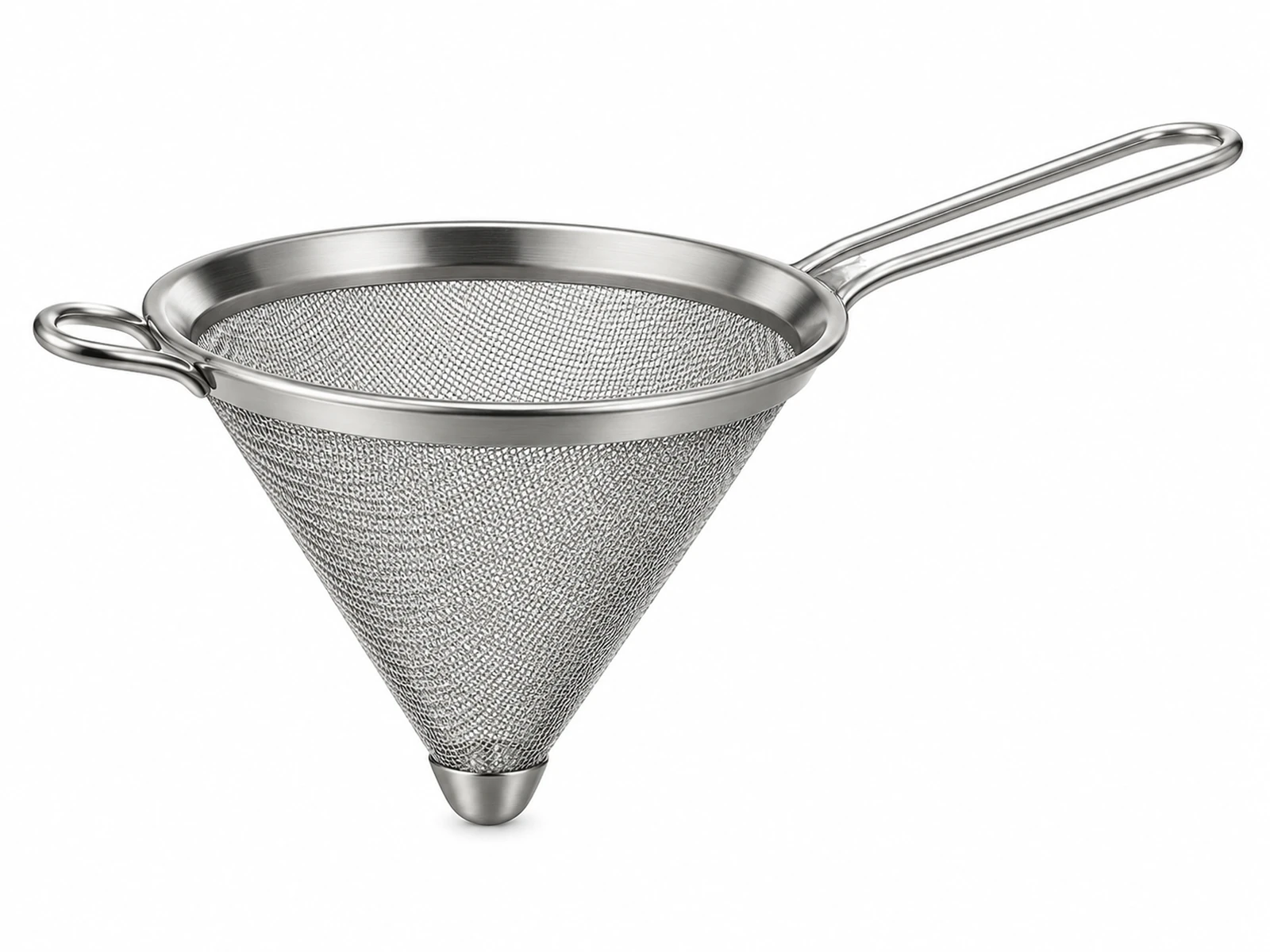
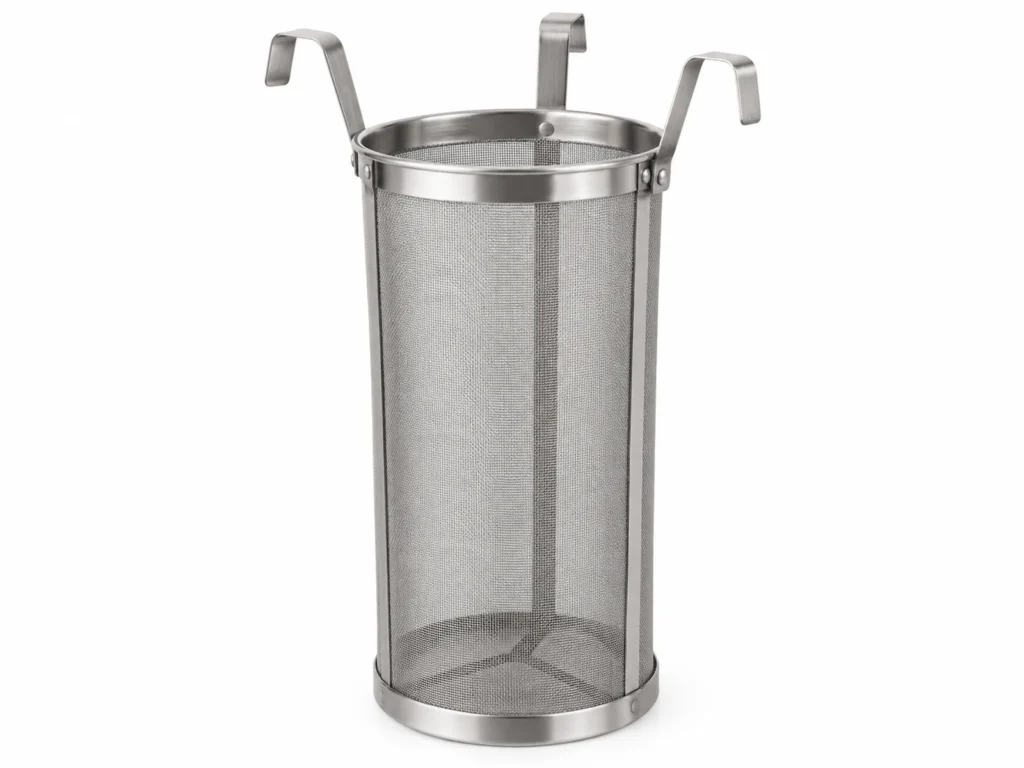
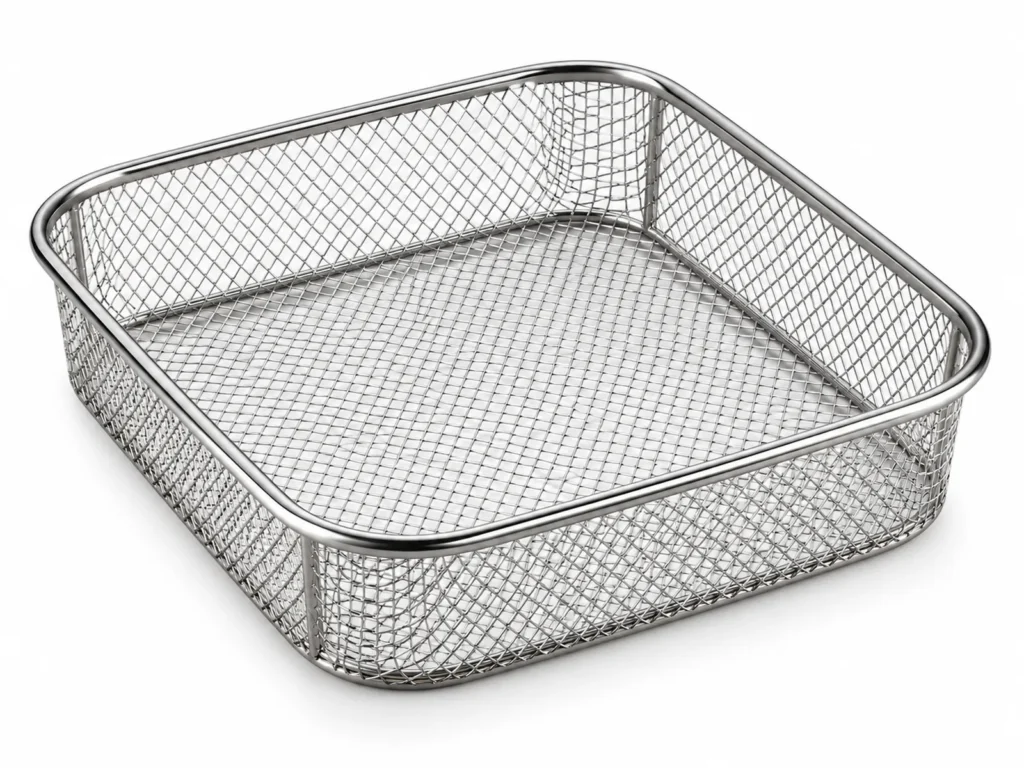
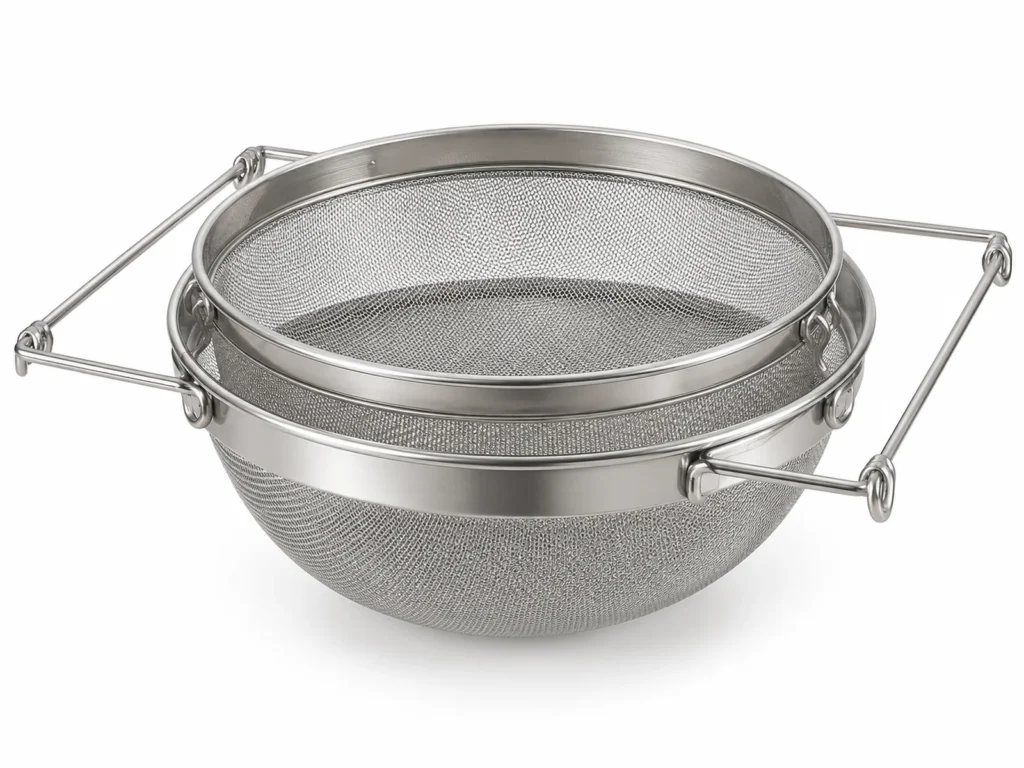
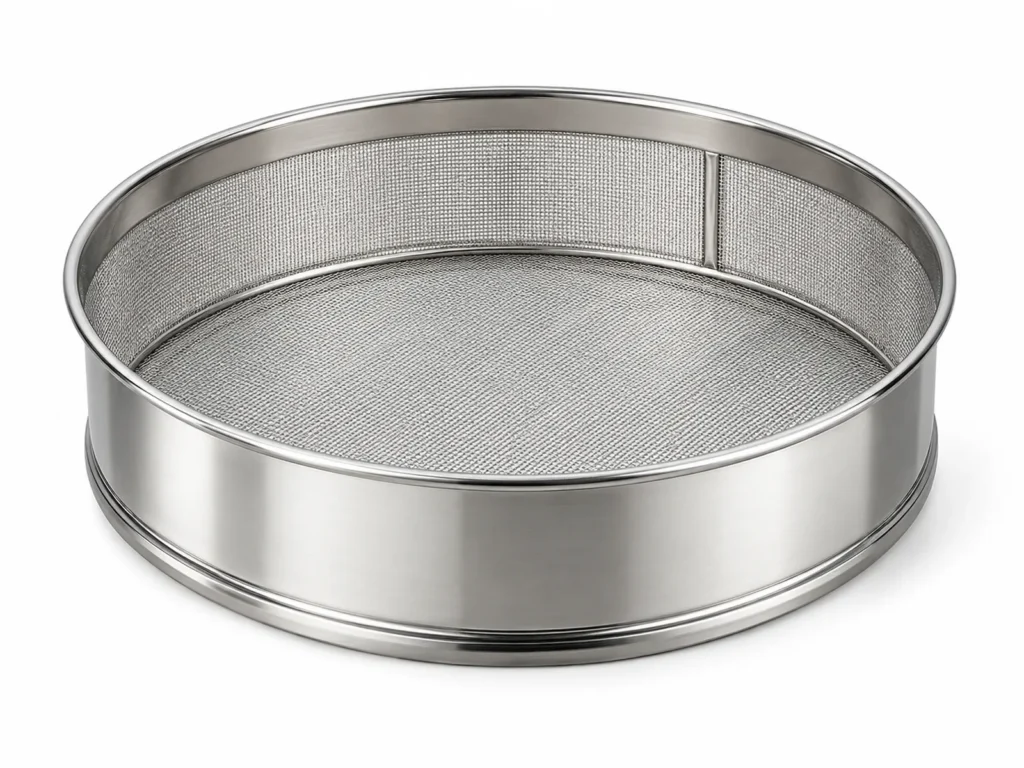
Bar Fine-Mesh Cocktail Strainer in 304 Stainless Steel (AISI 304 (1.4301)) is used for double-straining shaken cocktails so ice shards, mint fragments and citrus pulp stay out of the glass. The alloy gives good general corrosion resistance in atmosphere and fresh water and is essentially non-magnetic (annealed), with a practical service limit of approx. +450 °C continuous.
Alloy Properties
| Grade designation | AISI 304 (1.4301) |
|---|
| Magnetic response | Essentially non-magnetic (annealed) |
|---|
| Service temperature | approx. +450 °C continuous |
|---|
| Corrosion characteristic | Good general corrosion resistance in atmosphere and fresh water |
|---|
Specifications of Bar Fine-Mesh Cocktail Strainer Available in 304 Stainless Steel
| Size | Top diameter (mm) | Depth (mm) | Mesh | Micron rating (u00b5m) |
|---|
| Cone 85 | 85 | 45 | 60-Mesh | 233 |
| Cone 90 fine | 90 | 50 | 100-Mesh | 154 |
| Flat Hawthorne insert | 90 | 10 | Coil spring + 40-Mesh | 385 |
Where 304 Stainless Steel Bar Fine-Mesh Cocktail Strainer Is Used
- Barware brands: cone strainers packaged with shakers, jiggers and Hawthorne strainers.
- Craft cocktail bars: double straining every shaken, served-up drink for a clean texture.
- Hotel & banquet bars: durable stainless strainers that survive commercial glasswashers.
- Coffee & tea bars: straining shaken espresso and fruit teas.
Ordering Bar Fine-Mesh Cocktail Strainer in 304 Stainless Steel
- Bowl diameter: 85–90 mm sits steadily on coupes and rocks glasses.
- Mesh: 60-mesh for speed; 100-mesh for egg-white sours and muddled herbs.
- Insert option: A flat coil-spring insert converts a shaker tin into a Hawthorne strainer.
Mistakes to Avoid with Bar Fine-Mesh Cocktail Strainer
- Using a 60-mesh cone for egg-white drinks, which lets foam bubbles of uneven size through.
- Choosing a deep cone for rocks glasses; it tips over on narrow rims.