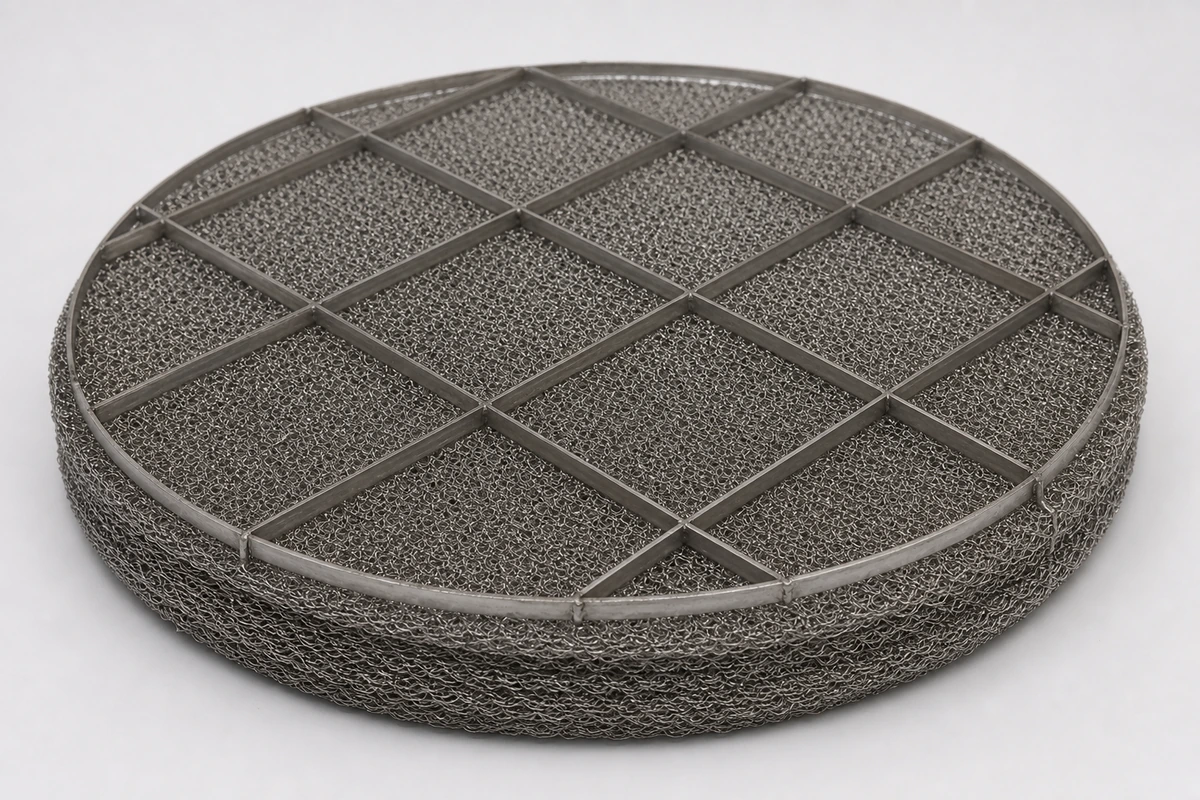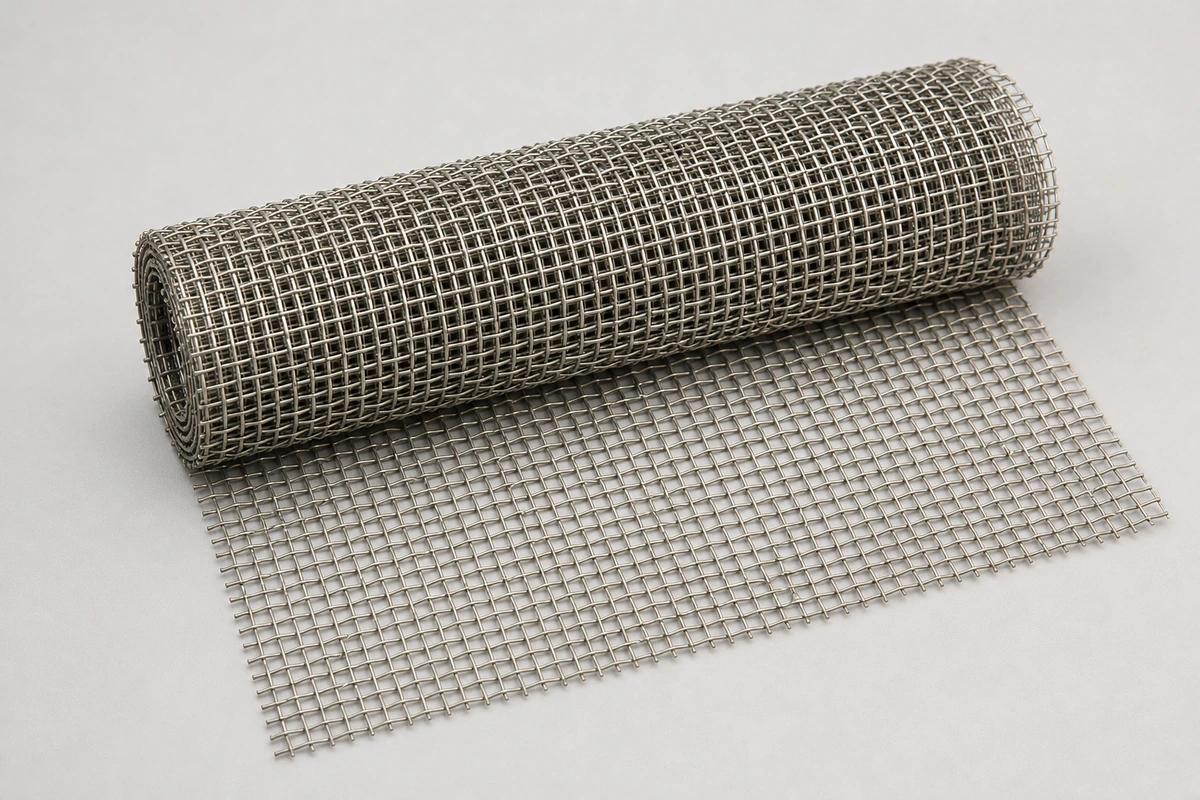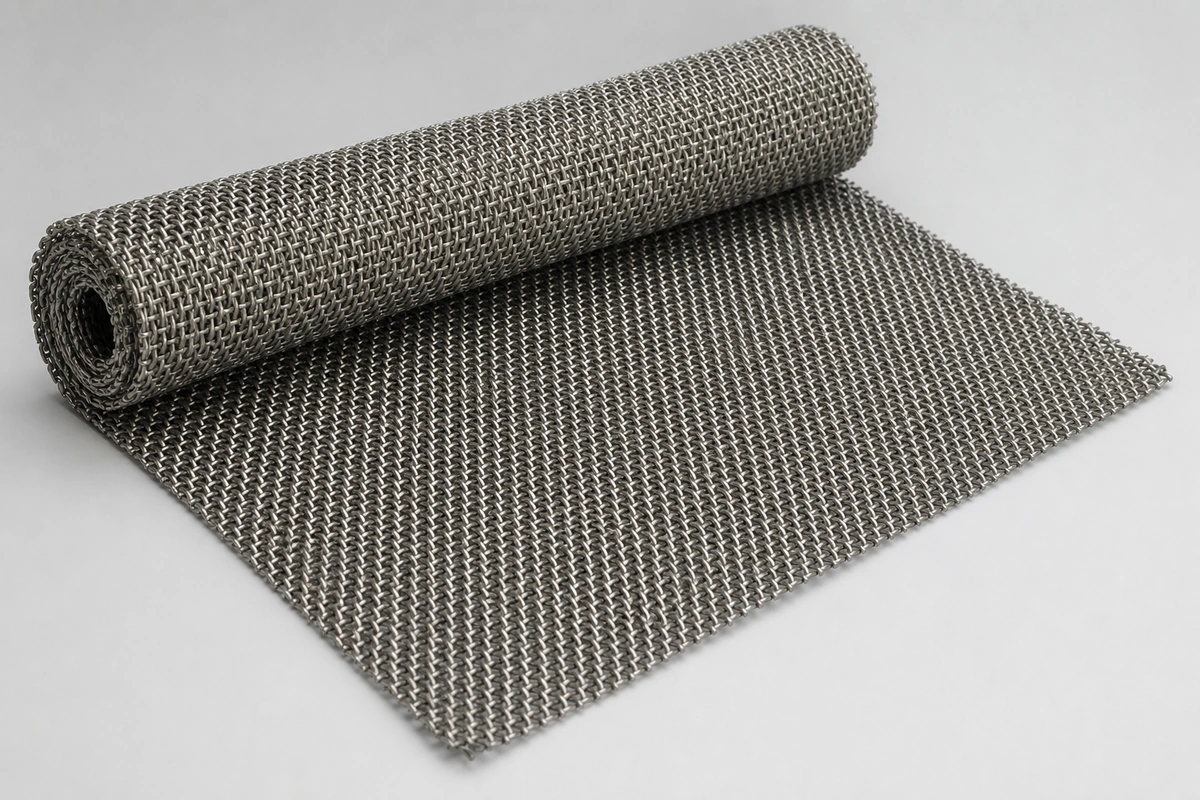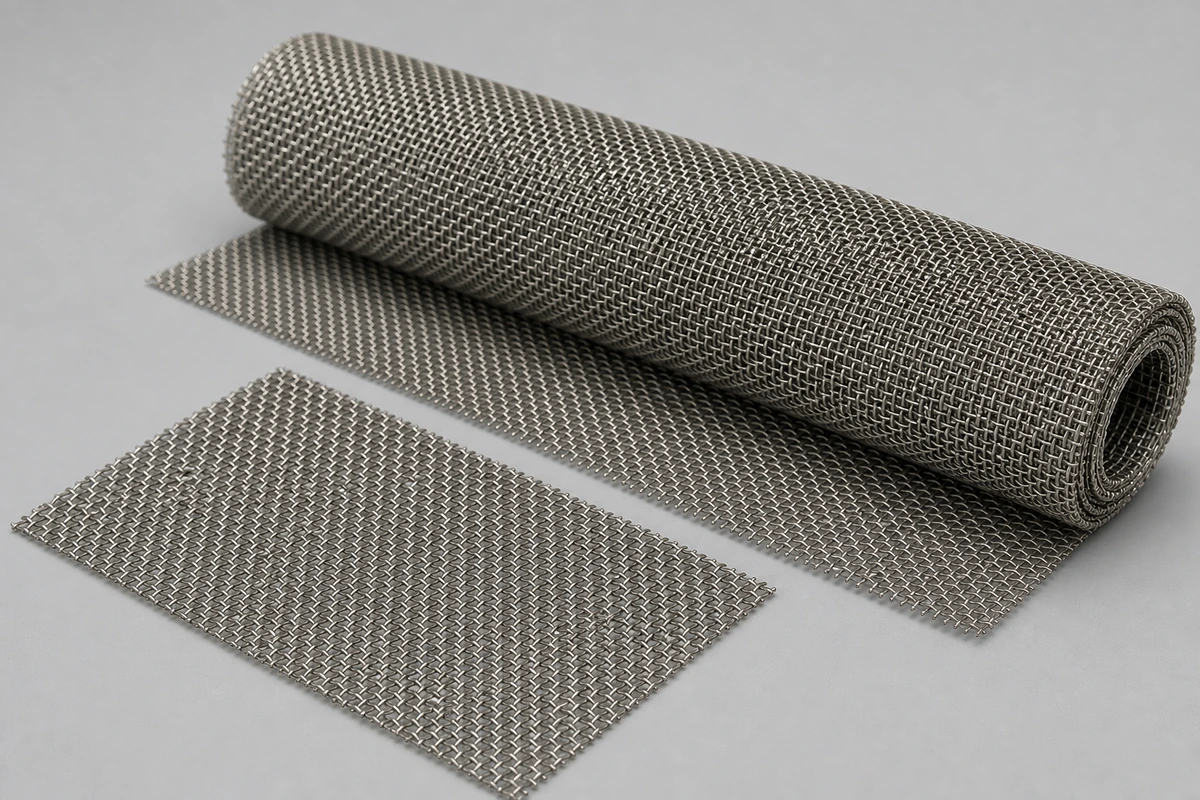
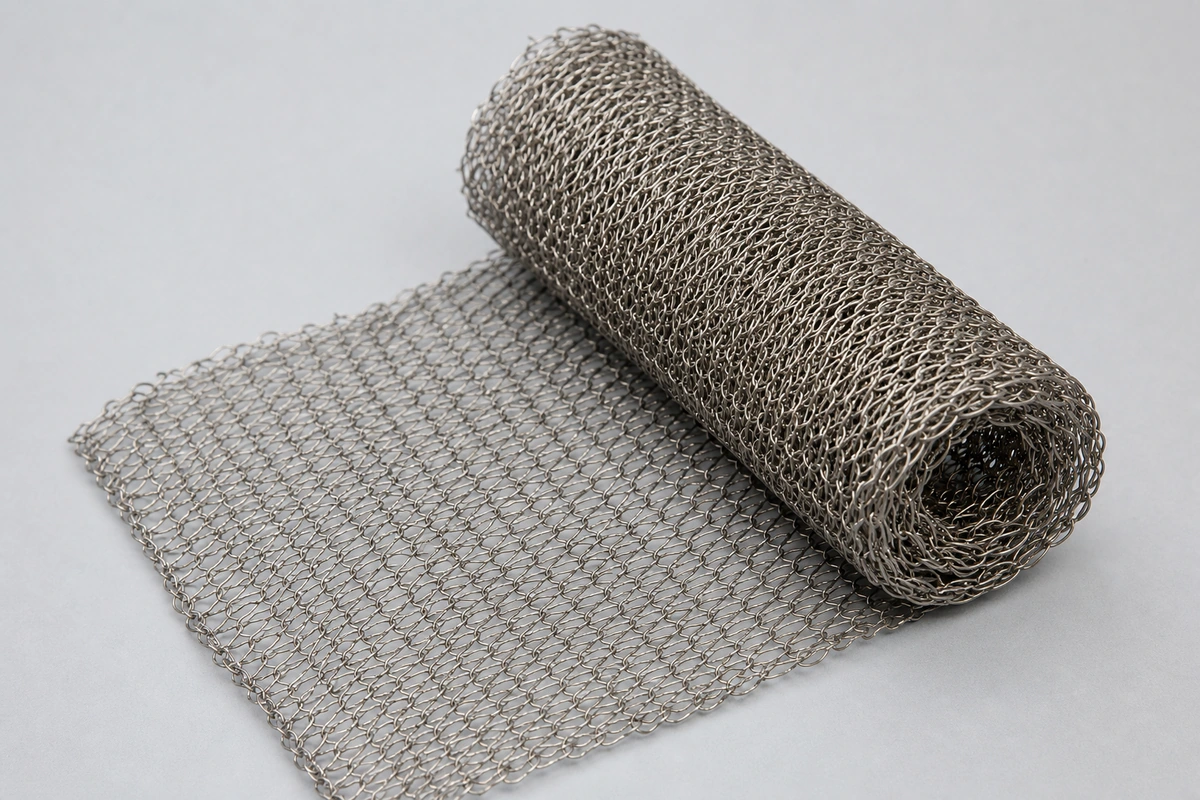
Brass knitted wire mesh is stocked to Industry convention. The alloy provides good atmospheric and fresh-water resistance; unsuitable for ammonia service and is non-magnetic; the practical service limit is approx. +200 °C. Property data, alloy comparison and the specification table follow.
Why Choose Brass for Knitted Wire Mesh
The decorative and spark-resistant screening alloy. For knitted wire mesh, this matters when good atmospheric and fresh-water resistance; unsuitable for ammonia service is the controlling requirement.
Alloy Properties
| Grade designation | H65 / CuZn35 |
|---|---|
| Magnetic response | Non-magnetic |
| Service temperature | approx. +200 °C |
| Corrosion characteristic | Good atmospheric and fresh-water resistance; unsuitable for ammonia service |
Corrosion Behavior in Filtration Service
Copper and brass knitted wire mesh resist atmospheric corrosion and fresh water well, tarnishing to a stable patina. Avoid ammonia and ammonium compounds (stress-corrosion cracking of brass) and strong oxidizing acids. In marine service, phosphor bronze outperforms plain brass.
Comparable Alloys
Within the copper family: brass for economy and appearance, phosphor bronze for fatigue strength and marine air, pure copper where conductivity (EMI shielding) is the point. For structural filtration duties, stainless 304/316 is the usual alternative.
Specifications of Knitted Wire Mesh Available in Brass
| Wire diameter (mm) | Stitch size (mm) | Roll width (mm) | Strand | Form |
|---|---|---|---|---|
| 0.10 | 1.5 x 2.5 | 40-600 | Single strand | Roll / sleeve |
| 0.15 | 2.0 x 3.0 | 40-600 | Single strand | Roll / sleeve |
| 0.20 | 3.0 x 4.0 | 40-600 | Single / double strand | Roll / sleeve |
| 0.23 | 4.0 x 5.0 | 40-600 | Single / double strand | Roll / sleeve |
| 0.28 | 5.0 x 6.0 | 40-600 | Double strand | Roll / sleeve |