Skip to content

Knitted Wire Mesh · Industry convention

Industry convention Knitted Wire Mesh Specifications

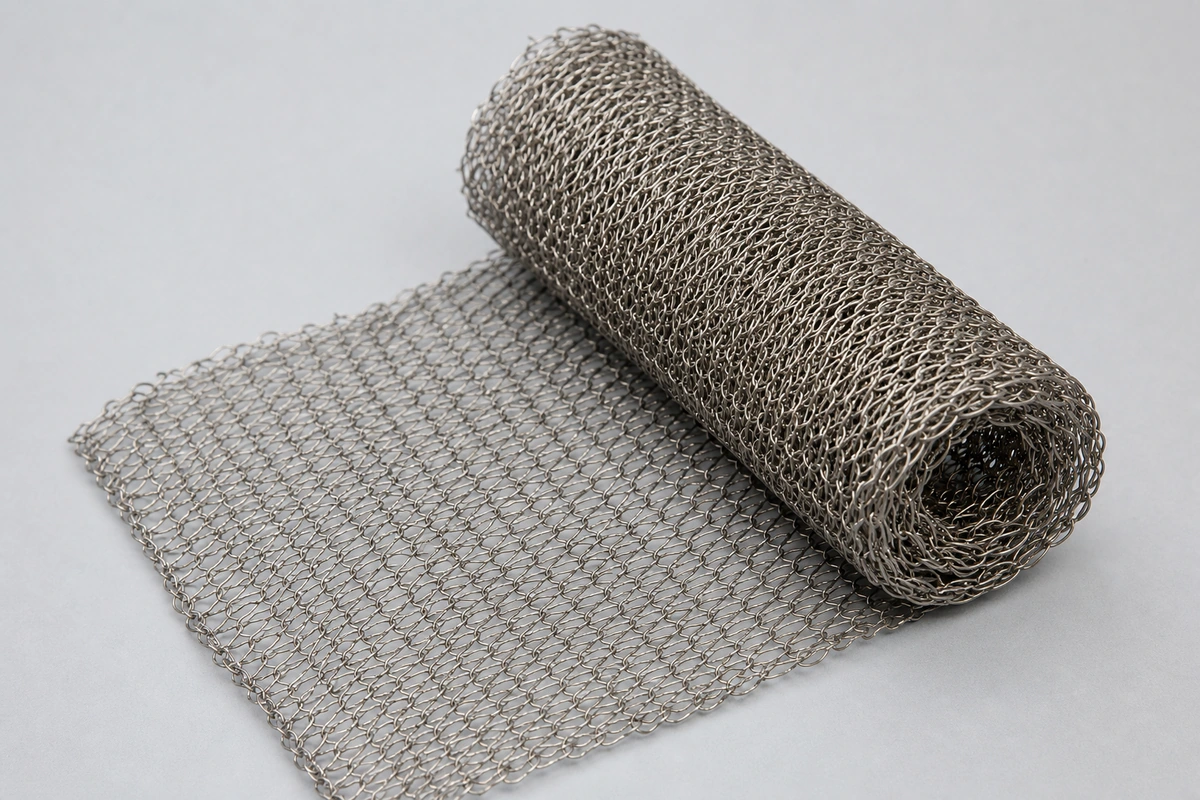
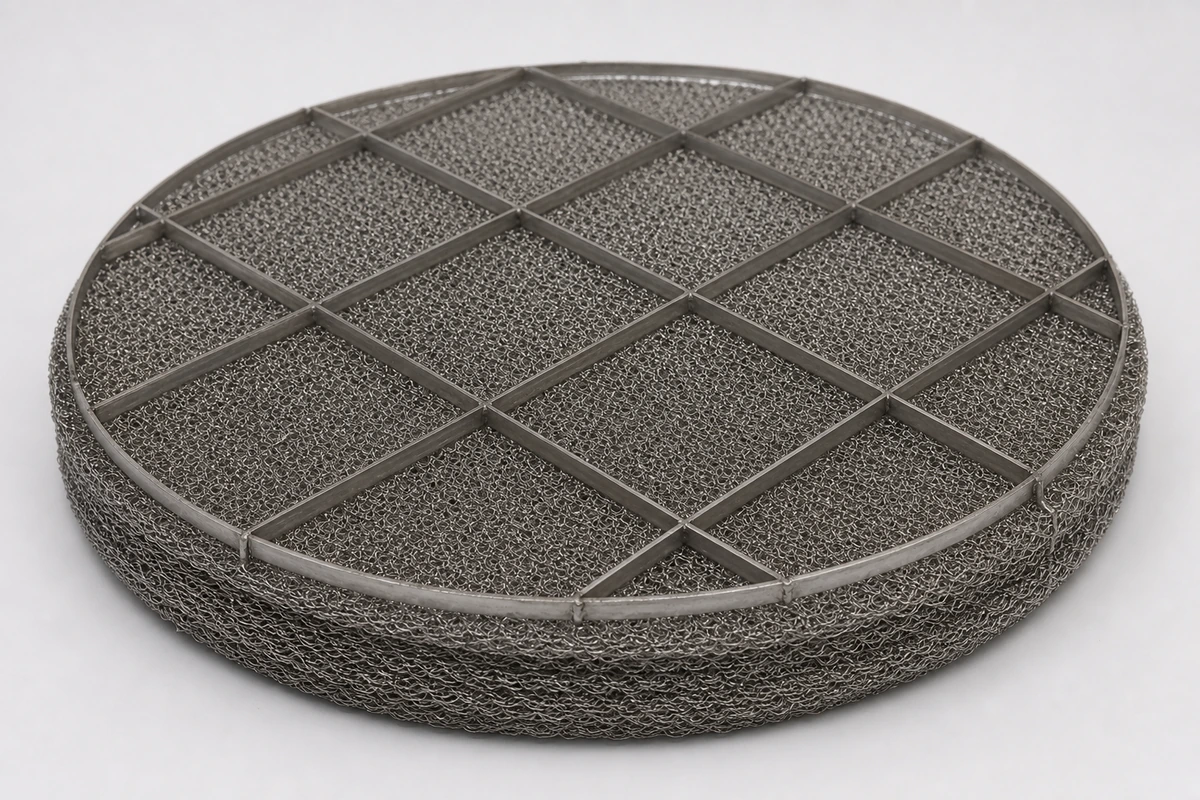
Knitted Wire Mesh manufactured to Industry convention follows the specification table reproduced on this page. The standard fixes geometry and tolerances; alloy chemistry and testing are assigned by their own companion documents.

Industry convention — Scope

Industry convention specifies the designation system, dimensions and tolerances of knitted wire mesh — mesh count or nominal opening, wire diameter and the permissible aperture deviations. Alloy chemistry, mechanical testing and delivery condition are governed by separate documents in the same standards family.

Tolerance Classes

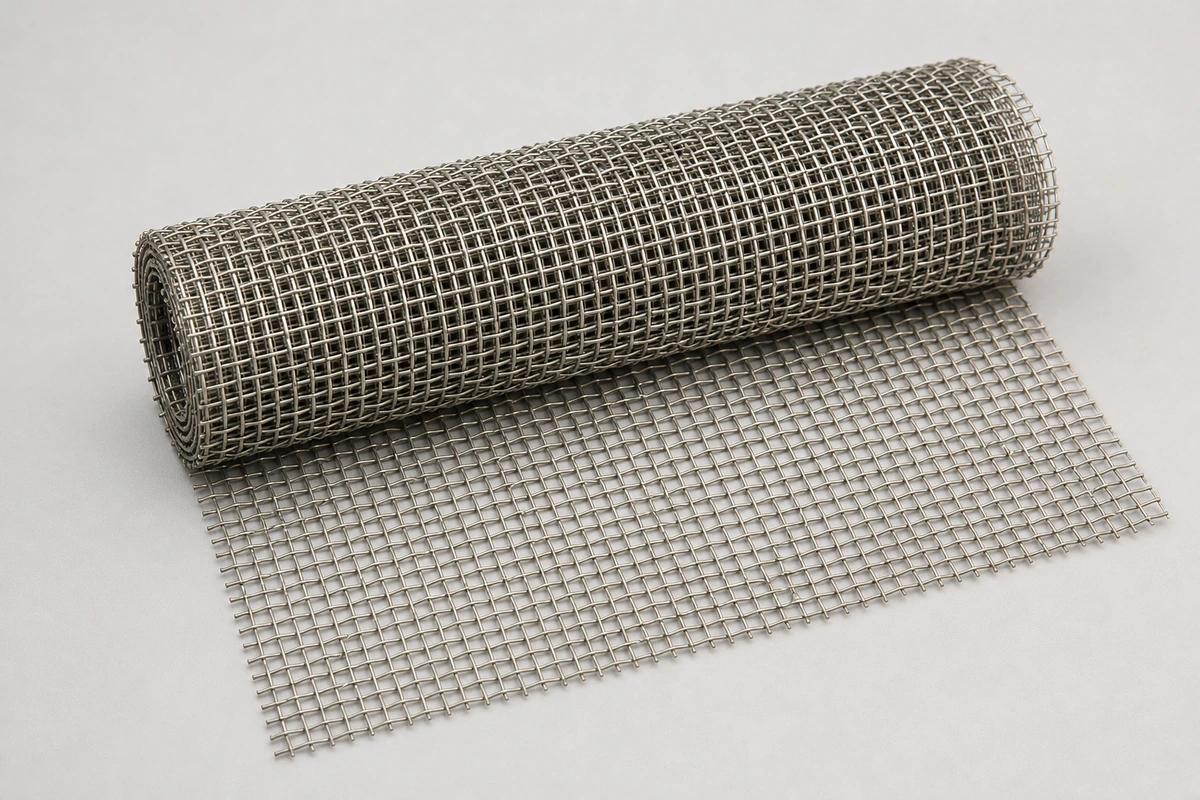
Industry convention defines tolerance limits on the average aperture and on the maximum single aperture, tightening as the aperture gets finer. For test-sieve duty the tighter ISO 3310-1 tolerances apply instead of the general cloth tolerances — specify sieve grade explicitly if the mesh will be used for particle-size analysis.

Specifications Defined by Industry convention

Wire diameter (mm)Stitch size (mm)Roll width (mm)StrandForm
0.101.5 x 2.540-600Single strandRoll / sleeve
0.152.0 x 3.040-600Single strandRoll / sleeve
0.203.0 x 4.040-600Single / double strandRoll / sleeve
0.234.0 x 5.040-600Single / double strandRoll / sleeve
0.285.0 x 6.040-600Double strandRoll / sleeve

Equivalent Standards

Where direct equivalents exist (ISO ↔ ASTM ↔ DIN), they are listed on the parent Knitted Wire Mesh page. Confirm against the specification table on this page — nominally equivalent documents can differ in tolerance limits.

Companion Standards

Industry convention controls the geometry of knitted wire mesh. Companions frequently cited alongside it: ISO 565 / ASTM E11 (test-sieve aperture series), ISO 3310-1 (test sieves of metal wire cloth), ISO 4783 (selection of wire and aperture combinations), ISO 9044 (industrial woven wire cloth), and ISO 2941 (collapse/burst rating for finished filter elements).
Technical Drawing

Customize the parameters below — every spec field is editable, and the drawing redraws to match the values you choose. Changing the size will snap the other fields to that size's standard values; you can then override any individual value.

Sends the selected values to the quote form below.

Request a Quote

Adjust the parameters in the drawing above and click "Request this configuration" to send the exact specification straight to this form.

Request a Quotation

Specification
Business Information

Dimensions & Specifications (Industry convention)

Wire diameter (mm)Stitch size (mm)Roll width (mm)StrandForm
0.101.5 x 2.540-600Single strandRoll / sleeve
0.152.0 x 3.040-600Single strandRoll / sleeve
0.203.0 x 4.040-600Single / double strandRoll / sleeve
0.234.0 x 5.040-600Single / double strandRoll / sleeve
0.285.0 x 6.040-600Double strandRoll / sleeve

Frequently Asked Questions

Is mesh to Industry convention interchangeable between suppliers?

Dimensionally yes — quoting the standard plus mesh count and wire diameter on the order fixes the cloth unambiguously. Surface finish, weaving quality and packaging can still differ, so qualify a new supplier against a retained sample.

Which tolerance class of Industry convention should I order?

General industrial cloth tolerances suit most filtration and screening. Order test-sieve grade (ISO 3310-1) only when the mesh is used for particle-size analysis — it costs more and adds nothing in ordinary service.

What does Industry convention specify for knitted wire mesh?

Industry convention specifies the designation system, dimensions and aperture tolerances of knitted wire mesh. Alloy chemistry and element testing are governed by separate companion standards.

Does Industry convention guarantee a filtration rating?

No — it fixes the geometry (count, wire, aperture and tolerance). The achieved filtration rating in service also depends on weave type, particle shape and cake formation; element-level ratings are verified per ISO 16889 (beta ratio) or equivalent.

How do I request a quotation?

Use the technical drawing on this page to pick the exact specification, then submit it with the quote form. We respond within one business day.