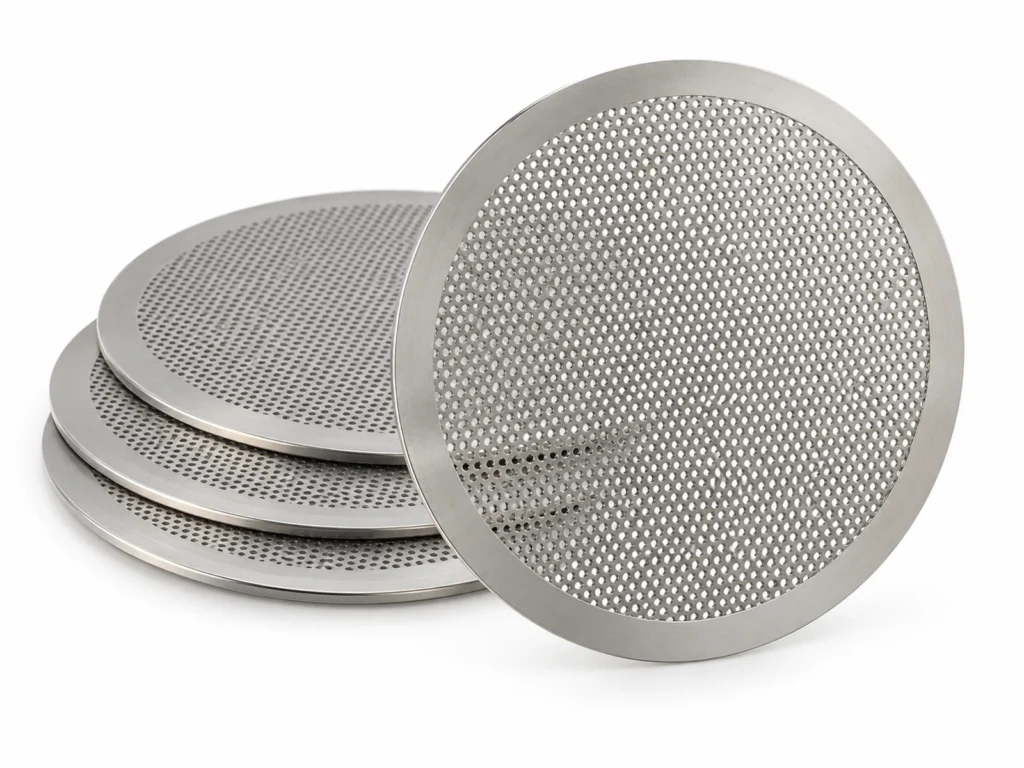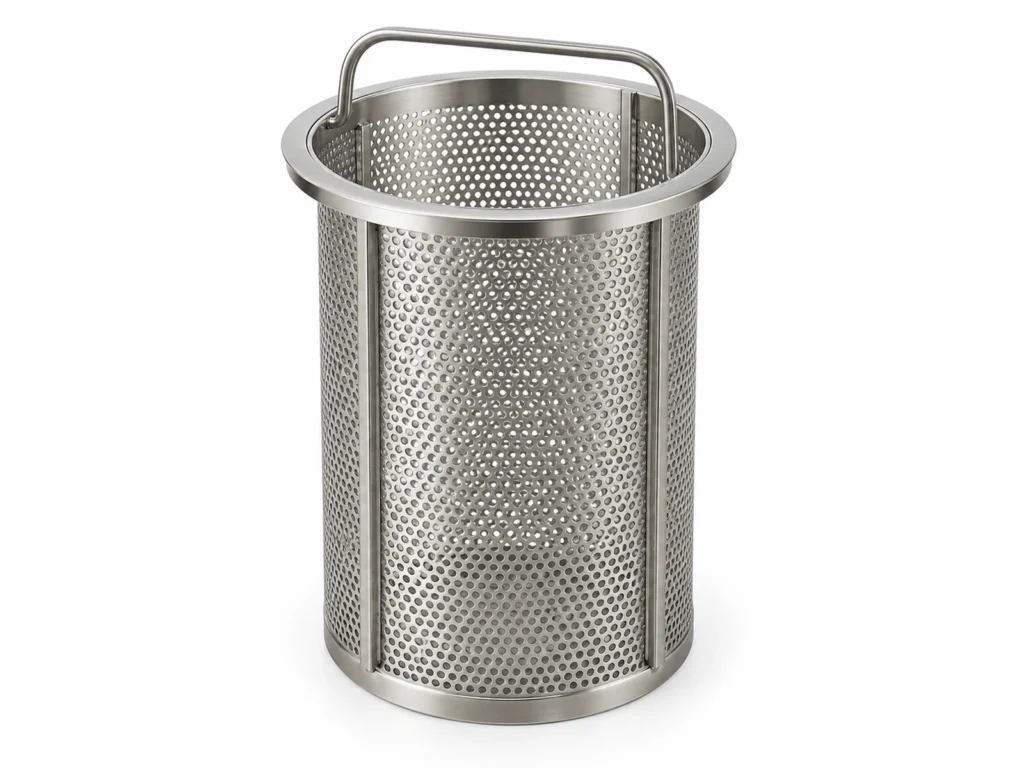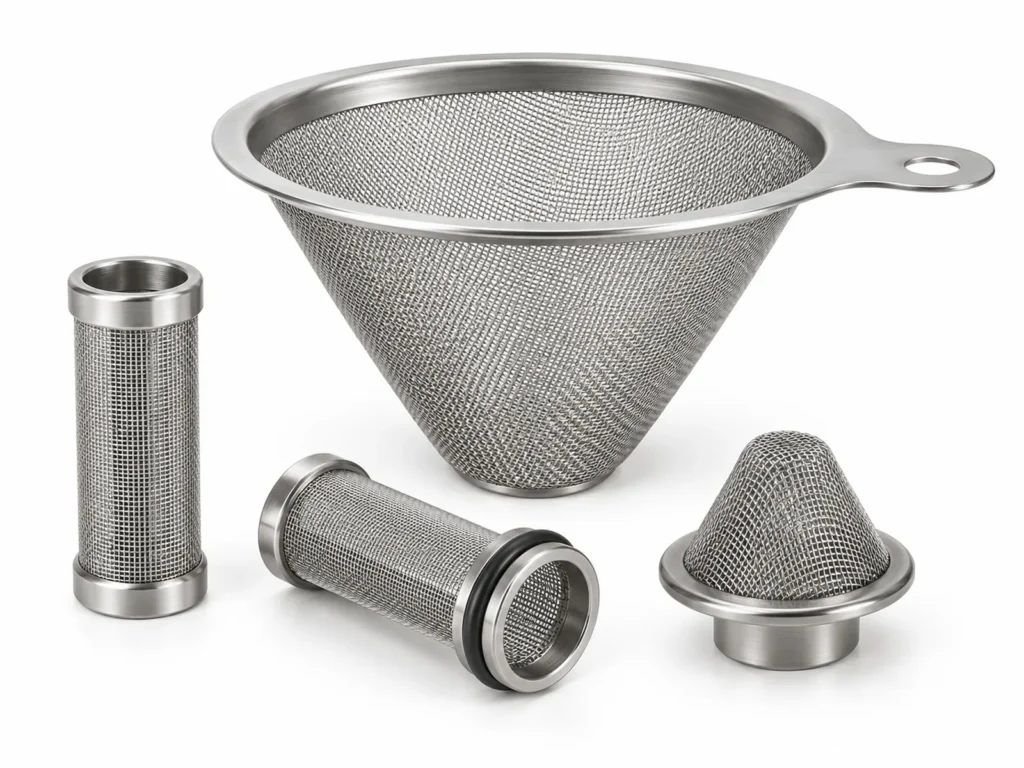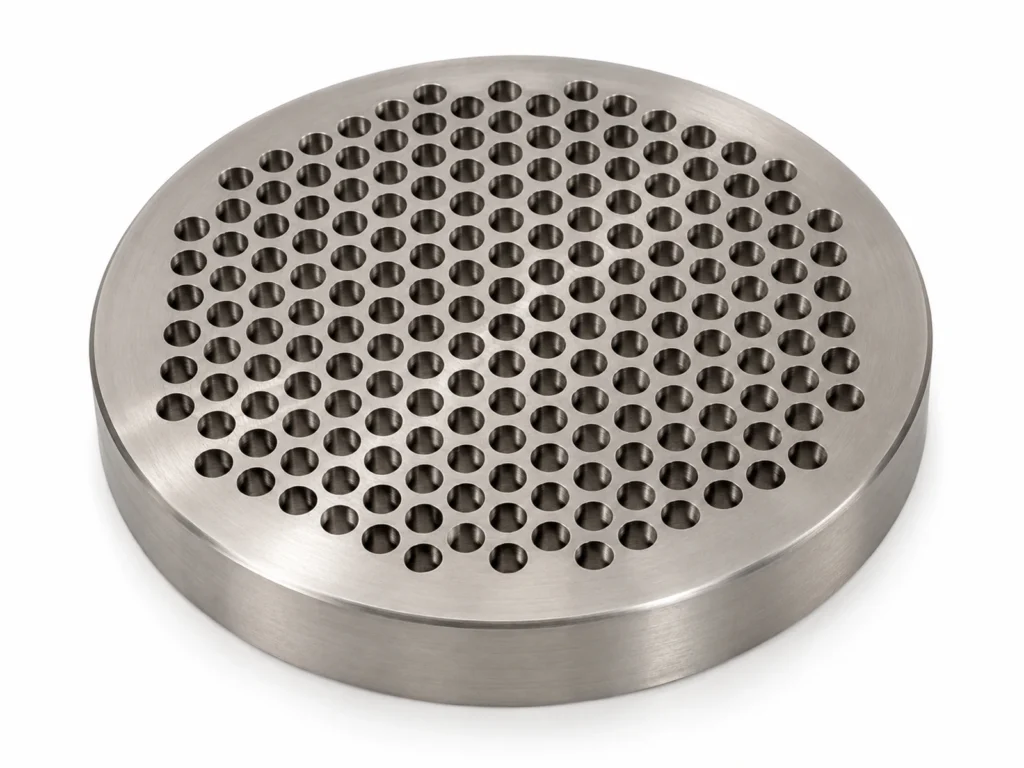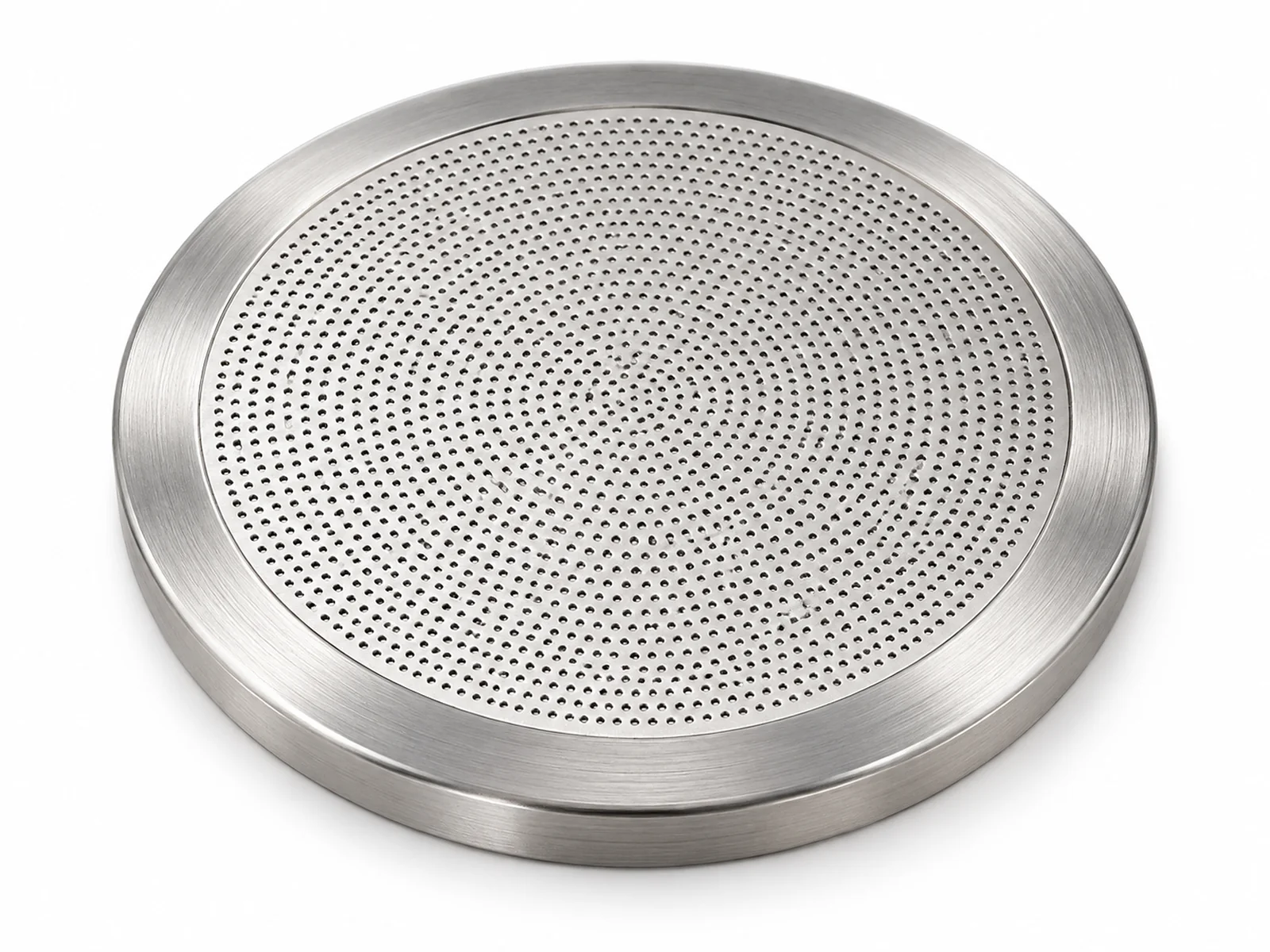
Application guide for Laser-Drilled Micro-Hole Filter Disc to Custom to drawing. The core duty of the type is controlling flow and holding back fine particles with discs laser-drilled with micron-sized holes in exact positions — for restrictors, nozzles and medical devices. The typical industries, the how-to-specify checklist, handling practice and the exclusion cases are set out below.
Typical Applications for Laser-Drilled Micro-Hole Filter Disc
Where Laser-Drilled Micro-Hole Filter Disc is specified and bought:
- Medical devices: drug-delivery restrictors, inhaler and IV flow control discs.
- Aerospace & space: propulsion and gas metering orifices.
- Instruments & sensors: pressure snubbers and calibrated leaks.
- Atomization: spray and mist nozzle plates.
How to Specify Laser-Drilled Micro-Hole Filter Disc for Your Application
- Hole diameter & tolerance: 20–100 µm holes held to about ±3–5 µm.
- Hole count & layout: From a single orifice to thousands, in any pattern.
- Thickness: 0.1–0.5 mm; thicker discs need tapered or stepped drilling.
- Standard: Quote Custom to drawing and the size designation from the table on the product page, plus any value you changed in the technical drawing.
Handling & Installation Practice
- Flow-test every lot rather than relying on optical hole measurement alone.
- Clean ultrasonically before assembly to remove drilling recast.
Common Selection Mistakes with Laser-Drilled Micro-Hole Filter Disc
- Specifying a hole tolerance tighter than the flow requirement actually needs.
- Skipping recast removal, which partly blocks small holes.
Where Laser-Drilled Micro-Hole Filter Disc Is Not the Right Choice
Not economical for large open-area filtration — etched or woven media are far cheaper per hole.