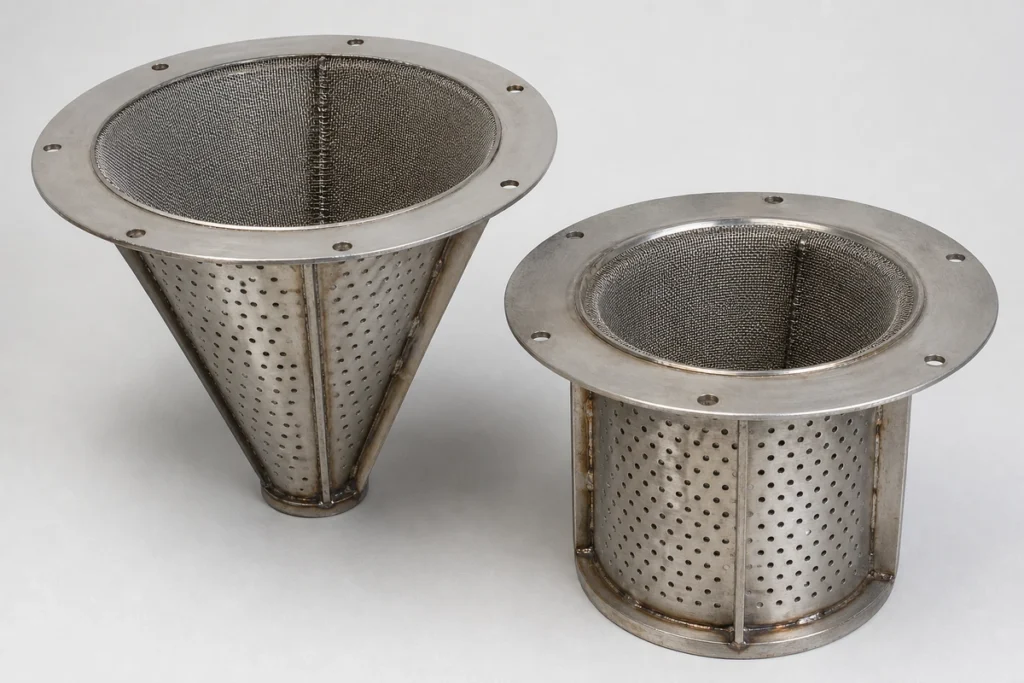
Temporary Cone & Basket Strainers (ASME B16.5 fit) is specified where the duty calls for protecting pumps, valves and meters during commissioning and turnarounds with temporary cone and basket strainers clamped between pipe flanges. The sections below cover the typical end-uses by industry, the mesh, micron and material decisions for each, installation practice, and the applications this product type is not suited to.
Typical Applications for Temporary Cone & Basket Strainers
Where Temporary Cone & Basket Strainers is specified and bought:
- New plant start-up: catching weld slag, scale and construction debris in new pipework.
- Refinery turnarounds: protecting rotating equipment after maintenance.
- Power plants: pump suction protection.
- Water & utilities: pipeline commissioning.
How to Specify Temporary Cone & Basket Strainers for Your Application
- Pipe size & class: Match the nominal pipe size and flange rating (ASME B16.5 class 150–2500).
- Open area ratio: Typically 150–300 % of the pipe cross-section to limit pressure drop.
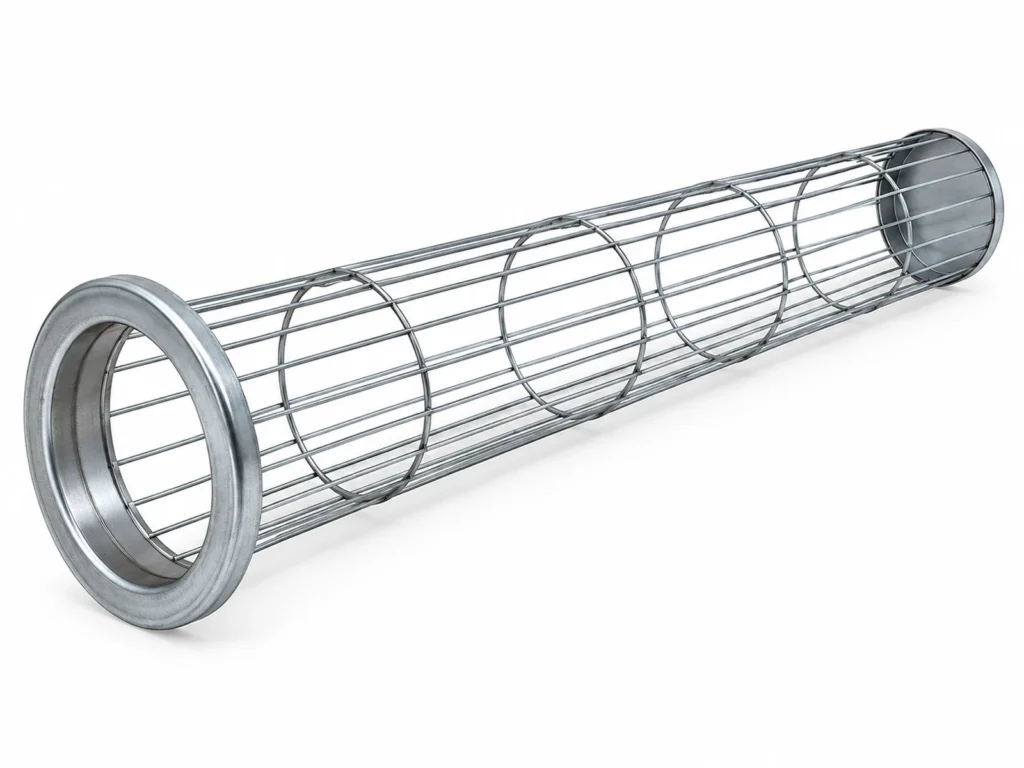
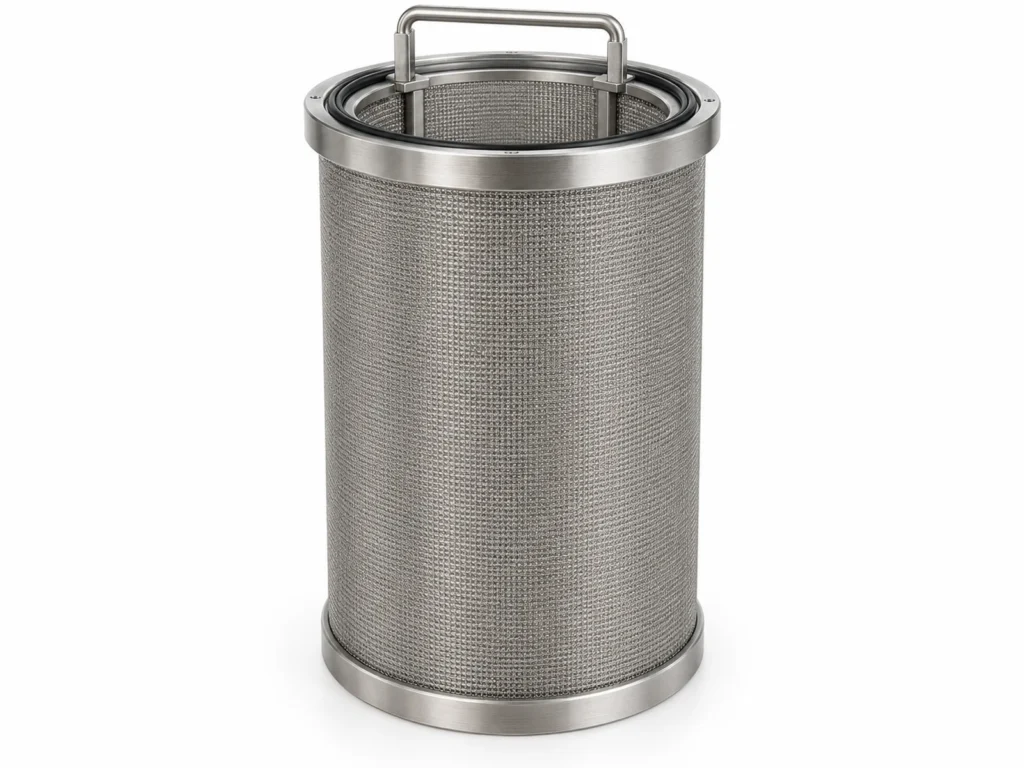
- Construction: Perforated cone or basket with an optional fine mesh liner.
- Standard: Quote ASME B16.5 fit and the size designation from the table on the product page, plus any value you changed in the technical drawing.
Handling & Installation Practice
- Install in the orientation the design specifies and log the pipe location for removal.
- Watch differential pressure closely during flushing; remove and clean before it rises too far.
Common Selection Mistakes with Temporary Cone & Basket Strainers
- Leaving temporary strainers in place permanently, where they collapse or restrict flow.
- Choosing a liner so fine that it blinds and collapses during the first flush.
Where Temporary Cone & Basket Strainers Is Not the Right Choice
Not a permanent strainer — permanent duty needs a Y- or basket-strainer body with a removable screen.