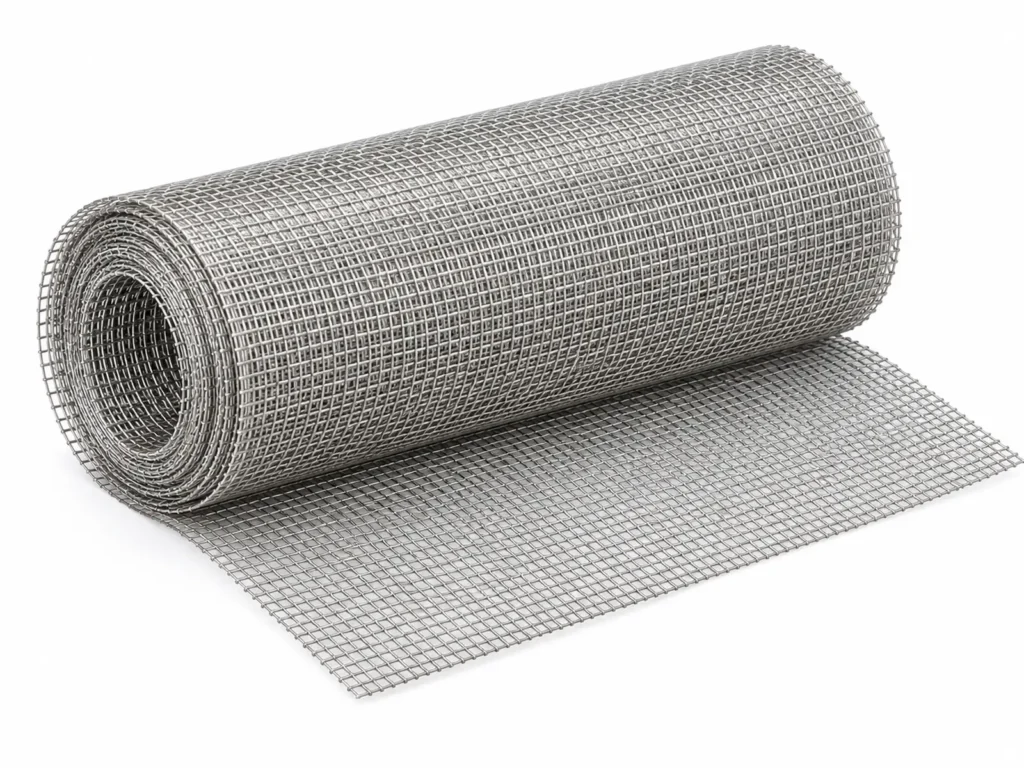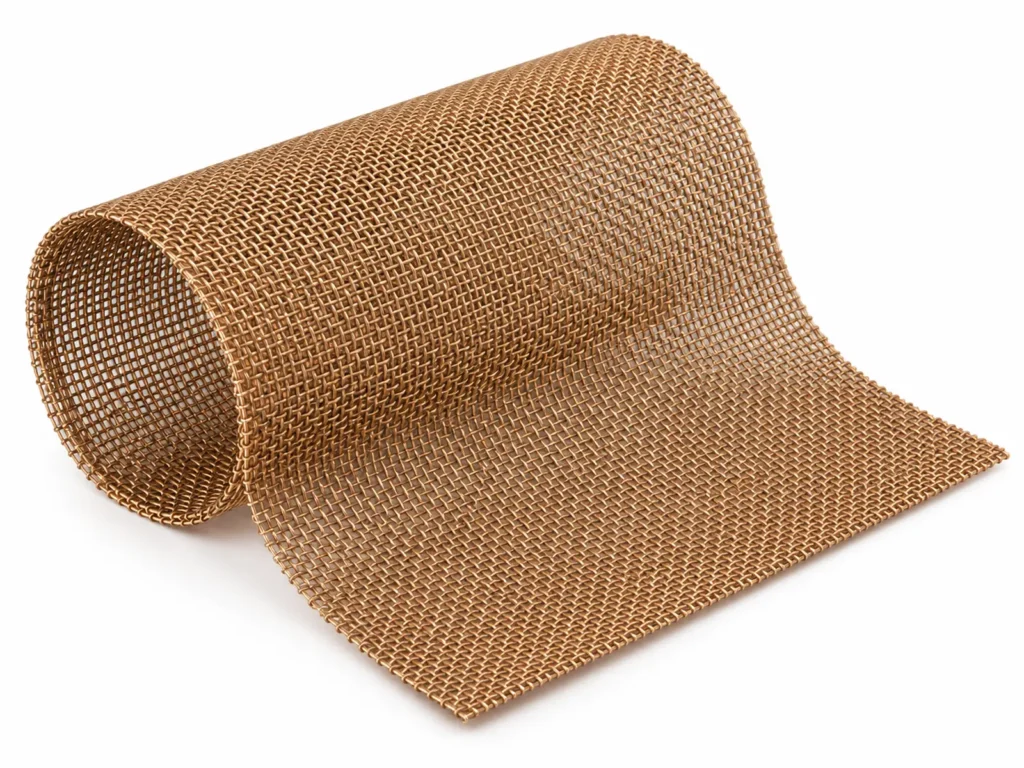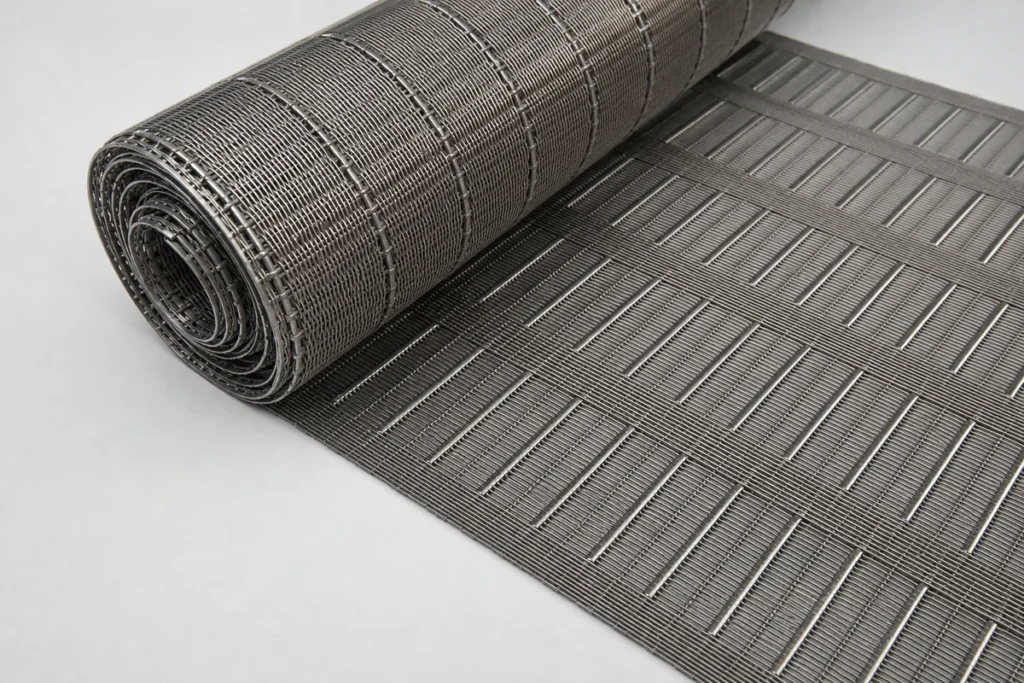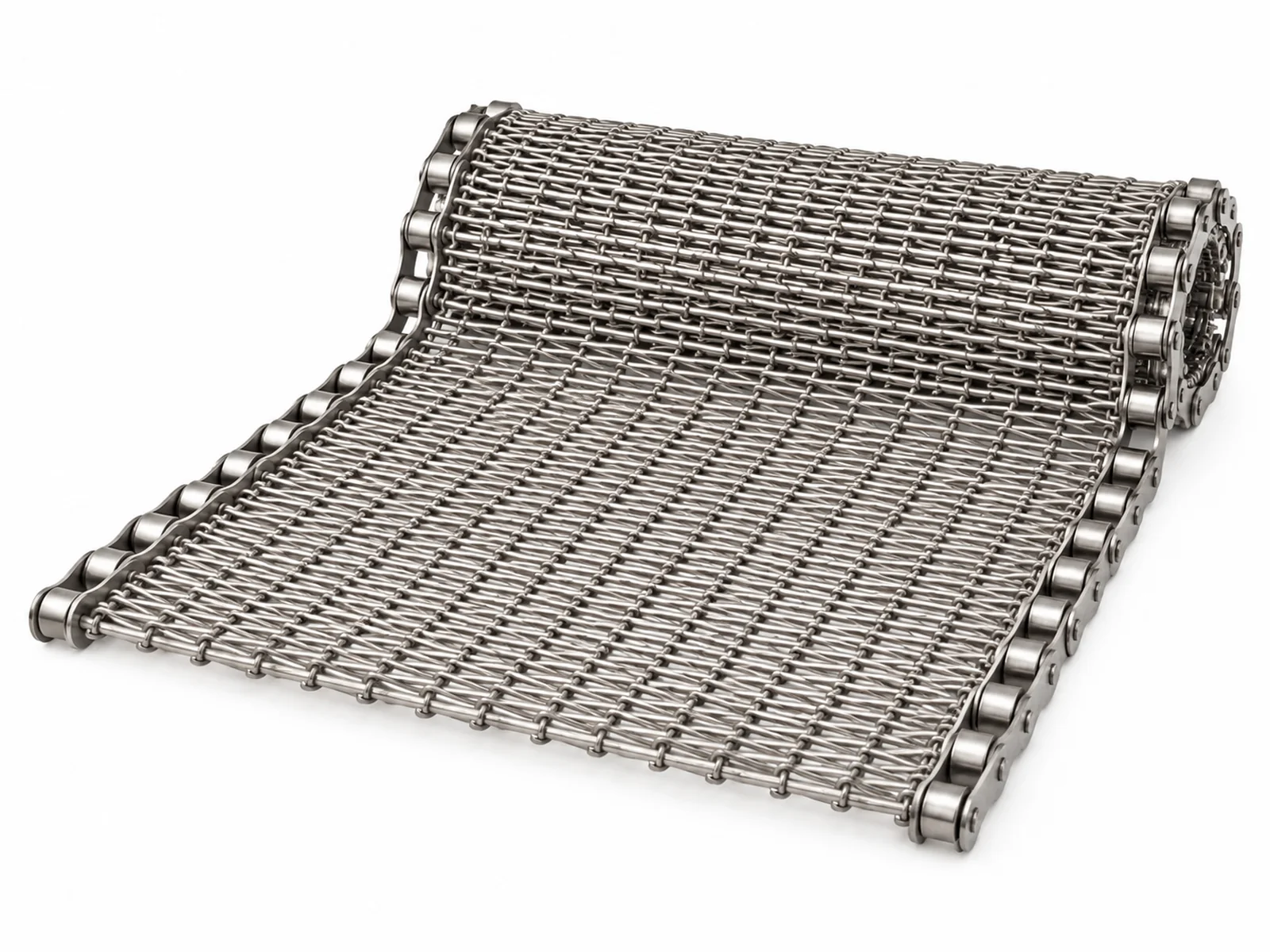
Metal Mesh Conveyor Belt is used for carrying parts and food through ovens, furnaces, washers, dryers and freezers on an open woven metal belt that air, heat and liquid pass through. DIN 22100 belt widths is the reference cited for it on drawings, datasheets and purchase orders.
What DIN 22100 belt widths Means for Metal Mesh Conveyor Belt
The dimensions in the table below are supplied to suit DIN 22100 belt widths. Where the standard sets requirements for the finished appliance, device or system, compliance testing of that assembly stays with its manufacturer; we supply the metal mesh part to the drawing and can provide material certificates and dimensional reports with the shipment.
Metal Mesh Conveyor Belt Dimensions
| Belt type | Aperture (mm) | Wire diameter (mm) | Pitch (mm) | Max temperature (u00b0C) | Alloy |
|---|---|---|---|---|---|
| Balanced weave B-24-24-16 | 8.4 | 1.6 | 10.6 | 1100 | SS314 |
| Balanced weave B-48-48-18 | 3.9 | 1.2 | 5.3 | 900 | SS304 |
| Flat-flex 1 u00d7 1 in | 25.4 | 1.8 | 12.7 | 400 | SS304 |
| Chain-edge 6 mesh | 3.5 | 0.7 | 4.2 | 600 | SS316 |
| Compound balanced | 2.0 | 1.0 | 3.0 | 1150 | Inconel 600 |
Specifying Metal Mesh Conveyor Belt Beyond the Standard
- Belt pattern: Balanced weave for heavy furnace loads; flat-flex for food and light loads; chain-edge for driven sprockets.
- Alloy: SS304 to 900 °C, SS314 to 1100 °C, Inconel above that.
- Width & drive: Specify belt width, length, drive method and edge finish.
When Metal Mesh Conveyor Belt Is Not the Right Choice
Not for very fine powders that would fall through the openings — a solid or fine-mesh overlay is needed.