Skip to content

Screening Mesh · Insect screen convention

14 Mesh Window & Insect Screen Mesh Specifications

Close-up of fine stainless steel insect screen mesh in a window frame, outdoor greenery blurred behind

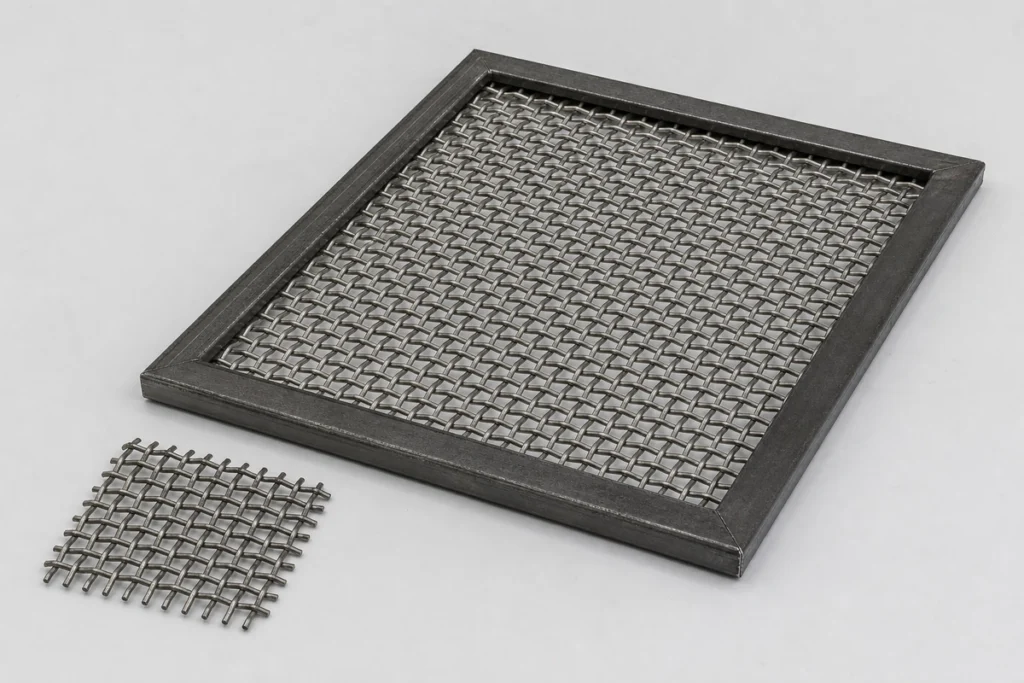
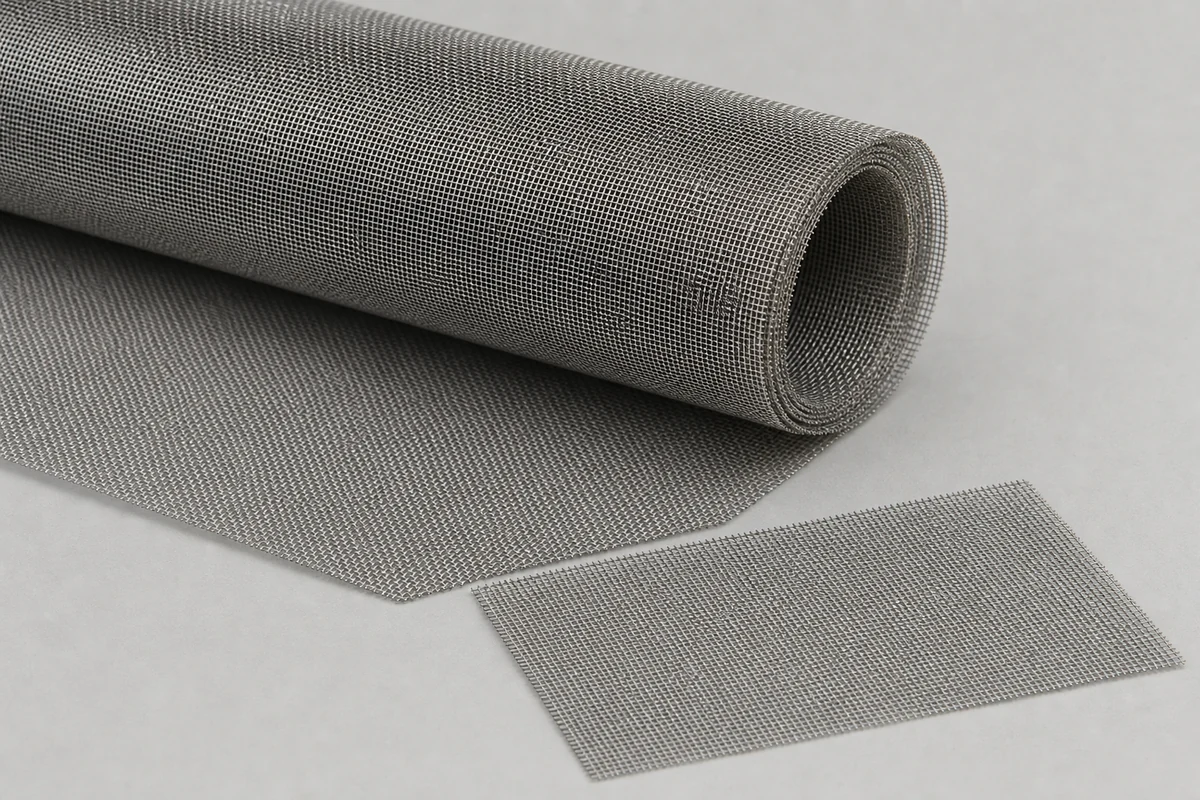
This page covers the 14 mesh count of window & insect screen mesh: the woven specification per Insect screen convention, the particle size it retains, the open area it presents to flow, and the neighbouring counts to step to when the separation requires it.

14 Mesh Specification Row (Insect screen convention)

Mesh countWire diameter (mm)Aperture (mm)Micron rating (u00b5m)Open area (%)Weight SS (kg/mu00b2)Reference standard
14-Mesh0.281.53153471.5u2014Insect screen convention

14 Mesh Cloth Weight

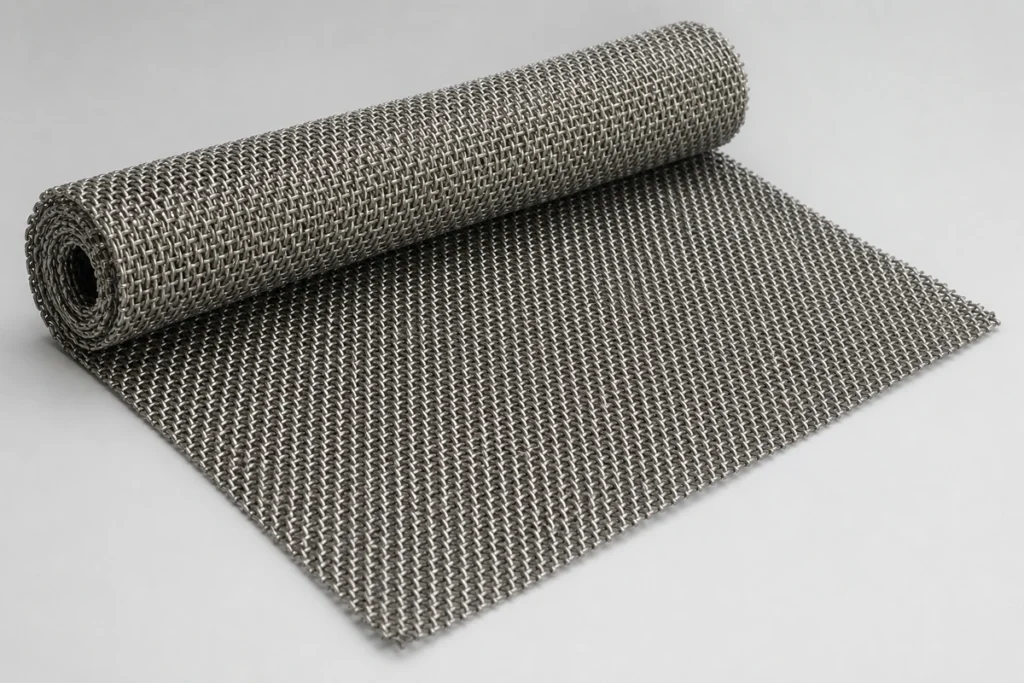
Standard 14 mesh stainless cloth weighs approximately u2014 kg/m² (density 7.93 g/cm³ basis; brass and copper weave roughly 10% heavier, aluminum about one third). Use this figure for roll handling and freight estimation.

Typical Applications for 14 Mesh Window & Insect Screen Mesh

14 mesh window & insect screen mesh is commonly specified for coarse screening and grading, safety guarding, animal enclosures, plaster and render reinforcement, and support layers behind finer filter cloth.

Plain, Twill or Dutch Weave at This Rating?

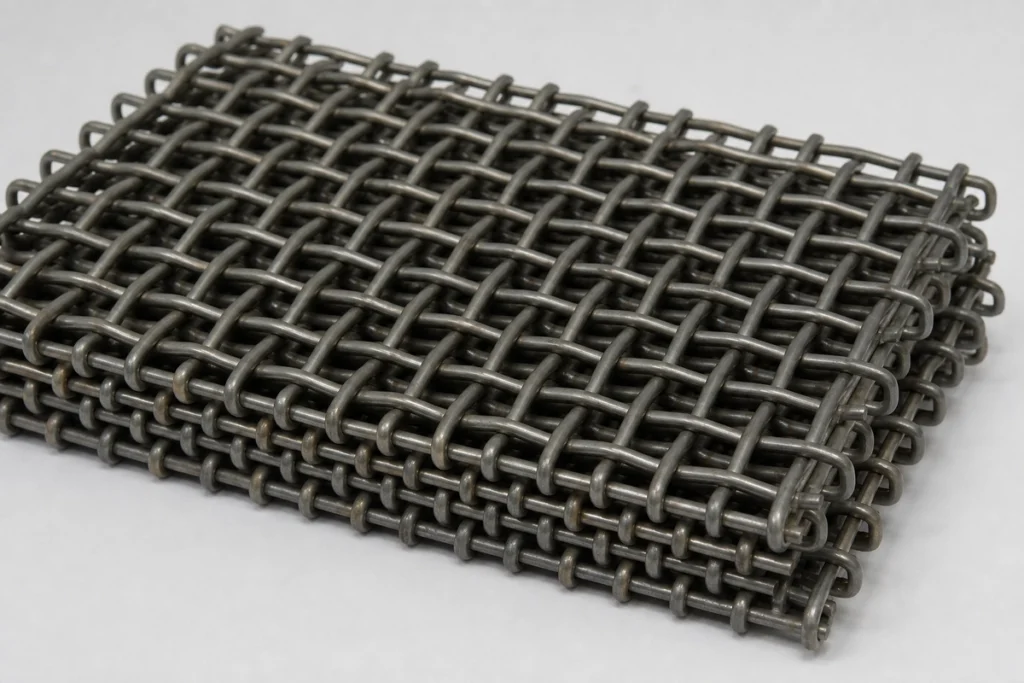
Plain square weave is the standard at this count: every opening is a true square of the stated aperture, retention is absolute for hard spherical particles, and the cloth is easy to clean.

What Window & Insect Screen Mesh Does

Keeping insects out of buildings, vents and food plants with fine woven stainless or aluminum screen mesh that still lets air and light through.

Fitting & Care

  • Tension the mesh evenly in a spline or clamp frame.
  • Seal frame edges so insects cannot bypass the screen.
Mesh count to micron conversion chart
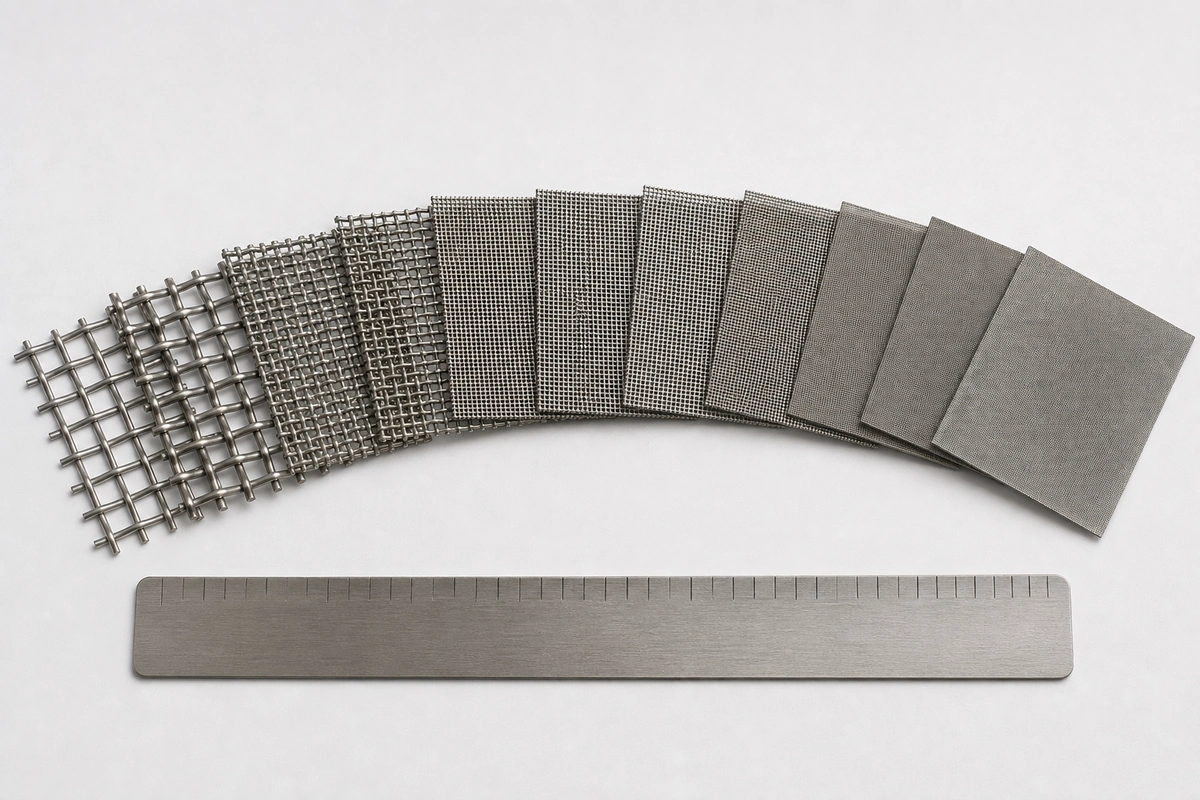
Mesh count to aperture and micron rating. Confirm the exact figure against the specification table below — wire diameter, not mesh count alone, sets the aperture.

Technical Drawing

Customize the parameters below — every spec field is editable, and the drawing redraws to match the values you choose. Changing the size will snap the other fields to that size's standard values; you can then override any individual value.

Sends the selected values to the quote form below.

Request a Quote

Adjust the parameters in the drawing above and click "Request this configuration" to send the exact specification straight to this form.

Request a Quotation

Specification
Business Information

Dimensions & Specifications (Insect screen convention)

Mesh countWire diameter (mm)Aperture (mm)Micron rating (u00b5m)Open area (%)Weight SS (kg/mu00b2)Reference standard
14-Mesh0.281.53153471.5u2014Insect screen convention
16-Mesh0.261.33132869.9u2014Insect screen convention
18-Mesh0.231.18118170.1u2014Insect screen convention
20-Mesh0.231.04104067.1u2014Insect screen convention

Frequently Asked Questions

What mesh size keeps insects out?

About 16–18 mesh; 20 mesh for very small insects.

Stainless or aluminum insect screen?

Stainless lasts much longer, especially near the sea.

In which materials is 14 mesh window & insect screen mesh available?

Stainless 304 and 316/316L are standard; brass, phosphor bronze, copper, Monel, Inconel, Hastelloy, nickel and titanium are woven to order for special chemistry or temperature.

What roll sizes does 14 mesh come in?

Standard roll widths are 1.0 m and 1.22 m (48 in), with 30 m or 30.5 m lengths; wider looms to 2.0 m and cut-to-size pieces or fabricated elements are available on request.

Is 14 mesh a screening or a filtration mesh?

14 mesh sits in the screening range — grading, guarding and support duties. True liquid filtration normally starts around 80–100 mesh and finer.

How do I request a quotation?

Use the technical drawing on this page to pick the exact specification, then submit it with the quote form. We respond within one business day.