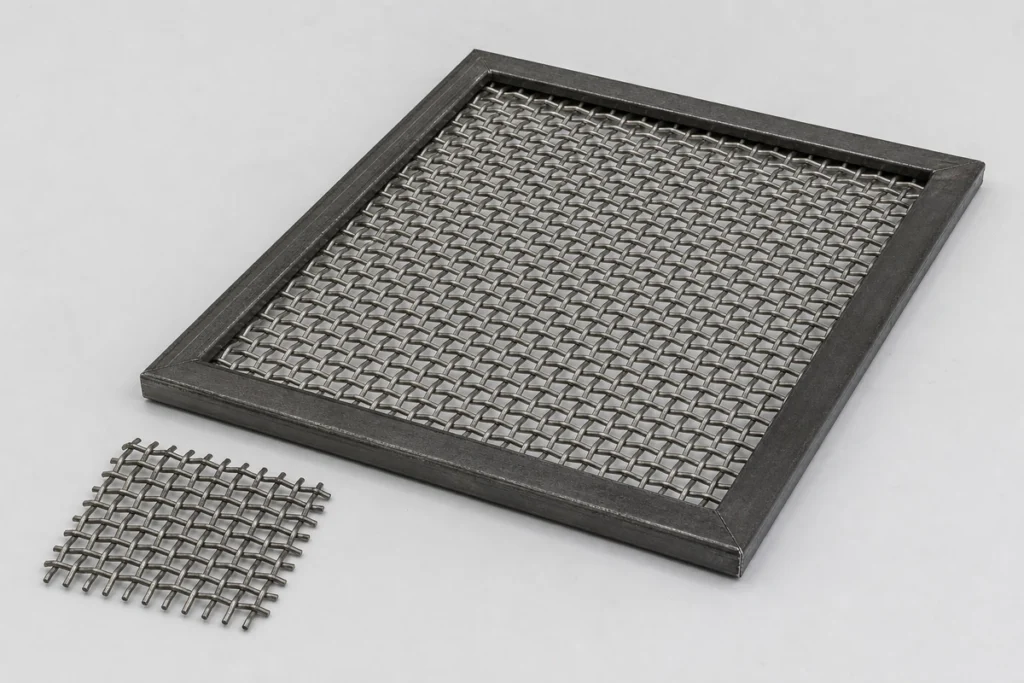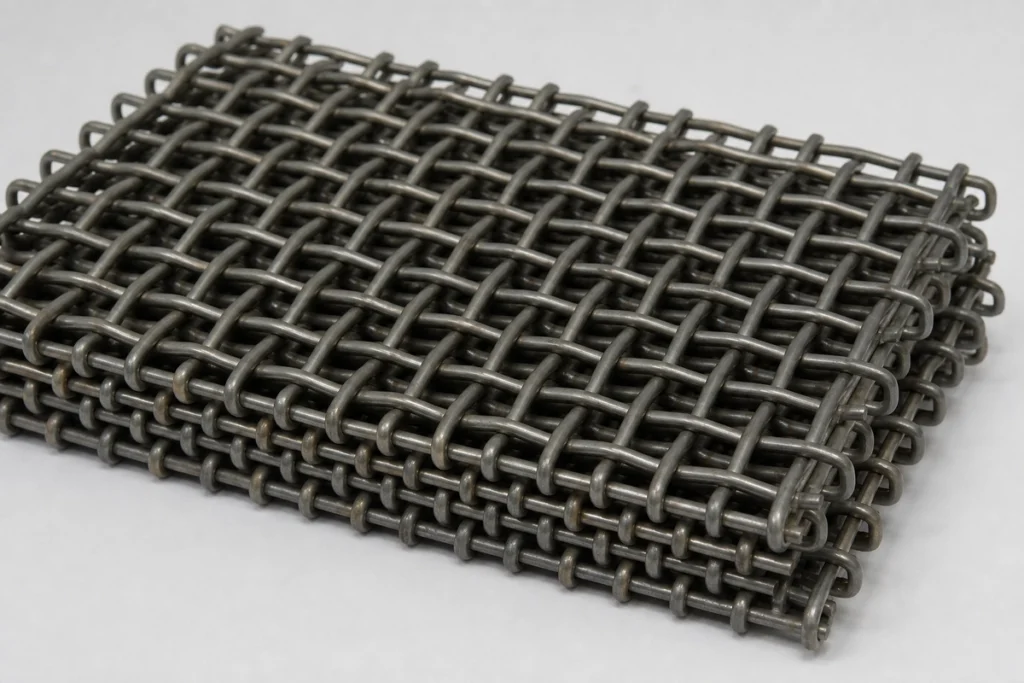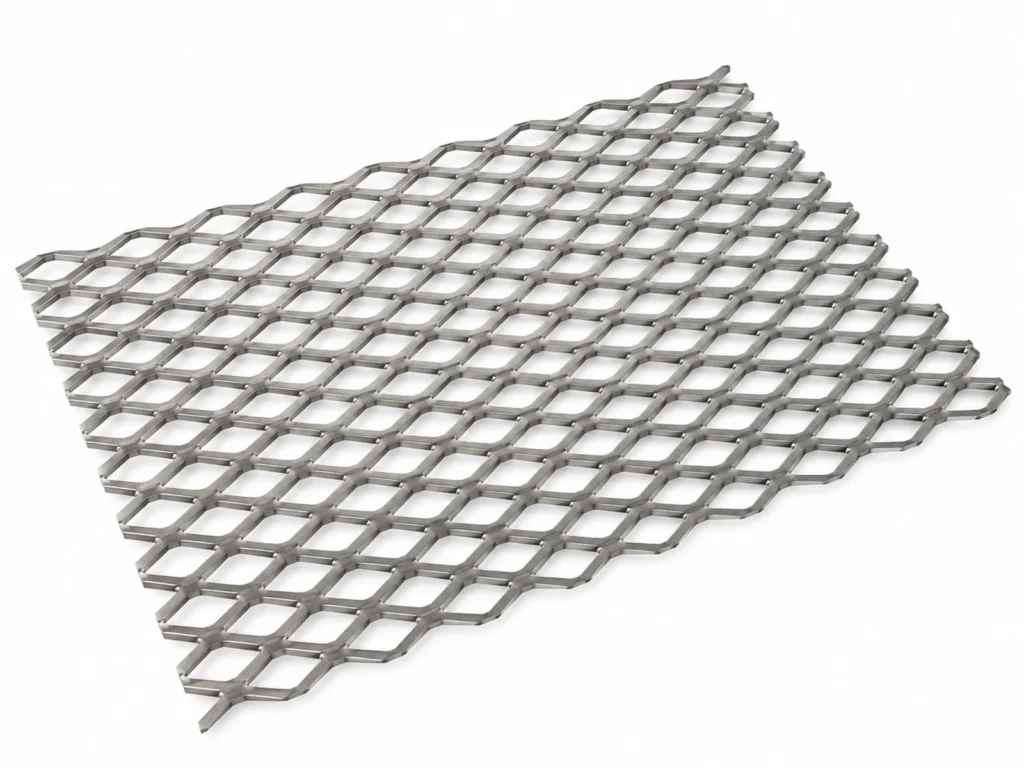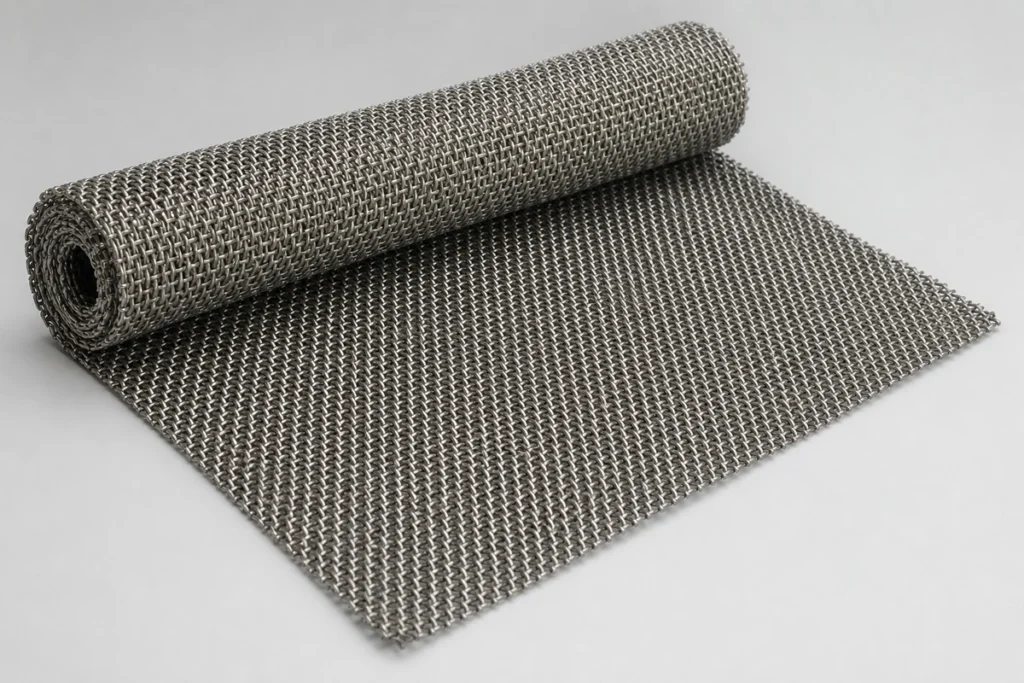
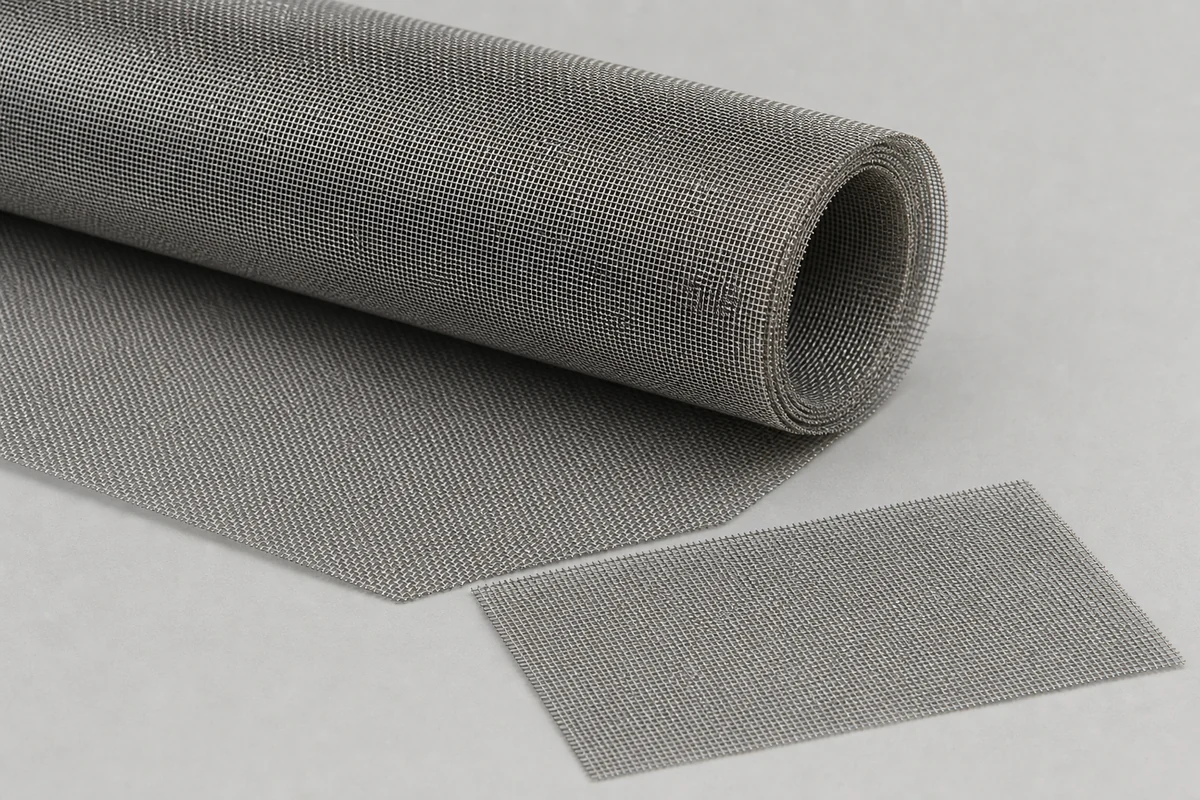
Window & Insect Screen Mesh woven or fabricated in 304 Stainless Steel (AISI 304 (1.4301)) keeps its dimensional specification to Insect screen convention; the alloy determines corrosion behavior (good general corrosion resistance in atmosphere and fresh water) and the service temperature limit (approx. +450 °C continuous). Both are covered below with the full specification table.
Why Choose 304 Stainless Steel for Window & Insect Screen Mesh
The standard general-purpose stainless mesh alloy. For window & insect screen mesh, this matters when good general corrosion resistance in atmosphere and fresh water is the controlling requirement.
Alloy Properties
| Grade designation | AISI 304 (1.4301) |
|---|---|
| Magnetic response | Essentially non-magnetic (annealed) |
| Service temperature | approx. +450 °C continuous |
| Corrosion characteristic | Good general corrosion resistance in atmosphere and fresh water |
Cleaning & Compatibility
Stainless window & insect screen mesh can be cleaned by backflush, ultrasonic bath, steam and most CIP chemistry. Two cautions: (1) avoid extended contact with hydrochloric acid or hypochlorite sanitizers, which pit even 316; (2) where the mesh contacts carbon steel during fabrication or service, iron pick-up can rust-stain the surface — specify passivation after fabrication.
Comparable Alloys
The direct upgrade from 304 is 316L (chlorides, acids, CIP). Downgrade options for dry, indoor screening are galvanized or plain steel. For heat beyond ~450 °C move to Inconel 600; for seawater immersion consider Monel 400 or duplex 2205 for window & insect screen mesh.
Specifications of Window & Insect Screen Mesh Available in 304 Stainless Steel
| Mesh count | Wire diameter (mm) | Aperture (mm) | Micron rating (u00b5m) | Open area (%) | Weight SS (kg/mu00b2) | Reference standard |
|---|---|---|---|---|---|---|
| 14-Mesh | 0.28 | 1.53 | 1534 | 71.5 | u2014 | Insect screen convention |
| 16-Mesh | 0.26 | 1.33 | 1328 | 69.9 | u2014 | Insect screen convention |
| 18-Mesh | 0.23 | 1.18 | 1181 | 70.1 | u2014 | Insect screen convention |
| 20-Mesh | 0.23 | 1.04 | 1040 | 67.1 | u2014 | Insect screen convention |
Where 304 Stainless Steel Window & Insect Screen Mesh Is Used
- Food & pharmaceutical plants: insect exclusion on vents and windows.
- Buildings: window and door insect screens.
- Agriculture: greenhouse and livestock-building vents.
- Coastal homes: stainless screens that resist salt air.
Ordering Window & Insect Screen Mesh in 304 Stainless Steel
- Mesh: 16–18 mesh stops most flying insects; 20 mesh for no-see-ums.
- Material: SS304/316 for durability; aluminum for economy.
- Finish: Black-coated mesh improves outward visibility.
Mistakes to Avoid with Window & Insect Screen Mesh
- Choosing 14 mesh where small insects are a problem.
- Using aluminum mesh in coastal air.