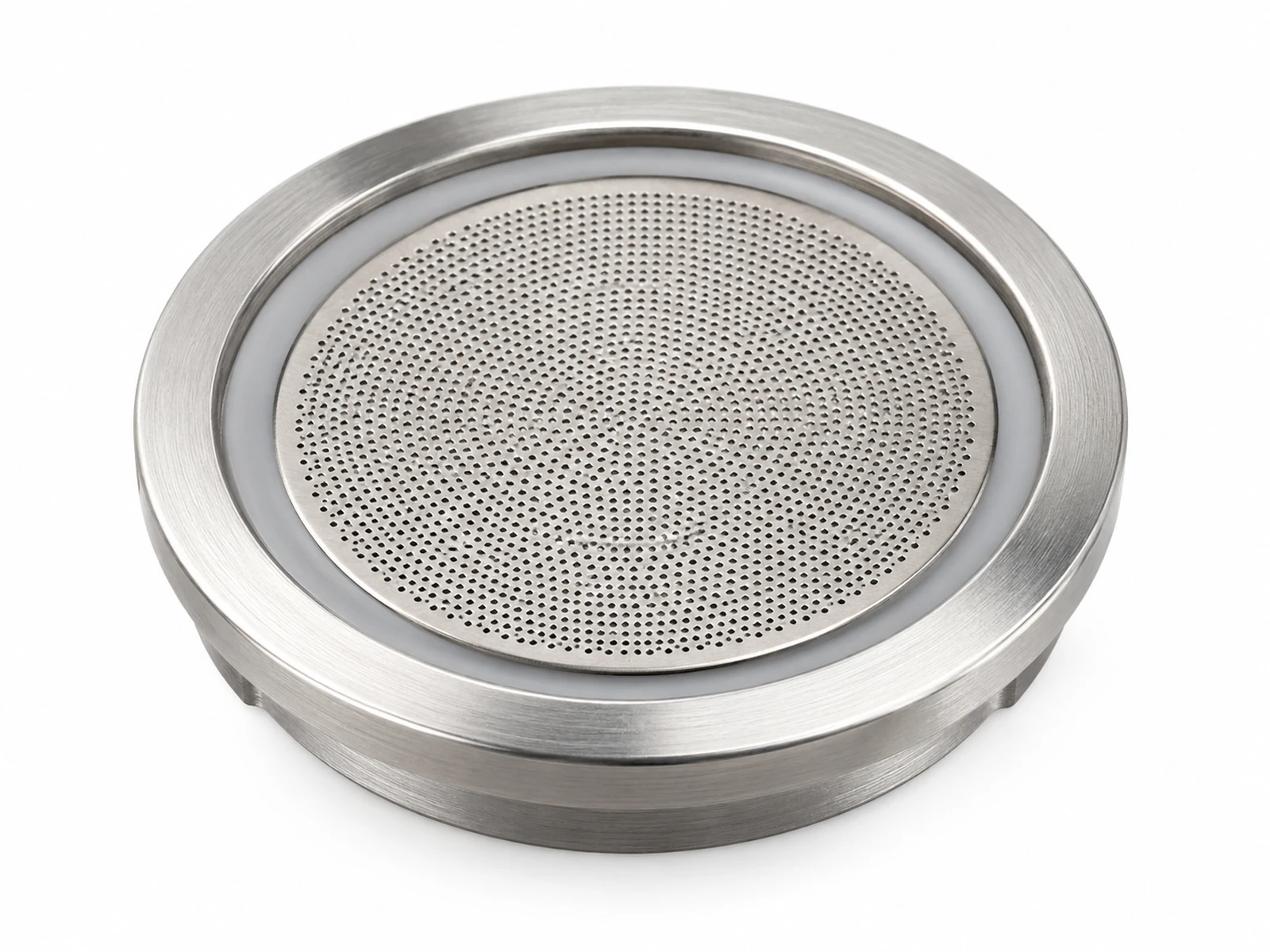
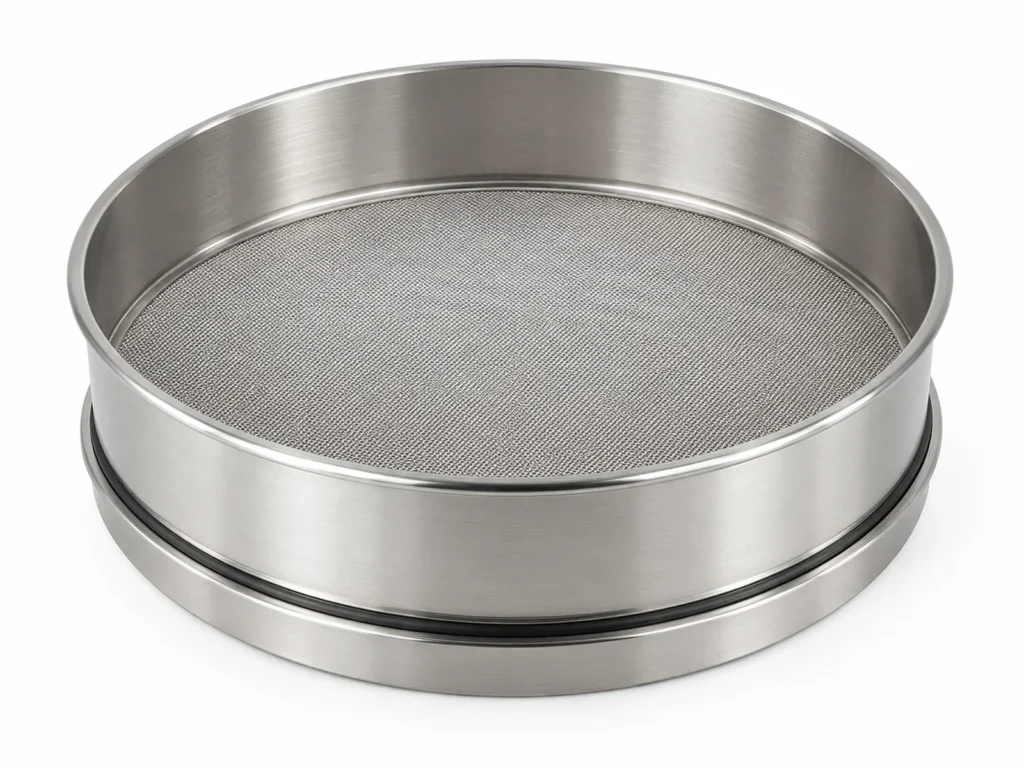
Vibrating Mesh Nebulizer Plate in 316L Stainless Steel (AISI 316L (1.4404)) is used for generating inhalable aerosol in vibrating-mesh nebulizers by pushing liquid medication through thousands of micron-scale laser-drilled holes. The alloy gives superior resistance, including chlorides, brines, food CIP and mild acids and is essentially non-magnetic, with a practical service limit of approx. +550 °C continuous.
Alloy Properties
| Grade designation | AISI 316L (1.4404) |
|---|
| Magnetic response | Essentially non-magnetic |
|---|
| Service temperature | approx. +550 °C continuous |
|---|
| Corrosion characteristic | Superior resistance, including chlorides, brines, food CIP and mild acids |
|---|
Specifications of Vibrating Mesh Nebulizer Plate Available in 316L Stainless Steel
| Size | Plate diameter (mm) | Thickness (mm) | Hole diameter (mm) | Hole count | Hole rings | MMAD (u00b5m) |
|---|
| N-3.0 | 8 | 0.05 | 0.0030 | 4000 | 7 | 3.0 |
| N-4.0 | 8 | 0.05 | 0.0040 | 3000 | 6 | 4.0 |
| N-5.0 | 10 | 0.06 | 0.0050 | 2500 | 6 | 5.0 |
Where 316L Stainless Steel Vibrating Mesh Nebulizer Plate Is Used
- Medical device OEMs: portable and handheld nebulizers.
- Hospital respiratory therapy: in-line ventilator nebulizers.
- Veterinary medicine: animal nebulizers.
- Pharmaceutical R&D: aerosol drug delivery studies.
Ordering Vibrating Mesh Nebulizer Plate in 316L Stainless Steel
- Hole size: Sets droplet MMAD — about 3–5 µm for deep-lung delivery.
- Plate diameter: Matches the piezo actuator and housing.
- Material: Biocompatible stainless or palladium-nickel alloys.
Mistakes to Avoid with Vibrating Mesh Nebulizer Plate
- Saline crystal buildup that blocks holes.
- Using a mesh with the wrong MMAD.