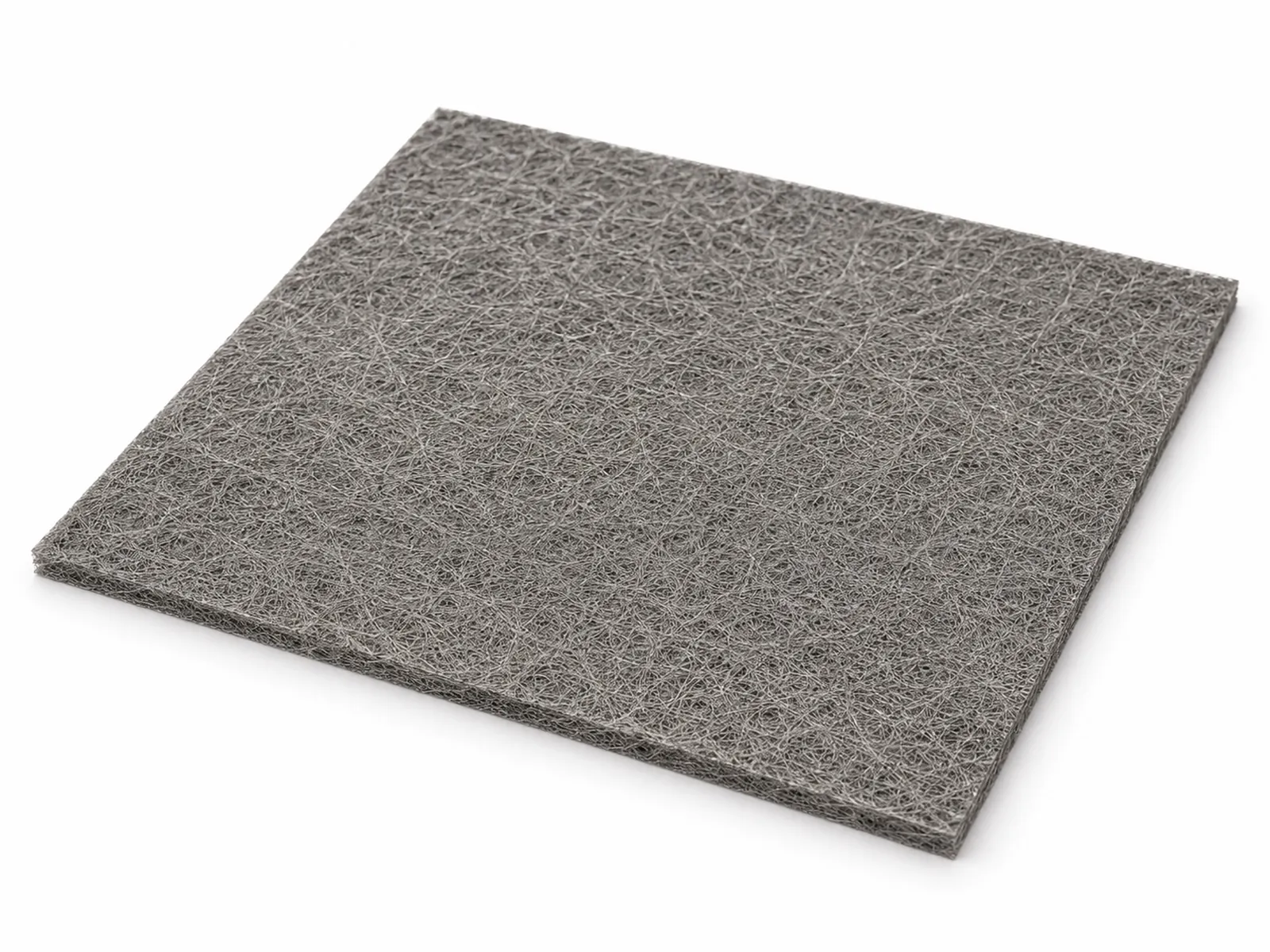
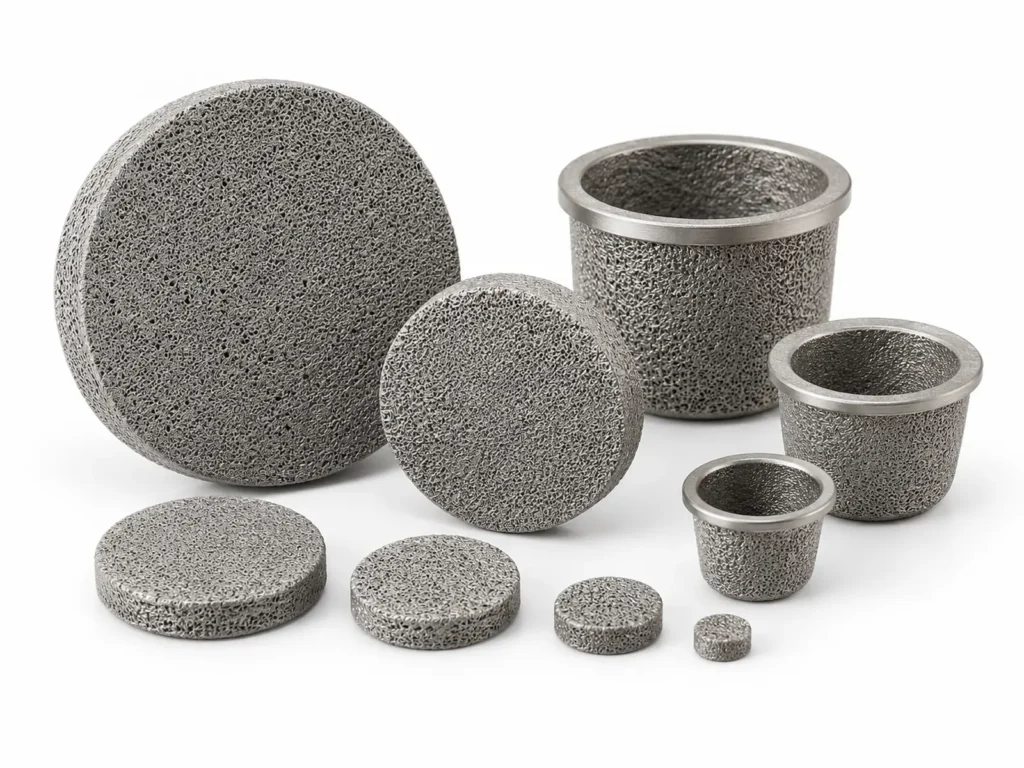
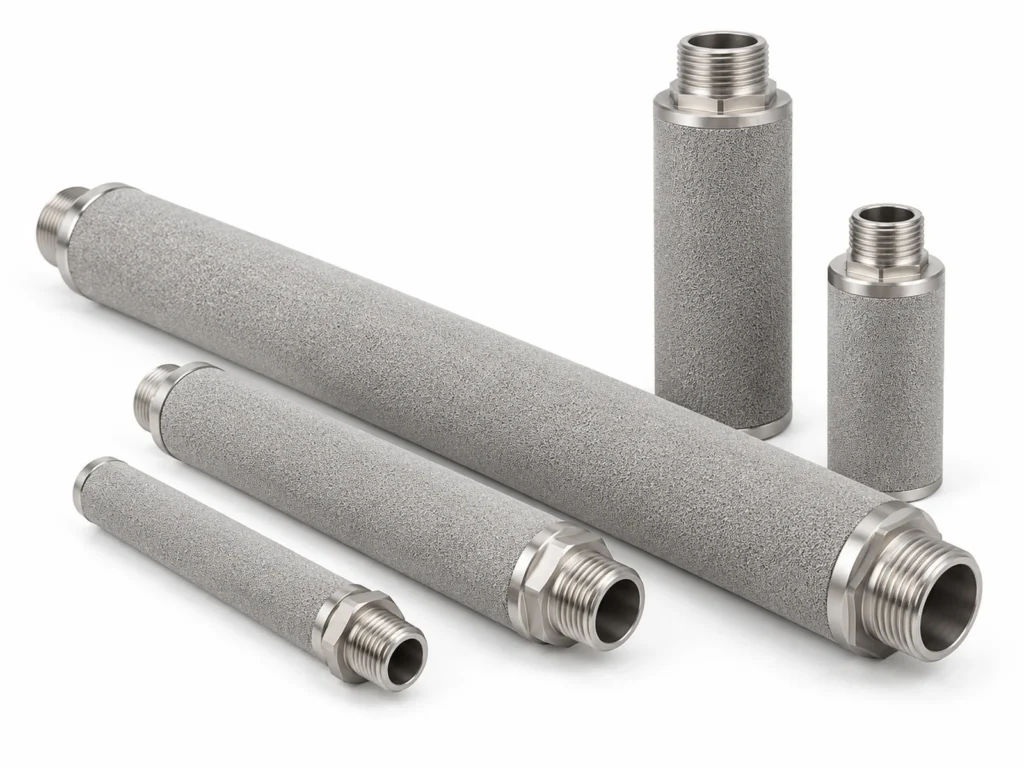
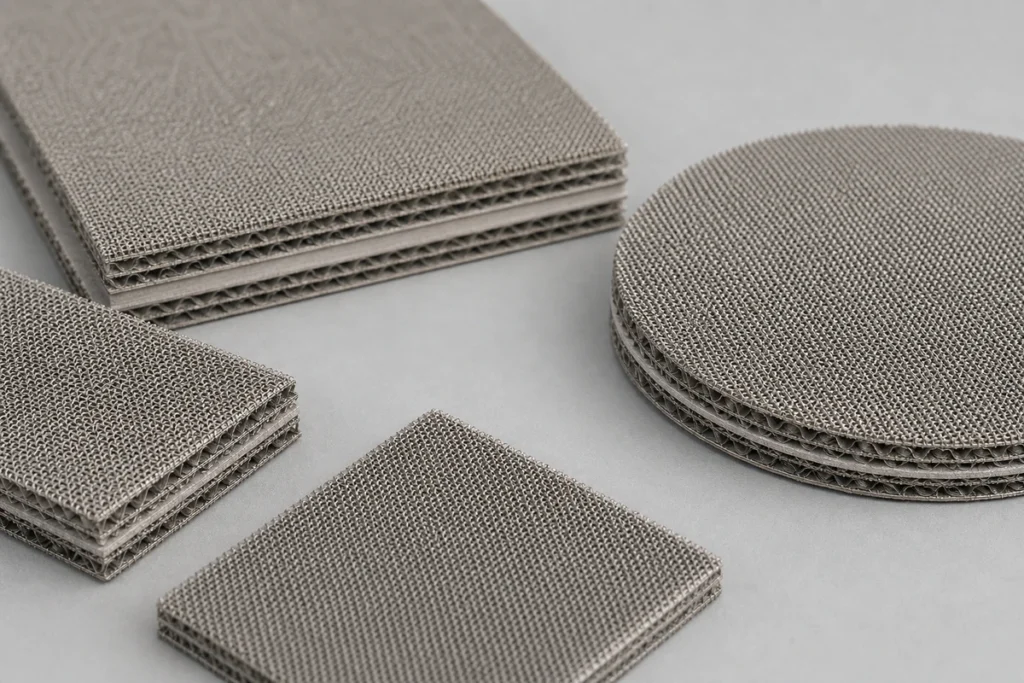
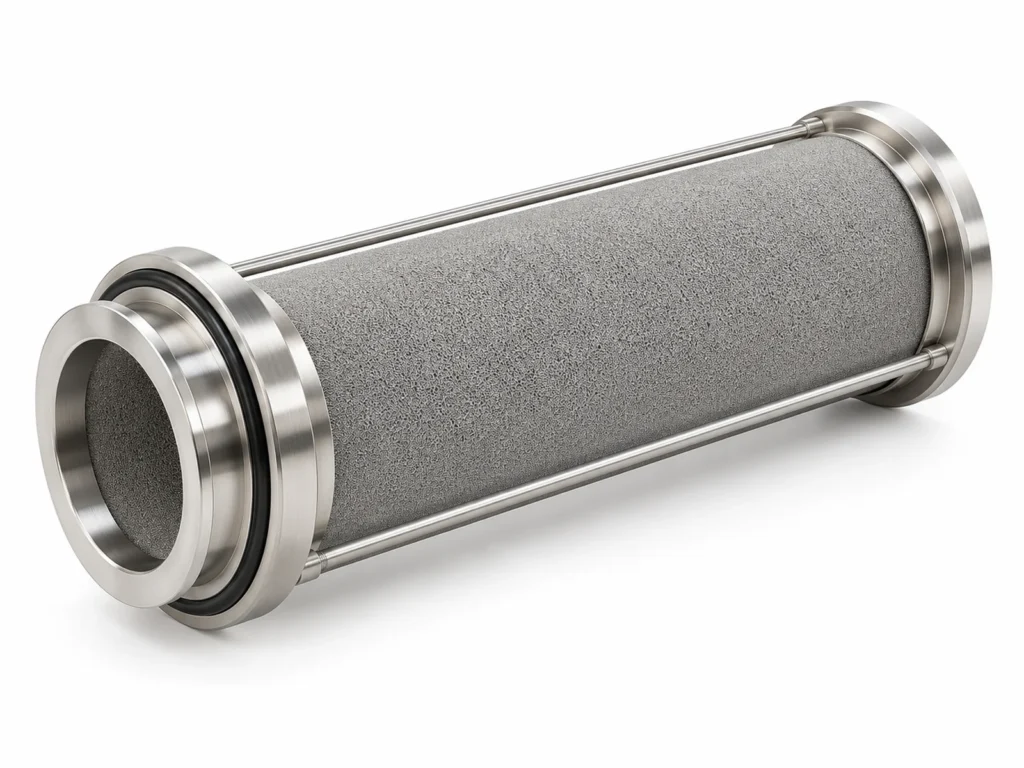
Titanium Fiber Felt for PEM Electrolyzers in 316L Stainless Steel (AISI 316L (1.4404)) is used for acting as the porous transport layer in PEM water electrolyzers, where sintered titanium fiber felt carries water to the anode catalyst, lets oxygen escape and conducts current to the bipolar plate. The alloy gives superior resistance, including chlorides, brines, food CIP and mild acids and is essentially non-magnetic, with a practical service limit of approx. +550 °C continuous.
Alloy Properties
| Grade designation | AISI 316L (1.4404) |
|---|
| Magnetic response | Essentially non-magnetic |
|---|
| Service temperature | approx. +550 °C continuous |
|---|
| Corrosion characteristic | Superior resistance, including chlorides, brines, food CIP and mild acids |
|---|
Specifications of Titanium Fiber Felt for PEM Electrolyzers Available in 316L Stainless Steel
| Size | Thickness (mm) | Porosity (%) | Micron rating (u00b5m) | Coating |
|---|
| Ti-0.25 | 0.25 | 60 | 20 | None |
| Ti-0.40 | 0.40 | 65 | 30 | Platinum flash |
| Ti-1.00 | 1.00 | 70 | 40 | Iridium / platinum |
Where 316L Stainless Steel Titanium Fiber Felt for PEM Electrolyzers Is Used
- PEM electrolyzer stack makers: anode-side porous transport layers (PTLs).
- Regenerative & unitized fuel cells: oxygen-side diffusion layers.
- Hydrogen R&D labs: single-cell test fixtures and short stacks.
- Electrochemical sensors & ozone generators: porous titanium electrodes.
Ordering Titanium Fiber Felt for PEM Electrolyzers in 316L Stainless Steel
- Thickness & porosity: 0.25–1.0 mm at 60–70 % porosity; thinner felts lower ohmic loss, thicker felts spread current better.
- Coating: Platinum or iridium flash keeps titanium oxide from raising contact resistance over time.
- Tolerance & flatness: Tight thickness tolerance so the membrane is compressed evenly across the cell.
Mistakes to Avoid with Titanium Fiber Felt for PEM Electrolyzers
- Using uncoated felt on the anode, which passivates and raises cell voltage over time.
- Uneven compression that leaves hot spots and membrane thinning.